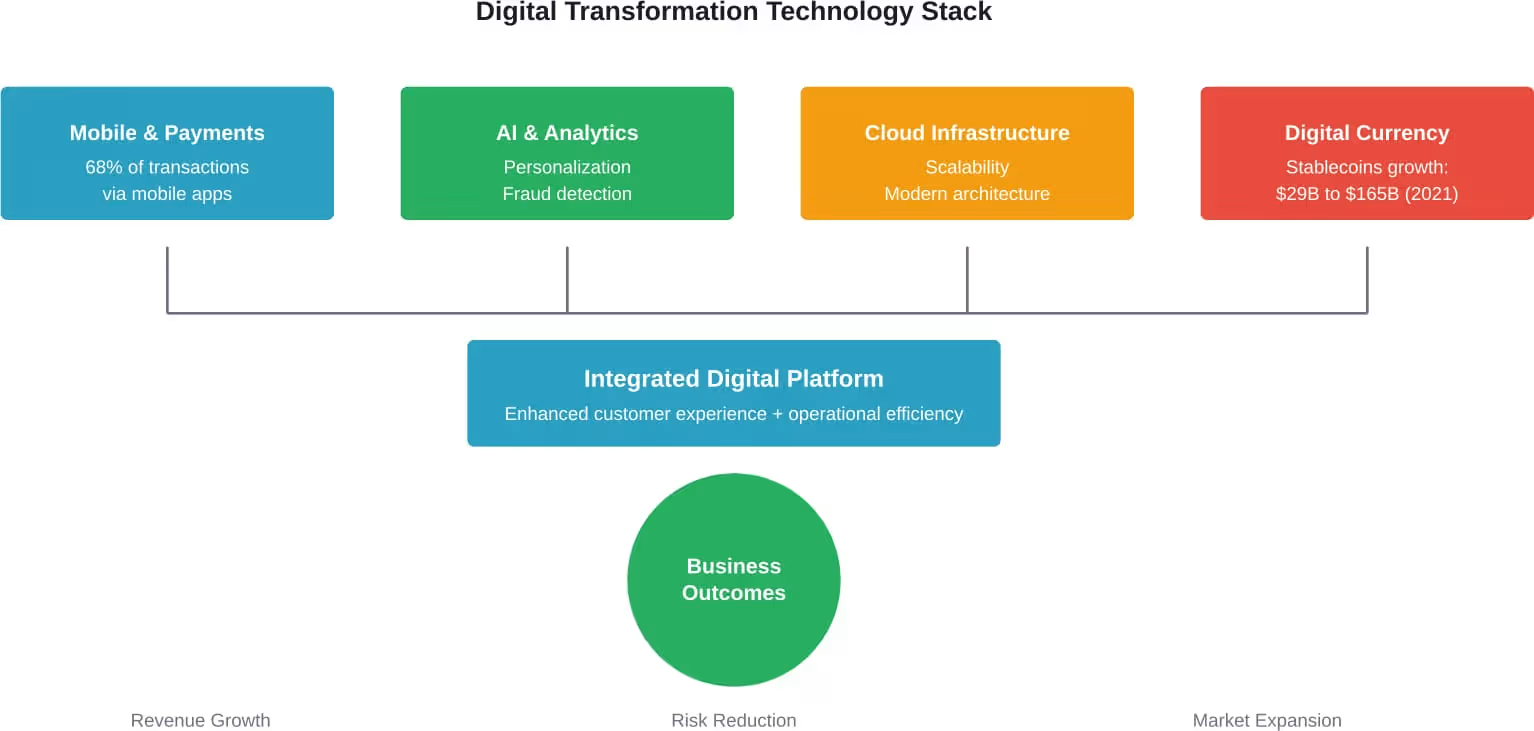
Quick Summary: Digital transformation in financial services involves integrating advanced technologies like AI, cloud computing, and mobile platforms to modernize banking operations, enhance customer experiences, and improve efficiency. According to recent data from central banks, mobile banking transactions now account for 68% of all digital banking activities, while stablecoin supply grew from $29 billion to $165 billion between January 2021 and January 2022. This transformation isn’t optional—it’s become essential for financial institutions to remain competitive and meet evolving regulatory requirements.
The financial services industry has reached a critical inflection point. Traditional banking models that served customers for decades are giving way to digital-first approaches that fundamentally reshape how people interact with money.
And here’s the thing: this shift isn’t happening gradually. It’s accelerating.
According to the Federal Reserve, digitalization is enabling consumers and businesses to transfer value in ways that were impossible just a few years ago. The landscape has evolved from simple online banking portals to sophisticated ecosystems involving mobile apps, digital currencies, and AI-powered financial advisors.
But what does digital transformation actually mean for financial institutions? More importantly, how can banks and financial services companies navigate this complex transition without losing sight of what matters most—their customers?
What Digital Transformation Really Means for Financial Services
Digital transformation in banking goes beyond installing a few apps or updating legacy systems. It’s a comprehensive reimagining of how financial institutions operate, compete, and deliver value.
The act of integrating digital technologies and strategies touches every corner of financial operations. From front-end customer interactions to back-end processing systems, transformation affects the entire value chain.
Real talk: many financial services companies still treat digitalization as a technology project. That’s where they go wrong.
According to the State Bank of Pakistan, during the past few years there has been significant growth in digital banking channels. In FY25, of the 9.1 billion transactions processed through banking and payment channels, 68% were conducted using mobile apps, 5% via cards, and 3% through internet banking portals. Only 12% of transactions were conducted through traditional branch-based channels.
That’s not a trend. That’s a complete transformation of customer behavior.
| Transaction Channel | Percentage of Total Transactions | Key Characteristics |
|---|---|---|
| Mobile Apps | 68% | 24/7 access, instant transactions, personalized experience |
| Cards | 5% | Digital payment method, convenience, widespread acceptance |
| Internet Banking | 3% | Desktop-based, detailed account management, transfers |
| Branch-Based | 12% | Traditional service, complex transactions, personal assistance |
| Other Digital Channels | 12% | ATMs, kiosks, phone banking, third-party platforms |
The financial system is undergoing fast-moving changes associated with digitalization and decentralization. These aren’t separate trends—they’re interconnected forces reshaping the entire industry.
Scale Financial Services Growth With LENGREO
Digital transformation in financial services requires adopting new technologies, improving customer experience, and building efficient systems. Growth also depends on strong marketing and lead generation.
LENGREO helps financial services companies connect strategy with real business outcomes through integrated marketing and sales support.
Key capabilities:
- SEO and content strategies
- LinkedIn and email outreach
- paid media campaigns
- full funnel demand generation
If you want to turn digital transformation into measurable growth, contact LENGREO to discuss your goals.
The Technologies Driving Financial Services Transformation
Several key technologies form the foundation of digital transformation in finance. Understanding these building blocks helps clarify where the industry is headed.
Mobile Banking and Digital Payments
Mobile platforms have become the primary interface between customers and their financial institutions. This isn’t just about convenience—it’s about fundamentally changing customer expectations.
According to the Federal Reserve, digitalization is enabling new forms of value transfer that blend financial services with social engagement, commercial transactions, and mobile ecosystems. In China, the majority of consumers and businesses participate in digital payment platforms operated by BigTech companies.
These platforms aren’t traditional financial institutions. They’re technology companies that integrated payments into their core services—creating massive user networks that banks now struggle to compete against.
Artificial Intelligence and Data Analytics
Advanced data analysis capabilities have freed up space for financial institutions to understand customers better, predict behaviors, and personalize services at scale.
AI technologies help banks optimize operations, detect fraud, assess credit risk, and automate routine tasks. But the real value comes from using these tools to enhance customer experiences rather than just cutting costs.
Cloud Computing and Infrastructure Modernization
Legacy systems remain one of the biggest barriers to transformation. Many banks still run on technology infrastructure built decades ago—systems that can’t easily integrate with modern digital services.
Cloud platforms provide the flexibility, scalability, and speed that financial institutions need to compete in the digital age. They also reduce the burden of maintaining outdated hardware and software systems.
Digital Currencies and Stablecoins
The rise of digital currencies represents one of the most significant shifts in how value is stored and transferred. According to Federal Reserve data, stablecoin supply grew nearly sixfold in 2021, from roughly $29 billion in January 2021 to $165 billion in January 2022.
That’s extraordinary growth in just twelve months.
As of January 2022, the market showed high concentration, with the largest stablecoin by market capitalization making up almost half of the total supply. This concentration raises important questions about stability, regulation, and systemic risk.
While the Federal Reserve has made no decisions on whether to pursue or implement a central bank digital currency (CBDC), they’ve been exploring the potential benefits and risks. Other central banks worldwide are taking similar exploratory approaches.
Customer Experience as the North Star
Technology alone doesn’t drive successful transformation. The real differentiator is using these tools to create better customer experiences.
Improving customer experience has become a top business imperative for financial services companies. Customers now expect seamless, personalized interactions across all channels—whether they’re using a mobile app, website, or visiting a physical branch.
But here’s the challenge: delivering consistent experiences across multiple touchpoints requires deep integration of systems, data, and processes. Many banks still operate in siloes, where the mobile team doesn’t coordinate with the branch network, and customer service can’t see the full picture of client interactions.
Personalization at Scale
Modern customers expect financial services tailored to their specific needs and circumstances. Generic, one-size-fits-all products don’t cut it anymore.
Advanced data analytics and AI make it possible to understand individual customer behaviors, preferences, and needs. Financial institutions can use these insights to recommend relevant products, provide timely advice, and anticipate customer needs before they’re explicitly stated.
Accessibility and Inclusion
Digital transformation also creates opportunities to expand financial inclusion. Mobile banking and digital payment platforms can reach underserved populations who lack access to traditional banking infrastructure.
This isn’t just about social responsibility—it represents significant market opportunities. Expanding access to financial services creates new customer segments and revenue streams.
Operational Efficiency and the Bottom Line
Digital transformation brings proven—and highly anticipated—ROI. But the path to realizing those returns isn’t always straightforward.
Operational efficiency improvements come from automating routine tasks, streamlining processes, and reducing manual intervention. When done right, these changes free up employees to focus on higher-value activities that require human judgment and expertise.
According to BDO’s research, digital transformation delivers measurable improvements across multiple dimensions of financial services operations. Companies report better processing speeds, reduced error rates, lower operational costs, and improved compliance tracking.
But transformation also requires significant upfront investment. Legacy system modernization, technology infrastructure upgrades, employee training, and change management all demand resources—both financial and organizational.
| Transformation Area | Operational Impact | Common Challenges |
|---|---|---|
| Process Automation | 30-50% reduction in processing time | Integration with legacy systems |
| Data Analytics | Improved decision-making accuracy | Data quality and governance |
| Cloud Migration | Reduced infrastructure costs | Security and compliance concerns |
| Customer Platforms | Enhanced satisfaction scores | Coordinating across channels |
Regulatory Compliance and Security Challenges
Growing regulatory pressures and geopolitical tensions have increased the burden on financial institutions. Companies must not only comply with current regulations but also accurately predict upcoming requirements.
The challenge intensifies as digital transformation introduces new risk vectors. Cybersecurity threats, data privacy concerns, and cross-border regulatory complexity all require careful navigation.
According to NIST’s Cybersecurity Framework, financial services organizations need structured approaches to managing cybersecurity risk. The framework helps institutions identify, protect, detect, respond to, and recover from cyber threats.
Supervisory Technologies (SupTech)
Financial regulators face their own digital transformation challenges. How can regulatory agencies supervise a fast-evolving, technologically enabled financial services ecosystem?
SupTech represents the application of technology to regulatory supervision. These tools help regulators monitor compliance, detect anomalies, and respond to emerging risks more effectively than traditional approaches.
For financial institutions, this means regulatory technology (RegTech) becomes increasingly important. Automated compliance monitoring, real-time reporting, and predictive risk assessment help companies stay ahead of regulatory requirements.
The Competitive Landscape: Banks vs. BigTech vs. FinTechs
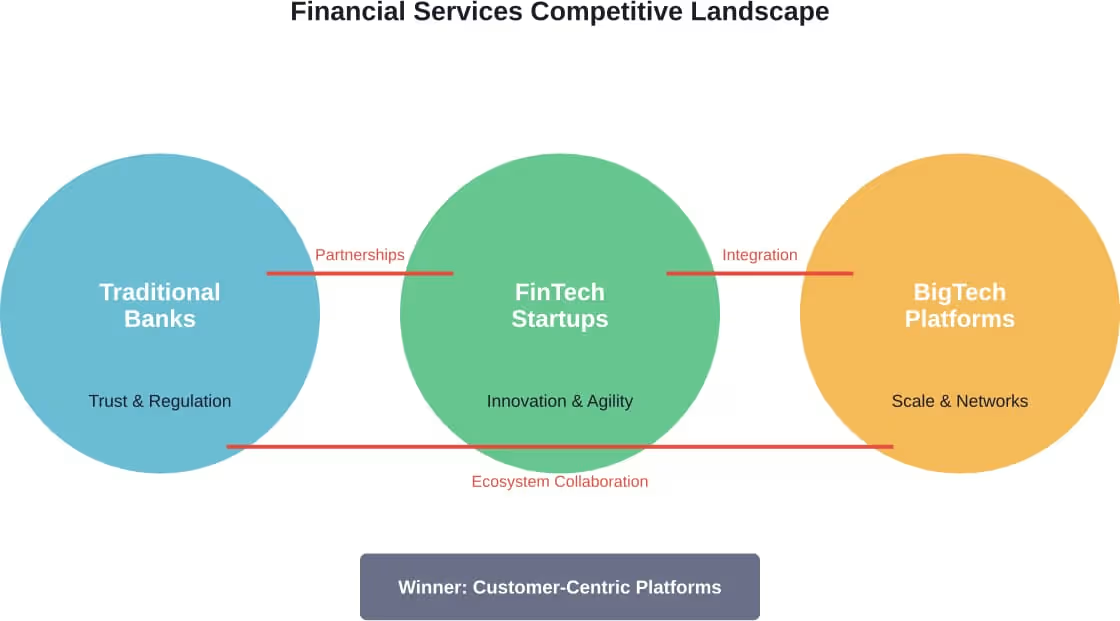
Traditional banks no longer compete just against each other. They face challenges from multiple directions—nimble FinTech startups and massive technology platforms.
According to the Federal Reserve, BigTech companies tend to be established platforms with massive user networks that provide payments in support of core nonfinancial services. These range from commercial transactions to social engagement to mobile apps to search engines.
This creates a fundamentally different competitive dynamic. While banks focus primarily on financial services, BigTech platforms integrate payments into broader ecosystems where they already have customer attention and trust.
FinTech companies approach the market from another angle. They typically focus on specific pain points or underserved niches, using technology to deliver superior experiences or lower costs than traditional banks.
So what’s a traditional financial institution to do?
Partnership and Ecosystem Strategies
Many banks are finding that collaboration beats pure competition. Rather than trying to build every capability in-house, they’re forming partnerships with FinTech companies and technology providers.
These ecosystem approaches combine the strengths of different players. Banks bring regulatory expertise, customer trust, and capital. FinTechs contribute innovation, agility, and specialized technology. Technology platforms offer scale, user networks, and infrastructure.
The key is finding the right balance—leveraging partnerships without losing control of the customer relationship or core value proposition.
Building a Digital Transformation Strategy
Successful transformation doesn’t happen by accident. It requires deliberate strategy, clear vision, and disciplined execution.
According to educational programs focused on this topic, developing a digital transformation strategy involves understanding the digital dynamics that define competitive advantage in modern finance. This means looking beyond individual technologies to see how they combine to create new business models and value propositions.
Assessment and Prioritization
Start by honestly assessing current capabilities and identifying gaps. Where does the organization excel? Where does it lag behind competitors or customer expectations?
Not every capability needs to be world-class. Focus transformation efforts on areas that matter most to customers and drive competitive differentiation.
Change Management and Culture
Technology changes are often easier than cultural ones. Digital transformation requires shifts in mindset, ways of working, and organizational structures.
Employees need training and support to develop new skills. Leadership must model digital-first thinking and empower teams to experiment and learn. Legacy institutional cultures that resist change will struggle regardless of how much they invest in technology.
Measuring Progress and ROI
Establish clear metrics for transformation success. These should include both financial measures (cost savings, revenue growth, profitability) and operational indicators (customer satisfaction, processing speed, error rates).
Track progress regularly and be willing to adjust course based on results. Transformation is iterative—not a one-time project with a fixed endpoint.
Looking Ahead: The Future of Digital Financial Services
The pace of change isn’t slowing down. Several emerging trends will shape the next phase of financial services evolution.
Decentralized Finance (DeFi)
Blockchain-based financial services that operate without traditional intermediaries represent a potential paradigm shift. While still early and facing regulatory uncertainty, DeFi platforms demonstrate alternative approaches to lending, trading, and asset management.
Embedded Finance
Financial services are increasingly embedded into non-financial customer experiences. Buy-now-pay-later options at checkout, insurance integrated into travel bookings, and investment features within payment apps all reflect this trend.
For traditional banks, this means their services might become invisible infrastructure—powering customer experiences delivered through other brands and platforms.
AI and Automation Acceleration
According to recent NIST guidelines, organizations need to determine ways to incorporate AI into operations while mitigating cybersecurity risks. As AI capabilities advance, financial institutions will find new applications across virtually every function.
The challenge is balancing automation’s efficiency benefits with the need for human oversight, ethical considerations, and regulatory compliance.
Sustainability and Impact
Digital transformation enables better tracking and reporting of environmental, social, and governance (ESG) factors. Customers increasingly expect financial institutions to demonstrate positive impact beyond profits.
Green financing, impact investing, and sustainable banking practices will likely become differentiators rather than nice-to-haves.
Making Transformation Work for Your Institution
Digital transformation in financial services isn’t optional anymore. The question isn’t whether to transform—it’s how to do it effectively.
The institutions that succeed will be those that keep customers at the center of every decision. Technology should enable better experiences, not just reduce costs. Data should drive insights that help people make smarter financial decisions, not just target them with more products.
Start with a clear-eyed assessment of where you are today. Identify the capabilities that matter most to your customers and your competitive position. Build partnerships where they make sense rather than trying to do everything in-house.
And remember: transformation is a journey, not a destination. The goal is building organizational capabilities for continuous adaptation in a rapidly changing landscape.
The financial services industry of 2026 looks dramatically different than it did just five years ago. According to central bank observations, the financial system continues experiencing fast-moving changes that will reshape how institutions operate for years to come.
Those that embrace transformation thoughtfully—balancing innovation with stability, technology with humanity, and efficiency with experience—will position themselves to thrive. Those that resist or approach transformation as purely a technology exercise will find themselves increasingly irrelevant.
The future belongs to institutions that can navigate complexity, adapt quickly, and never lose sight of their fundamental purpose: serving customers’ financial needs in ways that improve their lives.