


Quick Summary: Digital transformation in banking integrates modern technologies like cloud computing, AI, and mobile platforms to optimize operations, enhance customer experiences, and improve security. Banks are shifting from traditional brick-and-mortar models to digital-first approaches, driven by changing customer expectations and competitive pressure from fintech companies. Successful transformation requires strategic technology adoption, cultural change, and robust cybersecurity measures.
The banking industry stands at a crossroads. Traditional financial institutions face unprecedented pressure from digital-native competitors, evolving customer expectations, and rapidly advancing technologies. What worked a decade ago—branch networks, paper-based processes, legacy systems—won’t cut it anymore.
Digital transformation isn’t just about adding a mobile app or online banking portal. It’s a fundamental rethinking of how banks create and deliver value. According to Deloitte research, 25-30% of customers are willing to switch to a digital bank, forcing traditional institutions to accelerate their transformation efforts or risk losing market share.
But here’s the thing: transformation done right can double profitability. MIT research on ANZ Institutional shows that strategic platform design and digital service delivery doubled their return on equity between 2016 and 2024. That’s the kind of result that gets boardroom attention.
What Digital Transformation in Banking Actually Means
Digital transformation in banking is the integration of digital technologies and strategies across all areas of financial operations to optimize efficiency, enhance personalized experiences, and create new value propositions. This goes far beyond digitizing existing processes.
The transformation encompasses three core dimensions: technology infrastructure, operational processes, and customer engagement models. Banks are replacing legacy mainframe systems with cloud-based platforms, automating manual workflows with artificial intelligence, and redesigning customer journeys around mobile-first experiences.
Stanford’s case study on Lloyds Banking Group illustrates this shift perfectly. The UK’s oldest financial services franchise transformed from a product-aligned, brick-and-mortar institution to a customer-aligned, digital-first technology organization. Their Transformation division started as a hundred-person task force and grew to comprise one-third of the bank’s 70,000 employees.
Real talk: this isn’t a quick fix. Harvard’s research on DBS Bank documents three waves of purpose-driven transformation that overhauled systems, upgraded employee skills, and re-centered customer focus. The journey took years, but it turned DBS into one of the world’s best banks.
Why Banks Can’t Ignore Digital Transformation Anymore
The competitive landscape has fundamentally shifted. New digital banks are entering the market at unprecedented rates, redesigning segmentation principles and customer expectations along the way. These challengers operate with lower cost structures, faster innovation cycles, and customer experiences built from scratch for the digital age.
Customer behavior has changed permanently. Branch visits have plummeted while mobile banking usage has skyrocketed. Security expectations have also evolved—91% of Americans decide which bank to use based on fraud protection and security features, placing it as the most important factor alongside quality customer service and digital banking access.
But wait. There’s another critical driver: cybersecurity threats. According to Federal Reserve Governor Michael S. Barr’s speech on April 17, 2025, deepfake attacks have seen a twentyfold increase over the last three years. Estimates of direct and indirect costs of cyber incidents range from 1 to 10 percent of global GDP. Criminal tactics are becoming more sophisticated and available to a broader range of criminals.
The Federal Reserve emphasizes that effective information technology risk management is critical to the safety and soundness of financial institutions and the stability of the financial system. Effective use of IT enables sophisticated product development, better market infrastructure, implementation of reliable techniques for control of risks, and access to new markets.
Modernize Banking Operations With LENGREO
Digital transformation in banking is about improving customer experience, adopting new technologies, and staying competitive in a rapidly changing market. Alongside this, banks need effective ways to attract and convert new clients.
LENGREO helps financial institutions build structured marketing strategies that generate leads and support business growth.
Their services include:
- SEO and content for financial products
- LinkedIn and email outreach
- paid advertising campaigns
- conversion focused funnel optimization
If you want to combine digital transformation with consistent client acquisition, LENGREO can help you turn strategy into measurable growth.
Core Technologies Powering Banking Transformation
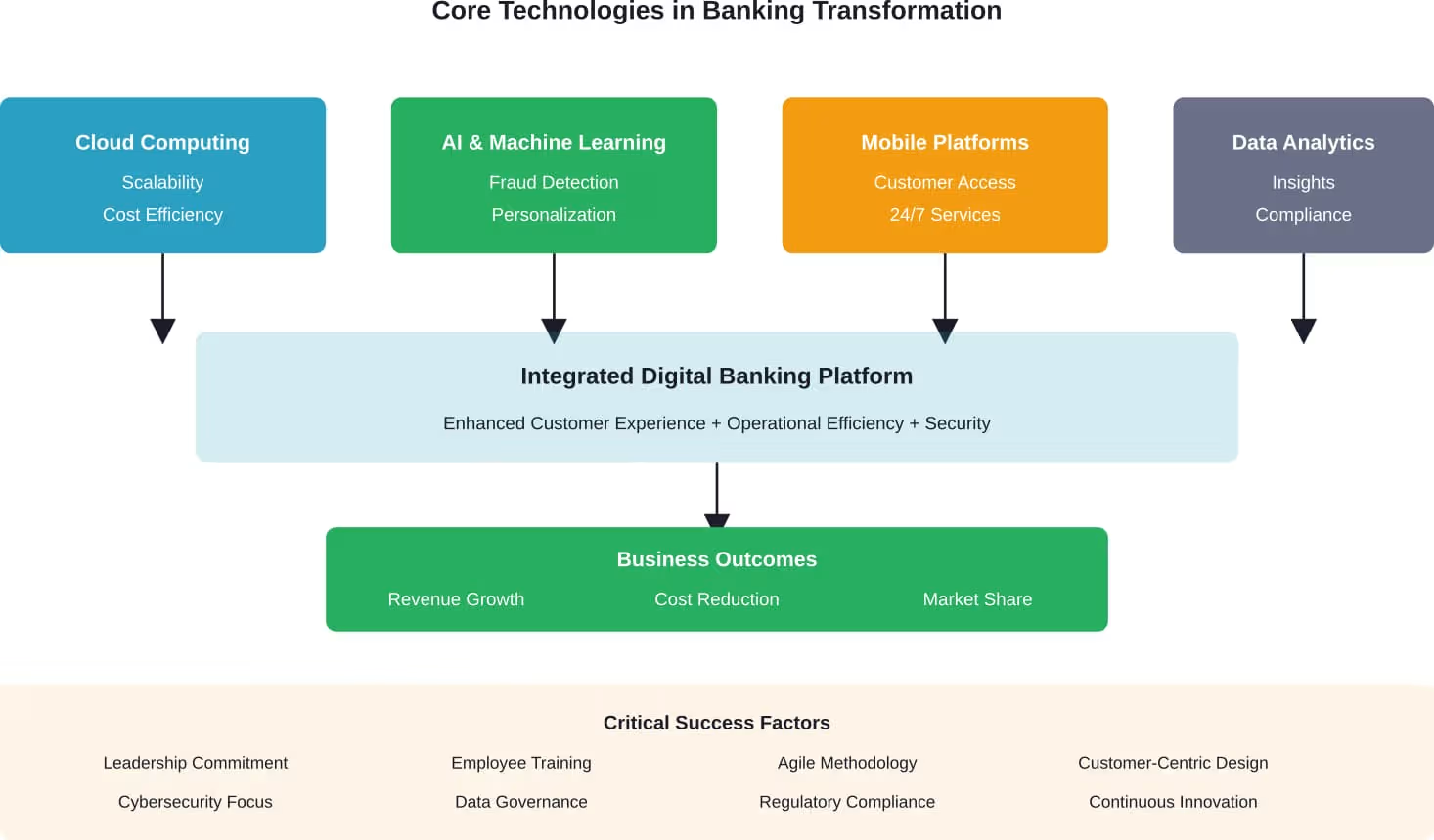
Several key technologies form the foundation of modern banking transformation. Each plays a distinct role in reshaping how financial institutions operate and serve customers.
Cloud Computing Infrastructure
Cloud platforms provide the scalability, flexibility, and cost-efficiency that legacy on-premise systems can’t match. Banks are migrating core banking systems, data warehouses, and customer-facing applications to cloud environments. This shift enables faster deployment of new services, better disaster recovery capabilities, and the ability to scale resources based on demand.
The platform transformation approach—as demonstrated by ANZ Institutional—focuses on building robust, scalable internal platforms and connecting them to deliver revenue-generating digital services. As BIS Chief Representative Tao Zhang noted in January 2026 remarks, strategically designing and reusing platforms that reflect core capabilities is key to driving growth and innovation in increasingly AI-enabled business models.
Artificial Intelligence and Machine Learning
AI technologies are reshaping everything from fraud detection to customer service. Machine learning algorithms analyze transaction patterns to identify suspicious activity in real-time, often catching fraud that traditional rule-based systems miss. Chatbots and virtual assistants handle routine customer inquiries, freeing human agents for complex issues.
Personalization engines use AI to tailor product recommendations, pricing, and communication based on individual customer behavior and preferences. Risk assessment models leverage machine learning to make more accurate lending decisions faster than traditional underwriting processes.
Sound familiar? This is where the AI arms race in banking really heats up. Banks must continuously upgrade their AI defenses as criminals deploy increasingly sophisticated AI-powered attacks, including deepfakes targeting customer verification systems.
Mobile and Digital Channels
Mobile banking apps have become the primary interface between banks and customers. These platforms enable account management, payments, deposits, loan applications, and investment activities—all from a smartphone. The best mobile experiences integrate biometric authentication, real-time notifications, and seamless cross-channel continuity.
Application programming interfaces (APIs) allow banks to connect their services with third-party platforms, enabling open banking ecosystems where customers can access multiple financial services through integrated experiences.
Data Analytics and Business Intelligence
Advanced analytics transform raw transaction data into actionable insights. Banks use data to understand customer behavior, predict churn, optimize pricing, detect operational inefficiencies, and identify new market opportunities. Real-time analytics enable dynamic decision-making rather than relying on historical reports.
Regulatory compliance also benefits from data analytics, with automated monitoring systems flagging potential issues before they become violations.
Strategic Implementation Approaches That Actually Work
Technology alone doesn’t transform a bank. Strategy, organizational culture, and execution capabilities matter just as much. Here’s what separates successful transformations from expensive failures.
Start with Customer Needs, Not Technology
The most successful transformations begin by deeply understanding customer pain points and designing solutions around those needs. DBS Bank’s purpose-driven approach centered transformation efforts on customer focus, upgrading systems and skills to support that vision rather than implementing technology for its own sake.
Customer journey mapping identifies friction points in existing processes—where customers struggle, abandon transactions, or switch to competitors. Digital solutions should address these specific issues rather than digitizing broken processes.
Build Platforms for Reusability and Scale
The platform approach emphasizes building core capabilities once and reusing them across multiple products and services. ANZ Institutional’s platform strategy allowed them to rapidly deploy new digital services by connecting existing platforms rather than building from scratch each time.
This approach requires upfront investment in robust, scalable architecture. But it pays dividends through faster time-to-market for new offerings and lower marginal costs for each additional service.
Adopt Agile and Iterative Development
Traditional waterfall development—spending months or years building a complete solution before launch—can’t keep pace with market changes. Agile methodologies enable banks to release minimum viable products quickly, gather customer feedback, and iterate based on real usage data.
This shift requires cultural change. Risk management and compliance teams must adapt their processes to support rapid iteration while maintaining appropriate controls. Many banks create regulatory sandboxes or innovation labs where new ideas can be tested with limited risk exposure.
Invest in Employee Capabilities
Transformation fails when employees lack the skills or mindset to work differently. Training programs must go beyond basic technology literacy to develop data-driven decision-making, customer-centric thinking, and comfort with experimentation.
Lloyds Banking Group’s transformation involved massive workforce development, as their Transformation division grew to comprise one third of the bank’s 70,000 employees. This ensured sufficient internal capability to drive and sustain change rather than remaining dependent on external consultants.
Balance Innovation with Risk Management
Banks operate in heavily regulated environments where failures can have systemic consequences. Effective transformation strategies create space for innovation while maintaining robust risk controls. The Federal Reserve emphasizes that effective IT risk management remains critical to institutional safety and financial system stability.
This means implementing strong governance frameworks, conducting thorough testing before production deployment, maintaining comprehensive audit trails, and building redundancy into critical systems. Cybersecurity must be baked into every initiative from the start, not bolted on afterward.
| Implementation Phase | Key Activities | Common Pitfalls | Success Metrics |
|---|---|---|---|
| Assessment | Current state analysis, customer research, technology audit | Insufficient stakeholder input, ignoring cultural barriers | Clear baseline metrics, stakeholder alignment |
| Strategy Development | Vision definition, roadmap creation, business case | Technology-first thinking, unrealistic timelines | Board approval, funding commitment |
| Platform Build | Architecture design, core systems migration, API development | Underestimating complexity, poor data migration planning | Platform stability, API performance |
| Service Deployment | Product launches, customer onboarding, channel integration | Inadequate testing, poor user experience design | Adoption rates, customer satisfaction |
| Optimization | Performance monitoring, feedback integration, continuous improvement | Declaring victory too early, neglecting maintenance | ROI achievement, market share growth |
Real-World Examples of Banking Transformation
Theory matters less than results. Several banks have successfully navigated digital transformation, offering valuable lessons for others on the journey.
DBS Bank: From Traditional to Best Bank in the World
Singapore-based DBS executed three waves of purpose-driven transformation that fundamentally rebuilt the organization. The bank overhauled legacy systems, invested heavily in employee skill development, and re-centered operations around customer needs. Harvard Business School’s case study documents how DBS’s purpose guided decision-making throughout the multi-year journey, ultimately earning recognition as one of the world’s best banks.
Lloyds Banking Group: Digital-First Reinvention
The UK’s oldest financial services franchise transformed from a product-aligned, branch-focused institution to a customer-aligned, digital-first technology company. Stanford’s case study shows how the Transformation division grew from a small task force to 23,000 employees—one-third of the workforce. This massive internal capability build enabled sustained transformation rather than dependence on external vendors.
ANZ Institutional: Platform-Driven Growth
ANZ’s institutional banking division built robust, scalable internal platforms and connected them to deliver revenue-generating digital services. MIT research documents how this platform strategy redefined value creation and delivery, doubling return on equity between 2016 and 2024. The approach demonstrates the power of strategic platform design in increasingly AI-enabled business models.
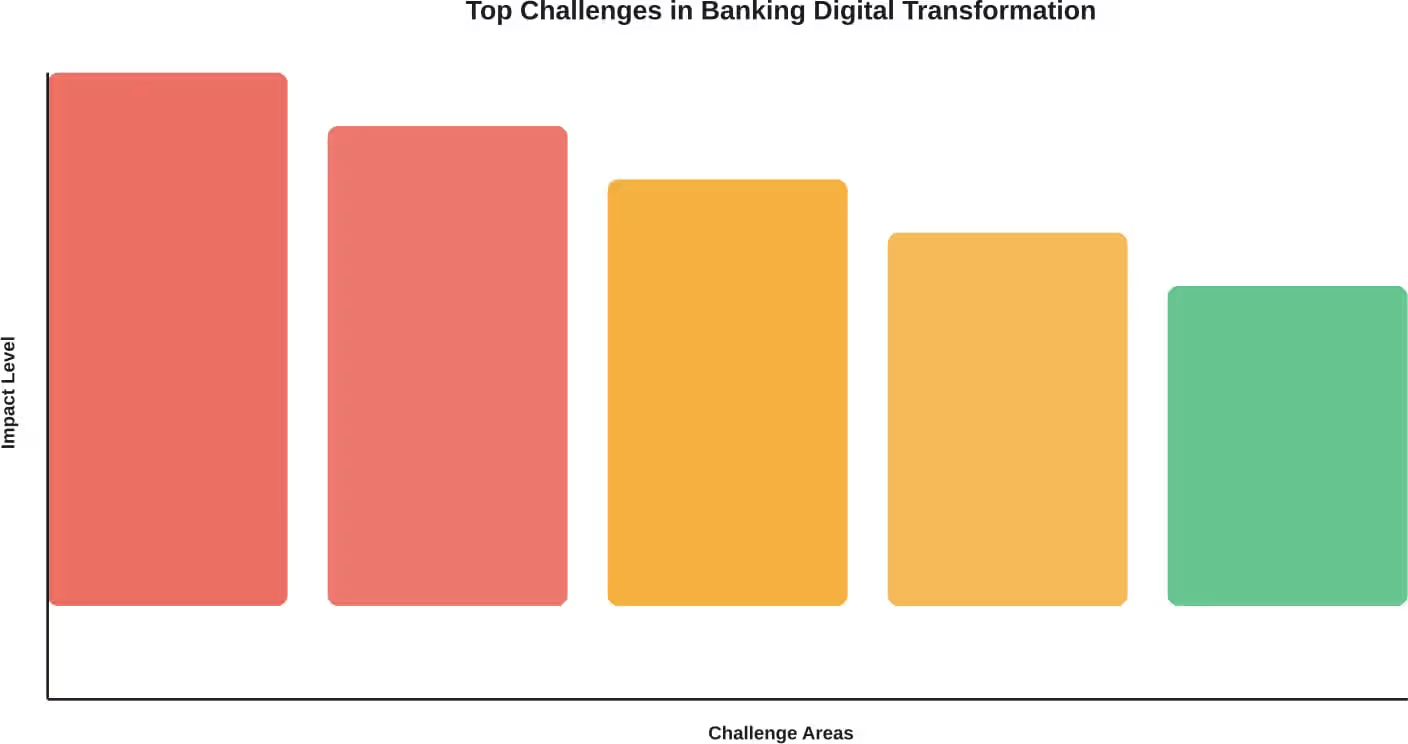
Critical Challenges Banks Face During Transformation
Transformation initiatives encounter predictable obstacles. Anticipating these challenges enables better planning and risk mitigation.
Legacy System Complexity
Decades-old mainframe systems run critical banking operations. These systems are deeply intertwined, poorly documented, and supported by aging workforces with specialized knowledge. Migrating to modern platforms without disrupting service requires careful planning, extensive testing, and often temporary parallel operations that increase costs.
Regulatory and Compliance Constraints
Financial services operate under strict regulatory oversight. Every system change must comply with banking regulations, data protection laws, and industry standards. Compliance requirements slow innovation and increase implementation costs. Regulatory uncertainty around new technologies like AI and cryptocurrency creates additional complexity.
Cybersecurity Threats
As noted in Federal Reserve research, cyber incidents cost between 1 and 10 percent of global GDP. Deepfake attacks have increased twentyfold in three years. Banks must continuously upgrade defenses against increasingly sophisticated threats while maintaining customer convenience. The AI arms race means both attackers and defenders are deploying more advanced technologies in escalating competition.
Cultural Resistance
Organizational culture often presents the biggest transformation barrier. Employees comfortable with existing processes resist change, especially when it threatens job security. Traditional hierarchical structures slow decision-making and inhibit the agility transformation requires. Risk-averse cultures struggle with the experimentation mindset needed for innovation.
Talent Shortages
Banks compete with technology companies for data scientists, software engineers, cybersecurity experts, and digital product managers. Financial services can’t always match tech sector compensation or work environments. Building internal capabilities requires sustained investment in training and development programs.
Integration Complexity
Banks typically run hundreds of applications across multiple business units. Creating seamless customer experiences requires integrating these disparate systems—a massive technical undertaking. APIs help, but achieving true integration demands architectural changes and data standardization across the organization.
Emerging Trends Shaping Banking’s Future
The transformation journey continues to evolve as new technologies and market dynamics emerge. Several trends will shape banking over the next few years.
AI-Driven Personalization at Scale
Banks are moving beyond basic segmentation to true one-to-one personalization powered by AI. Machine learning models analyze individual behavior patterns to deliver customized product recommendations, pricing, and financial advice. This level of personalization was economically impossible with human advisors for mass-market customers.
Generative AI introduces new capabilities for content creation, customer service, and analytical insights. But as BIS research notes, AI-enabled business models require careful platform strategy to capture full value while managing risks.
Embedded Finance and Banking-as-a-Service
Financial services are increasingly embedded into non-financial platforms. Retailers offer point-of-sale financing, ride-sharing apps provide payment services, and e-commerce platforms enable business lending. Banks provide the underlying infrastructure through APIs while partners own customer relationships.
This trend forces traditional banks to decide whether to compete for direct customer relationships or become infrastructure providers powering other companies’ services. Both models can succeed, but they require different capabilities and strategies.
Decentralized Finance and Blockchain
Blockchain technology enables new forms of financial services that operate without traditional intermediaries. While cryptocurrency adoption remains debated, the underlying distributed ledger technology offers potential applications in cross-border payments, securities settlement, and identity verification.
Regulatory uncertainty continues to constrain blockchain adoption in mainstream banking. But institutions are experimenting with private blockchains and preparing for potential future scenarios where decentralized technologies play larger roles.
Sustainability and ESG Integration
Environmental, social, and governance factors are becoming central to banking operations. Customers, regulators, and investors expect banks to measure and report ESG impacts, offer sustainable financial products, and align operations with climate goals. Digital platforms enable the data collection and transparency these expectations require.
Biometric Authentication and Passwordless Security
Passwords and PINs are giving way to biometric authentication using fingerprints, facial recognition, and behavioral patterns. These methods offer better security against credential theft while improving user experience. Multi-factor authentication combining biometrics with device recognition provides robust security without friction.
Measuring Transformation Success
How do banks know if transformation efforts are working? Clear metrics aligned with strategic objectives provide the answer.
| Metric Category | Key Performance Indicators | Target Direction |
|---|---|---|
| Customer Experience | Net Promoter Score, mobile app ratings, digital channel usage, customer satisfaction scores | Increase |
| Operational Efficiency | Cost-to-income ratio, processing time, automation rate, error rates | Decrease costs, increase automation |
| Financial Performance | Return on equity, revenue growth, digital revenue percentage, customer acquisition costs | Increase ROE and revenue |
| Innovation Capability | Time-to-market for new products, number of experiments, API adoption, platform reuse | Increase speed and volume |
| Risk and Security | Cyber incident frequency, fraud losses, system uptime, regulatory findings | Decrease incidents and losses |
| Employee Engagement | Digital skills proficiency, employee satisfaction, internal platform adoption | Increase capabilities and satisfaction |
Leading indicators predict future success before lagging financial metrics show results. Digital channel adoption rates, mobile app engagement, and API transaction volumes signal whether customers are embracing new offerings. Employee digital skills assessments and internal platform usage indicate organizational readiness for sustained transformation.
The short answer? Track metrics across multiple dimensions—financial, operational, customer, and employee—rather than focusing solely on traditional financial KPIs. Transformation creates value through improved experiences and capabilities that eventually drive financial results.
Security Considerations in Digital Banking
Security isn’t a feature that gets added to digital banking—it’s the foundation everything else builds on. Customer trust evaporates instantly after a security breach, and regulatory penalties can reach staggering amounts.
As Federal Reserve research emphasizes, estimates of cyber incident costs range from 1 to 10 percent of global GDP. The twentyfold increase in deepfake attacks over three years represents just one dimension of escalating threats. Criminal tactics are becoming more sophisticated and available to broader audiences.
Banks must implement defense-in-depth strategies with multiple security layers: network security, application security, data encryption, access controls, and continuous monitoring. Zero-trust architectures assume breach attempts and verify every access request regardless of source.
Fraud detection systems now use AI to identify suspicious patterns in real-time, blocking fraudulent transactions before they complete. Behavioral biometrics analyze typing patterns, mouse movements, and device handling to detect account takeovers even when credentials are correct.
Security operations centers monitor threats 24/7, combining automated detection with human expertise to respond to incidents. Threat intelligence sharing across institutions and with law enforcement helps the industry stay ahead of emerging attack vectors.
Regulatory compliance adds another security dimension. Data protection regulations like GDPR impose strict requirements on how banks collect, store, and use customer information. Non-compliance carries massive fines and reputational damage beyond the direct financial impact.
The Role of Partnership and Ecosystem Thinking
No bank can build everything in-house. Strategic partnerships extend capabilities and accelerate transformation without requiring complete vertical integration.
Fintech partnerships bring innovation and specialized expertise. Payment processors, lending platforms, wealth management tools, and compliance software providers offer proven solutions banks can integrate rather than build from scratch. These partnerships allow banks to focus resources on core differentiators while leveraging external expertise for commodity functions.
Technology vendor relationships provide infrastructure, platforms, and applications. Cloud providers offer computing resources and managed services. Core banking system vendors deliver transaction processing capabilities. Cybersecurity firms provide threat intelligence and defensive tools.
But here’s the challenge: dependency on external partners creates risks. Vendor failures, security breaches, or strategic conflicts can disrupt bank operations. Strong vendor management, clear contractual protections, and backup plans mitigate these risks.
Ecosystem thinking goes beyond bilateral partnerships to multi-party collaboration. Open banking regulations require banks to share customer data (with consent) with third parties through APIs. This creates ecosystems where banks, fintechs, merchants, and other players collaborate to deliver integrated customer experiences.
Getting Started: Practical First Steps
Where should banks begin their transformation journey? These practical steps create momentum while building capabilities for sustained change.
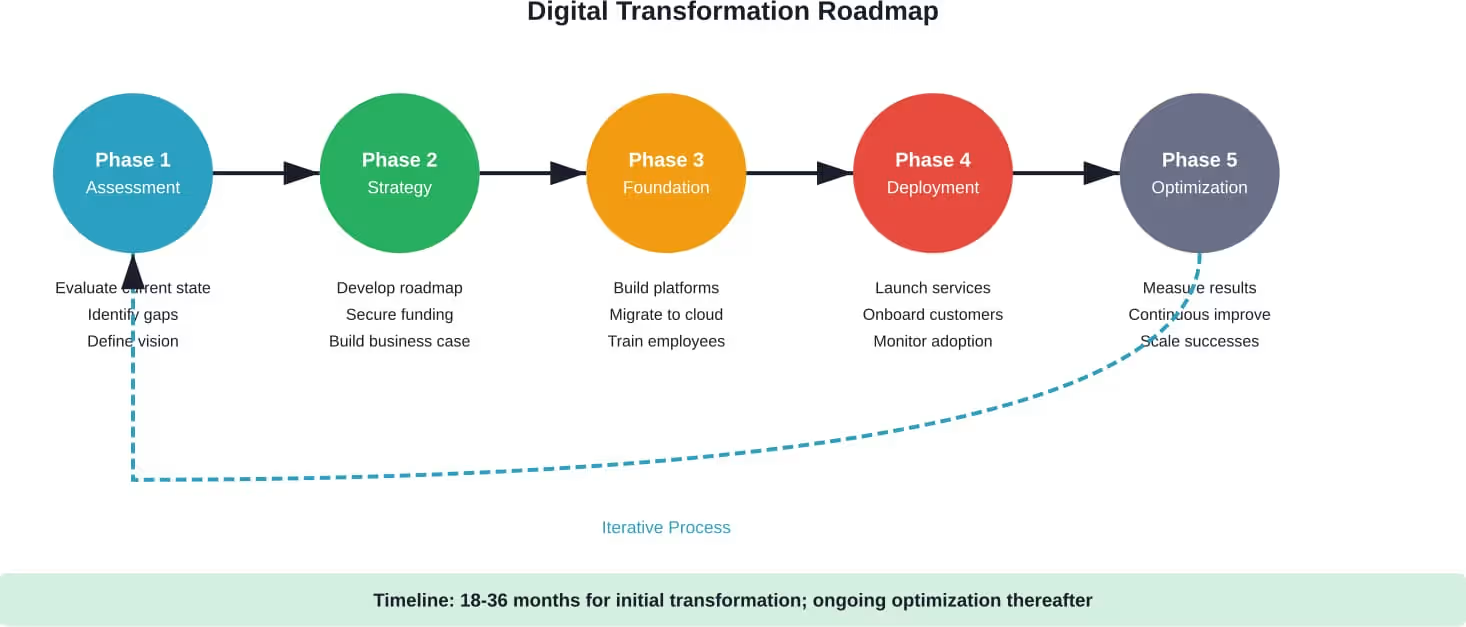
Start with a comprehensive assessment of current capabilities, customer needs, and competitive positioning. Understand which legacy systems create the most constraints, where customers experience the most friction, and what competitors offer that attracts consideration.
Define a clear vision and strategy aligned with business objectives. What does success look like in three to five years? Which customer segments matter most? What capabilities differentiate the bank? The strategy should guide technology investments rather than letting technology drive strategy.
Identify quick wins that deliver visible value within six to twelve months. Mobile app improvements, streamlined loan applications, or enhanced fraud detection can demonstrate transformation benefits while building organizational confidence and momentum.
Build the foundational platform capabilities that enable future innovation. Cloud migration, API development, data consolidation, and security infrastructure create the base for rapid service deployment later. These initiatives require patience since benefits materialize over time.
Invest in people and culture alongside technology. Training programs, organizational restructuring, and leadership communication signal that transformation is serious and permanent, not just another temporary initiative.
Establish governance structures and metrics to track progress. Transformation requires sustained executive attention, clear accountability, and regular course correction based on results and changing conditions.
Moving Forward with Digital Transformation
Digital transformation in banking isn’t optional anymore. Customer expectations, competitive dynamics, technological capabilities, and security requirements have fundamentally shifted the landscape. Traditional institutions that fail to adapt will find themselves losing market share to more agile competitors who understand modern banking is a technology business that happens to be regulated as a financial service.
But transformation done right creates tremendous value. The examples of DBS, Lloyds, and ANZ demonstrate how strategic technology adoption, cultural change, and customer-centric design can rebuild banks for the digital age. These institutions didn’t just digitize existing processes—they reimagined how to create and deliver financial services.
The journey requires sustained leadership commitment, significant investment, patience through inevitable setbacks, and willingness to fundamentally change organizational culture. Technology provides the tools, but strategy, people, and execution capabilities determine success or failure.
Start with clear vision and strategy aligned to business objectives. Build foundational platform capabilities that enable rapid innovation. Focus relentlessly on customer needs rather than technology for its own sake. Invest in employee capabilities and cultural change. Measure progress across multiple dimensions. And maintain robust cybersecurity as the foundation everything else builds on.
The banking industry’s transformation continues to accelerate. Artificial intelligence, embedded finance, and evolving customer expectations will reshape financial services in ways we’re just beginning to understand. Banks that build strong digital foundations and cultivate cultures of continuous innovation will thrive. Those that treat transformation as a one-time project rather than an ongoing journey will struggle.
The question isn’t whether to pursue digital transformation. It’s whether to lead the change or react to competitors who moved faster. Start the journey today, and build the bank customers will choose tomorrow.