

Product marketing used to be mostly about launches. Announce the product, send a few emails, publish a landing page, and hope for the best. That playbook doesn’t work anymore. Today, users move faster, markets shift sooner, and teams don’t get second chances to explain what their product really does.
This is where thoughtful product marketing steps in. It connects research with positioning, and turns raw features into something people instantly understand. A good strategy isn’t loud; it’s clear. It’s the difference between a product people glance at and one they bother to explore.
In this article, we’ll walk through the key strategies teams use in 2026 to stand out – the ones grounded in real behavior, not buzzwords.
Why Product Marketing Matters More Than Ever
The biggest shift today is not the tools. It’s user behavior. People move across channels without thinking about it, compare products faster, and expect clarity almost instantly. They look for what feels relevant, not what is simply available.
Because of this, product marketing is no longer only responsible for the announcement moment. It owns the narrative before, during, and after a launch. It helps the product team understand what customers actually care about. It makes sure the sales team has the right story. And it shapes the product’s role in the market, not just its description.
To simplify it: a good product may create interest, but strong product marketing helps people understand why the product is worth sticking with.
How Lengreo Brings Product Marketing to Life
At Lengreo, we believe product marketing works best when it grows from real user insight instead of assumptions. We spend time understanding how people move through a product, where they pause, and what helps them take the next step. That clarity shapes everything else we do, from positioning and messaging to lead generation and long term demand growth.
Because we work across industries like SaaS, cybersecurity, biotech, and sports tech, we’ve learned how to blend strategy with hands-on execution. Whether it’s SEO, paid campaigns, content, or outreach, we tailor our work to the way your audience behaves rather than forcing a rigid framework. This approach has helped our clients increase acquisition, reduce costs, and generate higher quality opportunities across the full funnel.
We integrate with teams closely, aligning with product, sales, and leadership, and refining the narrative as the market shifts. Our goal is simple: help you communicate value clearly and turn that clarity into measurable growth.
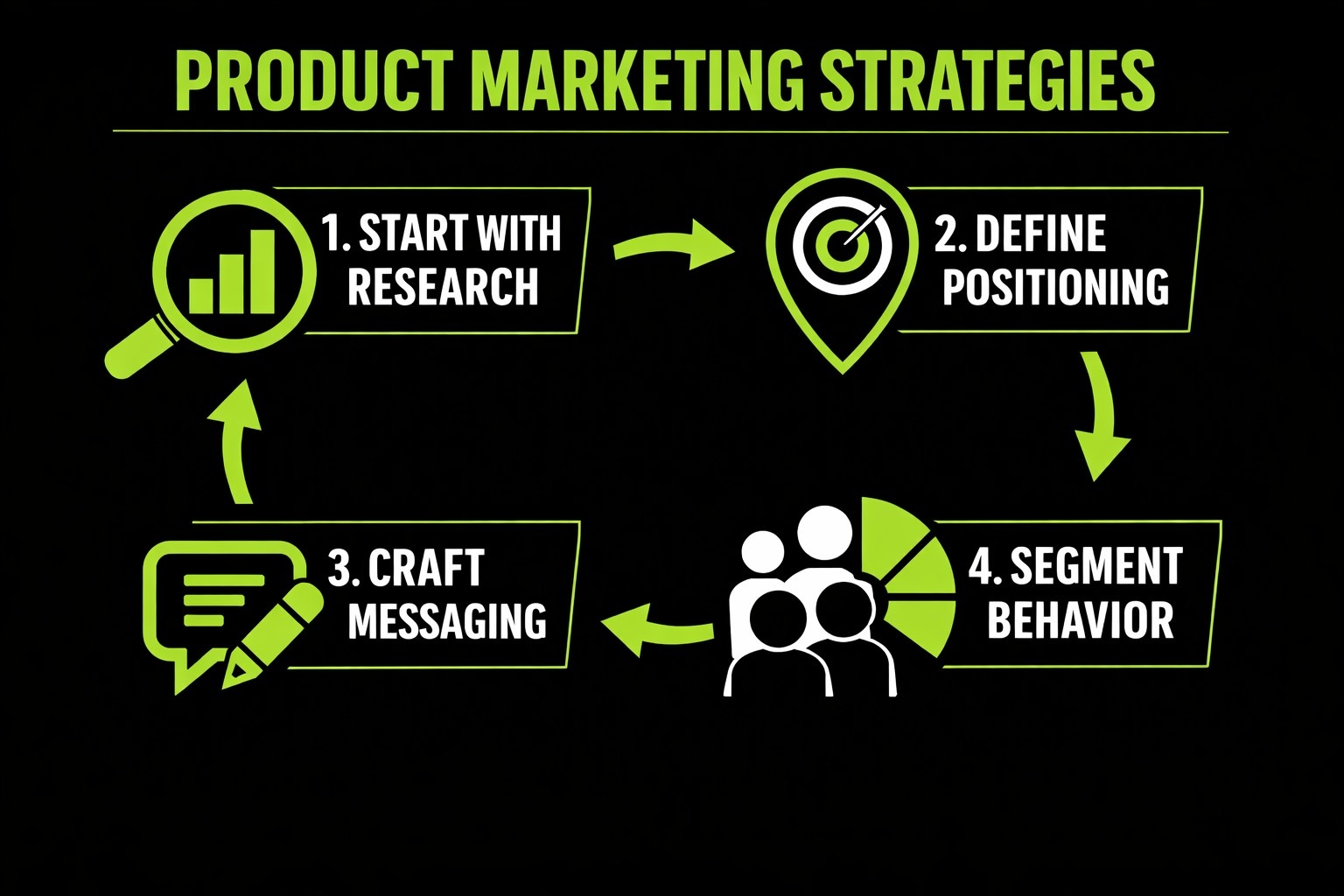
1. Start With Research That Goes Beyond Demographics
Most teams say they know their audience, but in practice, they know surface-level details. Age ranges. Job titles. High-level pain points. That stuff is fine as a starting point, but it rarely helps you create a compelling message.
Real product marketing research goes deeper. It looks at behavior, preferences, expectations, and the small hesitations that stop users from taking the next step. A few hours of direct interviews can reveal more actionable insight than months of dashboards.
The goal is simple: understand what people are actually trying to do, not just who they are on paper.
Methods Worth Using:
- Short customer interviews
- Session recordings
- Support ticket reviews
- Competitor walkthroughs
- Win or loss analysis from sales calls
- Behavioral cohorts (fast activators vs hesitant users)
Instead of aiming for perfect research, aim for consistent insight. Markets change quickly. What was true for your product last year may already be outdated. The strongest PMM teams revisit their research often so they can adapt messaging and positioning before the gap becomes obvious to users.
2. Define Positioning That People Understand Quickly
Positioning is usually treated like a slogan exercise. But real positioning is about claiming a clear space in the customer’s mind. It gives context. It explains why the product exists and why someone should care.
In crowded markets, clarity is what wins. The goal is to state your value in a way that feels obvious to the right audience.
Good positioning answers three questions:
- What category are we in?
- What problem do we solve?
- Why is our approach better or different?
If your positioning takes more than a few seconds to understand, users will guess your value for you. And when they guess, they usually get it wrong.
The tricky part is keeping positioning honest. It should match how people actually use the product, not how we wish they would use it.
3. Craft Messaging That Mirrors How Users Talk
One thing that separates effective product marketing from generic content is the tone. Users respond when the messaging feels familiar. If the copy sounds like a corporate brochure, people tune out.
The easiest way to write better messaging is to use the same language customers use. Listen to how they describe problems in interviews, support chats, Reddit comments, or sales calls. Those words often perform far better than internal terminology.
And remember, messaging is not one layer. It has multiple levels:
- high level value
- key benefits
- differentiators
- product proof
- feature explanations
Many companies jump straight to features. But features only matter when positioned inside a story that makes sense to the audience.
Messaging should be flexible, not static. Update it as you learn more. Test versions during onboarding, ads, sales calls, and landing pages. What works for one segment may fall flat for another.
4. Segment by Behavior, Not Only by Demographics
Traditional segmentation based on demographics or company size doesn’t give enough direction for product marketing. It’s too broad to guide messaging or onboarding effectively.
Behavior is what reveals patterns. Some users research heavily before taking action. Others skim. Some care deeply about pricing. Others focus on speed or convenience. When you understand how different groups behave, you can tailor language, timing, and content much more precisely.
This doesn’t require complicated models. Even simple observations can help you adjust how you introduce the product to each type of user.
5. Build a Story That Guides Everything Else
If positioning is the headline, then your narrative is the full story. It pulls together the context, the problem, and the product’s place in the user’s world. A strong narrative feels familiar. Someone reads it and thinks, “Yes, this is exactly the situation I’m in.”
The story should show how people currently attempt to solve the problem, why those attempts fall short, and how the product helps them make real progress. When this narrative is shared across marketing, product, and sales, the entire company starts speaking with one voice.
This consistency builds trust because users encounter the same logic everywhere.
6. Content That Educates Instead of Explains
Most companies publish content that talks about the product. That’s not what users want. They want guidance. They want someone to help them understand the space, compare options, avoid mistakes, and get the result they care about.
Content that works in 2026 focuses on clarity. It helps the user understand why the category matters before telling them why the product works.
Content Formats That Usually Perform Well:
- comparison guides
- feature spotlights with real examples
- user tutorials
- case studies with measurable results
- objection handling content
- short videos
- interactive demos
- landing pages aligned with specific segments
What matters most is usefulness. The best product marketing content answers the questions people are already asking, not the ones we wish they were asking.
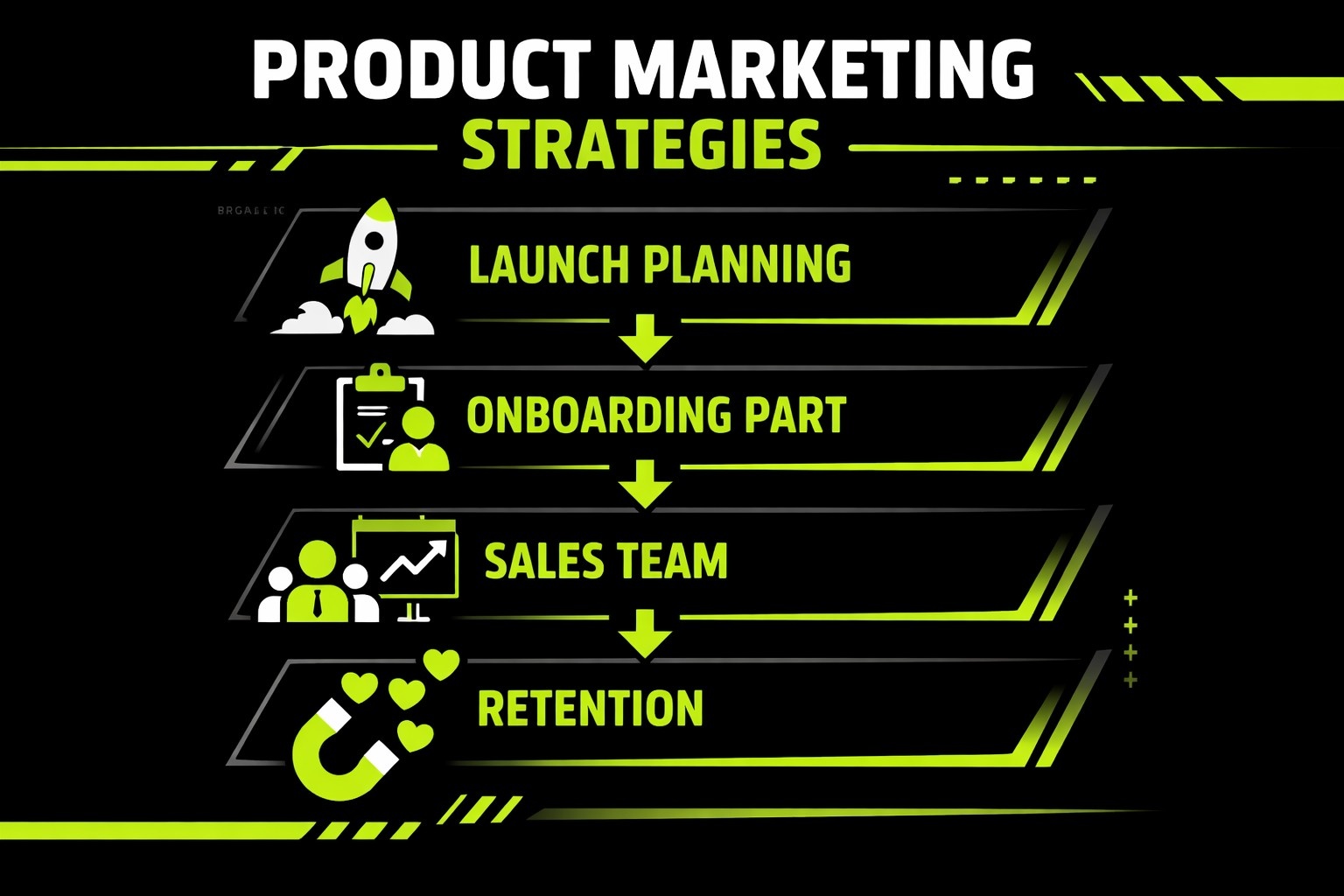
7. Launch Planning That Goes Beyond the Announcement
Launches often get romanticized. Teams put huge energy into the announcement day, and then the enthusiasm evaporates by week two. A smart launch strategy treats the announcement as the midpoint, not the peak.
There are three phases that matter:
1. Pre-launch
This is the stage where you shape the angle of the story, test variations of the messaging, align internally, and quietly warm up the audience. It’s less about hype and more about clarity and preparation. The stronger the groundwork, the easier the actual launch feels.
2. Launch
When launch day arrives, the focus shifts to coordination. The narrative should be crisp, the assets should look intentional, and communication across teams should feel unified. Timing plays a big role here. When everything rolls out in sync, the product appears polished and ready, not rushed.
3. Post-launch
This is where the real work begins. The goal is to reinforce value, clarify anything that created confusion, and pay close attention to how users behave. Early reactions reveal what needs refining. Teams that adjust quickly during this phase maintain momentum far longer than those that simply move on after the announcement.
The most common mistake is assuming success is measured by attention on launch day. In reality, the real test happens in the following weeks. If people understand the product, stick with it, and begin using it in meaningful ways, then the launch truly worked.
8. Make Onboarding Part of Your Marketing Strategy
Onboarding is usually treated as a product responsibility, but it is equally a marketing one. It shapes the user’s first impression and decides whether your messaging feels honest.
If the onboarding experience does not match the promises your marketing makes, users feel misled and drop off.
In 2026, onboarding needs to do three things:
- Set expectations clearly
- Show value quickly
- Guide users toward the next meaningful action
This is where many teams lose momentum. They try to explain everything at once. People don’t need everything. They need direction.
Small nudges, mini missions, short tooltips, and simple progress paths can outperform complicated onboarding flows. The goal is not to teach the entire product on day one. It is to help the user feel progress, even if it is small.
9. Support the Sales Team With Context, Not Just Slides
Sales enablement is not about producing more materials. It’s about giving the team context they can actually use. Sales needs to understand the audience, real objections, and why the product matters right now.
Instead of long decks, give them short explanations of the narrative, competitive angles, and the few proof points that repeatedly influence decisions. Listening to sales calls is one of the most valuable sources of insight for product marketers because it shows where the story is still unclear.
When PMM and sales collaborate closely, leads move through the pipeline with far less friction.
10. Retention is Now Part of Product Marketing
Most attention goes to acquisition, but retention has become one of the real drivers of product success. When people understand the product and feel supported, they stay longer, upgrade more naturally, and generate stronger word of mouth.
Effective retention marketing doesn’t overwhelm users with constant communication. It nudges them at the right moments. It shows them progress, reminds them of value, and offers helpful content exactly when they need it.
This kind of marketing feels more like guidance than promotion, which is why it works so well.
11. Use AI as a Strategic Tool, Not a Shortcut
AI is everywhere now, but how you use it matters. It can help you speed up research, analyze user behavior, personalize messaging, and optimize content, but it cannot replace the intuition that comes from understanding your audience.
Ways AI helps product marketers:
- identifying user patterns
- running quick message tests
- clustering customer segments
- summarizing feedback
- predicting churn
- assisting with content variations
AI becomes powerful when combined with human judgment. It helps you spend time on higher level thinking instead of mechanical tasks. But it cannot replace the subtle insight needed to position a product properly.
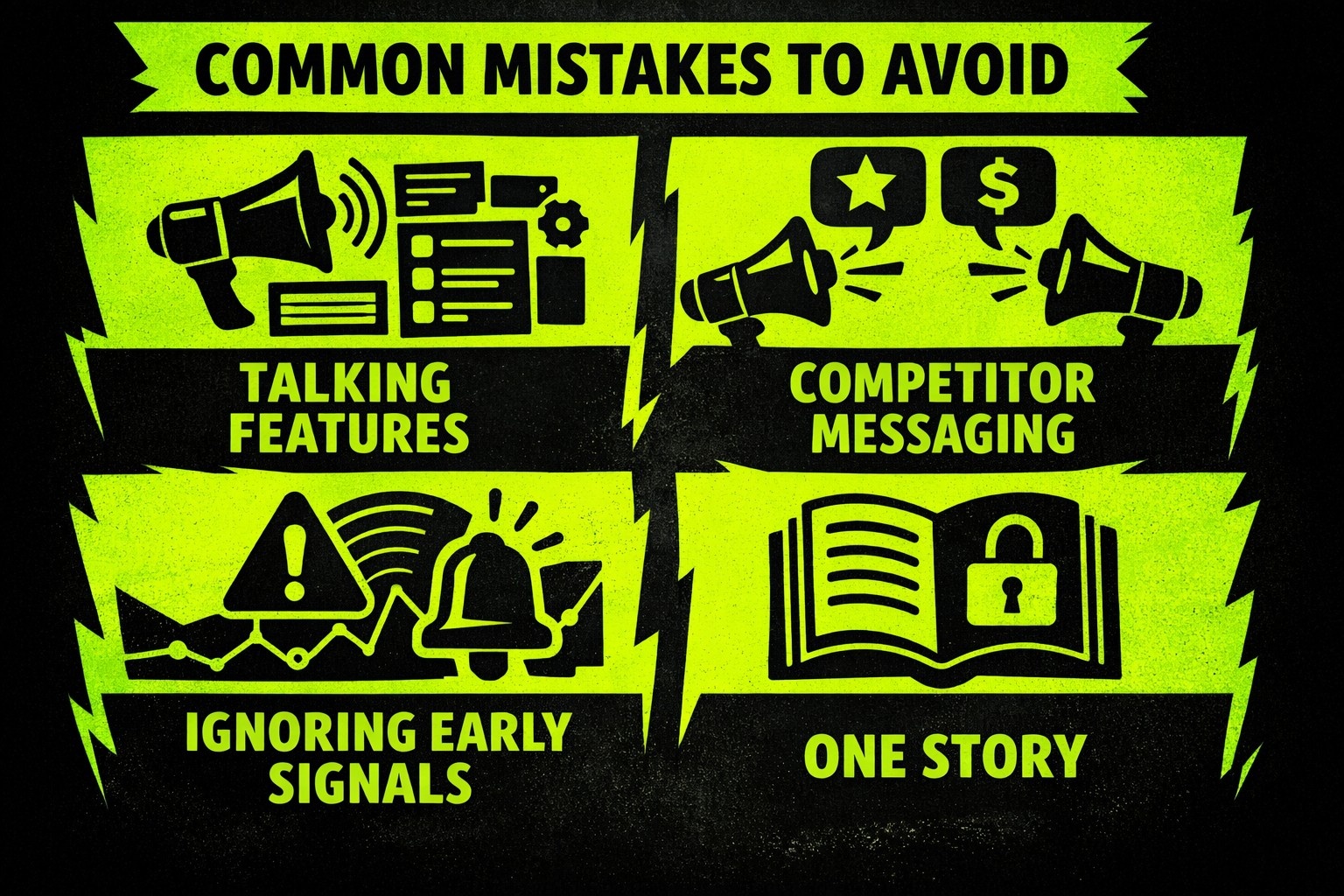
Common Mistakes to Avoid
Even strong product teams fall into familiar traps that create unnecessary friction for users. These mistakes usually happen during busy cycles, rushed launches, or when teams rely too heavily on assumptions.
- Talking only about features: Focusing on features without tying them to real outcomes makes the product sound technical instead of useful. Users want to understand what they can achieve, not just what exists inside the interface.
- Copying competitor messaging: Mirroring the language of other companies blurs identity. It makes the product feel generic and forces customers to guess how you’re actually different.
- Ignoring early user signals: Early users reveal what is confusing, what feels valuable, and where the message falls apart. When those signals are ignored, the product drifts away from real needs.
- Using one story for everyone: A single narrative rarely fits all audiences. Different segments care about different things, so relying on one message forces many users to work harder to understand your value.
- Over explaining instead of guiding: When teams feel unsure, they add more words. More explanations. More screens. But clarity usually comes from direction, not volume.
- Launching without internal alignment: If product, sales, and marketing are not synced, users receive mixed messages. A launch only works when the entire company tells one coherent story.
- Treating onboarding like a checklist: A long list of steps or tutorials overwhelms people. Onboarding works best when it helps users take one meaningful action instead of walking them through every corner of the product.
Product marketing works best when it removes friction, not adds to it. The more clearly people understand the value, the faster they adopt and the longer they stay.
Conclusion: Product Marketing Is a Long Game
Great product marketing strategies rarely come from big, dramatic moves. They come from consistent clarity. From understanding users better than competitors do. From refining the story until it clicks. From making the product easier to trust. And from guiding people forward, not just attracting their attention.
In 2026, the teams that win are the ones that stay close to the customer, adapt quickly, and make the product feel intuitive. They treat marketing not as a loudspeaker, but as a bridge between what people need and what the product can help them achieve.
If your strategy does that, everything else becomes easier.