

Nonprofit marketing operates under constraints that most commercial marketers never face. Limited budgets, small teams, and the need to inspire action rather than close sales force organizations to be deliberate about every decision. The strategies that work best share one common trait: they treat marketing as a system, not a series of one-off campaigns.
Strategy Basics: Knowing Your Audience and Your Objectives
Every effective nonprofit marketing strategy starts with two non-negotiable elements: clearly defined goals and a precise understanding of the audience.
Organizations that skip this step waste resources on channels and messages that feel busy but deliver little impact. Goals must be specific enough to guide daily work and measurable enough to prove value to boards and funders. Common objectives include increasing recurring donations, growing volunteer registration, improving event attendance, or expanding email list size.
When to Consider External Marketing Partners
At Lengreo, we focus on B2B digital marketing, SEO, website development, and lead generation for commercial clients in industries like software development, IT, biotech, and cyber security. Our work centers on helping businesses scale through data-driven strategies, but we do not currently offer services tailored to nonprofits or mission-driven organizations.
If you’re a nonprofit seeking marketing support, consider agencies that specialize in the sector, as our expertise is strictly in B2B commercial applications without adaptation for charitable or impact-focused work. This ensures organizations get partners aligned with their specific needs rather than generalized approaches.
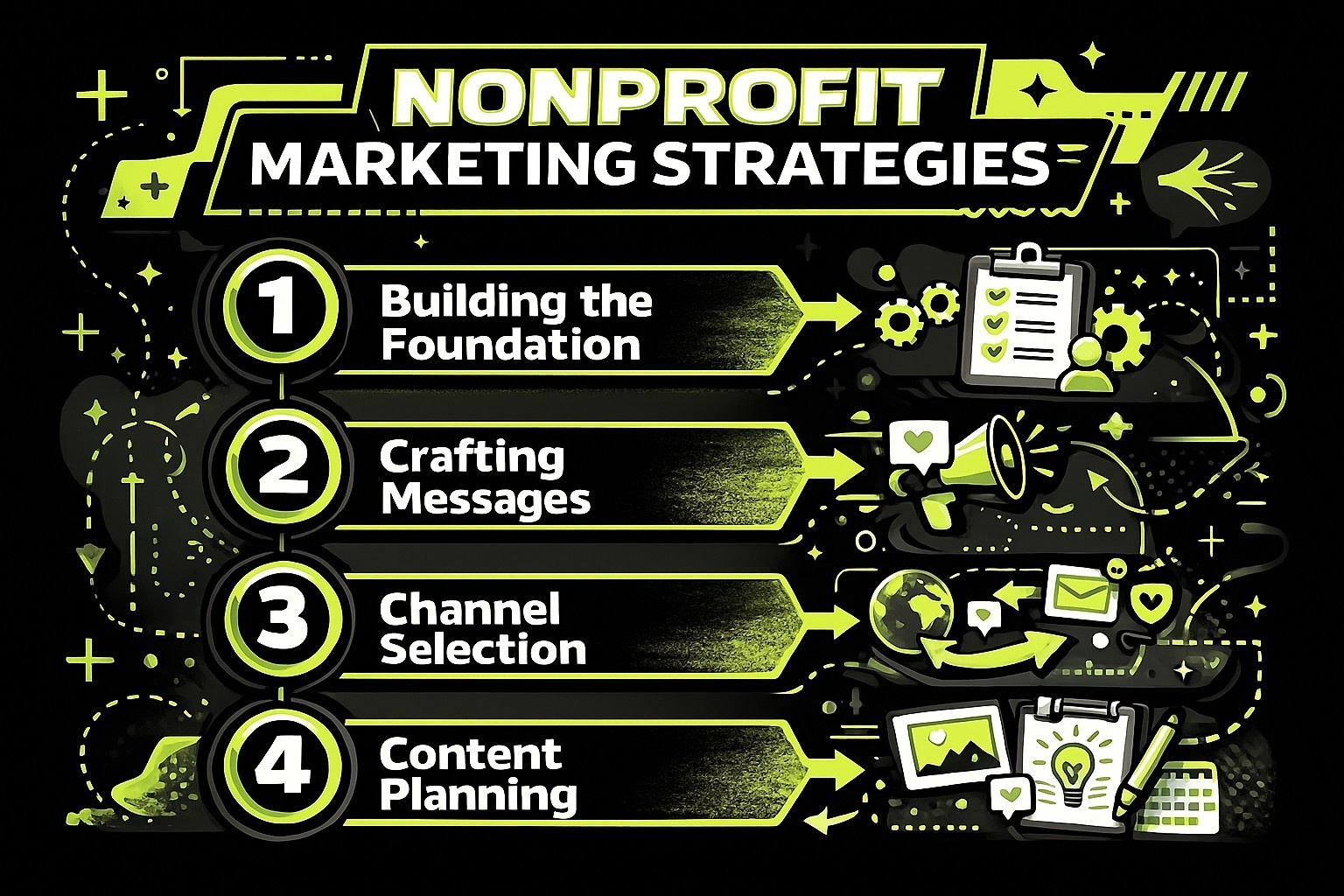
1. Building the Foundation: Goals and Audience Clarity
Audience definition goes beyond basic demographics. Successful teams create separate profiles for distinct supporter types: one-time donors, monthly givers, major donor prospects, corporate partners, volunteers, and program beneficiaries. Each group responds to different triggers and prefers different communication channels. Mapping these differences early prevents the common mistake of sending the same message to everyone.
Turning Data into Personas
Personas built from actual donor and volunteer data outperform generic assumptions. Teams collect insights from CRM records, past campaign responses, website behavior, and direct feedback. The resulting profiles include preferred communication methods, giving capacity, motivation triggers, and typical objections. These documents then inform every piece of content and every channel decision.
2. Crafting Messages That Resonate
Nonprofit messaging must achieve two things simultaneously: communicate the problem being solved and make the supporter the hero of the solution.
The most effective messages focus on impact already achieved rather than needs alone. Donors and volunteers want evidence that their involvement creates change. This requires consistent language about outcomes across all materials, from social posts to grant proposals.
Brand consistency extends to tone and visual identity. Organizations that maintain unified fonts, colors, and voice across platforms build recognition faster and appear more professional to potential supporters.
Storytelling as the Core Discipline
Stories remain the primary currency of nonprofit marketing. The structure stays simple: introduce a real person or community affected by the issue, describe the challenge, show how the organization’s work creates change, and invite the audience to participate in that change. This framework works in email appeals, social videos, grant applications, and direct mail pieces.
3. Channel Selection and Prioritization
Not every channel deserves equal attention. The highest-performing nonprofit marketing strategies concentrate effort on three to five channels where target audiences already spend time.
Email consistently delivers the strongest return for relationship building and direct appeals. Social platforms excel at awareness and community engagement but require different content approaches for each network. Websites serve as the central hub and must optimize for both search engines and mobile users.
Digital Advertising Options
Google Ad Grants provide significant search visibility for eligible organizations. When combined with well-optimized landing pages, these grants drive targeted traffic to donation forms, event registrations, and volunteer signups. Paid social advertising works effectively for event promotion and reaching new audience segments similar to existing supporters.
Traditional channels still matter for specific audiences. Direct mail retains value for major donor cultivation and older demographics. Text messaging delivers urgent updates and time-sensitive appeals with exceptionally high open rates.
4. Content Planning and Calendar Management
Consistency separates professional nonprofit marketing from amateur efforts. A documented content calendar ensures regular communication across chosen channels without last-minute scrambling.
The calendar aligns content themes with organizational priorities: program updates, impact reporting, volunteer recognition, upcoming events, and seasonal giving moments. Responsibilities get assigned in advance, preventing bottlenecks when multiple deadlines converge.
Content Types That Perform
Certain formats reliably drive engagement:
- Impact reports showing specific outcomes from previous support
- Behind-the-scenes updates from programs and staff
- Beneficiary or volunteer stories in their own words
- Educational pieces about the issue the organization addresses
- Clear explanations of how different giving levels create change
Teams that prioritize these content categories see higher open rates, longer time on site, and stronger conversion numbers. Impact reports and personal stories consistently outperform generic appeals because they provide concrete evidence of change while creating emotional connection. Educational content positions the organization as a trusted authority and improves search rankings when optimized properly. Giving-level explanations reduce donor hesitation by making the path from contribution to outcome completely transparent. Repurposing extends the life of each asset. A single beneficiary interview becomes an email feature, three social posts, a blog article, and printed material for events. This approach maximizes return on the time invested in creating high-quality original material while maintaining message consistency across all channels.
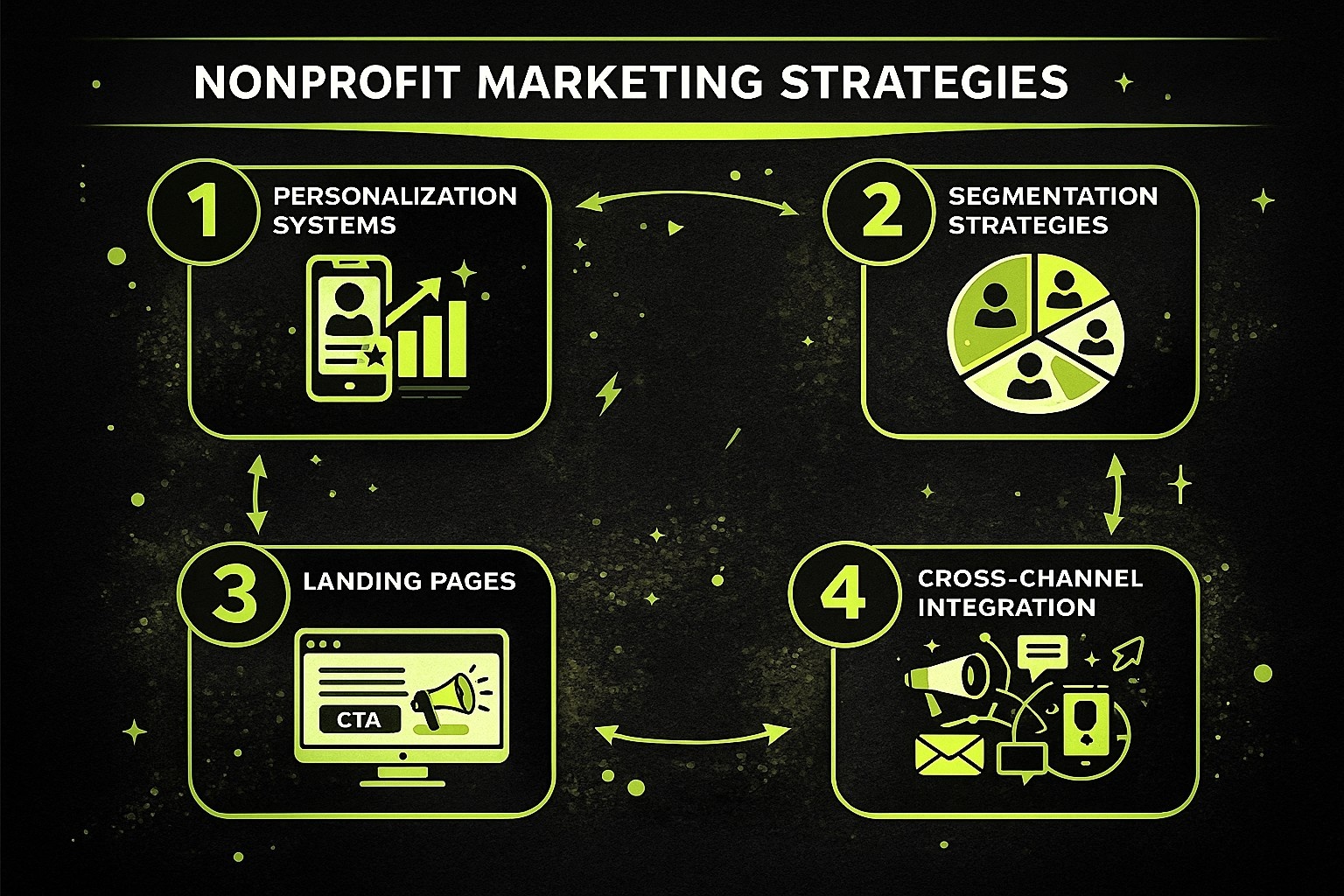
5. Automation and Personalization Systems
Marketing automation removes repetitive tasks and enables scale that would otherwise require additional staff.
Welcome series greet new subscribers and set expectations for future communication. Re-engagement campaigns bring lapsed donors back into the fold. Event sequences handle registration confirmations, reminders, and post-event follow-up automatically. Behavioral triggers send targeted messages when supporters take specific actions like visiting the donation page without completing a gift.
The real power of automation appears when these flows run without constant oversight yet still feel personal to the recipient. Organizations that map supporter journeys in advance avoid the common trap of sending generic blasts that erode trust. Instead, every automated message arrives because of a specific action or timing trigger, which dramatically improves both open rates and long-term retention.
6. Segmentation Strategies
Effective segmentation starts simple and grows more sophisticated over time:
- New vs returning supporters
- Giving frequency and recency
- Average gift amount ranges
- Engagement level with emails and events
- Program or campaign interests
Personalization extends beyond using first names. Messages reference past giving history, preferred programs, or previous volunteer service when relevant.
Segmentation done properly turns a single database into multiple distinct audiences that receive only content matching their relationship with the organization. This precision prevents supporter fatigue from irrelevant messaging and protects deliverability by keeping engagement scores high. Over time, the data gathered from segmented campaigns becomes the foundation for even sharper future targeting.
7. Landing Pages and Conversion Optimization
General websites rarely convert well for specific actions. Dedicated landing pages remove navigation distractions and focus visitors on one objective: donating, registering, signing a petition, or volunteering.
High-converting pages share common elements. Clear headlines state the purpose immediately. Compelling visuals reinforce the message. Social proof through testimonials or impact statistics builds credibility. Forms stay short and mobile-friendly. Thank-you pages deliver instant confirmation and suggest next steps.
A focused landing page typically converts at rates several times higher than the main website because every element serves the single conversion goal. Testing different headlines, images, and form lengths reveals which variations resonate most with each audience segment. These insights then inform broader campaign design and reduce wasted traffic across all channels.
8. Cross-Channel Integration
The strongest nonprofit marketing strategies create seamless experiences across touchpoints.
A social media post drives traffic to a landing page. The landing page captures email addresses. New subscribers enter an automated welcome series. The welcome series references the original social post and invites further action. Each channel reinforces the others rather than operating in isolation.
Integration also applies to data flow. Information collected through forms syncs immediately to the CRM. Email engagement data updates donor records. All teams work from the same supporter profiles.
When channels function as a connected system, supporters experience consistent messaging regardless of where they engage. This coherence builds trust faster than fragmented efforts ever can. More importantly, the unified data layer enables accurate attribution and eliminates silos that typically form between fundraising, programs, and communications teams.
Conclusion
Nonprofit marketing succeeds when organizations treat limited resources as a focusing mechanism rather than a limitation. The difference between scattered activity and strategic impact comes down to deliberate choices about goals, audience understanding, message clarity, channel focus, and consistent execution.
Teams that document their strategy, measure results religiously, and adjust based on data gradually compound small advantages into significant growth. The process requires discipline more than budget, systemization more than creativity alone, and patience more than quick wins.