

Construction has always been a competitive space, but the way clients choose contractors has changed. People don’t just look at price anymore. They look at your online presence, your past work, your credibility, and even how quickly you respond.
That means your marketing has to work harder than a few photos on a website or a dusty portfolio in the office. It needs to show who you are, why you’re reliable, and what makes your projects worth choosing.
In this guide, we’ll walk through practical strategies that help construction companies get noticed, earn trust, and turn more opportunities into signed contracts.
What Is Construction Marketing?
Construction marketing is about more than just getting your name out there. It’s the combination of tools, messaging, and touchpoints that help potential clients understand what you do, why you’re the right fit, and how to take the next step. For some companies, it’s about winning bigger bids. For others, it’s simply about staying top-of-mind in a crowded local market.
What makes construction marketing a bit different from other industries is that trust matters more than flash. Most clients are making high-stakes decisions – on budgets, timelines, and quality. They’re not looking for gimmicks. They’re looking for proof: photos, process, reviews, responsiveness.
Therefore, you need more than a few surface-level tactics. You need a real system that works across platforms and across time.
How We Help Construction Companies Market Smarter
At Lengreo, we’ve seen how easily construction companies get overlooked – not because they lack experience or quality work, but because they haven’t built the kind of digital presence that speaks to the right audience. That’s where we come in. We help businesses move beyond guesswork and build a marketing strategy that actually fits how their clients search, choose, and engage.
We’re not handing over a generic playbook. We dive into what makes your work different, who you’re trying to reach, and how to show up where it counts – whether that’s through local SEO, targeted outreach, or a website that finally feels like it represents the quality you deliver on site. Our job is to connect you with the people you need and make it easier for them to say yes.
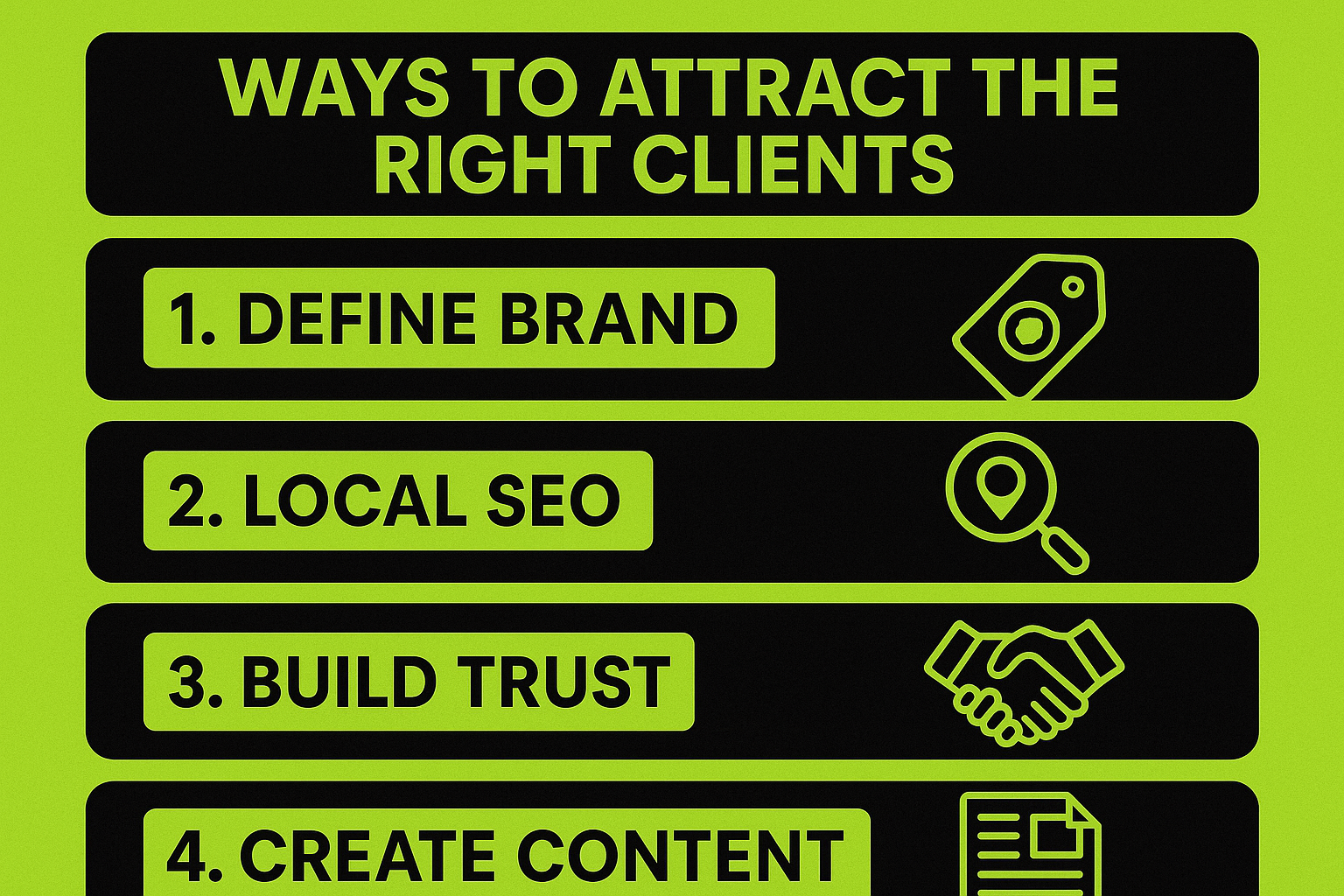
11 Ways to Attract the Right Clients and Keep Them
This section walks you through 11 practical, proven marketing plays that help you do just that. Some will feel familiar. Others might be things you’ve meant to try but never got around to. Together, they form an approach that covers visibility, credibility, outreach, and long-term growth.
1. Start with Clarity: Define Your Brand and Buyer
Before diving into SEO or video campaigns, take a step back. Who are you trying to reach, and what makes you different? If your answer is “we build great stuff,” join the club – so does everyone else. What clients care about is whether you understand their needs and can deliver what they want, on time and within budget.
Start here:
- Define your core services. Are you residential, commercial, infrastructure? New builds or renovations?
- Identify your niche. Maybe it’s eco-friendly builds, industrial fit-outs, or high-end custom homes.
- Build client personas. What keeps your ideal client up at night? Is it project delays? Permits? Cost control?
- Develop a voice. Make sure your tone and messaging match the people you want to work with.
Strong branding isn’t just for the big firms. Even small construction companies can build trust and recognition by showing consistency across everything from their website to their truck decals.
2. Be Found Locally: Nail Your Local SEO
Most construction clients start their search with location in mind. They’re not just looking for someone who does the work – they’re looking for someone nearby who feels accessible and trusted. That’s why local SEO isn’t something you can afford to ignore. If your business doesn’t show up when people in your area search for services you offer, you’re leaving work on the table.
To improve visibility, make sure your online presence is complete and up to date. Your business profile should reflect your actual service area, include real photos, and be updated regularly. It also helps to keep your name, address, and contact details consistent across every platform where you’re listed. On your website, it’s smart to include local search terms that people actually use.
Local SEO might take a little time to build momentum, but once it starts working, it can put you ahead of even the bigger players who don’t have that neighborhood relevance.
3. Build Trust Through Your Website
Think of your website as your 24/7 project manager. It introduces your team, shows your work, answers questions, and guides visitors toward contacting you. If your site looks outdated or loads slowly, people will bounce.
What matters most:
- Mobile design. Most visitors come from phones, so test your site on multiple devices.
- Portfolio pages with real, high-res photos. Before-and-after shots are gold.
- Clear calls-to-action like “Request a Quote” or “Book a Consultation.”
- Pages that load fast and make navigation intuitive.
Also, make sure it speaks to your actual client – not just what you want to say, but what they need to know. Think timelines, process, safety, warranties, permits.
4. Create Content That Pulls Clients In
Content has a way of working quietly in the background, pulling in the right clients even when you’re off the clock. A thoughtful blog or article can answer the questions people are already searching for, helping them feel more confident before they ever reach out.
Whether it’s walking someone through timelines, permits, or the pros and cons of certain materials, the goal is to be useful before being promotional. Real-world case studies can go a long way too, especially when they show the full story – not just the glossy results, but the challenges you solved along the way.
If you’re using tools or tech that make your projects run smoother or faster, talk about it in plain language. Skip the buzzwords. Just explain how it helps your clients get better outcomes. That’s what builds trust and keeps your content working for you over time.
5. Use Video and Let People See How You Work
In construction, visuals matter. And nothing tells your story better than video. It’s not about slick production – it’s about showing real work, real people, and real results.
Ideas that work:
- Time-lapse videos of your builds.
- Drone footage of finished projects.
- Walkthroughs with your project manager or site supervisor.
- Quick explainers of processes.
These videos can go on your site, social media, and in email campaigns. They show your professionalism before a client ever meets you.
6. Make Social Media Work Without It Feeling Like a Job
No, you don’t need to post every day. But a steady, thoughtful presence on platforms like LinkedIn, Facebook, or Instagram can do more than you think, especially for local visibility and B2B credibility.
Here’s how to make it useful: sharing project updates and behind-the-scenes moments, introducing team members or showcase subcontractor partnerships, or reusing blog and video content in short-form snippets.
Use some networks to connect with developers, architects, and commercial leads. Use others for residential work. You don’t have to go viral – you just have to stay visible.

7. Involve Paid Ads That Target the Right Clients
SEO and content are great long-term plays. But if you need leads now, pay-per-click (PPC) ads can get you in front of high-intent searchers fans, especially those looking for services in your area.
PPC can be a powerful tool when used with intention. By focusing on the right search terms, you can reach people who are actively looking for exactly what you offer. Showing up at the top of search results with a trusted badge adds credibility right out of the gate, making potential clients more likely to click. And when someone visits your site but isn’t quite ready to commit, reminder ads help keep your business in their view until they’re ready to take the next step.
The trick is knowing what to spend and who to target. Start small, test often, and refine based on results.
8. Email: Stay on the Radar Without Being Annoying
Most people aren’t ready to hire a contractor the day they visit your site. But if you collect emails and keep in touch the right way, you’ll be top-of-mind when they are.
Tips for email marketing:
- Offer a helpful download like in exchange for an email.
- Send a monthly update with project photos, team news, or quick tips.
- Highlight client stories or case studies.
- Don’t oversell – stay helpful, relevant, and brief.
This is one of the most cost-effective ways to nurture leads over time, especially in B2B construction.
9. Leverage Reviews Like They’re Referrals
Reviews are the new word of mouth. Before someone hires you, they’ll scan what past clients have said, and if they don’t see much, they’ll keep scrolling.
Reviews should be a natural part of how you wrap up a project. The best time to ask for feedback is right after everything’s done and the client’s happy. Make it easy by sending them a direct link to leave a review on the platform that matters most to your business.
When you get great feedback, don’t just let it sit there – feature it on your website or share it through your social channels to build trust with new clients. And if a review isn’t glowing, respond calmly and professionally. How you handle criticism says a lot about your company.
One well-written review can do more than a whole ad campaign.
10. Strategic Partnerships Can Open New Doors
You don’t have to do all the marketing yourself. The right partnerships can send warm leads your way while adding value to your services.
Ideas to explore:
- Team up with architects, interior designers, or real estate agents.
- Build referral relationships with suppliers, inspectors, or property managers.
- Collaborate on joint content or sponsor local industry events together.
These alliances help expand your reach without doubling your effort.
11. Make Data Your Feedback Loop
It’s easy to spend money on marketing. It’s harder to know what’s working. That’s why tracking and analyzing your efforts isn’t just helpful – it’s essential.
Metrics worth watching:
- Website traffic and which pages keep people engaged.
- How many leads come from search, ads, or referrals.
- Quote request form completions.
- Email open rates and link clicks.
- Keyword rankings for core services.
Use tools to spot patterns and adjust. Marketing without data is like building without blueprints.
To Sum Up: Good Marketing Feels Like Good Communication
At the end of the day, marketing in construction isn’t about flashy campaigns. It’s about clear, consistent communication – showing potential clients who you are, how you work, and why they can trust you.
Start with what feels manageable. Pick two or three areas from this guide and build from there. With the right approach, your marketing won’t just support your business – it’ll help grow it.