Omnichannel marketing isn’t about showing up everywhere – it’s about showing up coherently. Customers jump between devices, platforms, and real-world spaces without thinking twice. If your brand can’t keep up with that fluid journey, you’re probably leaving both revenue and trust on the table.
This guide is for teams ready to move past disconnected campaigns and start building real continuity. We’ll unpack the strategies that help businesses sync their channels, personalize at scale, and create customer experiences that actually feel seamless, because that’s what people expect now. Not more noise, just better flow.
What Omnichannel Marketing Really Means (And What It Doesn’t)
Let’s clear this up first: omnichannel is not just being present in more than one place. That’s multichannel. With omnichannel, it’s not just about presence – it’s about integration. The channels talk to each other. The experience feels connected. And the customer doesn’t have to start from scratch every time they switch devices or locations.
For example, someone might browse your product on their phone, get a reminder via email, pick it up in-store, and reach out to support later. If each of those steps feels like dealing with a different company, that’s a failure. In contrast, a true omnichannel approach ensures that the context carries over from one channel to another, messaging and tone stay consistent, and the backend systems (like inventory or support tickets) are synced. That’s what separates omnichannel from just “having a lot of marketing channels.”
How We Approach Omnichannel Strategy at Lengreo
At Lengreo, we don’t treat omnichannel marketing as a trend or a checklist. For us, it’s the foundation of how we help businesses grow in real-world conditions. We work with companies that operate in complex markets – B2B, SaaS, biotech, fintech, cybersecurity, and beyond – where disconnected efforts can stall momentum fast. That’s why we build every strategy around real alignment: one message, one experience, across every touchpoint.
Whether we’re running LinkedIn outreach for a software firm or managing SEO and paid campaigns for a global tech client, we focus on connecting the dots. Our team doesn’t just launch isolated campaigns – we integrate into your marketing structure, sync with your goals, and act like an extension of your own crew. That way, when your customer moves from email to landing page to sales call, the experience doesn’t fall apart. It moves forward.
10 Omnichannel Strategies That Actually Work
Below are 10 practical strategies that can help you move from scattered channels to a unified customer journey. Whether you’re just getting started or refining an existing approach, these tactics are built to create alignment, reduce friction, and make your marketing feel a whole lot more human.
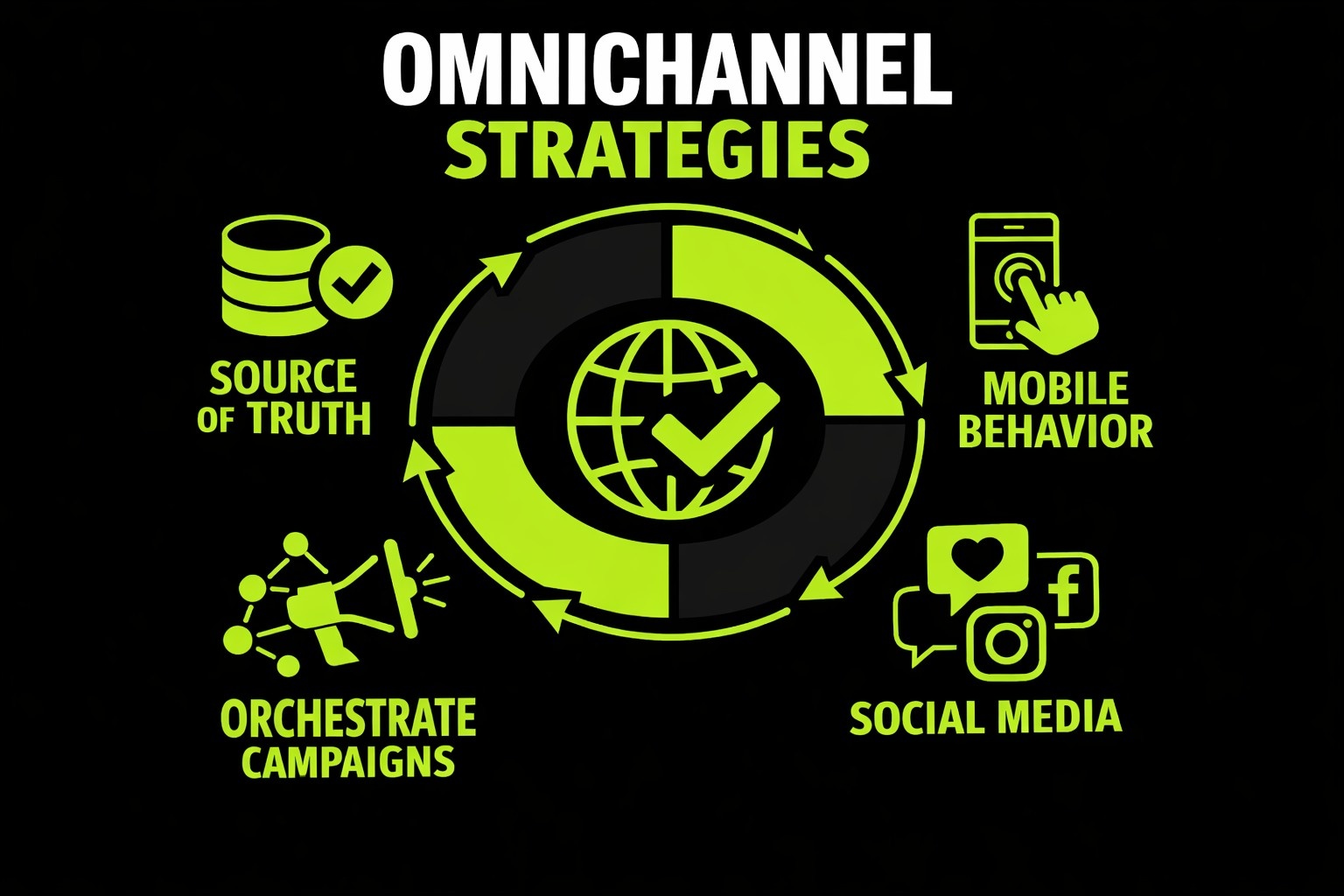
1. Start With a Single Source of Truth: Unified Customer Data
If your data lives in silos, your customer experience will feel just as fragmented. That’s why every good omnichannel strategy starts with unifying customer data.
What this means in practice:
- Pull in behavior from websites, apps, emails, ads, support chats, and in-store purchases.
- Consolidate it into one profile per customer.
- Keep that data updated in real time.
- Make it accessible to both marketing and customer-facing teams.
This kind of visibility lets you build real context. Someone abandons a cart on mobile? You can follow up by email. They talked to support last week? Sales can see that history before they reach out.
No guesswork. No repetition. Just clarity.
2. Design With Mobile Behavior in Mind
People shop on their phones now – it’s not a maybe, it’s a given. They scroll, compare options, read reviews, and make purchases all from the palm of their hand. So if your mobile experience still feels like a stripped-down version of your desktop site, you’re losing people before they even get to checkout.
Mobile-first design isn’t just about shrinking content to fit a smaller screen. It’s about building for mobile from the start. Sites that take more than three seconds to load see 53% of mobile visitors abandon them. It also means designing layouts that are easy to navigate with thumbs, making buttons and forms tap-friendly, and offering one-click checkout options that don’t require a magnifying glass.
Mobile users also expect seamless payments, so supporting wallets like Apple Pay or Google Pay isn’t optional anymore. And your emails and text messages? They need to look sharp and work perfectly on mobile too.
3. Remember That Social Media Isn’t Just Top-of-Funnel Anymore
For years, brands treated social media like a billboard – great for awareness, maybe some engagement, but not where conversions happen. That’s changed.
Platforms like Instagram, TikTok, and Facebook now allow for full in-app purchases, not just click-throughs.
To make your social channels part of your omnichannel strategy:
- Use shoppable posts so users can buy without leaving the app.
- Keep product details and pricing synced with your ecommerce site.
- Include customer support access directly through social media.
- Maintain consistent brand tone (don’t be cheeky on TikTok and robotic in emails).
Treat social media like a real sales channel, not just a way to get noticed.
4. Orchestrate Campaigns That Actually Flow
An omnichannel campaign isn’t just about blasting the same message across every platform. It’s about timing, relevance, and knowing how to use each channel for what it does best. Think of a shopper who spots your product in a social ad, clicks through to browse but doesn’t buy, then receives a personalized email the next day. Maybe they get an SMS a few hours later with a limited-time offer, and that’s what nudges them to come back and complete the purchase. That’s not random, it’s an intentional, well-paced sequence. And it works.
To build campaigns that flow like that, you need to start by mapping out your customer journeys in advance. Automation can help you respond in real time based on how someone interacts with your brand. It’s also worth testing not just what you send, but how it performs across different platforms. A coordinated mix of touchpoints – email, SMS, social, maybe even a retargeted ad – can boost your chances of converting, as long as everything feels like part of the same story. The tone needs to stay consistent too. If your social ad is witty and casual, but your email follow-up sounds like a legal disclaimer, the experience breaks down. Keep it connected, and keep it human.
5. Blur the Line Between Online and Offline
Customers don’t distinguish between digital and in-store experiences. So your marketing shouldn’t either.
If you’ve got a physical presence, integrate it:
- Offer BOPIS (Buy Online, Pick Up In-Store).
- Let customers return online purchases in-store.
- Sync loyalty rewards across channels.
- Equip in-store staff with access to customers’ digital profiles.
Even if you’re fully digital, think about how to make your experience feel grounded. For example, offering a live support call at checkout can be your version of an in-store sales rep.
6. Personalize Like You Actually Know Them
Generics aren’t just ineffective. It’s annoying. And today’s shoppers are used to being known. If you have the data but don’t use it well, it shows.
Good omnichannel personalization means:
- Sending product recommendations based on browsing or purchase history.
- Adjusting messaging based on device or location.
- Using abandoned cart triggers, but adding timing or incentive logic.
- Offering support that picks up where the last interaction left off.
AI tools can help here, especially for scaling recommendations or adapting tone by channel. But personalization only works when it’s accurate and timely – otherwise, it comes off as tone-deaf.
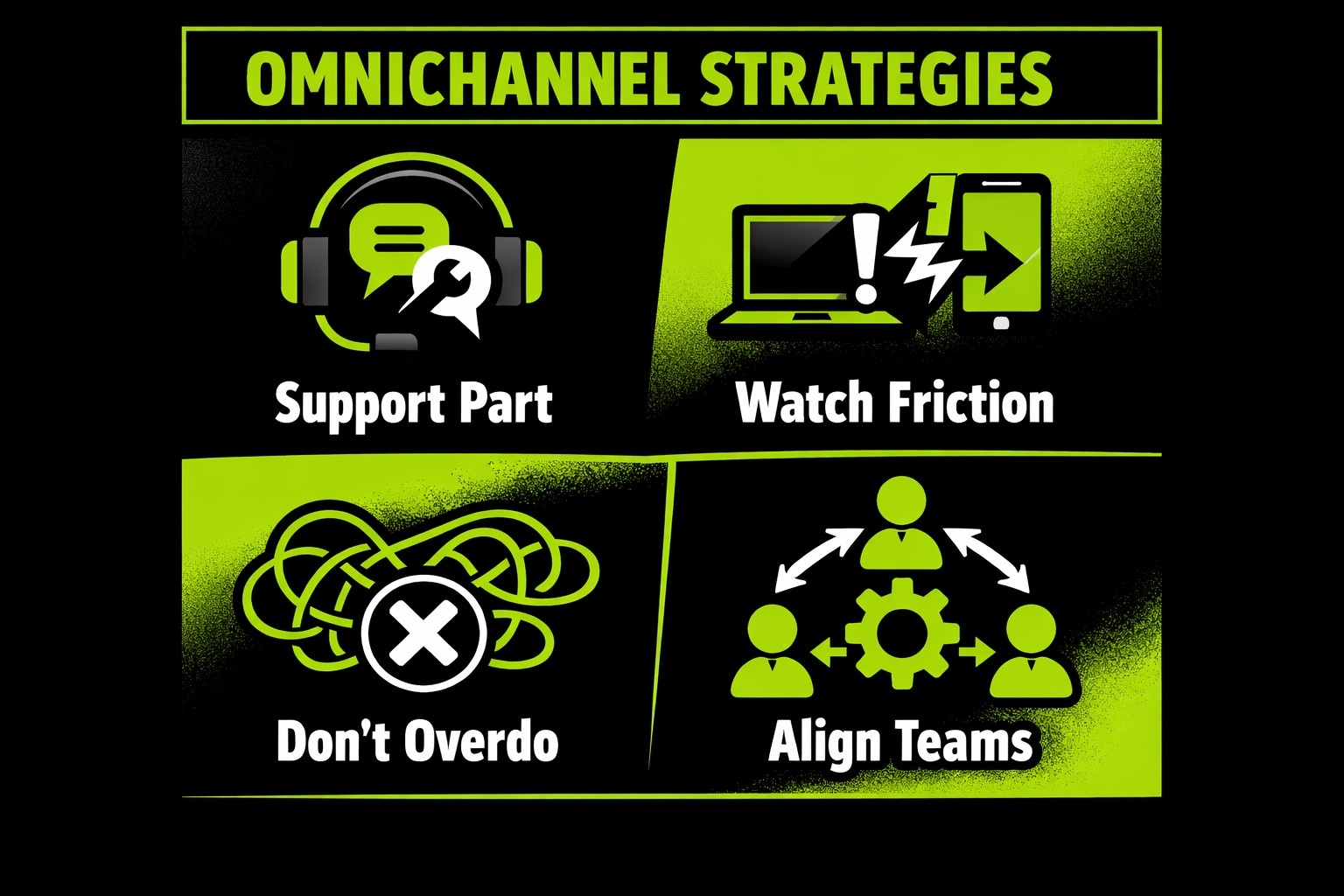
7. Make Support Part of the Experience
Support isn’t some separate function tucked away from the rest of your marketing. It’s part of the overall experience, and when it’s done right, it feels like a natural continuation of the journey, not a detour. If a customer has to explain their issue over and over again just because they switched from chat to email or picked up the phone, that’s not omnichannel. That’s just frustrating.
In a seamless setup, support can begin with a chatbot and then move fluidly to a live agent without the customer having to start from scratch. Whoever picks up the conversation already has the full context – what the customer browsed, what they bought, what they said earlier. The tone stays consistent, and the resolution feels smooth no matter which platform they’re on. To make that possible, you need tools that bring everything into one place – chat, email, tickets, phone logs – all visible to your team in real time. That’s how support becomes not just helpful, but part of the brand experience.
8. Watch for Friction, Then Fix It
A smart omnichannel strategy isn’t set-and-forget. It evolves. And the best way to improve it is by tracking where things break down.
Look for:
- Abandoned carts after certain steps.
- Drop-off rates on mobile vs desktop.
- Inconsistent product info across platforms.
- Customer complaints about slow responses or mixed messaging.
Use those signals to tighten the gaps. Sometimes, it’s a tech issue. Other times, it’s a process. Either way, omnichannel is a living system. It needs tuning.
9. Don’t Overdo It With Channels
One of the biggest traps in omnichannel marketing is assuming it means being on every channel out there. It doesn’t. Trying to show up everywhere just to check boxes spreads your team too thin and often leads to sloppy, inconsistent experiences.
What really matters is focusing on the platforms your customers actually use. It’s better to do a few things well than to be mediocre across the board. Consistency and quality always beat quantity. And when you do expand, it should be because your team and systems are ready to support that growth, not because you feel pressured to keep up.
Not every channel is a fit for every brand. WhatsApp might be essential in Europe, LinkedIn is more effective for B2B, and TikTok isn’t the right move for every industry. That’s okay. Omnichannel isn’t about being everywhere. It’s about being present where it matters most.
10. Align Your Teams (Or You’ll Undermine Everything)
If your social team is running one playbook and your email team is doing something else entirely, the customer will notice. And not in a good way.
To align your teams:
- Define shared goals across marketing, sales, and support.
- Appoint a lead (or team) responsible for the full customer journey.
- Hold regular cross-functional reviews of campaigns.
- Make data and feedback accessible across roles.
When everyone sees the same big picture, it’s easier to stay on track. And it shows up in the customer experience.
Final Takeaway: Start Where You Are, But Don’t Stay There
You don’t need to launch a full omnichannel ecosystem overnight. Start where you have traction, fix the disconnects, and build from there.
Maybe that means syncing your CRM and email tools. Maybe it’s rethinking your mobile UX or cleaning up your product data. Whatever the step, the point is progress, not perfection.
Omnichannel marketing isn’t just a tactic. It’s how you treat your customers like they actually live in the real world, not in a segmented funnel. When you get it right, it doesn’t just drive revenue. It builds trust.
And in a world full of noise, trust is what keeps people coming back.