


Quick Summary: Website development for breweries requires a specialized approach that combines essential e-commerce features, tap list integration, beer finder tools, and mobile-responsive design. A well-built brewery website serves as the digital hub for brand storytelling, customer engagement, and driving taproom traffic, with according to Brewers Association data, 76% of people researching a business on social media before visiting in person. Professional brewery websites typically include features like event calendars, online stores, distribution locators, and seamless social media integration to maximize both online presence and real-world sales.
The craft brewing industry faces unique digital challenges. Unlike most businesses, breweries can’t simply throw up a standard website and call it done.
Your website needs to tell your brand story, showcase rotating tap lists, help customers find your beer in stores, sell merchandise, promote events, and drive foot traffic to your taproom. All while competing in an increasingly crowded market where differentiation matters more than ever.
Here’s the thing though—most brewery websites fail at one or more of these critical functions. They look nice but don’t convert visitors into customers. Or they’re packed with features but impossible to navigate on a phone.
This guide covers everything breweries need to know about building a website that actually works for the brewing business model.
Why Brewery Websites Require Specialized Development
Standard website platforms weren’t designed with breweries in mind. The typical small business site template doesn’t accommodate the specific needs of craft beer producers.
Breweries operate with unique requirements. Tap lists change weekly or even daily. Distribution footprints expand constantly. Events drive significant taproom revenue. Merchandise sales provide crucial margin.
According to Brewers Association data, 76% of people look up a business on social media before visiting in person. That means your Instagram feed and website work together as the first impression for the majority of potential customers walking through your door.
But wait. Social media can’t do everything.
While platforms like Instagram excel at connection and engagement, they don’t function well as direct sales tools—especially for products that can’t be purchased online. Your website serves as the permanent, searchable, comprehensive hub that social media can point toward.
The Digital Ecosystem for Modern Breweries
Successful brewery websites don’t exist in isolation. They anchor a broader digital ecosystem that includes social media, email marketing, third-party platforms, and in-person experiences.
Email marketing consistently ranks highest in ROI—ranging from $36 to $44 per $1 spent according to Brewers Association advertising materials. That makes collecting email addresses through your website a critical business function, not an afterthought.
The website serves as the one digital property breweries own completely. Social platforms can change algorithms overnight. But your website remains under your control.
Build a Brewery Website That Brings Visitors to Your Taproom
A brewery website isn’t just about listing beers. People check events, look for opening hours, explore new releases, and decide whether to visit based on what they see online. Lengreo approaches website development with a focus on how the site is used after launch. They avoid setups that are harder to manage over time. As a result, changes like seasonal menus, events, and announcements can be handled without slowing the team down.
Use a Development Approach That Keeps Your Website Easy to Run
Lengreo focuses on building websites that stay manageable as your brewery changes over time:
- Clear structure that makes information easy to find
- Setup designed for simple updates and content changes
- Focus on usability across different devices
- Delivery aligned with timelines and defined scope
👉 Get a consultation with Lengreo to plan a brewery website that stays easy to manage over time.
Essential Features Every Brewery Website Needs
Not all brewery websites require the same feature set. A production brewery with wide distribution has different needs than a small taproom-only operation.
That said, certain core features appear across virtually every successful brewery website.
Dynamic Tap List Integration
Static tap lists become outdated immediately. Nobody wants to drive across town for a beer that kicked last Tuesday.
Dynamic tap list integration connects your website to your point-of-sale system or draft management software. When a keg kicks or a new beer goes on tap, your website updates automatically.
This eliminates the manual work of logging into your website admin panel every time something changes. More importantly, it keeps customers informed and reduces frustration.
Modern tap list displays can show beer styles, ABV, IBU, tasting notes, and even remaining volume. Some systems display different tap lists for multiple locations if you operate more than one taproom.
Beer Finder and Distribution Locator
If you distribute beyond your taproom, customers need an easy way to find your beer. A beer finder tool maps where your products are available for purchase.
The best implementations allow visitors to enter their zip code or city and see nearby retailers, bars, and restaurants carrying your beers. Some advanced systems even show which specific beers are available at each location.
This feature serves two purposes. First, it helps customers find your beer, driving sales through distribution channels. Second, it provides value to your distribution partners by sending traffic their way.
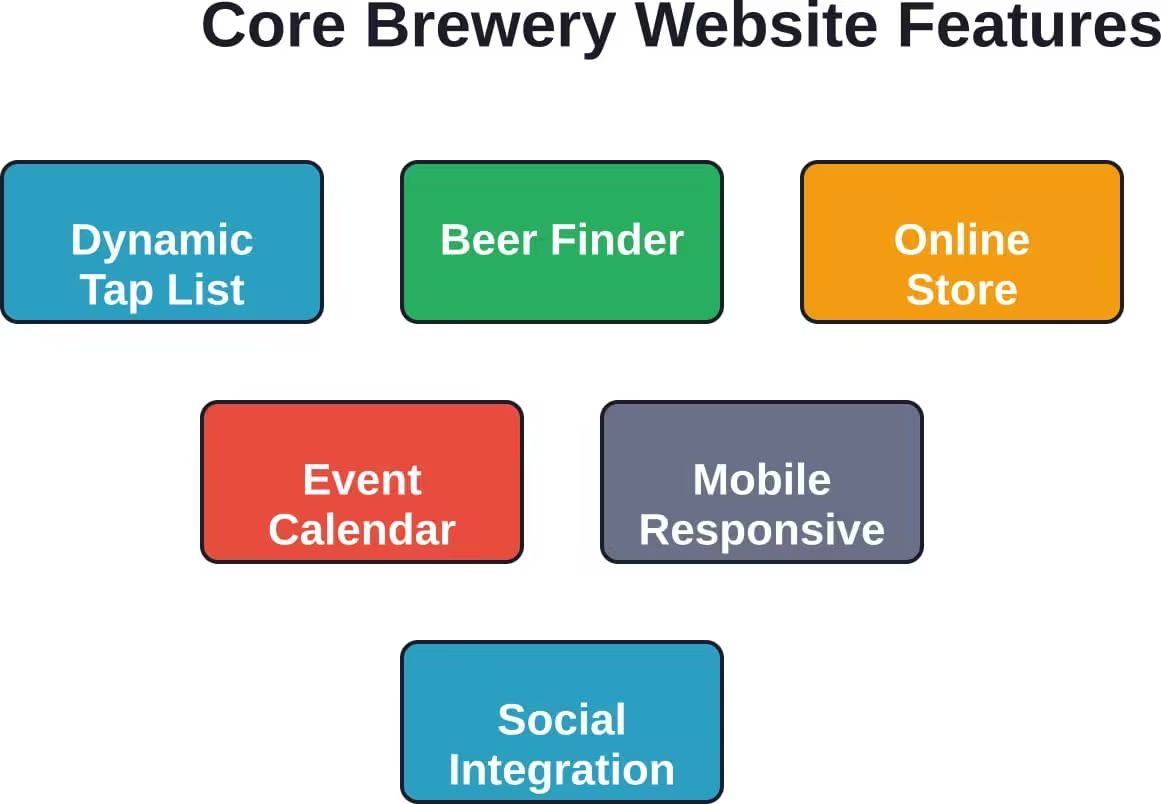
E-commerce and Online Store
Merchandise represents a significant revenue stream for many breweries. Glassware, apparel, and specialty items often carry better margins than beer itself.
An integrated online store lets customers purchase merchandise for pickup or shipping. During the pandemic, many breweries added beer-to-go ordering systems that proved so successful they’ve remained permanent features.
The key consideration here is integration with inventory management. Manual inventory tracking across online and in-person sales creates headaches quickly.
Event Calendar and Ticketing
Events drive taproom traffic. Food trucks, live music, trivia nights, beer releases, and brewery tours all need promotion.
A proper event calendar does more than list dates. It allows detailed event descriptions, ticket sales for paid events, RSVP tracking, and calendar integration so visitors can add events to their personal calendars.
Some breweries generate significant revenue from private events and brewery tours. Built-in booking and payment processing for these offerings streamlines operations.
Mobile-First Design for Brewery Websites
Most brewery website traffic comes from mobile devices. People searching for “breweries near me” while out with friends. Customers checking tap lists before deciding where to go. Beer enthusiasts looking up that brewery they just heard about.
Mobile-first design means building the mobile experience first, then scaling up to larger screens. Not the other way around.
This affects everything from navigation structure to image sizes to tap list layouts. What works beautifully on a 27-inch desktop monitor often becomes unusable on a 6-inch phone screen.
Page Speed and Performance
Mobile users operate on cellular connections that are slower and less reliable than WiFi. They’re also less patient.
Website performance directly impacts both user experience and search engine rankings. Google explicitly uses page speed as a ranking factor.
Common performance killers on brewery websites include oversized images, too many custom fonts, bloated JavaScript, and poorly optimized embedded social media feeds. Each of these can be addressed during development.
Content Strategy and Brand Storytelling
Technical features matter, but content makes the difference between a functional website and a compelling one.
Brand storytelling about the people behind the brewery, the brewing philosophy, and the community connections matters enormously.
Your website provides the space to tell that story in ways social media can’t. Detailed brewery history. In-depth brewing process explanations. Profiles of your brewing team. The inspiration behind specific beers.
Balancing Brand Building and Direct Response
One common mistake is treating the website purely as a direct sales tool. Social media works best for connection, and websites should balance brand building with conversion optimization.
Brand building content increases long-term loyalty and word-of-mouth recommendations. Direct response content drives immediate actions like visiting the taproom or making a purchase.
The most effective brewery websites blend both approaches. Story-driven content about your brewing philosophy sits alongside clear calls-to-action to visit, order, or sign up for the mailing list.
Platform Options for Brewery Websites
Breweries face several options when choosing a website platform. Each approach has distinct tradeoffs.
| Platform Type | Pros | Cons | Best For |
|---|---|---|---|
| Brewery-Specific Platforms | Pre-built integrations, industry-specific features, faster setup | Less customization, recurring fees, potential vendor lock-in | Breweries wanting turnkey solutions without technical staff |
| WordPress + Plugins | Highly customizable, large plugin ecosystem, one-time costs possible | Requires more technical knowledge, manual integration work, maintenance responsibility | Breweries with in-house technical resources or developer relationships |
| Website Builders (Squarespace, Wix) | Easy to use, professional templates, all-in-one hosting | Limited brewery-specific features, difficult to add specialized integrations | Very small taproom-only operations with simple needs |
| Custom Development | Complete control, unique features, optimized performance | Highest cost, longest timeline, requires ongoing developer relationship | Larger breweries with specific requirements and budget for custom solutions |
Brewery-Specific Website Platforms
Specialized platforms designed specifically for breweries have emerged to address the industry’s unique needs. These platforms come with built-in tap list management, beer finders, event calendars, and other brewery-specific features.
The main advantage is speed to launch. Instead of building or integrating each feature separately, everything works together out of the box.
The tradeoff is less flexibility. These platforms offer customization within defined parameters, but truly unique functionality may not be possible.
WordPress for Brewery Websites
WordPress powers a significant portion of brewery websites. Its plugin ecosystem allows adding specific functionality as needed.
E-commerce plugins like WooCommerce handle online stores. Event calendar plugins manage taproom events. Custom integrations can connect to point-of-sale systems for tap list updates.
WordPress offers more control and customization than brewery-specific platforms, but requires more technical expertise or a relationship with a developer who understands both WordPress and brewery operations.
Integration with Brewery Management Systems
Modern breweries run on specialized software for inventory management, point-of-sale, distribution tracking, and production planning. Website integration with these systems eliminates duplicate data entry and keeps information synchronized.
The most valuable integration is typically between your POS system and website tap list. When configured properly, tapping a new keg or marking a beer as kicked in your POS automatically updates your website.

Distribution management software can feed your beer finder tool, automatically updating which locations carry your products as distribution changes.
Email marketing platforms like Mailchimp or Constant Contact integrate with website signup forms to automatically add new subscribers to mailing lists.
API Connections and Custom Integrations
Most modern brewery software provides APIs (Application Programming Interfaces) that allow websites to pull data programmatically.
Custom integrations require development work but provide the tightest synchronization between systems. Pre-built plugin integrations may exist for popular software combinations.
When evaluating brewery management software, API availability and quality should factor into the decision if website integration matters to your operation.
SEO Considerations for Brewery Websites
Search engine optimization determines whether potential customers find your website when searching for breweries, craft beer, or related terms in your area.
Local SEO is particularly critical for breweries since most customers come from the surrounding geographic area.
Local Search Optimization
Google prioritizes local businesses for geographically relevant searches. Someone searching “brewery near me” sees results based on their location.
Optimizing for local search requires claiming and maintaining your Google Business Profile, ensuring NAP (Name, Address, Phone) consistency across the web, gathering customer reviews, and creating location-specific content on your website.
Your website should clearly state your address, hours, and service area. A dedicated contact page with embedded maps helps both users and search engines understand your location.
Content Marketing and Blog Strategy
Regular content creation serves multiple purposes. It provides fresh material for social media, gives customers reasons to return to your website, and improves search rankings.
Effective brewery blog topics include beer release announcements, brewing process explanations, ingredient spotlights, staff profiles, event recaps, food pairing guides, and local community involvement.
The key is consistency and quality over volume. One well-written, informative article per month beats four rushed, thin posts.
Compliance and Legal Considerations
Alcohol regulation affects brewery website content. The Alcohol and Tobacco Tax and Trade Bureau (TTB) regulates how breweries can market and label their products.
While the TTB’s primary focus is physical labeling, breweries must ensure website content complies with applicable regulations around health claims, alcohol content disclosure, and advertising standards.
Age Verification
Many brewery websites implement age gates—screens requiring visitors to confirm they’re of legal drinking age before accessing the site.
While not federally mandated for all content, age verification is often required for e-commerce functionality and represents a best practice for compliance with state-level regulations.
The implementation matters. Effective age gates remember the user’s confirmation so they don’t have to re-verify on every page load, balancing compliance with user experience.
Accessibility Requirements
Web accessibility ensures people with disabilities can use your website. Beyond being the right thing to do, accessibility is increasingly a legal requirement.
The Americans with Disabilities Act (ADA) has been interpreted to apply to websites, and breweries have faced lawsuits over inaccessible sites.
Basic accessibility measures include proper heading structure, alt text for images, keyboard navigation support, sufficient color contrast, and screen reader compatibility.
Maintenance and Ongoing Management
Launching a website isn’t the end—it’s the beginning. Websites require ongoing maintenance to remain secure, functional, and effective.
Security and Updates
Websites running on platforms like WordPress require regular updates to core software, themes, and plugins. Skipping updates creates security vulnerabilities that hackers actively exploit.
E-commerce functionality adds additional security responsibilities. Payment processing must comply with PCI DSS standards. Customer data requires protection.
Many breweries lack internal IT resources for website maintenance. Managed hosting services or retainer agreements with developers handle updates, backups, and security monitoring.
Content Updates and Freshness
Stale content hurts both user experience and search rankings. Outdated event calendars, old tap lists, and expired promotions create negative impressions.
Someone needs clear responsibility for keeping website content current. This might be a marketing team member, taproom manager, or owner—but it can’t be everyone’s job or it becomes nobody’s job.
The easier the content management system makes updates, the more likely staff will keep content fresh. This is where brewery-specific platforms often excel with simplified tap list and event management interfaces.
Measuring Website Performance
Analytics reveal how well your website performs its intended functions. Without measurement, optimization becomes guesswork.
Key Metrics for Brewery Websites
Different metrics matter depending on your website’s primary goals.
For driving taproom traffic, track metrics like page views on your tap list and events calendar, clicks on directions/maps, and time spent on location/hours pages.
For e-commerce functionality, conversion rate, average order value, cart abandonment rate, and revenue per visitor matter most.
For brand awareness, monitor metrics like time on site, pages per session, bounce rate, and return visitor percentage.
Google Analytics Setup
Google Analytics provides free, comprehensive website analytics. Proper setup requires adding tracking code to every page and configuring goals that align with business objectives.
Goals might include newsletter signups, online purchases, event RSVP submissions, beer finder searches, or contact form submissions.
Regular review of analytics data—monthly at minimum—helps identify what’s working and what needs improvement.
Cost Considerations and Budgeting
Website development costs vary enormously based on complexity, platform choice, and whether work is done in-house, by freelancers, or by agencies.
Brewery-specific platforms typically charge monthly fees that include hosting, features, and support. These range from basic packages for smaller operations to premium tiers for multi-location breweries with extensive needs.
Custom WordPress development might involve higher upfront costs but lower ongoing expenses. Agencies often work on project fees or retainers.
Don’t forget ongoing costs beyond initial development. Hosting, domain registration, SSL certificates, plugin licenses, maintenance, content updates, and marketing all require budget allocation.
DIY vs. Professional Development
Some breweries build their own websites using platforms like Squarespace or basic WordPress themes. This minimizes cash outlay but requires significant time investment and results in limited functionality.
Professional development costs more upfront but typically delivers better results through superior design, proper integrations, optimized performance, and fewer technical headaches.
The decision often comes down to available resources. A brewery with no marketing budget but tech-savvy staff might DIY successfully. One with a marketing budget but no technical resources benefits more from professional development.
Conclusion
Website development for breweries requires balancing unique industry needs with fundamental web best practices.
The most successful brewery websites function as comprehensive digital hubs—showcasing brand story, displaying current offerings, enabling e-commerce, promoting events, and driving both online engagement and real-world taproom traffic.
Whether choosing a brewery-specific platform, custom WordPress development, or another approach, the key is aligning website features with business goals. A production brewery with fifty distribution accounts needs different functionality than a neighborhood taproom.
Technical execution matters, but content and strategy determine whether that technical foundation translates into business results. Regular updates, fresh content, and attention to both brand building and conversion optimization keep websites effective long-term.
The craft brewing industry continues evolving rapidly. Your website should too—not through constant redesigns, but through ongoing refinement based on performance data and changing customer needs.
Ready to build a brewery website that actually drives business results? Start by clearly defining goals, identifying must-have features, and choosing a platform aligned with your technical resources and budget. The investment in proper website development pays dividends through increased taproom traffic, distribution growth, and stronger customer relationships.