


Quick Summary: Recruitment marketing applies strategic marketing principles to talent acquisition, helping organizations attract, engage, and convert top candidates before positions open. With 6.9 million job openings and 61% of recruiting professionals reporting a lack of qualified candidates, combining employer branding, social media outreach, employee referral programs, and optimized career sites has become essential to stand out in the competitive 2026 talent market.
The recruitment landscape has shifted dramatically. It’s no longer enough to post a job opening and wait for applications to roll in.
The competition for talent has never been fiercer. But here’s the thing—recruitment marketing gives organizations a strategic advantage by building relationships with potential candidates long before a position opens.
What Is Recruitment Marketing and Why It Matters
Recruitment marketing applies traditional marketing principles—targeting, messaging, content creation, and nurturing—to talent acquisition. Instead of waiting until a role opens to start recruiting, organizations proactively build a talent pipeline.
Think of it this way: traditional recruiting is transactional. A job opens, candidates apply, someone gets hired. Recruitment marketing is relational—it creates ongoing engagement with potential candidates whether there’s an open role or not.
The benefits are measurable. Organizations with strong recruitment marketing strategies reduce time-to-hire, build more diverse and qualified pipelines, and improve the candidate experience. They also boost employee engagement and retention by attracting candidates who genuinely align with company culture.
According to SHRM research, more than 70% of organizations struggle with talent acquisition. A skills mismatch persists across industries.
Recruitment marketing addresses these gaps by expanding reach, improving targeting, and building employer brand equity over time.
Build a Magnetic Employer Brand
Employer brand is the foundation of all recruitment marketing efforts. It’s how candidates perceive an organization as a place to work—and that perception drives application decisions.
In fact, 63% of employees would consider leaving their current role for another company with a better reputation and learning and development opportunities. Employer brand isn’t just about attracting external talent. It impacts retention too.
Define Your Employee Value Proposition
Start by clarifying what makes working at the organization unique. What benefits, culture elements, growth opportunities, and work environment factors set the company apart?
An employee value proposition (EVP) should be authentic, specific, and compelling. Avoid generic statements like “we’re a great place to work.” Instead, focus on tangible differentiators: flexible remote policies, transparent career progression, investment in professional development, or commitment to diversity and inclusion.
Interview current employees to understand why they joined and why they stay. Use their language and stories to craft messaging that resonates with similar candidates.
Showcase Company Culture Authentically
Candidates want to see behind the curtain. Share employee stories, day-in-the-life content, team celebrations, and real workplace moments on social media and the careers site.
Video content works particularly well. Short clips of employees talking about their roles, projects they’re proud of, or what they love about the team humanize the organization and build trust.
Authenticity is critical. Overly polished, corporate content can feel scripted and disconnected from reality. Real talk: candidates can tell when culture content is manufactured.
Set Up Recruitment Marketing With Lengreo
Recruitment agencies need marketing that clearly presents services, candidate opportunities, and client solutions while driving measurable inquiries. Lengreo helps connect website development, SEO, paid ads, content, lead generation, appointment setting, and tracking so the marketing setup works as a cohesive system.
This ensures that the website, outreach campaigns, and tracking all support the goal of attracting qualified candidates and clients, instead of running as disconnected efforts.
Need a Clearer Way to Attract Candidates and Clients?
Lengreo can help with:
- improving website pages for services, jobs, and contact
- setting up SEO and paid campaigns
- tracking candidate applications and client inquiries
- supporting content and lead generation workflows
👉 Contact Lengreo to discuss your marketing setup.
Optimize Your Careers Site for Conversion
The careers site is often the first touchpoint where interest converts to action. Yet many organizations treat it as an afterthought—a static repository of job listings with minimal engagement.
That’s a massive conversion leak that most organizations ignore.
Simplify the Application Process
Every extra field in an application form is a conversion killer. Candidates—especially passive ones—won’t spend 20 minutes filling out redundant information.
Limit initial applications to the essentials: name, contact information, resume upload. Collect additional details later in the process for candidates who advance.
Mobile optimization matters too. A significant portion of job seekers browse and apply from mobile devices. If the application process isn’t mobile-friendly, those candidates are lost.
Use Content to Engage and Educate
The careers site shouldn’t just list jobs. It should tell a story, educate candidates about the organization, and give them reasons to apply beyond the job description.
Include employee testimonials, blog posts about company initiatives, information about benefits and perks, and resources that help candidates prepare for the interview process.
This content also improves SEO, making it easier for candidates to discover the organization when searching for employers in the industry or location.
Leverage Employee Referral Programs
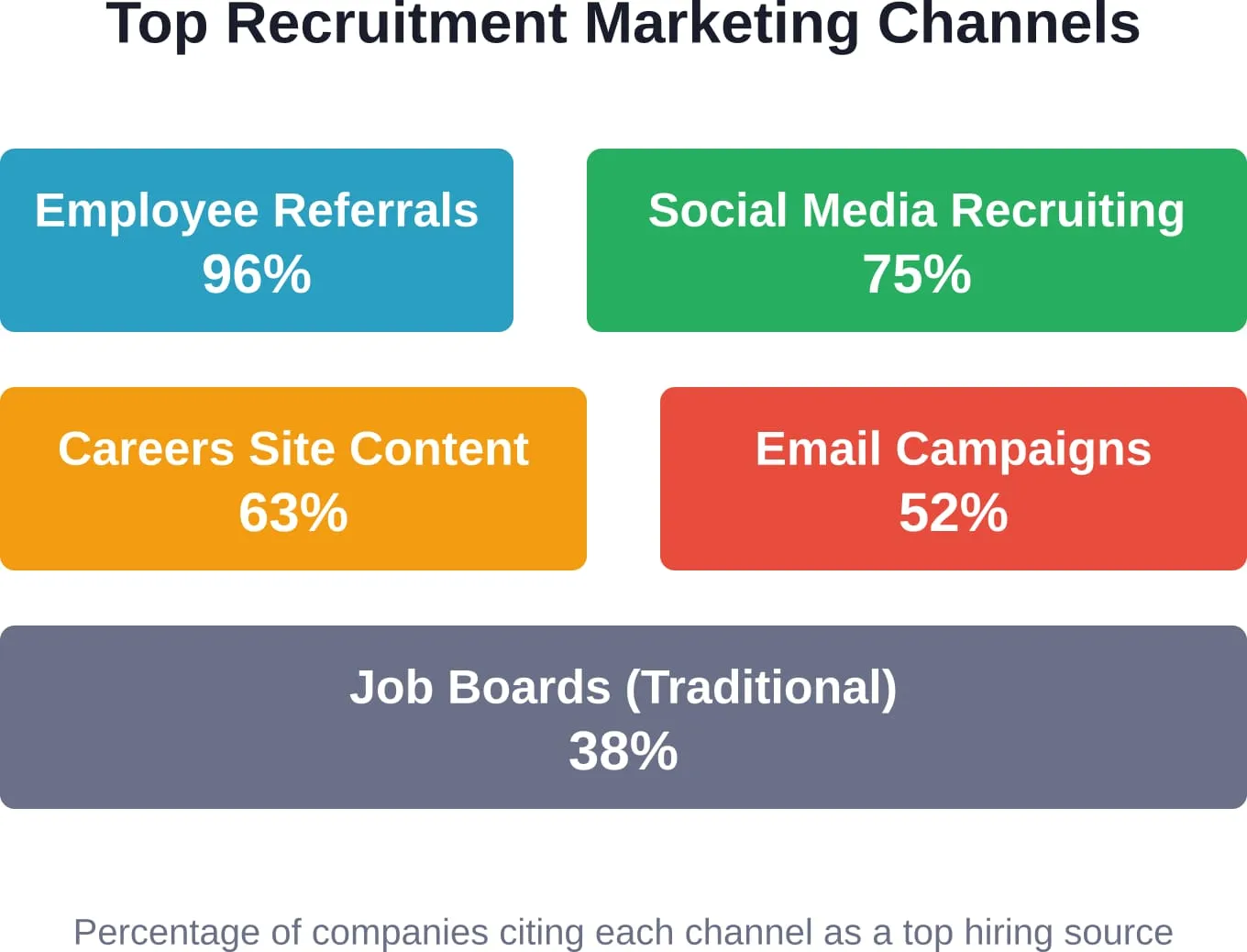
Employee referrals consistently rank as the highest-quality source of hires.
Referrals tend to be better cultural fits, ramp up faster, and stay longer than candidates sourced through other channels. They also cost less to acquire.
Yet many organizations fail to activate their employee networks effectively.
Make Referring Easy and Rewarding
Friction kills participation. If employees need to navigate a complex system or fill out lengthy forms to refer someone, most won’t bother.
Create a simple referral process—ideally a single link or form where employees can submit a candidate’s name and contact information. Automate follow-up so employees receive updates on their referral’s status.
Incentives matter too. Financial bonuses are common, but recognition, extra PTO, or charitable donations in the employee’s name can also motivate participation.
Promote Open Roles Internally First
Employees can’t refer candidates for roles they don’t know about. Regularly communicate open positions through internal channels—email newsletters, Slack channels, team meetings.
Highlight roles that are difficult to fill and explain what makes a great candidate. The more context employees have, the better quality referrals they’ll make.
Harness Social Media for Talent Attraction
Social media is where candidates spend time, form opinions, and discover opportunities. Organizations that build a strong social presence gain visibility with passive candidates who aren’t actively job hunting but might be open to the right opportunity.
Share Employee-Generated Content
The most effective social content doesn’t come from the marketing department. It comes from employees sharing their experiences, projects, and day-to-day moments.
Encourage employees to post about their work, tag the company, and use branded hashtags. Reshare their content on official company accounts.
This approach builds authenticity and reach simultaneously. Employee networks extend far beyond the company’s follower base, exposing the employer brand to new audiences.
Run Targeted Social Media Campaigns
Organic reach is valuable, but paid social campaigns allow precise targeting by job title, skills, location, and interests.
Create campaigns that promote specific roles, showcase company culture, or drive traffic to the careers site. Use compelling visuals and clear calls to action.
Track performance closely. Social platforms provide detailed analytics on impressions, clicks, and conversions. Test different messaging, audiences, and creative to identify what resonates.
Develop Content That Attracts Passive Candidates
Passive candidates—those not actively job hunting—represent a huge untapped talent pool. They won’t visit job boards or search for openings, but they will engage with interesting content.
Content marketing positions the organization as an industry thought leader and keeps the employer brand top of mind when passive candidates eventually consider a career move.
Publish Industry Insights and Thought Leadership
Blog posts, whitepapers, webinars, and podcasts that address industry trends, challenges, and innovations demonstrate expertise and attract professionals interested in those topics.
For example, a tech company might publish articles on emerging technologies, best practices for software development, or career advice for engineers. A healthcare organization might share insights on patient care innovations or professional development for clinicians.
This content doesn’t need to be sales-focused. The goal is to provide value and build awareness.
Showcase Employee Career Journeys
Career progression stories resonate with candidates evaluating growth opportunities. Feature employees who’ve advanced within the organization, transitioned between roles, or developed new skills.
These narratives demonstrate that the organization invests in people and provides paths for development—key factors that influence candidate decisions.
Use Email Marketing to Nurture Talent Pipelines
Not every candidate is ready to apply immediately. Email marketing allows organizations to stay connected with interested candidates over time, nurturing relationships until the right opportunity arises.
Build a Talent Community
Invite candidates to join a talent community—a mailing list that receives updates about company news, culture content, career advice, and job opportunities.
This opt-in approach builds a warm pipeline of candidates who’ve already expressed interest. When a relevant role opens, they’re far more likely to apply than cold prospects.
Segment and Personalize Outreach
Not all candidates are interested in the same roles or content. Segment email lists by function, seniority level, location, or interests to deliver more relevant messaging.
Personalization increases engagement. Use candidate names, reference their skills or interests, and tailor job recommendations to their profile.
Invest in Recruitment Marketing Technology
Manual processes don’t scale. As recruitment marketing efforts grow, technology becomes essential to manage campaigns, track performance, and optimize results.
Candidate Relationship Management (CRM) Systems
A recruitment CRM centralizes candidate data, tracks interactions, and automates outreach. It functions like a marketing automation platform but tailored for talent acquisition.
CRMs enable segmentation, email campaigns, and pipeline management—all critical for nurturing passive candidates and building long-term relationships.
Analytics and Attribution Tracking
Understanding which recruitment marketing tactics drive applications and hires is essential for optimization. Use analytics tools to track traffic sources, conversion rates, and candidate behavior across channels.
Attribution tracking connects hires back to their original source—whether that’s a social media ad, employee referral, content download, or careers site visit. This data informs budget allocation and strategy adjustments.
Create Targeted Recruitment Campaigns
Broad, generic recruiting messages don’t cut through the noise. Targeted campaigns that speak to specific candidate segments—by role, industry experience, or career stage—generate better engagement and applications.
Segment by Persona
Develop candidate personas based on the roles needed most. What motivates a senior software engineer versus an entry-level marketing coordinator? What concerns does a mid-career finance professional have when evaluating a new employer?
Tailor messaging, content, and channels to each persona. A campaign targeting recent graduates might emphasize mentorship and learning opportunities, while one aimed at experienced leaders might highlight strategic impact and autonomy.
Run Role-Specific Landing Pages
Instead of directing all traffic to a generic careers page, create landing pages for high-priority roles or functions. These pages can include role-specific content, testimonials from team members, details about projects and technologies, and a streamlined application form.
Landing pages improve conversion by reducing cognitive load and providing exactly the information candidates need to make a decision.
Attend and Host Industry Events
Virtual and in-person events provide direct access to engaged candidates. Career fairs, industry conferences, meetups, and webinars create opportunities for real-time interaction and relationship building.
Sponsor Relevant Conferences
Sponsoring industry events positions the organization as a leader in the field and provides visibility with attendees—many of whom are current professionals and potential candidates.
Set up a booth, send recruiters and hiring managers to network, and collect contact information from interested attendees for follow-up.
Host Your Own Events
Hosting events—whether technical talks, panel discussions, or networking mixers—allows organizations to showcase expertise and culture in a controlled environment.
These events attract candidates interested in the topics covered and create positive associations with the employer brand. Follow up with attendees after the event to continue the conversation.
Partner with Educational Institutions
Building relationships with universities, bootcamps, and training programs creates a pipeline of early-career talent. These partnerships also enhance employer brand visibility with students and recent graduates.
Offer Internships and Co-op Programs
Internships serve as extended interviews, allowing organizations to evaluate candidates over weeks or months before making full-time offers. They also provide valuable experience that strengthens the organization’s reputation on campus.
Many interns convert to full-time employees. Even those who don’t often become advocates, sharing positive experiences with peers and maintaining connections that can lead to future opportunities.
Participate in Campus Recruiting
Attend career fairs, host information sessions, and build relationships with career services offices. Consistent campus presence builds brand recognition and trust with students.
Collaborate with faculty to identify top students or sponsor capstone projects that give students real-world experience while introducing them to the organization’s work.
Measure and Optimize Campaign Performance
Recruitment marketing isn’t set-it-and-forget-it. Continuous measurement and optimization are essential to maximize ROI and improve results over time.
Track Key Metrics
Focus on metrics that connect marketing activities to hiring outcomes. Important KPIs include:
- Careers site traffic and sources
- Application conversion rate
- Cost per application and cost per hire by channel
- Time to fill for roles with active marketing campaigns
- Quality of hire (performance ratings, retention) by source
- Email open and click-through rates
- Social media engagement and follower growth
These metrics reveal what’s working and where to focus resources.
A/B Test Campaigns
Test different headlines, images, calls to action, and targeting parameters to identify the most effective combinations. Small improvements in conversion rates compound over time and across campaigns.
Document learnings and apply them to future initiatives. Over time, this builds institutional knowledge about what resonates with target candidate segments.
Competitive Compensation and Benefits
Marketing can attract attention, but compensation and benefits close the deal. Candidates evaluate total rewards packages carefully—especially in competitive markets.
Benchmark Against Market Rates
Conduct regular compensation benchmarking to ensure salaries are competitive. Use industry surveys, salary databases, and competitor job postings as reference points.
Where possible, be transparent about salary ranges in job postings. Transparency builds trust and filters out candidates whose expectations don’t align, saving time for everyone involved.
Highlight Non-Monetary Benefits
Total compensation extends beyond salary. Flexible work arrangements, professional development budgets, generous PTO, health and wellness programs, and retirement benefits all factor into candidate decisions.
Showcase these benefits prominently in job postings, on the careers site, and in recruitment marketing content.
| Strategy | Primary Benefit | Best For |
|---|---|---|
| Employee Referrals | Highest quality hires | All organizations |
| Social Media Campaigns | Reach passive candidates | Tech, creative, professional services |
| Content Marketing | Build thought leadership | Knowledge-based industries |
| Career Site Optimization | Increase application rates | High-volume hiring |
| Email Nurture Campaigns | Long-term pipeline development | Specialized or senior roles |
| Campus Recruiting | Early career talent pipeline | Entry-level or rotational programs |
Address Skills Gaps Through Upskilling and Internal Mobility
Recruitment marketing typically focuses on external candidates, but internal talent represents an often-overlooked opportunity.
Investing in current employees through upskilling, reskilling, and internal mobility programs reduces external hiring needs and improves retention.
Promote Internal Job Opportunities
Many employees don’t know about open roles in other departments or functions. Communicate internal opportunities through intranet postings, newsletters, and manager conversations.
Make internal applications easy and encourage employees to explore lateral moves or promotions that align with their career goals.
Develop Training and Development Programs
Skills gaps won’t always be solved by hiring. Sometimes the best solution is developing existing employees.
Offer training programs, certifications, mentorship, and on-the-job learning opportunities that help employees grow into roles the organization needs to fill.
This approach also enhances employer brand. Candidates want to work for organizations that invest in people.
Practical Tips for Small Teams and Limited Budgets
Not every organization has a dedicated recruitment marketing team or a six-figure budget. But that doesn’t mean effective recruitment marketing is out of reach.
Start Small and Scale
Pick one or two strategies to implement well rather than trying to do everything at once. Master employee referrals and careers site optimization before layering in social campaigns and content marketing.
Small improvements—a simplified application form, a monthly employee spotlight on LinkedIn, a quarterly email to past candidates—add up.
Leverage Free Tools
Many recruitment marketing tools offer free tiers or trials. LinkedIn, Canva for graphics, Mailchimp for email campaigns, Google Analytics for website tracking—these platforms provide powerful capabilities without upfront investment.
As results demonstrate value, securing budget for paid tools becomes easier.
Activate Employees as Advocates
Employees are the most authentic and cost-effective recruitment marketing resource. Encourage them to share content, refer candidates, and talk about their work on social media.
Provide guidance and assets—sample posts, branded graphics, talking points—to make participation easy.
Conclusion
The recruitment landscape in 2026 demands more than job postings and hope. With 6.9 million job openings, increasing skills mismatches, and 88% of employers struggling to find qualified applicants, organizations need strategic recruitment marketing to stand out and attract top talent.
The eighteen strategies outlined here—from building magnetic employer brands and optimizing career sites to leveraging employee referrals and creating targeted campaigns—provide a comprehensive framework for transforming talent acquisition from reactive to proactive.
Start by choosing the two or three tactics that align best with current needs and resources. Implement them consistently, measure results, and refine based on data. Over time, these efforts compound into a sustainable competitive advantage in the war for talent.
The organizations that win the talent battle in 2026 and beyond won’t be the ones with the biggest budgets. They’ll be the ones that treat candidates like customers, build authentic relationships, and deliver compelling reasons to choose them over every other employer competing for the same people.
Ready to transform talent acquisition? Start building a recruitment marketing strategy today.