


Quick Summary: Consumer lenders need a mix of digital and traditional marketing strategies to attract borrowers while staying compliant with strict advertising regulations. The most effective approaches include local SEO optimization, educational content marketing, strategic partnerships with real estate and financial professionals, targeted social media campaigns, and referral programs—all while adhering to CFPB and FTC disclosure requirements.
Marketing a consumer lending business isn’t like selling shoes or software. Every claim, every testimonial, every interest rate mentioned in an advertisement falls under the scrutiny of federal regulators. According to the Consumer Financial Protection Bureau, Regulation Z requires that if an advertisement for credit states specific credit terms, it shall state only those terms that actually are or will be arranged or offered by the creditor.
And here’s the thing: most borrowers aren’t actively shopping for loans until they need one. So the challenge becomes staying visible during the research phase and being the first call when they’re ready to act.
This guide covers marketing strategies that actually work for consumer lenders—from digital channels to relationship-building tactics—while keeping compliance front and center.
Understanding the Consumer Lending Landscape in 2026
The consumer credit market continues to evolve. According to Federal Reserve data, retail credit outstanding totalled $130 billion, or over 2.5 percent of total outstanding consumer credit as of the end of 2023, with nearly 85 million individuals having a retail credit account. According to Federal Reserve data, retail credit accounts show a median outstanding balance per account of $194 and a median monthly payment of $29.
But here’s what matters for marketing: not all consumers have traditional credit scores. Alternative data is opening doors for lenders willing to look beyond FICO scores to serve underserved borrower segments, including those with limited or no traditional credit history.
That’s a significant underserved market. Alternative data—like rent payments, utility bills, and bank account history—is opening doors for lenders willing to look beyond FICO scores. And that creates marketing opportunities.
Compliance-First Advertising Strategies
Before diving into specific tactics, let’s talk about staying legal. The FTC’s Endorsement Guides require clear disclosure of any material connection between endorsers and advertisers. If someone promotes lending products on social media and receives compensation—even just a discount or free service—that relationship must be disclosed.
The CFPB has issued guidance that digital marketing providers must comply with consumer financial protection laws and fair lending requirements. Third-party marketing vendors aren’t exempt from Equal Credit Opportunity Act requirements or fair lending regulations.
Real talk: compliance isn’t optional. Build it into every marketing campaign from the start.
What This Means for Your Ads
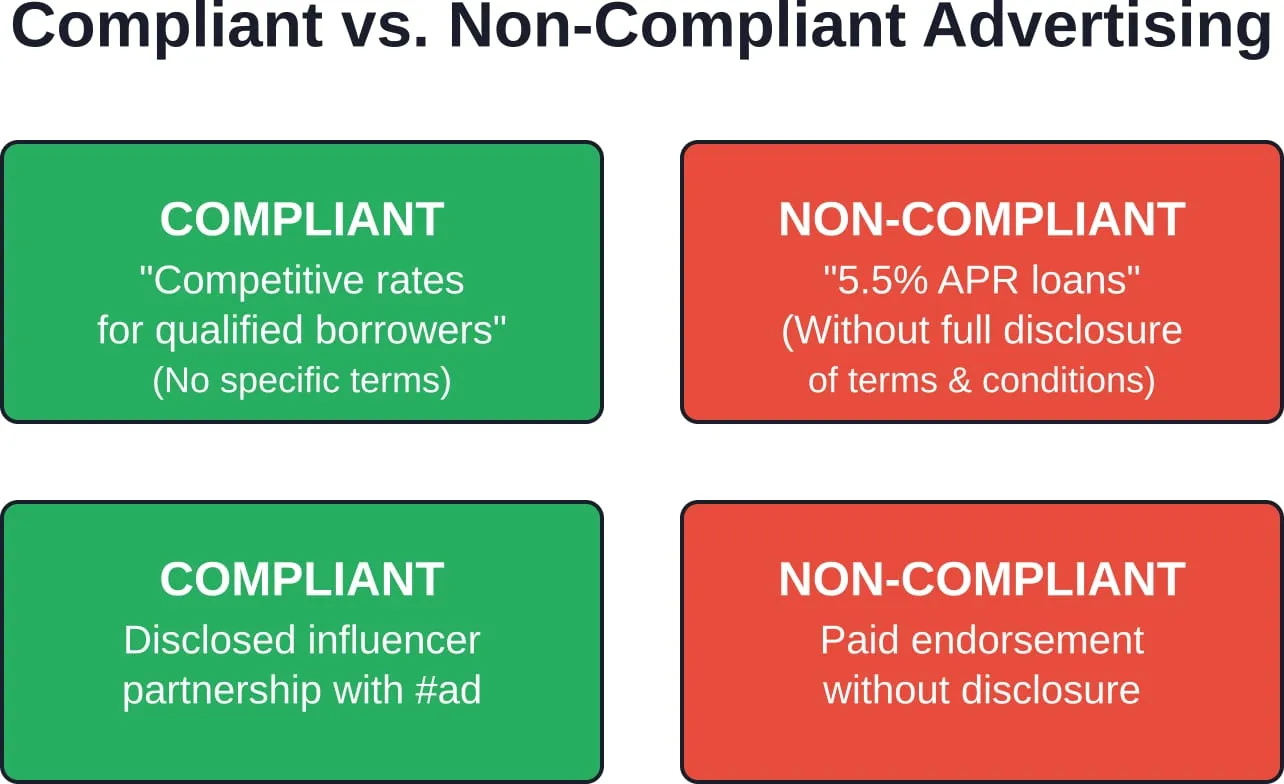
When advertising specific loan terms, Regulation Z requires additional disclosures. If an ad mentions rates, it must state whether the rate is fixed or variable. If it mentions payment amounts, it must disclose the payment schedule. Limits or caps on rate adjustments for variable-rate products don’t need to be stated in every ad, but any terms mentioned must be actually available.
Avoid trigger terms unless prepared to provide full disclosures. General statements like “competitive rates” or “flexible terms” don’t trigger disclosure requirements. Specific claims like “5% APR” or “$500 monthly payments” do.
Set Up Consumer Lending Marketing With Lengreo
Consumer lenders need marketing that explains loan options clearly and gives people a simple way to request information or start the next step.
Lengreo works on the full setup behind that process, from website structure and search visibility to paid campaigns, tracking, and lead generation.
Need More Qualified Loan Inquiries?
Lengreo can help with:
- refining loan, eligibility, and application pages
- improving search visibility for lending-related queries
- setting up paid campaigns for inquiry generation
- tracking leads and campaign performance
👉 Contact Lengreo to discuss your marketing setup.
Local SEO: The Foundation of Digital Visibility
Most borrowers search for lenders near them. “Mortgage lender near me” and “personal loans [city name]” drive significant search volume. Local SEO puts consumer lenders in front of these high-intent searchers.
Start with Google Business Profile optimization. Claim and verify the listing, then fill out every field: business hours, service areas, lending categories, photos of the office and team. Encourage satisfied borrowers to leave reviews—but never incentivize them, as that violates FTC guidelines.
Local citations matter. Ensure the lender’s name, address, and phone number appear consistently across Yelp, Better Business Bureau, local chamber of commerce directories, and industry-specific sites. Inconsistent information confuses search engines and hurts rankings.
Location-Specific Content
Create dedicated landing pages for each service area. Don’t just swap out city names in a template—write unique content addressing local market conditions, average home prices, popular neighborhoods, and regional lending programs.
A page titled “FHA Loans in Austin, Texas” should discuss Austin’s median home price trends, first-time buyer demographics in Travis County, and how FHA loan limits apply specifically to the Austin metro area. This specificity signals relevance to both search engines and potential borrowers.
Content Marketing That Educates Borrowers
Educational content builds trust and positions lenders as experts. But it has to answer real questions borrowers are asking.
Popular topics include: how credit scores affect loan approval, the difference between pre-qualification and pre-approval, how to compare APR versus interest rate, what documents are needed for loan applications, and how different loan types (conventional, FHA, VA, USDA) compare.
Video content performs particularly well. Industry data suggests that 86% of marketers use video as a marketing tool, and the same percentage believes video successfully generates leads.
Create short explainer videos covering common borrower questions. Keep them under three minutes. Post them on YouTube with keyword-optimized titles and descriptions, then embed them on the website and share across social channels.
Blog Strategy
Publish consistently—weekly if possible, monthly at minimum. Focus on topics that align with borrower search behavior: seasonal content about home buying in spring, year-end financial planning, tax implications of mortgage interest, how rising or falling interest rates affect affordability.
Each post should target a specific long-tail keyword, include internal links to loan product pages, and end with a clear call to action like “Ready to explore loan options? Contact us for a free rate quote.”
Strategic Partnership Development
Referral relationships remain one of the most effective lead sources for consumer lenders. Real estate agents, financial advisors, CPAs, divorce attorneys, and business bankers all work with clients who need lending services.
The approach matters. Showing up at a real estate office with donuts once isn’t a strategy. Building genuine relationships is.
Offer value first. Host educational lunch-and-learn sessions for real estate agents covering how recent regulation changes affect buyer qualification, or what first-time buyer programs are available in the local market. Sponsor open houses. Provide co-branded buyer guides that agents can share with clients.
Making Partnerships Work
Set up a system to keep partners informed. Send monthly market updates with local lending statistics, average rates, and noteworthy program changes. Make it easy for them to refer clients—provide a simple online referral form and respond to referrals within hours, not days.
Track which partners send quality leads and prioritize those relationships. Some partnerships will be more productive than others. That’s normal.
Social Media Marketing for Lenders
Social media works for consumer lenders, but it requires a specific approach. Nobody wakes up excited to follow a lender on Instagram. The content has to provide genuine value.
Focus on education and local engagement rather than constant sales pitches. Share first-time homebuyer tips, credit score improvement advice, local real estate market updates, and mortgage rate trends. Mix in behind-the-scenes content showing the team, community involvement, and client success stories (with permission and proper disclosures).
Platform choice matters. LinkedIn works well for building B2B relationships with real estate professionals and financial advisors. Facebook and Instagram reach consumers directly. TikTok is gaining traction for reaching younger first-time buyers, though it requires a different content style—shorter, more casual, more personality-driven.
Content Ideas That Perform
Post types that generate engagement include: myth-busting videos (“You don’t need 20% down to buy a home”), local market snapshots with charts showing median prices by neighborhood, Q&A sessions answering common lending questions, and client testimonials (properly disclosed and compliant).
Consistency beats perfection. Posting three times per week with decent content outperforms one perfectly polished post per month. Social algorithms reward regular activity.
Email Marketing and Nurture Campaigns
Not every prospect is ready to apply for a loan today. Email nurture campaigns keep the lender top-of-mind until they are.
Segment email lists by prospect type: first-time homebuyers, refinance prospects, real estate agent partners, past clients for repeat business. Each segment gets different content tailored to their needs and timeline.
First-time buyer sequences might include: understanding mortgage types, improving credit before applying, how much a house is affordable based on income, the application process timeline, and closing cost expectations. Send one email every 7-10 days, providing value in each without pushing for an immediate application.
| Email Campaign Type | Target Audience | Frequency | Primary Goal |
|---|---|---|---|
| Educational Drip | New prospects | Weekly for 6-8 weeks | Build trust, demonstrate expertise |
| Market Updates | All subscribers | Monthly | Stay top-of-mind, show market knowledge |
| Rate Alerts | Active prospects | As rates change | Create urgency for rate-conscious buyers |
| Past Client Re-engagement | Closed loans 2+ years ago | Quarterly | Generate refinance and repeat business |
| Partner Newsletter | Referral partners | Monthly | Provide value, encourage referrals |
Automation and Personalization
Modern email platforms allow automated sequences triggered by specific actions. When someone downloads a first-time buyer guide, they automatically enter a nurture sequence. When they use a mortgage calculator, they receive follow-up emails about next steps.
Personalization goes beyond using the recipient’s first name. Reference their specific interests based on website behavior, previous email clicks, or the type of content they downloaded.
Paid Advertising Strategies
Organic marketing takes time. Paid advertising generates leads faster, but it requires careful targeting and compliance monitoring.
Google Ads work well for high-intent searches like “mortgage pre-approval,” “personal loan application,” or “auto loan rates [city].” These searchers have immediate needs. The key is matching ad copy to landing pages and ensuring all disclosures required by Regulation Z appear clearly.
Facebook and Instagram ads excel at building awareness and capturing earlier-stage prospects. Target by demographics (age, income, homeownership status), interests (real estate, home improvement, personal finance), and behaviors (recently moved, upcoming life events).
Retargeting Campaigns
Most website visitors leave without converting. Retargeting keeps the lender in front of them as they continue researching. Show ads to people who visited loan product pages but didn’t submit an application, or who started an application but didn’t finish.
Keep retargeting ad frequency reasonable—three to five impressions per week, not twenty per day. Overexposure creates negative brand associations.
Building a Referral Program
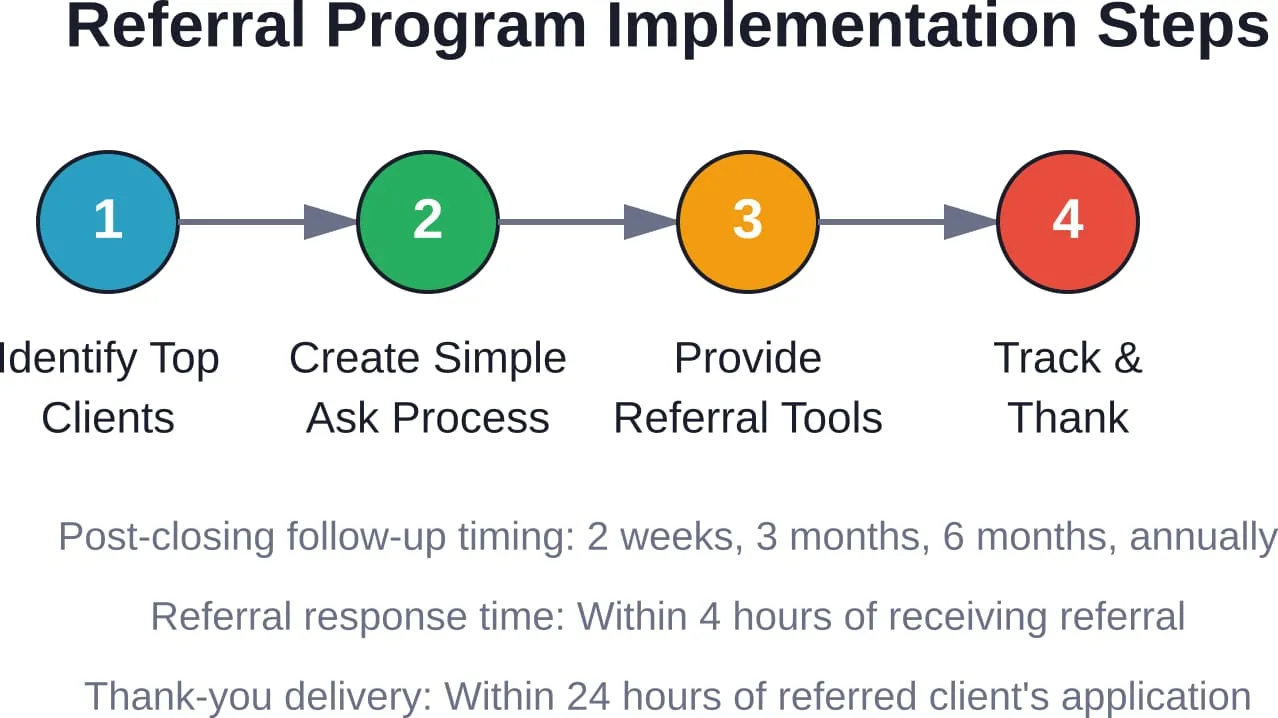
Happy borrowers are the best source of new business. A structured referral program turns satisfied clients into active promoters.
The simplest approach: ask. After closing, send a thank-you note explaining that referrals are the highest compliment and asking if they know anyone else who might need lending services. Make it easy by providing referral cards or a unique referral link.
Some lenders offer incentives—gift cards, closing cost credits on future loans, donations to charity in the client’s name. But be careful: any incentive given to clients for referrals must comply with RESPA’s anti-kickback provisions. Consult legal counsel before implementing a paid referral program.
Community Involvement and Local Visibility
Consumer lending is a local business. Community presence builds brand recognition and trust.
Sponsor local events: youth sports teams, charity runs, food drives, housing fairs. Participate in first-time homebuyer seminars hosted by nonprofits or municipal housing departments. Join the local chamber of commerce and attend networking events.
The goal isn’t immediate leads—it’s long-term visibility. When someone in the community needs a loan, the lender who sponsored their kid’s soccer team or taught the homebuyer workshop at the library comes to mind first.
Host Educational Workshops
Free homebuyer workshops position lenders as helpful experts rather than just salespeople. Partner with real estate agents to co-host events covering the entire home purchase process: finding the right home, understanding financing options, the application process, and closing procedures.
Promote workshops through social media, local event calendars, community bulletin boards, and partnerships with libraries or community centers that provide free venue space.
Measuring Marketing Performance
Track what works. Marketing without measurement is just expensive guessing.
Key metrics include: cost per lead, lead-to-application conversion rate, application-to-closing rate, customer acquisition cost by channel, and lifetime customer value. Digital channels provide detailed analytics—use them.
Set up conversion tracking for website actions: form submissions, phone calls, calculator uses, document downloads. Use unique phone numbers for different marketing channels to identify which sources generate calls. Ask every new applicant how they found the lender and record the response in the CRM.
| Marketing Channel | Primary Metrics | Success Indicators |
|---|---|---|
| SEO / Organic Search | Organic traffic, keyword rankings, conversion rate | Steady traffic growth, page-one rankings for target keywords |
| Paid Search (Google Ads) | Cost per click, conversion rate, cost per acquisition | CPA below average loan revenue, conversion rate above 3% |
| Social Media | Engagement rate, follower growth, link clicks | Growing engaged audience, consistent website traffic from social |
| Email Marketing | Open rate, click-through rate, conversion rate | Open rate above 20%, CTR above 2.5%, measurable conversions |
| Referral Partnerships | Number of referrals, referral conversion rate, partner activity | Increasing referral volume, high conversion rate from quality partners |
Attribution Challenges
Consumer lending involves long sales cycles. Someone might discover a lender through social media, visit the website multiple times over weeks, call after seeing a Google ad, then finally apply after a referral from their real estate agent. Which channel gets credit?
Multi-touch attribution models account for all touchpoints in the customer journey. First-touch attribution credits the initial discovery channel. Last-touch credits the final interaction before conversion. Linear attribution distributes credit equally across all touchpoints.
Most lenders use last-touch attribution because it’s simplest, but it undervalues awareness-building activities like content marketing and social media. Consider tracking both first-touch and last-touch to understand the full customer journey.
Leveraging Technology and Automation
Marketing technology makes it possible to do more with less. CRM systems track every lead, interaction, and conversion. Email automation platforms send the right message at the right time without manual effort. Social media scheduling tools maintain consistent presence without daily manual posting.
Key tools for consumer lenders include: CRM software to manage leads and client relationships, email marketing platforms with automation capabilities, social media management tools for scheduling and analytics, website chat widgets to capture and qualify leads in real time, and mortgage-specific calculators that engage visitors while capturing contact information.
Integration matters. The best marketing technology stack connects together—leads from Facebook ads flow automatically into the CRM, website form submissions trigger email sequences, and closed loans automatically move clients into past-client nurture campaigns.
Staying Ahead of Regulatory Changes
Consumer lending regulations evolve. Staying compliant requires ongoing attention.
Subscribe to CFPB updates and FTC business guidance. Join industry associations that provide compliance resources and training. Conduct regular audits of marketing materials to ensure all disclosures are current and properly placed.
When in doubt, consult legal counsel. The cost of compliance review is minimal compared to the cost of enforcement actions or reputation damage from violating consumer protection laws.
Conclusion
Marketing consumer lending services requires balancing visibility with compliance, education with promotion, and digital efficiency with personal relationships. The most successful lenders build multi-channel strategies that work together: local SEO captures high-intent searchers, content marketing educates and builds trust, partnerships generate qualified referrals, social media maintains visibility, and email nurturing converts prospects over time.
But here’s what matters most: authenticity. Borrowers can spot generic marketing a mile away. The lenders who win are those who demonstrate genuine expertise in their local market, provide real value through education, and build lasting relationships with both clients and referral partners.
Start with one or two strategies from this guide. Implement them well, measure results, then expand to additional channels. Marketing success in consumer lending isn’t about doing everything—it’s about doing the right things consistently and compliantly.
Ready to grow a lending business? Begin by auditing current marketing efforts, identifying the highest-potential opportunities, and building a 90-day implementation plan. The borrowers are out there searching—make sure they find the lender first.