Quick Summary: Finding local SEO clients requires a mix of proven strategies: optimizing your own online presence to demonstrate expertise, leveraging Google Business Profile audits as lead magnets, networking at local business events, using targeted cold outreach with visual proof, and mining online communities for businesses seeking help. Success comes from showing tangible evidence of ranking improvements rather than making empty promises.
Knowing how to optimize a Google Business Profile and improve local rankings matters little if the client pipeline stays empty. Technical SEO skills don’t automatically translate into client acquisition abilities.
The challenge is real. Community discussions among local SEO practitioners reveal a consistent pattern: delivering results for existing clients proves easier than landing the first few projects. In community discussions, practitioners have noted struggling with client acquisition despite delivering strong results, with one noting they could “deliver results, but I’m still struggling to get a real break in local SEO.”
But here’s the thing—some methods consistently work across different markets and business types. The tactics that generate qualified leads aren’t the ones typically promoted in generic marketing advice. They’re grounded in demonstrating competence through evidence rather than claims.
This guide covers eight practical methods for finding local SEO clients, from optimizing visibility to crafting outreach that converts. Each approach has been reported as effective by practitioners actively working in the field.
Why Traditional Outreach Often Fails
Cold calling doesn’t work the way it did a decade ago. Local business owners receive countless pitches from marketing agencies making similar promises. The noise level is high.
Most outreach fails for three specific reasons:
- No proof of capability. Claims about improving rankings or increasing traffic sound identical across hundreds of agencies. Without evidence, one pitch blends into the next. Business owners can’t distinguish between competent practitioners and those overselling basic services.
- Wrong targeting. Reaching out to businesses that already rank well or have existing agency relationships wastes time. So does contacting businesses too small to afford ongoing services or too large to consider smaller agencies.
- Generic messaging. Templates that open with “I noticed your website could use improvement” trigger immediate deletion. These messages demonstrate zero research about the specific business and its actual challenges.
The solution isn’t abandoning outreach entirely. It’s rebuilding the approach around demonstration rather than declaration.
Generate More SEO Clients Consistently
Finding local SEO clients is part of a bigger challenge, and LENGREO helps build predictable lead generation systems using SEO and outreach strategies. Consistent growth comes from having a repeatable system, not one off efforts.
- lead generation strategy
- outreach and positioning
- conversion optimization
If you want to grow your client pipeline consistently, get a free consultation with LENGREO.
Method 1: Optimize Your Own Local Presence First
Practitioners who rank well for local SEO services in their own market report easier client conversations. The logic is straightforward: businesses trust agencies that can rank themselves.
Start with these specific optimizations:
Claim and Optimize Your Google Business Profile
Set up the complete profile with accurate business hours, service areas, and categories. Add high-quality photos showing the team and workspace. Post regular updates about client wins, local SEO tips, and industry changes.
According to Google, customers are 70% more likely to visit and 50% more likely to consider purchasing from businesses with a complete Business Profile.
Build Content Around Local Keywords
Create service pages targeting “local SEO [city name]” and related variations. Write case studies showing specific results for local businesses. Publish guides addressing common questions local business owners ask about search visibility.
Keep the content focused on demonstrable outcomes rather than technical jargon. Business owners care about more calls and walk-ins, not algorithm updates.
Generate Reviews From Existing Clients
Reviews establish credibility faster than any marketing copy. After delivering results, ask satisfied clients to leave detailed Google reviews mentioning specific improvements they experienced.
Research cited in competitor content indicates that 97% of consumers look for local businesses online, and reviews significantly influence their decisions. When potential clients research the agency before responding to outreach, positive reviews validate the pitch.
Build Local Citations
Get listed in relevant business directories, chamber of commerce sites, and industry-specific platforms. Consistent NAP (Name, Address, Phone) information across these citations strengthens local ranking signals.
This foundational work creates a demonstration case. When prospects research the agency, they find evidence of ranking ability before the first conversation happens.
Method 2: Offer Free Google Business Profile Audits
Free audits work because they provide immediate value while demonstrating expertise. The audit reveals specific problems the business owner can verify independently.
The process is straightforward. Identify local businesses with clear optimization gaps in their Google Business Profiles. Common issues include incomplete business information, missing categories, lack of posts, no photos, or minimal reviews.
Set these up within 30 minutes for most businesses, as noted by practitioners setting up profiles with all basic elements. The improvements are visible immediately, making the value proposition tangible rather than theoretical.
How to Structure the Audit Offer
Reach out to the business owner with a specific observation about their profile. Instead of “I can help your business,” try “I noticed your Google Business Profile is missing three categories that your competitors use. This might be limiting your visibility in local searches.”
Offer to send a detailed audit highlighting five to seven specific improvements. Keep the technical language minimal. Focus on the business impact: more visibility in Maps, higher likelihood of appearing in local searches, better conversion from profile views to calls or visits.
After sending the audit, follow up with an offer to implement the basic fixes for free or at minimal cost. This establishes the relationship and demonstrates competence through action.
Converting Audit Requests to Ongoing Clients
Not every audit converts immediately. That’s fine. The goal is starting the conversation and demonstrating value.
After implementing the basic optimizations, track the profile’s performance over 30 days. Share the data showing increased impressions, profile views, or actions taken. Then position the ongoing service as maintaining and expanding those improvements.
According to the U.S. Small Business Administration, asking for referrals is one of the best ways to get new customers—implementing a system for actively soliciting referrals from satisfied customers is essential. The free audit approach often generates referrals to other local businesses once the initial client sees results.

Method 3: Network at Local Business Events
Chamber of commerce meetings, business networking groups, and industry-specific events put practitioners directly in front of local business owners. These environments favor relationship building over cold pitching.
But traditional networking approaches need updating. Standing in a circle exchanging business cards rarely generates qualified leads. The modernized approach focuses on positioning as the local search expert rather than just another service provider.
Preparing for Events
Before attending, research which businesses will be present. Check their Google Business Profiles and local search visibility. Identify two or three with clear optimization opportunities.
Prepare specific observations rather than generic pitches. “I noticed your bakery doesn’t appear in the Maps results when people search for ‘gluten-free bakery near me’ even though your website mentions gluten-free options” opens better conversations than “I do local SEO.”
Positioning During Conversations
When asked what the business does, skip the technical explanation. Instead: “I help local businesses show up when people search for their services on Google Maps.”
Follow with a brief example: “Recently worked with a dental practice that wasn’t appearing for ’emergency dentist’ searches despite offering emergency services. After optimizing their profile and adding service-specific content, they started getting 3-4 emergency calls per week from Maps searches.”
Concrete examples with measurable outcomes resonate more than capability lists.
The Follow-Up Process
After the event, connect on LinkedIn with the business owners who showed interest. Send a brief message referencing the conversation and offering to send the specific observation discussed.
Avoid the hard sell in the initial follow-up. The goal is maintaining the connection and demonstrating value through insights rather than pushing for immediate commitment.
For businesses that engage with the follow-up content, schedule a brief call to discuss their local search goals and challenges. This transitions the relationship from networking contact to potential client consultation.
Method 4: Use Targeted Cold Outreach With Visual Proof
Cold outreach works when it demonstrates immediate, verifiable value. Generic templates fail. Personalized messages showing specific ranking opportunities convert.
The key differentiator is visual proof—screenshots or data showing exactly where the business could improve.
Identifying High-Potential Prospects
Target businesses that meet these criteria:
- Have a Google Business Profile but rank poorly for relevant local searches
- Operate in industries where local visibility directly impacts revenue (restaurants, home services, healthcare, legal services)
- Show signs of investment in their business (professional website, active social media) but lack optimization
- Have competitors ranking visibly higher despite similar services
Research indicates that 46% of all Google searches are looking for local information, and 76% of people who perform a local search on smartphones visit a business within 24 hours. This data underscores the revenue impact of local visibility, making it easier to justify the investment to prospects.
Crafting the Outreach Message
The effective cold email structure includes:
- Subject line: Reference something specific about their business. “Quick question about [Business Name]’s Maps visibility” or “Noticed [Business Name] missing from ‘service + near me’ searches.”
- Opening: Start with the specific observation. “When I searched for ’emergency plumber in [city]’ on Google Maps, your business didn’t appear in the top 20 results—even though you offer 24/7 emergency service according to your website.”
- The proof: Attach a screenshot showing the Map Pack results they’re missing from, or a simple comparison showing where they rank versus competitors.
- The offer: Propose a brief call to walk through three specific changes that could improve visibility. Alternatively, offer to send a short video audit explaining the gaps and potential fixes.
- Low-pressure close: “If you’re interested in learning more, I can send over some specific suggestions. If not, no worries—just thought it was worth mentioning.”
Sample Cold Email Template
Subject: [Business Name] missing from “[service] near me” searches
Hi [Name],
I was searching for [service type] in [city] earlier today and noticed something odd—[Business Name] doesn’t appear in the first 20 Google Maps results for “[relevant search term],” even though you offer that service.
I’ve attached a screenshot showing what currently ranks. Your competitors [Competitor 1] and [Competitor 2] are showing up prominently, but [Business Name] is absent from that search.
This is likely costing you several potential customers per week. The good news? It’s usually fixable with some targeted Google Business Profile optimization.
I work with local [industry] businesses to improve their visibility in these exact searches. Would you be open to a quick 15-minute call where I can walk through what’s causing the gap and what can be done about it?
If this isn’t a priority right now, no problem at all.
[Your Name]
[Your Agency]
[Contact Info]
This approach works because it provides immediate, verifiable information the prospect can check independently. The visual proof makes the problem tangible.
Method 5: Mine Online Communities for Opportunities
Business owners actively seeking help congregate in specific online spaces. Finding them requires knowing where to look and how to engage without appearing spammy.
Reddit and Niche Forums
Subreddits like r/smallbusiness, r/Entrepreneur, and industry-specific communities regularly feature posts from business owners asking about improving local visibility or dealing with poor Google rankings.
Rather than direct pitching (which violates most community rules), provide genuinely helpful advice in the comments. Explain what might be causing their visibility issues and outline a few steps they could take immediately.
Include a note like “Happy to take a look at your specific situation if you want to DM me your business info” at the end of helpful comments. This positions as a knowledgeable resource rather than a salesperson.
Facebook Groups
Local business groups on Facebook often have discussions about marketing challenges. Join groups for specific industries (restaurant owners, contractors, healthcare providers) where local SEO skills are particularly valuable.
Answer questions thoroughly when members ask about improving local visibility. Share case studies (without overt self-promotion) showing what worked for similar businesses.
Over time, consistent helpful participation positions as the go-to expert in that community. When members need help, they reach out directly rather than needing cold outreach.
Search LinkedIn for posts using terms like “how to improve local SEO,” “not showing up on Google Maps,” or “need help with Google Business Profile.” Comment with specific suggestions and offer to connect.
Publish regular content on LinkedIn about local SEO topics—quick tips, case studies, common mistakes. Tag local businesses or industries in posts when relevant. This content attracts inbound inquiries from businesses recognizing they need help with these issues.
Method 6: Partner With Complementary Service Providers
Web designers, branding agencies, and marketing consultants often work with clients who need local SEO but don’t offer it in-house. Building referral partnerships creates a steady client pipeline.
Identifying Potential Partners
Look for agencies or freelancers who serve similar client types but don’t directly compete. Web designers who build sites for local businesses make ideal partners—their clients need optimization after the site launches.
Marketing consultants, business coaches, and print marketing agencies also work with local businesses that likely need better online visibility.
Structuring the Partnership
Offer a referral fee for any leads that convert to clients. Typical arrangements range from 10-20% of the first month’s payment or a flat fee per closed deal.
Alternatively, offer to white-label services so partners can offer local SEO under their brand while outsourcing the execution. This works particularly well with web design agencies that want to expand service offerings without hiring SEO specialists.
Making Partners Successful
Provide partners with simple tools for identifying referral opportunities among their existing clients. A one-page checklist of local SEO red flags (incomplete GBP, no reviews, poor local keyword rankings) helps them spot businesses that need help.
Create case studies specifically for partners to share with their clients. These should focus on results (increased calls, more walk-in traffic) rather than technical details.
According to the U.S. Small Business Administration, referrals are one of the most effective methods for gaining new business. Offering incentives and making the referral process easy increases the likelihood partners will actively recommend services.
Method 7: Create Location-Specific Content
Publishing content targeting specific locations attracts businesses in those areas searching for local SEO help. This approach generates inbound leads rather than requiring constant outreach.
Building Service Area Pages
Create dedicated pages for each city or region served. These should target searches like “local SEO services in [city]” or “Google Business Profile optimization [city].”
Each page needs unique content specific to that location—not just template text with the city name swapped. Include local business examples, mention specific neighborhoods or business districts, and reference location-specific search trends.
According to research highlighted by Search Engine Land, service area pages are critical for ranking in localized search results. Testing shows how far customers are willing to drive varies by service type, making geographic targeting essential for service businesses.
Publishing Local SEO Case Studies
Write detailed case studies showing results achieved for local businesses in specific industries. Structure these around the business problem, the optimization strategy implemented, and the measurable outcomes.
Include specific data: “Increased Map Pack impressions by 120% in 90 days” or “Generated 15 qualified leads per month from local searches, up from 2-3 previously.”
Prospects searching for evidence that local SEO delivers real results discover these case studies during research. When the case study features a business similar to theirs, it shortens the sales cycle considerably.
Local Business Guides
Create comprehensive guides for specific industries: “Complete Local SEO Guide for Restaurants,” “How Home Service Businesses Can Dominate Local Search,” or “Local SEO for Healthcare Providers.”
These long-form resources attract searches from business owners in those industries looking for marketing guidance. Gate the guide behind a simple email signup to capture leads, then follow up with additional value-focused content before pitching services.
Method 8: Leverage LinkedIn for Direct Outreach
LinkedIn provides direct access to business owners and decision-makers. The platform’s professional context makes outreach less intrusive than cold emails or calls.
Building a Targeted Prospect List
Use LinkedIn’s search filters to find business owners in specific industries and locations. Search for titles like “Owner,” “Founder,” or “CEO” combined with business types that benefit most from local SEO: restaurants, law firms, dental practices, home services, retail stores.
Sales Navigator provides more advanced filtering options, allowing searches by company size, location, and industry simultaneously. This creates highly targeted prospect lists.
The Connection Request Strategy
Send personalized connection requests with a brief note: “Hi [Name], I help [industry] businesses in [city] improve their visibility on Google Maps. Would like to connect and share some local search insights relevant to [business type].”
Keep it professional and value-focused. Avoid immediate sales pitches in connection requests.
Post-Connection Engagement
After connecting, engage with the prospect’s content before pitching. Like or comment thoughtfully on a few of their posts. This establishes familiarity before the outreach message.
When sending the pitch message, reference something specific about their business. “I noticed [Business Name] has excellent reviews but doesn’t appear prominently in Maps searches for [relevant term]. I’ve helped similar [business type] businesses improve visibility in these searches—would you be interested in a brief call to discuss what might be limiting your Maps rankings?”
LinkedIn Content Strategy
Publish regular posts about local SEO topics. Share quick tips, industry updates, case study highlights, and common mistakes local businesses make.
Tag relevant businesses or industries when appropriate. For example, a post about restaurant local SEO could tag local restaurant associations or specific successful restaurants as examples.
Consistent content posting positions as a thought leader in local SEO. Prospects who see regular valuable content are more receptive when outreach happens.
Qualifying Leads Effectively
Not every interested prospect makes a good client. Qualifying leads early saves time and focuses effort on businesses most likely to convert and see results.
Questions to Ask During Initial Conversations
- What are your current monthly revenues? This indicates whether the business can afford ongoing SEO services. Businesses below certain revenue thresholds may not have the budget for sustained work.
- How many customer inquiries do you currently get per week? This establishes a baseline for measuring improvement and helps set realistic expectations.
- Who else have you worked with for marketing or SEO? This reveals whether they’ve tried optimization before and why it didn’t work, plus indicates familiarity with the service.
- What would success look like for you in six months? This identifies whether expectations align with what local SEO can realistically deliver. Red flags include expecting immediate results or focusing solely on vanity metrics.
- What’s your timeline for making a decision? This distinguishes serious prospects from those just gathering information with no intention to act soon.
Red Flags to Watch For
Some warning signs indicate prospects unlikely to convert or challenging to work with:
- Expecting guaranteed first-page rankings (this violates Google’s guidelines and isn’t how legitimate SEO works)
- Unwilling to invest in ongoing optimization (expecting one-time fixes to permanently solve rankings)
- Focused exclusively on rankings rather than business outcomes
- Shopping based purely on lowest price without considering expertise or results
- Unable to provide access to necessary business assets (website, GBP, social media)
Walking away from poor-fit prospects preserves resources for high-quality opportunities.
Demonstrating Value Without Giving Away Services
Prospects want to see competence before committing. The challenge is demonstrating value without providing so much free work that they don’t see the need to hire ongoing help.
The Strategic Free Audit
Free audits work when they identify problems clearly but don’t solve them completely. The audit should:
- Point out specific issues limiting visibility
- Explain why each issue matters in business terms
- Outline the general approach to fixing each problem
- Stop short of providing detailed implementation instructions
Think of it as showing the roadmap but not walking the entire journey. The prospect sees what needs work and understands the value, but implementing the fixes still requires expertise.
Quick-Win Implementations
Offering to implement one or two simple fixes for free demonstrates capability through action. Examples include:
- Adding missing business categories to the GBP
- Creating a few posts on the business profile
- Optimizing the business description with relevant keywords
These take minimal time but show immediate improvements. After the quick wins, propose ongoing work to tackle the more complex issues identified in the audit.
Case Studies as Proof
Detailed case studies showing results for similar businesses build confidence without requiring work on the prospect’s specific business. Structure these to emphasize:
- Starting point: Where the business ranked before optimization, how much traffic they received, what their conversion rate was.
- Strategy implemented: High-level overview of the approach (specific enough to demonstrate knowledge, general enough to not be a complete playbook).
- Results achieved: Specific metrics showing improvement—ranking increases, traffic growth, leads generated, revenue impact.
- Timeline: How long it took to achieve results, setting realistic expectations for the prospect.
- One case study example reported by practitioners showed a client’s organic traffic increase of 120%, driven by optimized blog content and new backlinks, with monthly sales growing by 80% due to increased visibility and targeted traffic.
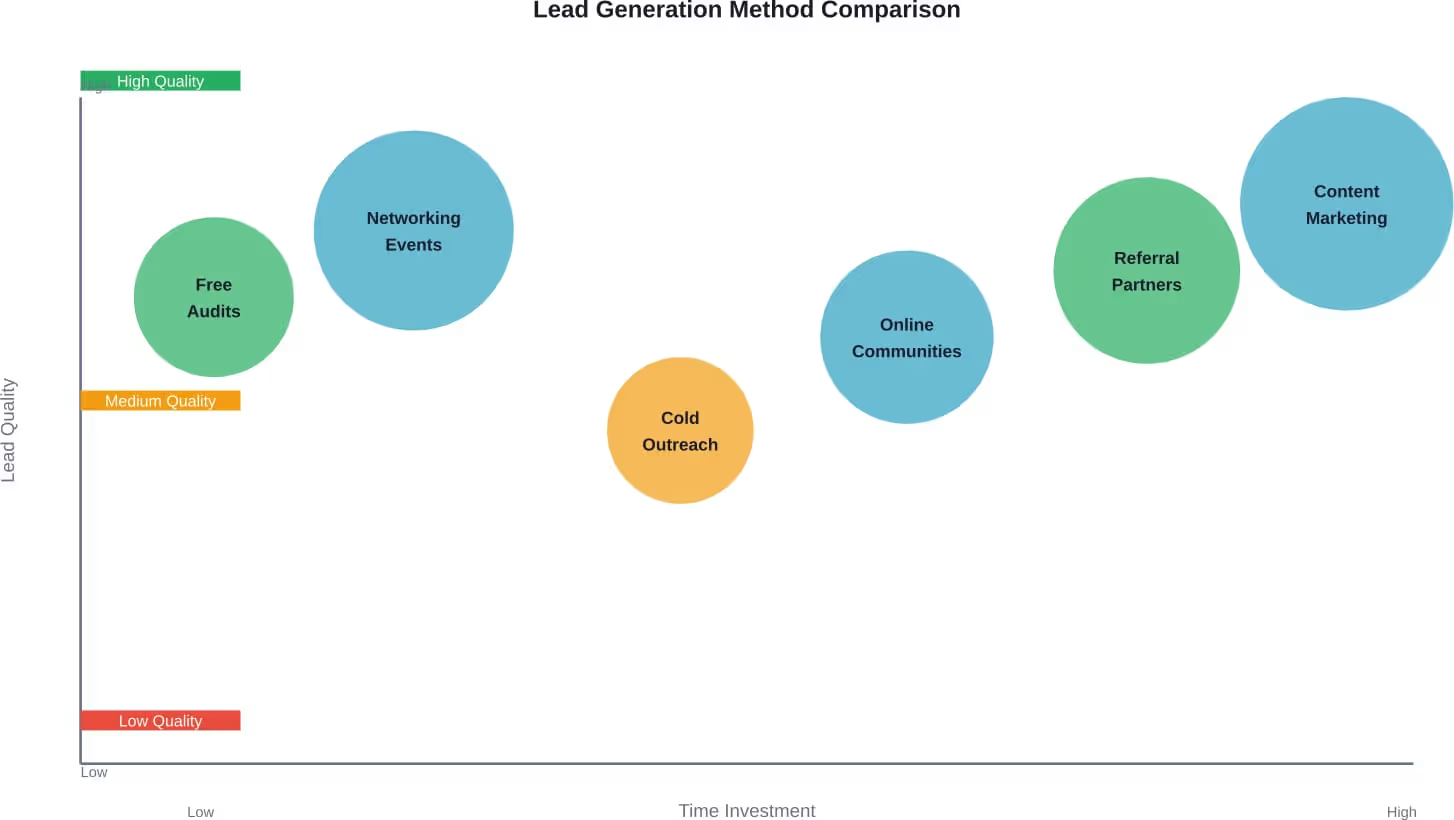
| Method | Time to First Lead | Typical Conversion Rate | Best For |
|---|---|---|---|
| Free GBP Audits | 1-2 weeks | 15-25% | Quick results, building portfolio |
| Local Networking | 1-3 months | 20-30% | Relationship builders, established markets |
| Cold Outreach | 2-4 weeks | 5-10% | Scale, consistent pipeline |
| Online Communities | 1-2 months | 10-20% | Building authority, passive leads |
| Referral Partners | 2-6 months | 30-40% | Steady pipeline, pre-qualified leads |
| Content Marketing | 3-6 months | 15-25% | Long-term, inbound leads |
| LinkedIn Outreach | 2-3 weeks | 8-15% | B2B services, professional outreach |
Communicating Value in Simple Terms
Technical SEO knowledge doesn’t translate to effective client communication. Business owners care about outcomes, not optimization details.
Frame Everything Around Business Impact
Instead of “I’ll optimize your Google Business Profile categories and add schema markup to your website,” say “I’ll make your business show up when people search for [service] in [area], which typically generates 5-10 additional customer calls per month.”
The technical work matters, but clients buy outcomes. Lead conversations with the business benefit, then briefly mention the technical approach if asked.
Use Before-and-After Comparisons
Visual evidence resonates more than descriptions. Show:
- Screenshot of current Map Pack results where they don’t appear, next to target results where competitors rank
- Graph showing competitor traffic trends compared to theirs
- Side-by-side comparison of their incomplete GBP versus a well-optimized competitor profile
These visuals make the gap obvious without requiring clients to understand technical concepts.
Translate Technical Terms
When technical terms are unavoidable, provide simple explanations:
- “Local citations” becomes “online directory listings that verify your business location”
- “NAP consistency” becomes “making sure your business name, address, and phone number match everywhere online”
- “Map Pack” becomes “the three businesses that appear in the map at the top of Google search results”
Clear language builds trust. Jargon creates distance and confusion.
Building Long-Term Client Relationships
Client acquisition matters less when retention is strong. Keeping clients long-term requires demonstrating ongoing value beyond the initial ranking improvements.
Regular Reporting With Context
Monthly reports should go beyond raw data. Include:
- Key metrics: impressions, clicks, calls, direction requests from GBP
- Month-over-month changes with explanations
- Ranking changes for target keywords
- New reviews received
- Competitive changes (new competitors, ranking shifts)
Most importantly, connect the data to business outcomes. “The 40% increase in direction requests typically translates to about 10-12 additional store visits per month.”
Proactive Strategy Adjustments
Don’t wait for clients to ask about declining metrics. Monitor performance continuously and propose strategy adjustments when needed.
If a competitor launches aggressive optimization, explain the situation and recommend countermeasures. If search trends shift toward different keywords, propose content updates to capture the new search volume.
Proactive management demonstrates ongoing value and justifies the monthly retainer.
Expanding Service Scope
After delivering initial results, look for opportunities to expand services. Clients already seeing ROI are receptive to additional offerings that build on the foundation.
Natural expansions from local SEO include:
- Reputation management and review generation systems
- Local service ads or Google Ads management
- Social media management focused on local engagement
- Website conversion optimization
- Content creation for service pages and blog posts
Position these as ways to maximize the visibility already gained through local SEO.
Common Mistakes to Avoid
Certain approaches consistently fail when finding local SEO clients. Avoiding these mistakes increases success rates considerably.
Over-Promising Results
Guaranteeing first-page rankings or specific traffic increases creates unrealistic expectations. Rankings depend on competition, Google algorithm updates, and factors outside direct control.
Instead, promise effort and transparency: “I’ll implement best practices for local SEO and provide regular updates on progress. Based on similar businesses, most clients see significant visibility improvements within 60-90 days, but results vary.”
Targeting the Wrong Businesses
Not every local business benefits equally from local SEO. Businesses with very limited service areas, extremely niche services with minimal search volume, or those already ranking well represent poor targets.
Focus on businesses with:
- Clear local intent in their services
- Reasonable search volume for relevant terms
- Current poor visibility despite offering in-demand services
- Capacity to handle increased customer inquiries
Neglecting Follow-Up
Most prospects don’t commit on the first contact. Consistent, value-focused follow-up converts prospects over time.
Create a follow-up sequence that continues providing value: send a relevant case study two weeks after the initial contact, share a local SEO tip a week later, check in a month afterward with an observation about their market.
According to HubSpot research on sales outreach, 41.2% of salespeople said their phone is the most effective sales tool at their disposal, while 19% of buyers want to connect with a salesperson during the awareness stage of their buying process. This underscores the importance of multi-channel follow-up strategies.
Competing Purely on Price
Positioning as the cheapest option attracts price-sensitive clients who churn at the first opportunity. These clients rarely value the expertise and are most likely to question every invoice.
Instead, compete on demonstrated results, specialized expertise, and quality of communication. Clients paying premium rates tend to be better partners and stay longer.
Scaling Client Acquisition
Once initial methods prove effective, scaling requires systematizing the process and potentially adding team members.
Document What Works
Track metrics for each client acquisition method: number of prospects contacted, response rate, conversion rate, time to close, average client value.
Double down on the methods showing the best return on time investment. If networking generates higher-quality leads than cold outreach, allocate more time to events and less to email campaigns.
Create Systems and Templates
Systematize repetitive tasks:
- Prospect research checklists
- Outreach message templates (personalized but with consistent structure)
- Audit report templates
- Follow-up sequences
- Onboarding documentation
These systems allow delegation as the business grows. An assistant can handle prospect research and initial outreach using documented processes, freeing up time for client work and closing deals.
Hire for Client Acquisition
Once revenue supports it, hiring a dedicated salesperson or business development specialist accelerates growth. Look for someone with existing relationships in the local business community rather than just sales experience.
Alternatively, partner with someone who handles sales while focusing personally on service delivery. This division of labor plays to different strengths.
Conclusion
Finding local SEO clients comes down to demonstrating competence through evidence rather than claims. The methods that work consistently—free audits, targeted networking, proof-based cold outreach, community engagement, strategic partnerships, content marketing, and LinkedIn presence—all share a common thread: they show capability before asking for commitment.
Success doesn’t require mastering every method. Pick two or three approaches that align with personal strengths and market conditions. A natural networker should prioritize local events and partnerships. Someone comfortable with written communication might focus on cold outreach and content creation.
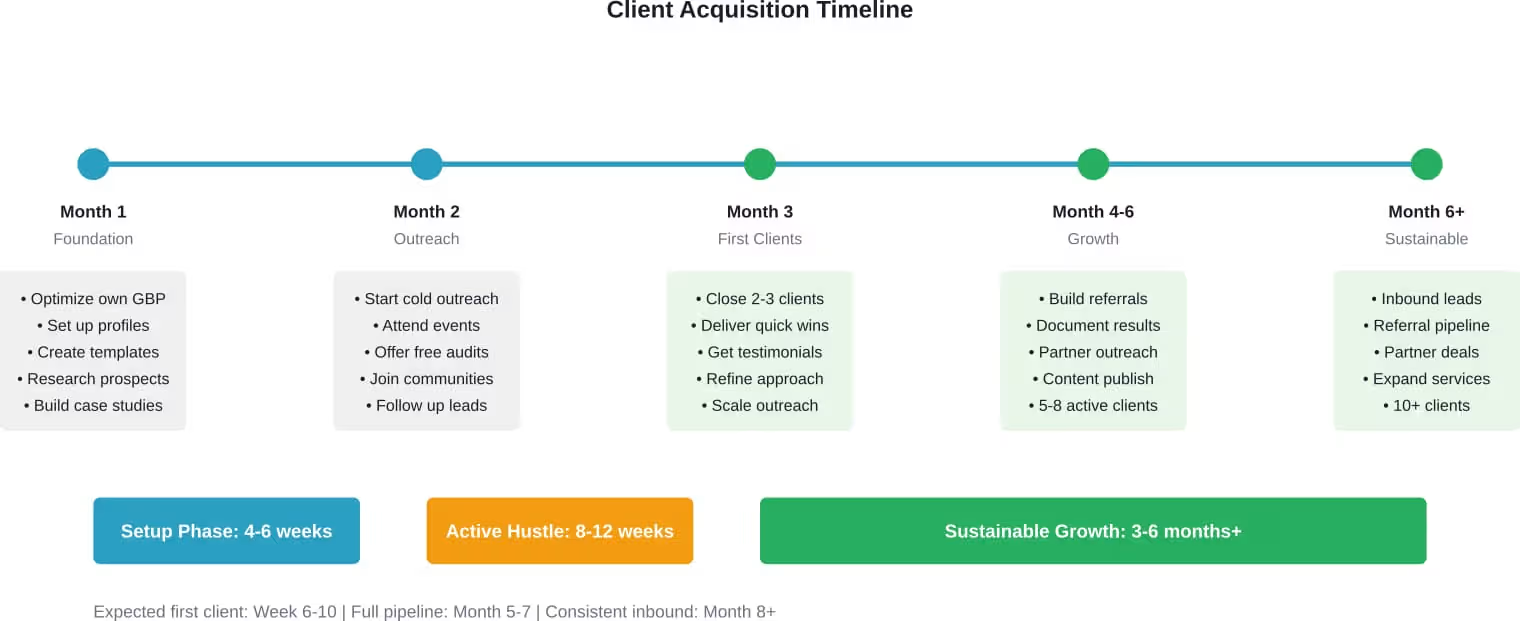
The timeline matters. Building a sustainable client pipeline takes 3-6 months of consistent effort. Quick methods like free audits and cold outreach generate faster results but require ongoing activity. Slower-building approaches like content marketing and referral partnerships eventually produce steadier inbound leads with less active effort.
Start by optimizing your own local presence. This creates the foundation for everything else—a demonstration case proving the ability to do what’s being sold. Then choose acquisition methods that fit the market and commit to consistent execution.
The local businesses that need help are out there. Most struggle with visibility despite offering valuable services. Reaching them requires moving beyond generic outreach and leading with evidence showing exactly how optimization improves their specific situation.
Ready to build your local SEO client pipeline? Start with the free audit approach—identify five businesses in your area with clear optimization gaps, reach out with specific observations, and offer to walk them through what’s limiting their visibility. That’s the foundation for everything else.