

Quick Summary: Creative marketing ideas for banks in 2026 focus on data-driven personalization, AI-powered customer experiences, and hyper-targeted campaigns that build trust while driving measurable revenue. Banks are shifting from broad awareness tactics to precise, results-driven strategies that leverage automation, gamification, educational content, and mobile-first engagement to capture deposits, improve retention, and differentiate in a competitive marketplace.
Banking has never been more competitive. With fintechs nipping at traditional institutions and customers demanding personalized, frictionless experiences, creative marketing is no longer optional—it’s survival.
Marketing is about growth, cross-selling, retention and measurable ROI. The banks that win in 2026 don’t just run campaigns. They build experiences that turn browsers into depositors and one-time customers into lifelong advocates.
So what separates the banks that thrive from those that barely tread water? The answer lies in creative, data-backed marketing ideas that connect with customers where they are, solve real problems, and build genuine trust.
Why Traditional Bank Marketing No Longer Works
Banking ads used to be simple: plaster a billboard with a smiling family, tout “competitive rates,” and wait for foot traffic. Not anymore.
Consumers are increasingly facing “digital fatigue” as ads pop up on every screen. Generic messages get ignored. Worse, they erode trust. When every bank claims to be “customer-first” without proving it, customers tune out.
The most effective bank marketing ideas in 2026 are focused on results, not visibility. Banks are moving away from broad campaigns to precise, data-backed outreach. That shift demands creativity rooted in customer insight, not assumptions.
Create Smarter Bank Marketing With Lengreo
Lengreo works with businesses that need marketing channels to support real inquiries, not just visibility. Their work covers SEO, paid ads, website development, lead generation, appointment setting, demand generation, and content support.
For banks, this can help structure pages, campaigns, and tracking around services, client segments, local branches, business banking, lending, or consultation requests. The focus is on making the marketing setup easier to understand, measure, and improve.
Need Marketing That Connects to Real Goals?
Lengreo can help with:
- improving website structure and service pages
- setting up SEO and paid traffic campaigns
- tracking leads, forms, and campaign performance
- supporting content and demand generation
👉 Contact Lengreo to discuss your marketing setup.
Turn Data Into Personalized Customer Journeys
Personalized, hyper-targeted marketing continues to gain ground in banking. The idea of delivering “the right message to the right customer at the right time” is more essential—and achievable—than ever.
Banks now have access to rich behavioral data: transaction history, spending patterns, app usage, browsing behavior. The challenge is turning that data into action.
Here’s the shift: instead of blasting one savings account offer to 50,000 people, segment customers by life stage. Target recent college graduates with budgeting tools. Offer mortgage refinancing to homeowners in rising-rate markets. Send credit card rewards updates to frequent travelers.
Studies indicate that personalized advice and tailored insights significantly impact customer retention and switching behavior. Personalization isn’t a nice-to-have. It’s table stakes.
Gamification: Make Banking Fun and Engaging
Banking is serious business. But marketing doesn’t have to be boring.
Gamification involves using the elements of game playing, like creating rules, keeping scores, or hosting a competition. Banks typically develop apps regarding different subjects to help people learn while having fun.
Wells Fargo developed a mobile application to promote money-saving among its customers. The app lets people save by cooking meals at home or buying items at discounted prices. Customers see real savings transferred directly to their accounts—and feel rewarded for smart behavior.
Other gamification tactics include:
- Savings challenges with leaderboards and badges
- Financial literacy quizzes with prize draws
- Mobile app streaks for daily check-ins
- Referral programs with tiered rewards
Gamification taps into intrinsic motivation. People want to win, progress, and achieve. Banks that harness that drive create sticky, habit-forming experiences.
Educational Content That Builds Trust and Authority
Bank marketing campaigns often focus on educating customers, building trust, and creating a sense of security. When customers understand financial products, they feel more confident making decisions—and are more likely to choose the institution that guided them.
Types of Educational Content
Educational content can take many forms:
- Blog posts on mortgage qualification tips
- Video explainers on retirement account types
- Webinars on estate planning basics
- Interactive calculators for loan affordability
- Social media infographics on credit scores
Leverage New Search and AI Trends
As consumers increasingly rely on voice search, AI-powered search tools, and conversational queries, financial service providers have an opportunity to answer frequently asked questions directly through content.
Focus on Helping, Not Selling
Effective educational content is genuinely helpful rather than thinly veiled sales pitches. Banks that succeed treat content as a service to the customer, not just as advertising.
Leverage AI to Scale Efficiency and Personalization
AI has transitioned from a buzzword to a boardroom priority—it is no longer a nice-to-have. Banks now use AI across marketing operations to automate workflows, personalize messaging, and predict customer needs.
AI helps personalize offers, while marketing automation reduces manual follow-up. Success depends on innovative data use, faster testing, and tight coordination between marketing and product teams—bigger budgets are not the primary driver anymore.
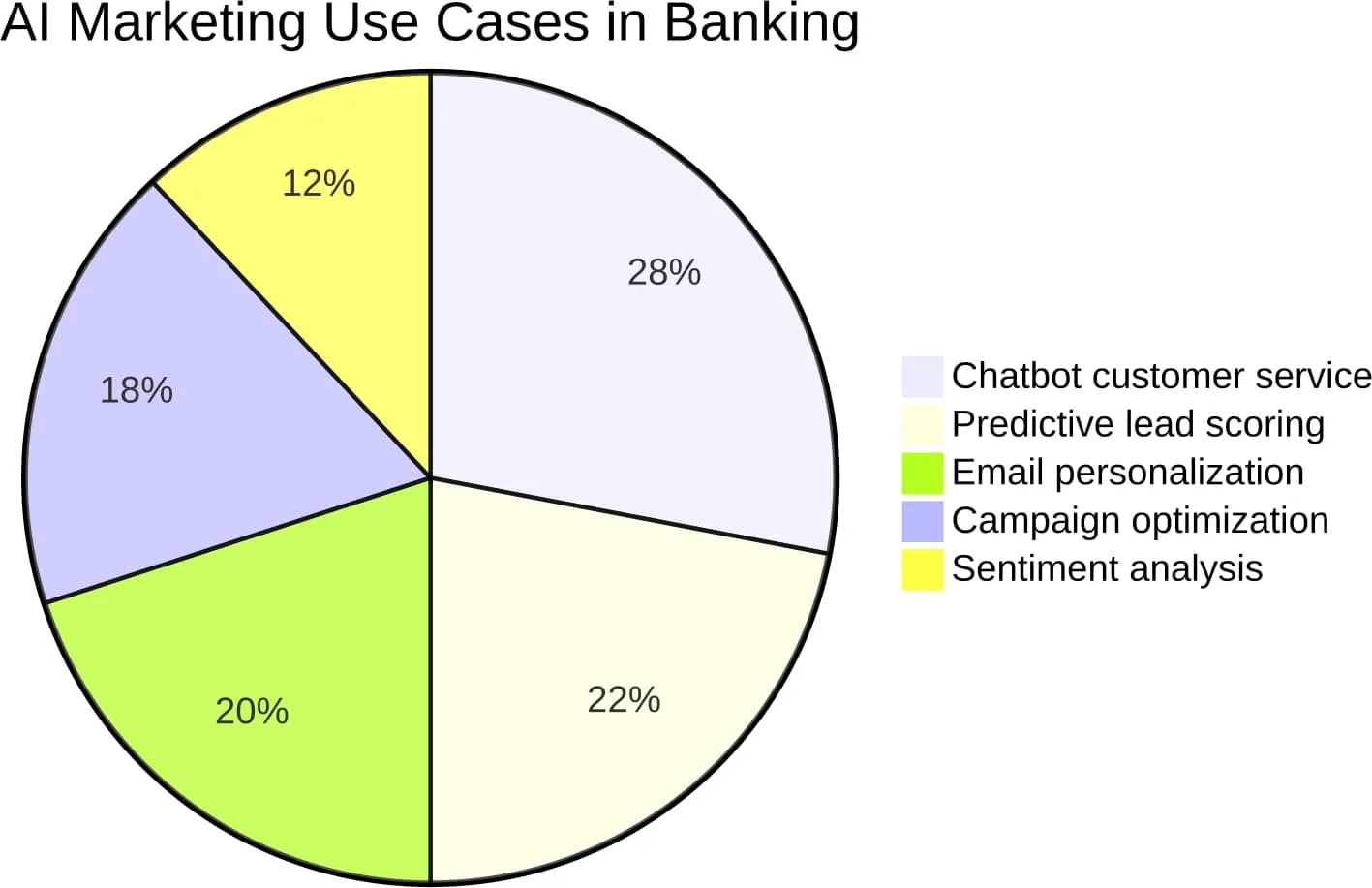
Practical AI applications for bank marketing:
- Chatbots that answer customer queries 24/7
- Predictive models identifying high-value prospects
- Dynamic email content that adapts to user behavior
- Real-time campaign optimization based on performance data
- Sentiment analysis of social media mentions
Many organizations realize less than optimal ROI on AI investments initially, though strategic implementation improves outcomes. Banks that embed human oversight, clear use cases, and strong data hygiene see measurably better results.
Social Media With Personality and Purpose
Most banks use social media in relatively traditional and even “boring” ways. At the same time, other types of big business are leveraging strong social media personalities to drive consumer engagement and build customer loyalty.
Look at brands like Denny’s or Wendy’s—they’ve built massive followings not by selling harder, but by being real, funny, and engaging. Banks can do the same without sacrificing professionalism.
Creative social media tactics for banks:
- Behind-the-scenes content featuring employees
- User-generated stories from satisfied customers
- Polls and Q&As on financial topics
- Timely, relevant commentary on economic news
- Partnering with local influencers or “finfluencers”
Community banks can sponsor local sporting events to build brand awareness and trust—and then use geofencing during those events to deliver hyperlocal, hyperspecific ads on attendees’ phones.
The goal is consistent engagement, not just product pushes. Customers should follow a bank’s social channels because the content is valuable, entertaining, or helpful—not just promotional.
Customer Success Stories That Showcase Real Impact
Trust is the foundation of any successful relationship between a bank and its customers. Building trust in bank marketing is essential, and it can be achieved by showcasing powerful customer testimonials and success stories.
Nothing sells better than proof. When prospects see real people sharing genuine experiences—buying their first home, starting a business, or achieving financial freedom—they connect emotionally and envision their own success.
Identify some of your biggest customers or your customers with the most unique stories and interview them about their experience with your bank. Tell the story in a creative way and seed it on your web site, in advertising and in your HTML emails to new business prospects.
Best practices for customer success stories:
- Use real names and photos (with permission)
- Focus on the customer’s journey, not just the product
- Keep stories short and visually engaging
- Distribute across multiple channels: video, blog, social, email
Mobile-First Experiences That Meet Customers Where They Are
72% of U.S. adults use mobile banking apps in 2025, up from 65% in 2022. Mobile isn’t a secondary channel anymore. It’s the primary interface for most customers, especially younger generations. Banks that still design for desktop-first are missing the mark.
Creative mobile marketing ideas:
- Push notifications with personalized offers based on spending habits
- In-app rewards programs that surprise and delight
- Micro-learning modules delivered via mobile notifications
- One-tap bill pay and transfer features that reduce friction
- Augmented reality tools for branch locators or budgeting visualizations
78% of consumers say they trust their primary financial provider, with mobile experience quality being a key driver. But satisfaction doesn’t mean complacency. Banks must continuously test, optimize, and enhance mobile experiences to stay competitive.
Direct Mail Isn’t Dead—It’s Evolved
Yes, digital dominates. But direct mail still delivers—literally.
Direct mail tops the list among traditional or analog channels in terms of investment, probably because its financial impact is also measurable. Paid search, display and social media advertising ranked highest in terms of ROI.
Bank marketers spend a larger percentage of their budget on direct mail, and 23% are planning to increase that spend in 2026. Why? Because direct mail stands out in a world drowning in digital noise.
Direct mail continues to be valued by bank marketers for its measurable impact and tangible engagement rates.
| Channel | Median ROI | Best Use Case |
|---|---|---|
| Direct Mail | Strong | High-value offers, onboarding |
| Email Marketing | Varies | Nurture campaigns, newsletters |
| Paid Search | High | Demand capture, lead generation |
| Social Media Ads | Moderate | Brand awareness, engagement |
Modern direct mail is personalized, targeted, and trackable. QR codes link to landing pages. Variable printing delivers unique messages to each recipient. Integration with CRM systems triggers mailers based on customer lifecycle events.
Branch Marketing That Surprises and Engages
Branches aren’t going away, but their role is evolving. No longer just centers for transactions, they are increasingly becoming experience hubs that draw in customers and create engagement.
Create a Welcoming, Interactive Environment
Banks like Virgin Money in the UK are introducing lounges where anyone can relax, making the branch feel inviting rather than purely functional. Free amenities such as coffee, WiFi, and coworking spaces can attract foot traffic and encourage longer visits.
Offer Workshops and Hands-On Experiences
In-branch marketing can include financial wellness workshops, homebuyer seminars, or interactive demonstrations of products. These events provide value, educate customers, and give people a reason to visit beyond traditional banking needs.
Use Creative Visuals
Instagram-worthy photo spots, branded backdrops, and interactive screens showcasing success stories or product demos make branches more memorable and shareable. High-impact signage on doors, windows, and parking lots can also capture the attention of passersby who might not yet be customers.
Engage the Community
Branches offer a physical space to connect with the local community. Sponsoring Little League teams, hosting charity drives, or displaying artwork from local artists can build goodwill, strengthen brand loyalty, and cement the bank’s role as a community pillar.
By transforming branches into places of experience, learning, and engagement, banks can turn physical locations into powerful marketing tools that complement digital strategies.
Partner with Colleges to Build Lifelong Relationships
Having a strong presence on a college campus is a great way to get new bankers while they’re young and finances are top-of-mind. Students are finally becoming financially responsible for themselves. By locking them in early, banks have a good chance of keeping them.
Campus marketing tactics:
- Set up branded ATMs in high-traffic student areas
- Sponsor student organizations and popular campus events
- Offer student-specific products with no fees and perks
- Provide financial literacy workshops during orientation
- Create ambassador programs with student influencers
The lifetime value of a customer acquired in college is immense. Students who open checking accounts at 18 often keep them for decades, adding mortgages, investment accounts, and business banking over time.
Creative Campaign Examples That Made Waves
Digital bank Monzo encouraged people to photoshop the Monzo bus in creative and interesting ways. Whoever submitted the best was featured on the Monzo bus Twitter account. Simple, low-cost, wildly engaging.
American Express-produced documentary “Spent: Looking for Change” has been watched nearly 2 million times and has 11,000 likes. The documentary follows four American families who are living paycheck-to-paycheck. It positioned Amex as a brand that cares about financial inclusion—powerful brand storytelling with lasting impact.
TD Bank quickly turned food trucks into its ‘Good Truck’ campaign. There were five Good Trucks around the country, delivering flowers to school staff and free lunches to healthcare workers. A perfect pivot that built goodwill during a crisis.
These campaigns share common threads: authenticity, creativity, and a willingness to step outside the traditional banking playbook.
Marketing as a Revenue Driver, Not a Cost Center
The most successful bank marketers in 2026 will be the ones who definitively demonstrate their team’s correlation to revenue. As banks become more data-driven, marketing leaders who align their strategies with business outcomes and speak the language of finance are finding the most success.
Smaller banks ($1 billion–$10 billion) grew their marketing budgets by 7.16% in 2025, while midsize banks (over $10 billion–$100 billion) posted even stronger growth of 10.15%. Both figures represent a significant reversal from the declining growth trend seen in prior years.
Marketing is no longer judged by impressions or clicks. It’s measured by deposits, loan originations, and customer lifetime value. Banks that can trace marketing touchpoints to business outcomes earn bigger budgets and executive buy-in.
| Marketing Metric | Business Outcome | Why It Matters |
|---|---|---|
| Email open rate | Campaign engagement | Indicates message resonance |
| Webinar registrations | Lead generation | Tracks interest in products |
| App downloads | Digital adoption | Reduces branch transaction costs |
| Branch visits from ads | New account openings | Direct revenue impact |
Common Mistakes Banks Make With Creative Marketing
Even with great ideas, execution matters. Here are pitfalls to avoid:
- Over-promising and under-delivering: Don’t claim “personalized service” if customers still wait on hold for 20 minutes.
- Ignoring compliance: Creativity is great, but not if it lands the bank in regulatory hot water.
- Chasing trends blindly: Not every bank needs a TikTok account. Pick channels that match the audience.
- Forgetting to test: Launch campaigns as pilots. Measure. Optimize. Scale what works.
- Neglecting existing customers: Acquisition matters, but retention is more profitable.
Bank marketers are increasingly accountable for helping their institutions hit revenue targets. Moving beyond traditional brand awareness strategies, performance marketing focuses on driving measurable, revenue-driven results.
The Future of Creative Bank Marketing
As continued pressure to grow with limited resources persists, 2026 will demand more agility, creativity and accountability from bank marketers than ever before. Those who embrace these trends as strategic imperatives will be best positioned to drive growth and build lasting relationships in an increasingly competitive market.
The banks that thrive won’t just adopt these creative marketing ideas—they’ll test, iterate, and evolve them. They’ll combine data-driven precision with human storytelling. They’ll balance digital innovation with physical presence. And they’ll prove, with every campaign, that marketing isn’t a cost—it’s an investment in growth.
Banking is changing. Creative marketing ideas aren’t just keeping pace—they’re leading the way.