


Quick Summary: Mortgage lenders can boost their lead generation and client acquisition through a strategic mix of digital marketing, relationship-building, and compliance-aware advertising. Effective approaches include content marketing, local SEO, social media engagement, strategic partnerships with real estate professionals, video marketing, and direct mail campaigns—all while adhering to federal advertising regulations under Regulation Z.
The mortgage industry in 2026 demands smarter, more targeted marketing than ever before. With borrowers conducting extensive online research before ever contacting a lender and compliance requirements tightening, standing out requires creativity paired with regulatory awareness.
The challenge? Most mortgage lenders rely on the same tired playbook—generic social posts, basic email campaigns, and hoping referrals magically appear. But the lenders capturing market share right now are implementing diverse, multi-channel strategies that address both digital-first consumers and traditional relationship-building.
Here’s the thing though—effective mortgage marketing isn’t about doing everything. It’s about finding the right combination of tactics that align with your market, your compliance obligations, and your capacity to execute consistently.
Build Mortgage Lender Marketing With Lengreo
Mortgage lenders need marketing that makes loan options, eligibility, and next steps easier for people to understand. Lengreo helps connect the website, search visibility, paid traffic, outreach, and tracking into one setup that supports real inquiries.
Need More Qualified Mortgage Leads?
Lengreo can help with:
- refining loan, eligibility, and application pages
- setting up SEO and paid campaigns
- supporting lead generation and appointment setting
- tracking forms, calls, and campaign performance
👉 Contact Lengreo to discuss your marketing setup.
Digital Marketing Strategies That Generate Qualified Leads
Digital channels offer mortgage lenders unprecedented targeting capabilities and measurable ROI. Industry analyses indicate that online video is expected to comprise a significant portion of web traffic, making visual content increasingly critical.
Video Marketing for Mortgage Professionals
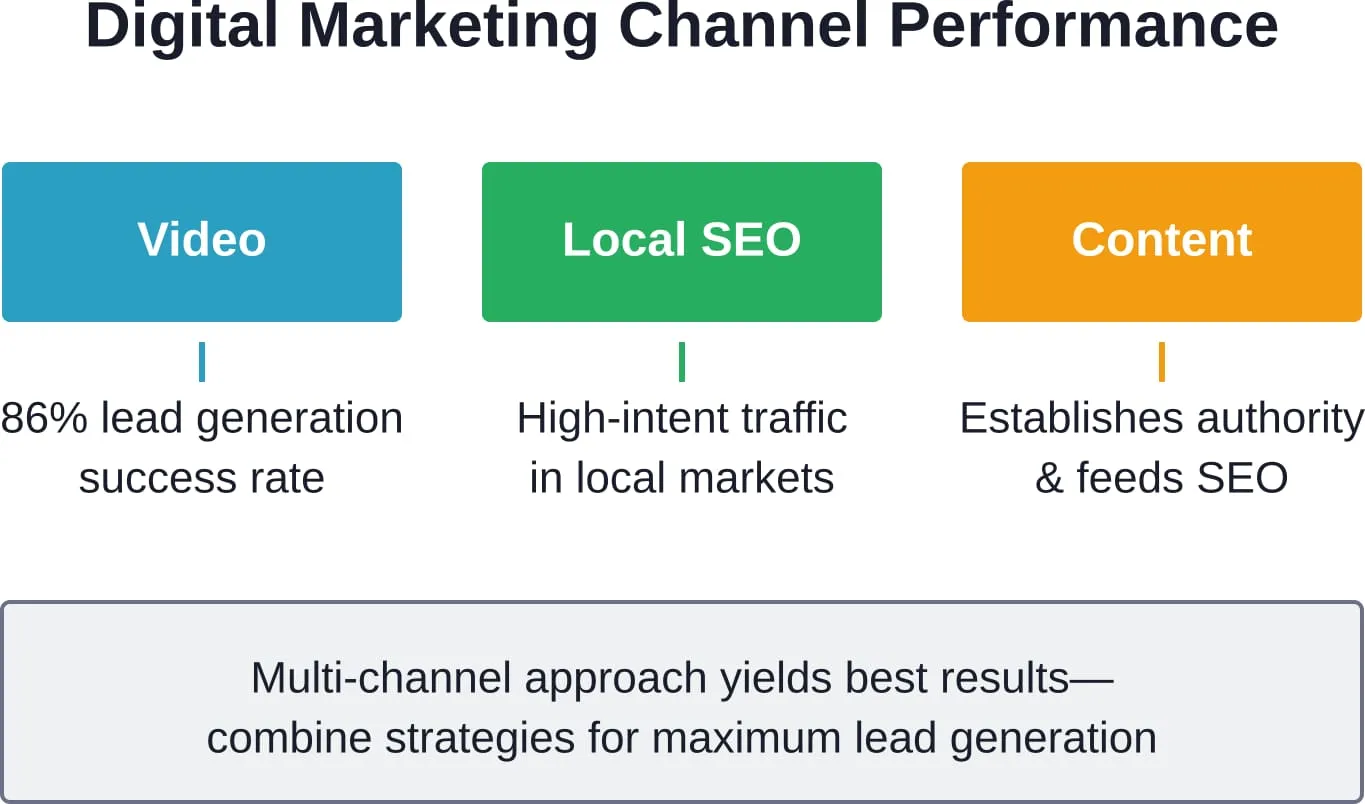
Video has become non-negotiable for mortgage marketing. Research shows that 86% of marketers use video as a marketing tool, with the same percentage believing video successfully generates leads.
Create short educational videos explaining complex mortgage concepts—adjustable versus fixed rates, FHA versus conventional loans, or the pre-approval process. These position lenders as educators rather than salespeople, building trust before a prospect ever fills out an application.
Facebook Live and Instagram Live sessions work particularly well for Q&A formats. Answer common borrower questions in real-time, addressing concerns about credit scores, down payment requirements, or closing costs. The informal nature of live video makes lenders approachable while demonstrating expertise.
Search Engine Optimization for Local Markets
Local SEO dominates mortgage lead generation because home buying is inherently location-specific. Optimize for geo-targeted keywords like “mortgage lender in [city]” or “best home loan rates [neighborhood].”
Complete your Google Business Profile thoroughly. Add business hours, service areas, photos of your office, and encourage satisfied clients to leave reviews. Local pack rankings—those map results appearing above organic listings—drive substantial qualified traffic.
Create location-specific content addressing local market conditions. Write blog posts about median home prices in your service area, neighborhood guides for first-time buyers, or how local property taxes impact monthly payments. This hyper-local content attracts borrowers actually searching in your market.
Content Marketing That Educates and Converts
Regular blog publishing establishes authority and feeds your SEO strategy. But generic mortgage content doesn’t cut it anymore.
Focus on addressing specific borrower pain points: “How to Qualify for a Mortgage with Student Loan Debt,” “Self-Employed Borrower Documentation Requirements,” or “Navigating Rate Locks in Volatile Markets.” These targeted topics attract prospects actively researching solutions to their exact situation.
Repurpose content across channels. Turn blog posts into social media graphics, email newsletter segments, or script outlines for video content. This maximizes your content investment while maintaining consistency across platforms.
Social Media Marketing for Mortgage Lenders
Social platforms offer mortgage lenders direct access to borrowers and referral partners. But success requires platform-specific strategies, not copy-paste content across channels.
Platform-Specific Approaches
Facebook remains powerful for mortgage marketing due to its demographic breadth and ad targeting capabilities. Share educational content, client testimonials (with permission), and market updates. Join local community groups and provide helpful answers to housing-related questions—without overtly selling.
LinkedIn targets professional audiences and referral sources. Share industry insights, market analysis, and thought leadership content. Connect with real estate agents, financial advisors, and CPAs who can become referral partners.
Instagram works well for visual storytelling. Share client success stories (maintaining privacy), office culture content, and simple infographics breaking down complex mortgage concepts. Use Stories for quick tips and behind-the-scenes content that humanizes your business.
Content Ideas That Drive Engagement
Post educational content consistently: “Mortgage Myth Monday” debunking common misconceptions, “Term Tuesday” defining industry jargon, or “Friday Rate Updates” summarizing weekly market movements.
Share local market statistics relevant to potential buyers: median home prices, inventory levels, or average days on market. This positions lenders as market experts while providing genuinely useful information to followers.
Client testimonials (video or written, always with explicit permission) build social proof. Highlight diverse borrower situations—first-time buyers, move-up purchasers, refinances—so prospects see themselves reflected in your success stories.
Relationship Marketing and Strategic Partnerships
Real talk: the best mortgage marketing combines digital reach with relationship depth. Referrals remain the highest-converting lead source in the industry.
Real Estate Agent Partnerships
Building relationships with real estate agents creates consistent referral pipelines. Offer to co-host homebuyer seminars where agents bring their contacts and lenders provide mortgage education.
Sponsor agent open houses by providing refreshments or marketing materials. This increases face time and demonstrates willingness to support their business.
Create agent-specific resources: pre-qualification checklists, loan program comparison sheets, or quick-reference guides for common questions. Make agents’ jobs easier and they’ll remember who to call when clients need financing.
Real estate professionals report that hosting lunch-and-learn sessions for agents and buyers works particularly well. Bring food, provide continuing education credits when possible, and share market updates that help agents serve their clients better.
Professional Network Development
Connect with financial advisors, CPAs, and attorneys who encounter clients needing mortgage services. These professionals value trusted referral partners who won’t embarrass them with poor service.
Join local chambers of commerce, business networking groups, and civic organizations. Attend consistently—relationship building takes time. The goal isn’t immediate sales but becoming the go-to mortgage resource in your professional community.
Consider teaching personal finance courses or workshops. Share expertise on credit management, debt-to-income ratios, or mortgage qualification. This positions lenders as educators invested in community financial wellness.
Email Marketing Strategies That Nurture Leads
Email remains one of the highest-ROI marketing channels when executed properly. Build segmented lists and deliver relevant content based on subscriber status.
- Create separate email tracks for different audiences: active prospects researching mortgages, past clients eligible for refinancing, and referral partners needing market updates.
- For prospects, send educational series covering the mortgage process step-by-step. Break down pre-approval, application, underwriting, and closing. This reduces anxiety and keeps lenders top-of-mind throughout the decision journey.
- Send past clients quarterly home maintenance tips—seasonal reminders about HVAC servicing, gutter cleaning, or winterization. This maintains relationships and keeps contact information current for future refinance opportunities or referrals.
- Market update emails for referral partners should include rate trends, program changes, and regulatory updates affecting borrowers. Make partners smarter about the mortgage landscape and they’ll value the relationship.
- Design email templates using tools with monthly subscriptions starting around $12.99 for consistent branding across campaigns.
Traditional Marketing Tactics That Still Work
Digital doesn’t mean abandoning proven traditional approaches. Many remain highly effective, especially in local markets.
Direct Mail Campaigns
Direct mail’s response rate is reportedly 750% more than email in certain demographics. Target specific neighborhoods with relevant offers—refinance opportunities when rates drop, or homebuyer programs for renter-dense areas.
Personalization matters. Industry data suggests that personalizing mortgage direct mail dramatically improves response rates.
Postcards work well for simple messages: rate announcements, open house co-hosting with agents, or seasonal homebuying tips. Keep messaging clear and include obvious next steps—QR codes linking to landing pages or dedicated phone numbers for tracking response.
Branded Materials and Promotional Items
Branded promotional items keep lenders visible long after initial contact. Consider practical items prospects actually use: quality pens, notepads, or phone accessories.
Typical pricing for promotional items ranges affordably: custom pens start around 99 cents, tumblers at $2.39, and car magnets at $8 each. These represent minimal investment for ongoing brand exposure.
For higher-value clients or referral partners, consider premium items: laptop cases (from $4.99), quality drinkware, or tech accessories. The goal is utility—items recipients use regularly, keeping your brand consistently visible.
Local Event Sponsorships
Sponsor community events, youth sports teams, or charity fundraisers. This builds brand awareness while demonstrating community investment—important for lenders whose business depends on local trust.
Host or sponsor first-time homebuyer workshops at libraries, community centers, or partner real estate offices. Provide genuinely educational content without high-pressure sales tactics. Attendees remember who helped them understand the process.
| Marketing Tactic | Best For | Typical Timeline | Key Benefit |
|---|---|---|---|
| Video Content | Brand awareness & education | Ongoing | High engagement rates |
| Local SEO | Capturing high-intent searches | 3-6 months | Qualified local traffic |
| Agent Partnerships | Consistent referral pipeline | 6-12 months | Pre-qualified leads |
| Email Nurture Campaigns | Lead conversion & retention | Ongoing | Highest ROI channel |
| Direct Mail | Geographic targeting | Immediate | Higher response vs. email |
| Event Sponsorships | Community brand building | Seasonal | Trust development |
Compliance Considerations for Mortgage Advertising
Mortgage advertising operates under strict federal regulations. The Consumer Financial Protection Bureau’s Regulation Z governs what lenders can and cannot state in advertisements.
According to CFPB regulations, if an advertisement states specific credit terms, it shall state only those terms actually available from the creditor. Lenders cannot advertise very low annual percentage rates that won’t actually be offered at any time.
Certain “triggering terms” in advertisements require additional disclosures. If ads mention down payment amounts, payment amounts, number of payments, or payment periods, they must include specific additional information about loan terms.
For example, advertising that mentions a 5% down payment, monthly payments of $1,650, or 12% APR triggers disclosure requirements under federal law.
Digital marketing providers working with mortgage lenders must also comply with these regulations. Recent CFPB guidance emphasizes that third-party marketers aren’t exempt from fair lending and advertising laws.
Work with compliance professionals to review marketing materials before deployment. The cost of compliance review is minimal compared to regulatory penalties or enforcement actions.
Measuring Marketing Performance and ROI
Track every marketing channel to identify what drives actual loan applications and closings. Vanity metrics like social media followers mean nothing if they don’t convert to business.
Implement tracking mechanisms: unique phone numbers for different campaigns, UTM parameters on digital ads, landing pages specific to each channel. This attribution reveals which tactics justify continued investment.
Calculate cost per lead and cost per closed loan for each marketing channel. A tactic generating cheap leads that never close wastes resources. Conversely, expensive leads that consistently close at high rates may justify premium spending.
Survey new clients about how they found you. Despite tracking technology, asking directly often reveals the actual decision path—perhaps they saw your social posts, then attended your seminar, then received an agent referral before applying.
Review performance quarterly and adjust accordingly. Marketing isn’t set-it-and-forget-it. Market conditions, competitor activities, and platform algorithm changes require ongoing optimization.
Building Your Mortgage Marketing Plan
Don’t attempt implementing every tactic simultaneously. Start with three to five strategies aligned with your strengths and market.
- For lenders with strong presentation skills, prioritize video content and live events. Those with writing ability should focus on content marketing and SEO. Relationship-oriented personalities excel at agent partnerships and networking.
- Set realistic timelines. Digital tactics like paid advertising can generate leads quickly but require ongoing budget. SEO and relationship marketing take months to build momentum but create compounding returns over time.
- Allocate budget proportionally. A general guideline suggests spending 5-10% of revenue on marketing, adjusted based on growth objectives and market competitiveness.
- Most importantly, commit to consistency. Sporadic marketing efforts waste resources. Regular, sustained execution—even at smaller scale—outperforms occasional large campaigns.
Taking Action on Your Marketing Strategy
The mortgage market rewards lenders who market strategically, consistently, and compliantly. Standing out requires more than occasional social posts or hoping past clients remember to refer.
Start by selecting three marketing tactics from different categories: one digital strategy for reach, one relationship-building approach for referrals, and one traditional tactic for local visibility. Implement these consistently for at least 90 days before evaluating performance.
Document processes as you build them. Create templates for social posts, email sequences, and outreach scripts. This systematization allows scaling successful tactics without reinventing approaches each time.
Most importantly, view marketing as ongoing business development rather than episodic campaigns. The lenders thriving in competitive markets maintain consistent visibility, provide genuine value to their communities, and build relationships that generate referrals for years.
Start implementing today—because borrowers are searching for mortgage solutions right now, and your competitors are already marketing to reach them.