

Quick Summary: Marketing ideas for masonry businesses include building a high-converting website, dominating local SEO and Google Business Profile, showcasing project photos on social media, collecting 5-star reviews, and running targeted Google Ads. Successful contractors allocate 1% of revenue to marketing and focus on strategies that generate measurable leads rather than spreading budgets thin across ineffective channels.
Most masonry contractors don’t do much marketing. When work comes through referrals and repeat customers, that’s fantastic—until it isn’t. The moment referrals slow down or a competitor moves into your territory, suddenly the phone stops ringing.
According to Bright Local research cited by the Mason Contractors Association of America, 98% of consumers used online resources to find local businesses in 2022. That number has only grown. If your masonry company isn’t visible where people are looking, you’re leaving money on the table.
Here’s the thing though—marketing doesn’t have to drain your budget or require a business degree. The best masonry marketing strategies focus on showing up where your customers are, proving your expertise through completed work, and making it dead simple for people to contact you.
Setting Your Marketing Budget the Smart Way
Before diving into specific tactics, nail down what you’re willing to spend. Many masonry contractors operate without any formal marketing budget, which makes it impossible to measure what works.
Industry experts at the Mason Contractors Association of America recommend starting with just 1% of your revenue as your marketing budget. That’s a manageable starting point that won’t strain cash flow. As you progress and see returns, adjust that percentage based on your growth goals.
For context, the average business spends 1.08% of revenues on marketing, while retailers spend closer to 4% and restaurants about 1.93%. Masonry sits comfortably in the lower range because word-of-mouth and project visibility do heavy lifting.
The key? Track every dollar. If a Google Ads campaign costs $500 and brings in three projects worth $15,000 total, that’s measurable ROI. If a $2,000 billboard generates zero traceable leads, cut it.
Build a Website That Actually Converts
Your website is your 24/7 salesperson. But most masonry contractor sites make critical mistakes: no clear call-to-action, buried contact information, or zero proof of quality work.
A high-converting masonry website needs these elements:
- Prominent phone number and contact form above the fold on every page
- Project photo galleries organized by service type (brick repair, stone veneer, retaining walls, etc.)
- Trust signals like years in business, certifications, insurance details, and service area
- Clear service descriptions that explain what you do and why it matters
- Mobile-responsive design since most searches happen on phones
Skip the fancy animations and focus on clarity. Homeowners researching masonry contractors want fast-loading pages with obvious next steps. Make the phone ring or the contact form submit—that’s the only metric that matters.
Organize Masonry Marketing With Lengreo
Masonry businesses need local visibility, clear service pages, and quote request paths that are easy for property owners or contractors to use. Lengreo helps connect the website, SEO, paid traffic, tracking, and lead generation so marketing is easier to manage and measure.
Need More Quote Requests?
Lengreo can help with:
- improving service, project, and quote pages
- setting up local SEO and paid campaigns
- tracking inquiries and campaign performance
- supporting content and lead generation work
👉 Contact Lengreo to discuss your marketing setup.
Dominate Local SEO and Google Business Profile
Local SEO puts your masonry business at the top of search results when someone types “brick repair near me” or “masonry contractor [your city].” This is non-negotiable.
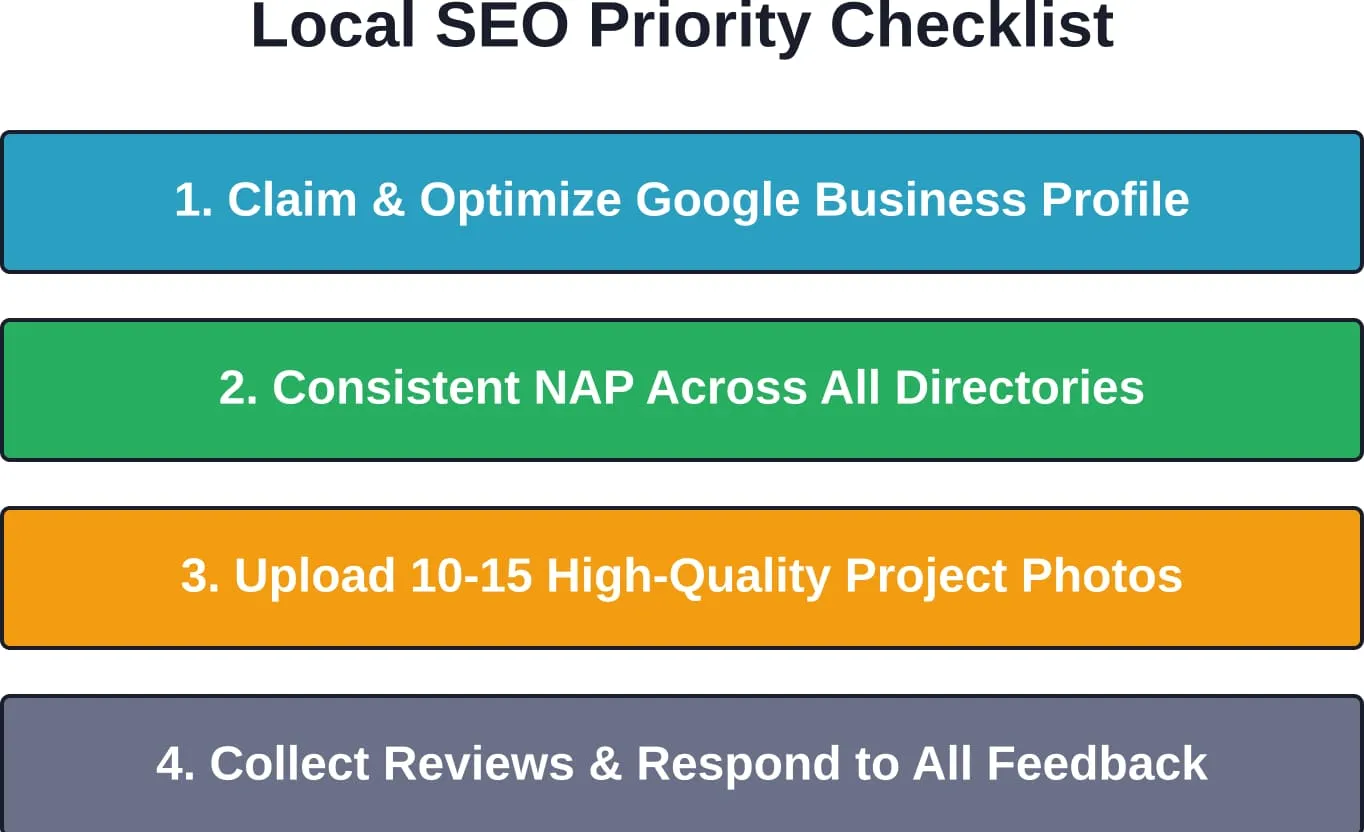
Start with your Google Business Profile (formerly Google My Business). Claim it, complete every field, and keep it updated:
- Business name, address, phone number (NAP) consistent across all online listings
- Service area clearly defined
- Business hours accurate
- High-quality photos of completed projects (upload at least 10-15)
- Regular posts about recent jobs, seasonal tips, or special offers
Masonry businesses with optimized Google listings are significantly more likely to attract phone calls and direction requests. The profile shows up in map results, local pack listings, and Knowledge Panels—free visibility that paid ads can’t match.
Beyond Google, ensure your NAP is consistent on Yelp, Angi (formerly Angie’s List), HomeAdvisor, and industry directories. Inconsistent information confuses search engines and tanks your rankings.
Showcase Your Work on Social Media
Visual platforms like Instagram and Facebook are built for masonry contractors. Your work is inherently photogenic—exposed brick, stone patios, freshly pointed chimneys, custom fireplaces.
But here’s what separates effective social media from posting into the void:
- Post consistently. Three times per week beats daily posting that burns you out after two weeks. Pick a schedule and stick with it.
- Show process, not just results. Before-and-after photos perform well, but so do time-lapse videos of a wall going up or a craftsman cutting stone. People love watching skilled trades work.
- Use local hashtags. #MasonryContractor is fine, but #ChicagoMasonry or #DenverBrickRepair targets people who can actually hire you.
- Engage with your audience. Reply to comments, answer DMs promptly, and thank people who share your posts. Social media rewards interaction.
Short-form video content—Reels on Instagram, TikTok clips—has potential to increase conversions by up to 80% when done well, according to firework.com. Film satisfied clients discussing their experience or create 30-second walkthroughs of finished projects.
Collect and Promote Customer Reviews
Reviews are social proof. Period. Homeowners trust other homeowners more than they trust contractor claims.
Ask every satisfied customer to leave a review on Google. Make it frictionless: send a follow-up email or text with a direct link to your Google Business Profile review page. Timing matters—ask within 48 hours of project completion while they’re still excited.
Respond to every review, positive and negative. Thank customers for 5-star reviews. Address concerns in negative reviews professionally and offer to make things right. Future customers read your responses to judge how you handle problems.
Feature your best reviews on your website homepage. Pull quotes from glowing testimonials and pair them with photos of those specific projects.
Run Targeted Google Ads for High-Intent Searches
Google Search Ads put your business at the top of search results for terms like “emergency brick repair” or “masonry contractor estimates.” You pay per click, and people clicking those ads have high intent—they’re actively searching for masonry services right now.
Digital marketing typically delivers leads at 62% lower cost than traditional methods. Google Ads work because you control budget, target specific service areas, and only pay when someone clicks.
Google Local Service Ads (LSAs) are even better for contractors. They appear above regular search ads, show your Google Guarantee badge, and charge per lead instead of per click. If someone calls or messages through an LSA but doesn’t convert, you can dispute the charge.
| Feature | Google Search Ads | Local Service Ads |
|---|---|---|
| Position | Top of search results | Above search ads |
| Cost Model | Pay-per-click | Pay-per-lead |
| Targeting | Keyword-based | Service category |
| Badge | No verification badge | Google Guarantee badge |
| Best For | Broader reach, brand awareness | High-intent local leads |
Leverage Content Marketing to Demonstrate Expertise
Content marketing means creating helpful resources that answer customer questions. For masonry contractors, that could be blog posts, how-to guides, or project galleries organized by problem solved.
Write about topics your customers actually search for:
- “How much does brick repair cost?”
- “Signs your chimney needs repointing”
- “Brick vs. stone veneer: pros and cons”
- “How to choose a masonry contractor”
Each piece of content targets a specific search query and positions your company as the expert. When someone reads your guide to chimney repair signs and then needs chimney work, who do they call?
Content also feeds your social media. Turn a blog post into five social media posts, an infographic, or a short video. One piece of quality content generates weeks of marketing material.
Network With Complementary Professionals
Building relationships with other professionals in related fields can generate high-quality leads and long-term partnerships. General contractors, architects, landscapers, and real estate agents often work with clients who need masonry services, making them ideal referral sources.
Attend Industry and Local Events
Participate in local builder association meetings, home and garden shows, or chamber of commerce events. Hand out business cards and introduce yourself as a reliable masonry subcontractor or referral partner.
Target High-Value Commercial Clients
For larger projects, consider account-based marketing. Identify specific general contractors or developers working on projects that require masonry, and reach out with targeted materials such as project proposals, capability statements, or invitations to tour your completed work.
Leverage Trust Through Referrals
Networking often generates the highest-quality leads. When a trusted architect or contractor refers your services, the client is already confident in your credibility, increasing the likelihood of conversion.
Use Vehicle Wraps and Jobsite Signage
Your work truck and jobsite are moving billboards. Vehicle wraps displaying your company name, phone number, services, and website turn every drive into advertising.
Jobsite signs do the same. When neighbors see quality masonry work happening on their street, they notice. A professional sign with clear branding plants your company in their mind for future projects.
These offline branding tactics work best in combination with digital strategies. Someone sees your truck, searches your company name later, and finds your optimized Google Business Profile and website. That’s how integrated marketing works.
Track What Works and Double Down
The biggest marketing mistake is spreading your budget across ten tactics without measuring results. If you can’t track it, you can’t improve it.
Use unique phone numbers for different marketing channels (Google Ads gets one number, website gets another) to identify lead sources. Ask every new customer how they found you and log that information.
Review your marketing data quarterly. Which channels generate the most leads? Which leads convert to paying customers? Which have the best ROI?
Cut what doesn’t work. Double down on what does. If Google Local Service Ads consistently deliver profitable jobs, increase that budget and reduce spending on low-performing channels.
Challenges Small Masonry Businesses Face
Marketing isn’t easy for small construction companies. Research from Walden University’s doctoral study on small construction businesses indicates that small and medium enterprises’ failure to maintain competitive advantage is a critical challenge to survival.
Common barriers include:
- Limited time: Owners juggle estimating, project management, and fieldwork, leaving little time for marketing
- Tight budgets: When cash flow is tight, marketing feels like a luxury rather than an investment
- Lack of expertise: Understanding Google Ads, SEO, or content marketing requires skills most masons don’t have
But wait. Those barriers are exactly why focusing on high-ROI tactics matters. You don’t need to master every marketing channel—just the ones that work for your specific business.
Start small. Optimize your Google Business Profile this month. Next month, launch a simple website. The month after, start asking for reviews. Incremental progress beats trying to do everything at once and burning out.
Conclusion: Start Marketing Your Masonry Business Today
Marketing a masonry business doesn’t require a massive budget or advanced technical skills. It requires showing up where customers look, proving your expertise through completed work, and making it easy to hire you.
The most successful masonry contractors focus on a few high-impact strategies: local SEO, Google Business Profile optimization, consistent project showcases on social media, collecting reviews, and targeted advertising through Google Ads or Local Service Ads.
Start with one or two tactics from this guide. Measure results. Adjust. Then add another tactic. Slow, steady marketing progress beats sporadic campaigns every time.
Ready to grow your masonry business? Pick the strategy that fits your budget and bandwidth, commit to it for 90 days, and track what happens. The phone will start ringing.