

Quick Summary: Investing in SEO delivers one of the highest ROIs in digital marketing because it connects businesses with people actively searching for their products or services. Unlike paid advertising that stops working when the budget runs out, SEO builds long-term organic visibility that compounds over time. With SEO leads converting at 14.6% compared to just 1.7% for outbound marketing, it’s a strategic investment that pays dividends for years.
Search engines aren’t going anywhere. More than 25% of users click on the first Google search result they see, and businesses that don’t appear in those top spots are essentially invisible to potential customers actively looking for what they sell.
But here’s the thing—SEO isn’t just about visibility. It’s about connecting with people at the exact moment they’re searching for solutions, building credibility that lasts, and creating a marketing asset that works around the clock without additional spend.
So why should businesses invest in search engine optimization? The data tells a compelling story.
SEO Reaches People Who Are Already Looking to Buy
Traditional marketing interrupts people who might not be interested. SEO does the opposite.
When someone types “best project management software for small teams” into Google, they’re not casually browsing. They have a specific need and are actively researching solutions. That’s purchase intent.
According to Google’s own guidance, search engines help people discover content by understanding what users are looking for. When a site is optimized properly, it becomes easier for search engines to match that content with relevant queries.
This targeting precision explains why SEO leads convert at significantly higher rates. SEO leads have a 15% close rate, significantly outperforming outbound marketing, which averages around 1.5% to 2%. This statistic is cited in competitor source material.
That’s not a small difference. That’s eight times higher.
The people finding businesses through search are further along in their buyer journey. They’ve identified their problem, they’re comparing solutions, and they’re ready to make decisions. Organic search puts businesses in front of these high-intent prospects without the aggressive push of cold outreach.
SEO Delivers One of the Highest ROIs in Marketing
Return on investment matters. Marketing budgets are finite, and every dollar needs to justify itself.
According to research cited in the source material, businesses see a return of two dollars for every one dollar spent on Google Ads. That sounds reasonable until comparing it to SEO’s long-term returns.
Paid search delivers immediate visibility, but the click-through rate (CTR) for paid search ads in 2025-2026 is approximately 6-7% across all industries. The moment advertising budgets pause, traffic stops. Organic search is different.
SEO requires upfront investment—time, expertise, content creation, technical optimization. But once a page ranks, it continues generating traffic without ongoing ad spend. That traffic compounds over time as more pages rank, more content gets indexed, and domain authority builds.
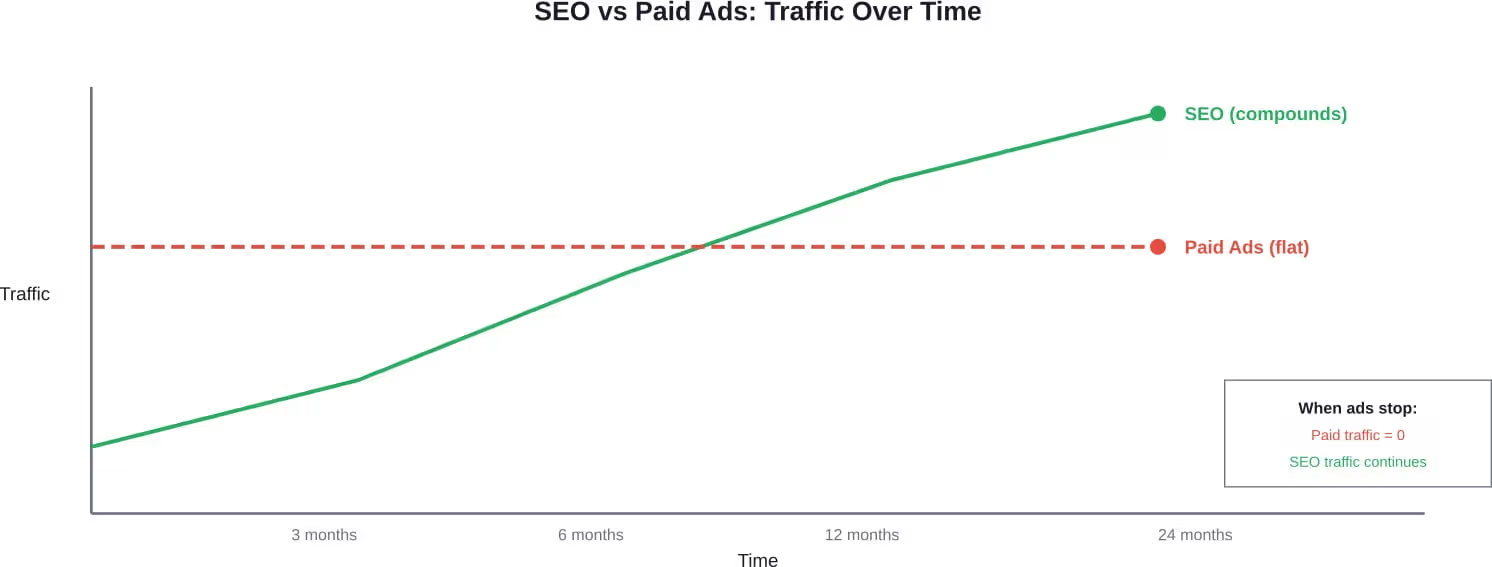
Think of SEO as buying property instead of renting billboard space. Paid ads are the billboard—effective while active, but the benefit stops the moment payments end. SEO is the property that appreciates.
For higher education institutions, defining SEO ROI comes with unique challenges, but the fundamentals remain consistent. The ROI becomes measurable through enrollment increases, program interest growth, and reduced cost per acquisition compared to paid channels.
SEO Works Around the Clock Without Additional Spend
A well-optimized page doesn’t take weekends off.
Once content ranks, it works continuously. At 2 AM when someone in a different time zone searches for solutions. During holidays when sales teams are out. While focusing on other business priorities. Organic search keeps generating leads.
This passive lead generation quality makes SEO particularly valuable for small businesses and startups with limited marketing budgets. The initial investment in optimization—whether done in-house or through an agency—creates an asset that performs indefinitely.
Paid campaigns require constant budget allocation. Pause spending, lose visibility. SEO requires ongoing maintenance and content updates, but the baseline traffic persists even during slower investment periods.
SEO Builds Credibility and Trust With Potential Customers
People trust organic results more than ads. That’s not opinion—it’s user behavior.
When comparing search results, users often skip past paid advertisements to find organic listings. There’s an implicit trust signal: “This site earned its position through relevance and quality, not just advertising budget.”
According to Google’s own documentation, search engine optimization is about helping search engines understand content and helping users find sites to make decisions about whether they should visit. That understanding translates to trust.
Ranking in top positions signals authority. It tells potential customers that search engines—and by extension, other users—consider this content valuable and relevant. That third-party validation matters more than self-promotion.
The credibility extends beyond just rankings. Proper SEO involves:
- Creating comprehensive, helpful content that answers user questions
- Building a fast, mobile-friendly website that provides good user experience
- Earning backlinks from other reputable sites
- Maintaining accurate, up-to-date information
These elements combine to create a trustworthy online presence that resonates with both search algorithms and human visitors.
Search Engine Optimization Is a Long-Term Investment That Compounds
Here’s where SEO differs fundamentally from most marketing tactics: it gets better over time.
The first three months of an SEO campaign typically show modest results. Rankings begin to shift, traffic starts increasing gradually, but the dramatic improvements take longer. That’s normal.
But at six months, the compounding begins. Early content starts ranking for multiple related queries. Domain authority grows, making new content rank faster. Internal linking creates pathways that strengthen the entire site.
By twelve months, businesses with consistent SEO efforts often see exponential growth compared to their starting point. Not because the tactics changed, but because the accumulated authority, content depth, and technical improvements create momentum.
| Timeframe | Expected SEO Progress | Paid Ads Progress |
|---|---|---|
| 0-3 months | Initial rankings, modest traffic increases | Immediate traffic based on budget |
| 3-6 months | Noticeable ranking improvements, growing traffic | Consistent traffic (budget-dependent) |
| 6-12 months | Significant organic growth, compounding returns | Plateau unless budget increases |
| 12+ months | Exponential growth, reduced cost per lead | Same performance, ongoing costs |
This timeline explains why SEO is considered a long-term investment. The patience required during early months pays off with sustained, growing returns that outlast any short-term campaign.
SEO Gives Businesses Competitive Advantage in Digital Marketing
In most industries, competitors are already investing in search optimization. Not participating means ceding market share.
Consider this scenario: a potential customer searches for a product or service. Three competitors appear in top positions. One business doesn’t rank at all. Who gets the lead?
The invisible business doesn’t even get considered.
For tech companies especially, SEO from day zero creates positioning advantages that become harder for later entrants to overcome. Early investment builds domain authority, captures valuable backlinks, and establishes topical expertise that compounds over time.
The competitive dynamics work both ways. Strong SEO doesn’t just bring in leads—it denies them to competitors. Every organic visitor represents someone who didn’t click on a competitor’s listing or ad.

Modern SEO Adapts to Evolving Search Behavior
Search isn’t static. User behavior evolves, and SEO evolves with it.
The shift toward answer engine optimization reflects this evolution. Consumers increasingly use natural language queries and expect direct answers. Search engines respond with featured snippets, knowledge panels, and AI-generated summaries.
According to Forrester research from 2025, marketers now face a zero-click search environment where answers appear directly in search results. This doesn’t diminish SEO’s value—it changes the tactics. Optimizing for featured snippets, structuring content for voice search, and providing clear, authoritative answers become priority strategies.
The fundamentals remain consistent though. Google’s guidance emphasizes creating content for users, ensuring search engines can understand it, and maintaining a positive user experience. Those principles persist regardless of how search interfaces change.
Businesses that invest in SEO now position themselves for whatever comes next in search evolution. The infrastructure—quality content, technical optimization, authoritative backlinks—adapts to new ranking factors more easily than starting from scratch.
SEO Improves Overall User Experience
Good SEO and good user experience are inseparable.
Search engines prioritize sites that load quickly, work well on mobile devices, have clear navigation, and provide valuable content. These aren’t just ranking factors—they’re elements that make websites better for actual humans.
According to Google’s documentation, SEO involves making sites better for search engines, which inherently means making them better for users. The overlap is intentional.
When optimizing for search, businesses naturally address issues like:
- Slow page load times that frustrate visitors
- Confusing site structure that makes content hard to find
- Poor mobile responsiveness that alienates smartphone users
- Thin content that doesn’t answer user questions
- Broken links and technical errors that damage credibility
Fixing these problems for search engines simultaneously improves conversion rates, reduces bounce rates, and increases customer satisfaction. The investment pays dividends beyond just rankings.
Turn SEO Investment Into Predictable Growth
Knowing why to invest in SEO is only the beginning, and LENGREO helps turn SEO into a scalable channel that consistently drives traffic, leads, and revenue. A structured approach ensures that SEO efforts build on each other over time instead of delivering short term results.
- long term SEO strategy
- traffic and lead generation
- conversion focused optimization
If you want SEO to become a reliable growth engine, contact LENGREO to get started.
Measuring SEO ROI: What to Track
Quantifying SEO returns requires tracking the right metrics. Revenue matters most, but the path from search to sale involves multiple data points.
Effective SEO measurement includes:
| Metric Category | Key Indicators | Why It Matters |
|---|---|---|
| Traffic | Organic sessions, new users, page views | Measures visibility and reach growth |
| Rankings | Keyword positions, ranking keywords, featured snippets | Tracks competitive positioning |
| Engagement | Time on page, bounce rate, pages per session | Indicates content quality and relevance |
| Conversions | Goal completions, lead form submissions, sales | Directly ties SEO to revenue |
| Authority | Backlinks, referring domains, domain authority | Measures long-term competitive strength |
For higher education institutions, the ROI calculation needs to account for longer decision cycles. A prospective student might research programs for months before applying. Attribution becomes complex, but tracking organic traffic to program pages, application starts, and eventual enrollments provides the necessary data.
The key is establishing baseline metrics before SEO investment, then tracking improvements over time. Quick wins matter, but the real ROI reveals itself in 12-24 month comparisons.
Different Types of SEO Investments
Not all SEO spending is created equal. Understanding where to allocate resources maximizes returns.
- Technical SEO addresses the foundation: site speed, mobile optimization, crawlability, indexation, structured data. These investments often deliver quick wins because they remove barriers preventing search engines from properly understanding and ranking content.
- Content creation fuels long-term growth. Comprehensive guides, helpful blog posts, resource pages, and product information all attract organic traffic for different queries. The investment compounds as content accumulates.
- Link building establishes authority. Earning backlinks from reputable sites signals trustworthiness to search engines. Quality matters more than quantity—one link from an authoritative domain outweighs dozens from low-quality sources.
- Local SEO matters for businesses serving specific geographic areas. Optimizing Google Business Profile, managing citations, and earning local backlinks captures nearby customers with high purchase intent.
The optimal mix depends on current site status and business goals. New sites need technical foundation first. Established sites with solid technical SEO benefit more from content and authority building.
Common SEO Investment Mistakes to Avoid
Knowing what doesn’t work saves money and time.
- Expecting immediate results leads to premature abandonment. SEO takes time. Businesses that expect paid-search-style immediacy often quit before seeing returns. Setting realistic timeline expectations prevents this mistake.
- Focusing solely on rankings misses the bigger picture. Top rankings for irrelevant keywords don’t generate revenue. Target search terms that align with business goals and user intent.
- Neglecting technical foundation wastes content investment. Publishing great content on a slow, poorly structured site limits its ranking potential. Fix technical issues first.
- Buying links risks penalties. Google explicitly warns against manipulative link schemes. The short-term ranking boost isn’t worth the long-term damage when search engines detect and penalize these tactics.
- Ignoring user experience undermines everything else. Search engines increasingly prioritize sites that satisfy user needs. Technical SEO perfection means nothing if visitors immediately bounce because of poor design or unhelpful content.
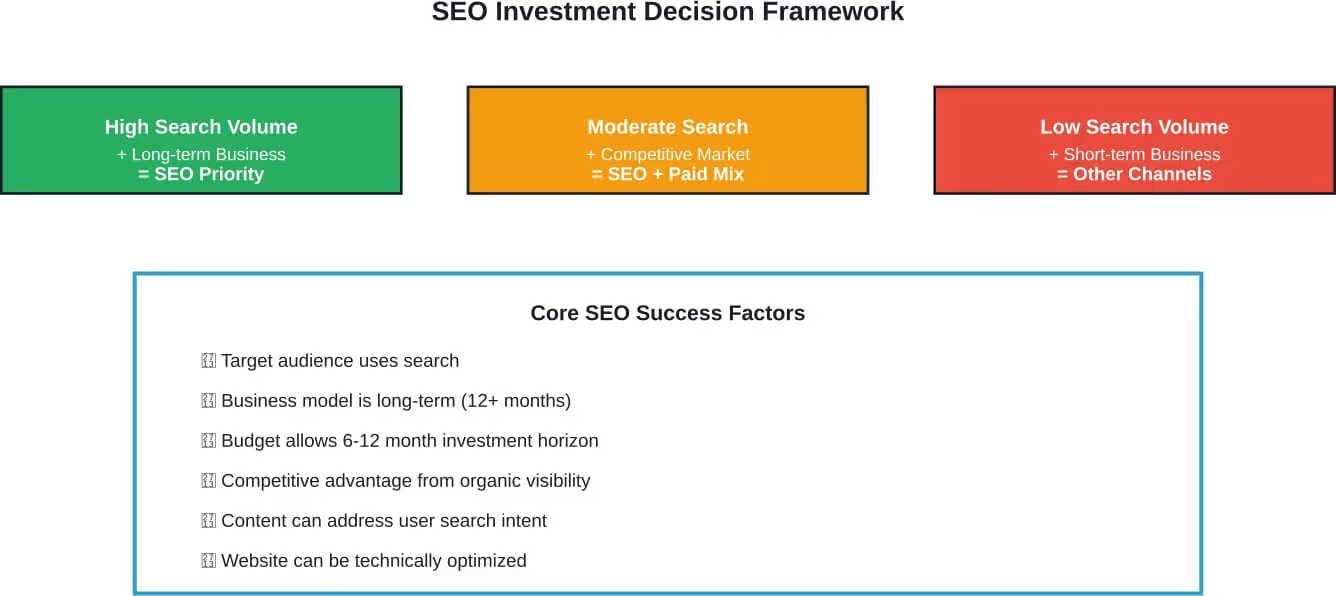
Is SEO Worth It for Every Business?
Real talk: SEO isn’t universally optimal for every situation.
Businesses with extremely limited budgets might see faster initial returns from targeted paid advertising while building SEO foundation gradually. Companies in hyperlocal markets with little search volume might benefit more from direct community engagement.
Temporary or event-based businesses—pop-up shops, one-time events—won’t see ROI from long-term SEO investment. The timeline doesn’t align.
But for most businesses with online presence and digital growth goals? SEO is not just worth it—it’s essential.
E-commerce sites, SaaS companies, professional services, educational institutions, healthcare providers, B2B businesses, and local service providers all benefit substantially from organic search visibility. The question isn’t whether to invest, but how much and where to start.
Getting Started With SEO Investment
The best time to start was yesterday. The second best time is now.
Beginning an SEO program doesn’t require massive budgets or enterprise software. Start with fundamentals:
- Audit current status. Where does the site stand now? What’s already ranking? What technical issues exist? Understanding the baseline guides strategic priorities.
- Research keyword opportunities. What are potential customers searching for? Which queries have reasonable volume and match business offerings? Keyword research reveals the target.
- Fix critical technical issues. Address site speed, mobile responsiveness, broken links, and indexation problems. These foundational fixes often deliver quick ranking improvements.
- Create helpful content. Answer the questions target audiences are asking. Solve their problems. Provide genuine value. Search engines reward content that satisfies user intent.
- Build authority gradually. Earn backlinks through quality content, industry participation, and relationship building. Authority accumulates over time.
- Measure and adjust. Track the metrics that matter. Analyze what’s working. Double down on successful tactics and adjust underperforming areas.
The investment can scale with resources. Small businesses can start with foundational technical optimization and consistent content creation. Larger enterprises can deploy comprehensive strategies across technical, content, and authority building simultaneously.
The Bottom Line on SEO Investment
Search engines connect people with solutions. Businesses that appear in those search results capture demand. Those that don’t remain invisible to potential customers actively looking to buy.
The data supports SEO investment decisively. With conversion rates eight times higher than outbound marketing, compounding returns that accelerate over time, and passive lead generation that works continuously without additional spend, search engine optimization delivers measurable ROI.
The timeline requires patience. Immediate results aren’t realistic. But for businesses with long-term growth objectives, few marketing investments offer comparable return potential.
Competition makes action urgent. Markets that seem wide open today become saturated tomorrow. Early movers build authority advantages that become progressively harder for later entrants to overcome.
Start with fundamentals: fix technical issues, research keyword opportunities, create helpful content, and build authority gradually. The investment scales with resources, making SEO accessible to businesses of all sizes.
The question isn’t whether SEO is worth investing in—the evidence clearly demonstrates its value. The real question is whether businesses can afford to delay while competitors capture market share through organic search visibility.
Ready to build sustainable organic growth? The best time to invest in SEO was twelve months ago. The second best time is today.