


SEO writing starts with a simple question: how do people actually look for information online? Once you understand that, the writing choices become clearer. You’re not just putting words on a page, you’re shaping content so it can be discovered, understood, and trusted.
This kind of writing pays attention to intent and context. It anticipates what a reader needs next, not just what they typed into a search bar. The language stays natural, the structure is deliberate, and every section has a reason to exist. Search engines benefit from that clarity, but the reader always comes first.
Done well, SEO writing creates content that keeps earning attention over time. It doesn’t chase trends or shortcuts. It builds visibility by being genuinely useful and easy to navigate, which is exactly what search engines are trying to reward.
Why SEO Writing Exists
People use search engines to solve problems. They look for explanations, comparisons, instructions, and reassurance. SEO writing exists to meet those needs in a way search engines can reliably index and present.
Without SEO writing, even strong content can remain invisible. Without strong writing, even technically optimized pages fail to engage readers. Effective SEO writing sits at the intersection of both.
It exists because:
- Search engines need clear signals to understand content
- Readers need clarity, relevance, and trust
- Businesses need sustainable visibility, not temporary spikes
The goal is not to manipulate algorithms. The goal is to remove friction between a question someone asks and the answer your content provides.
Lengreo: SEO Writing Within a Broader Strategy
We see SEO writing as one part of a much larger picture. At Lengreo, content is never created in isolation. Writing is shaped by research, positioning, and a clear understanding of how search visibility supports lead generation, conversions, and long-term growth. SEO principles help guide structure and clarity, but they are always aligned with wider business goals rather than treated as an end in themselves.
Our work focuses on building systems that perform over time. That includes SEO strategy, keyword and competitor analysis, technical optimization, content planning, and ongoing performance improvements. Within that framework, writing plays a practical role: explaining value, answering real questions, and supporting decision-making across complex B2B journeys. The result is content that feels purposeful, grounded, and connected to measurable outcomes, not just optimized for search engines.
SEO Writing vs Traditional Content Writing
SEO writing and traditional content writing overlap, but they are not the same. The difference lies in intention and structure, not in creativity or quality.
| Aspect | SEO Writing | Traditional Content Writing |
| Primary focus | Search visibility and user intent | Engagement or storytelling |
| Keyword use | Strategic and contextual | Optional or minimal |
| Structure | Optimized for scanning and indexing | Flexible and expressive |
| Measurement | Rankings, traffic, conversions | Engagement and brand perception |
| Longevity | Designed for long-term discovery | Often time-bound |
SEO writing does not limit creativity. It gives creative work a framework so the right audience can actually find it.
What Modern SEO Writing Looks Like
SEO writing used to be easy to recognize. Pages were filled with repeated phrases, awkward sentences, and text written more for machines than for people. That approach no longer works.
Modern SEO writing prioritizes intent over repetition, topics over isolated keywords, clarity over volume, and structure over density. A well-written SEO article reads as if it was written for a person first. Optimization works beneath the surface, guiding structure and scope rather than dominating the language.
Search Intent as the Foundation
Every search query has a reason behind it. Understanding that reason is the starting point of SEO writing.
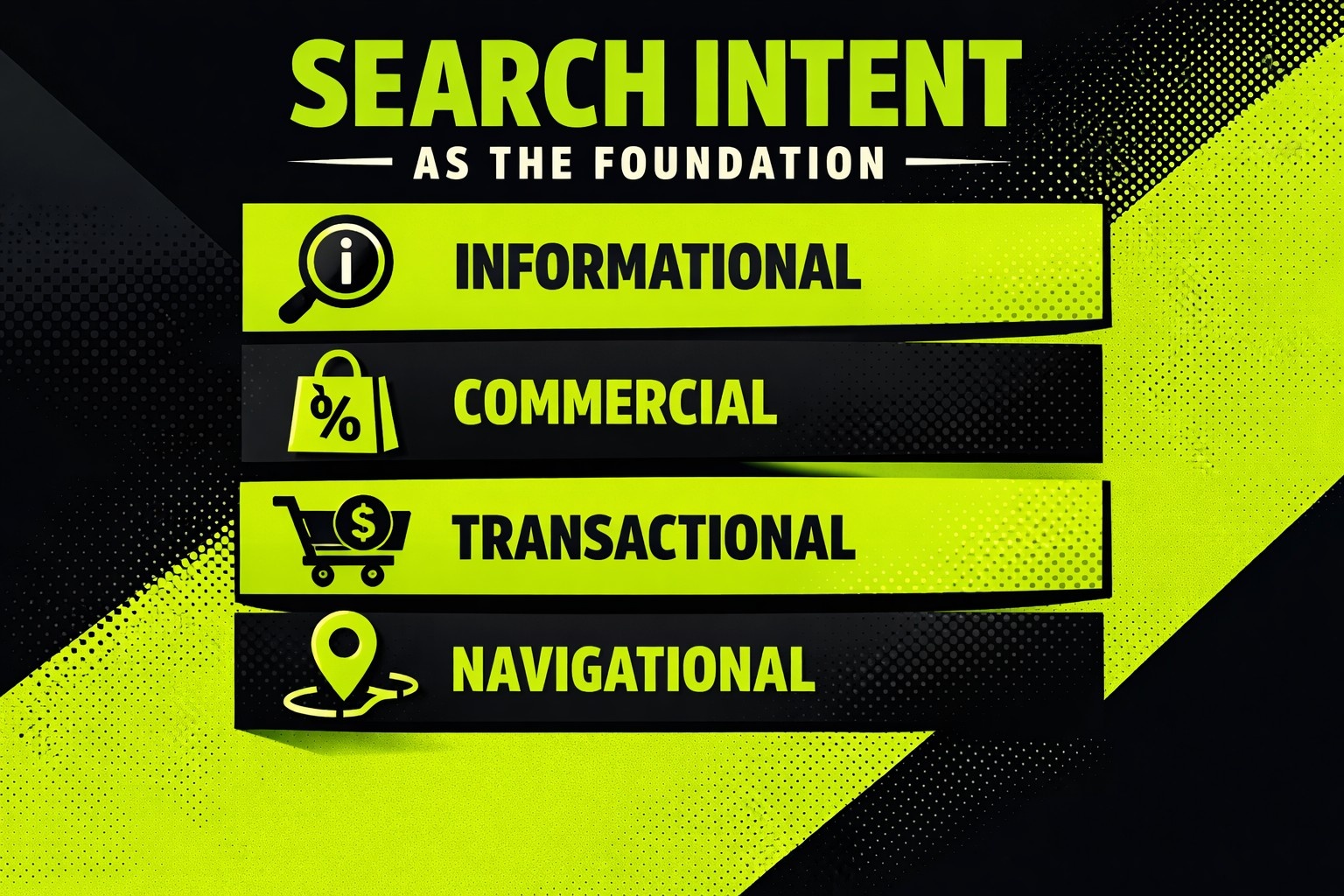
Most search intent falls into four categories:
- Informational – seeking explanations or knowledge
- Commercial – comparing options or evaluating solutions
- Transactional – ready to act or buy
- Navigational – trying to reach a specific site or brand
SEO writing fails when content ignores intent. A detailed guide will not satisfy someone ready to buy, and a sales page will not help someone looking for an explanation.
Before writing, it is essential to understand what the searcher wants to accomplish, what format best serves that goal, and how much depth is appropriate. Getting intent right prevents most SEO writing mistakes before they happen.
Keywords and Topic Coverage in Modern SEO Writing
Keywords still matter, but not as targets to repeat mechanically. They function as contextual signals that help define what a page is about and how it should be understood.
What Keywords Do in Modern SEO Writing
In modern SEO writing, keywords serve several practical purposes at once. They establish the main topic of a page, signal which subtopics should be addressed, and reflect the language real users naturally use when searching. Rather than dictating wording, keywords help shape the scope and direction of the content so it aligns with actual search behavior.
How Keywords Appear in a Strong SEO Article
A strong SEO article is usually built around one primary keyword that clearly defines the page’s focus. That core term is supported by related or secondary phrases and natural variations that appear organically throughout the text. These variations emerge naturally as the topic is explained in full, rather than being inserted deliberately or repetitively.
Why Topic Coverage Matters More Than Repetition
Search engines assess whether a page covers a topic comprehensively, not how often it repeats a specific phrase. Effective topic coverage means addressing common follow-up questions, explaining ideas from multiple angles, and filling potential knowledge gaps without adding unnecessary filler.
A simple test helps clarify this. If someone were to read only your page, would they need to search again to understand the topic fully? If the answer is yes, the issue is usually not keyword usage but incomplete topic coverage.
Structure and Readability in SEO Writing
Structure is one of the most underestimated elements of SEO writing. Headings and layout are not decorative choices, they shape how content is understood.
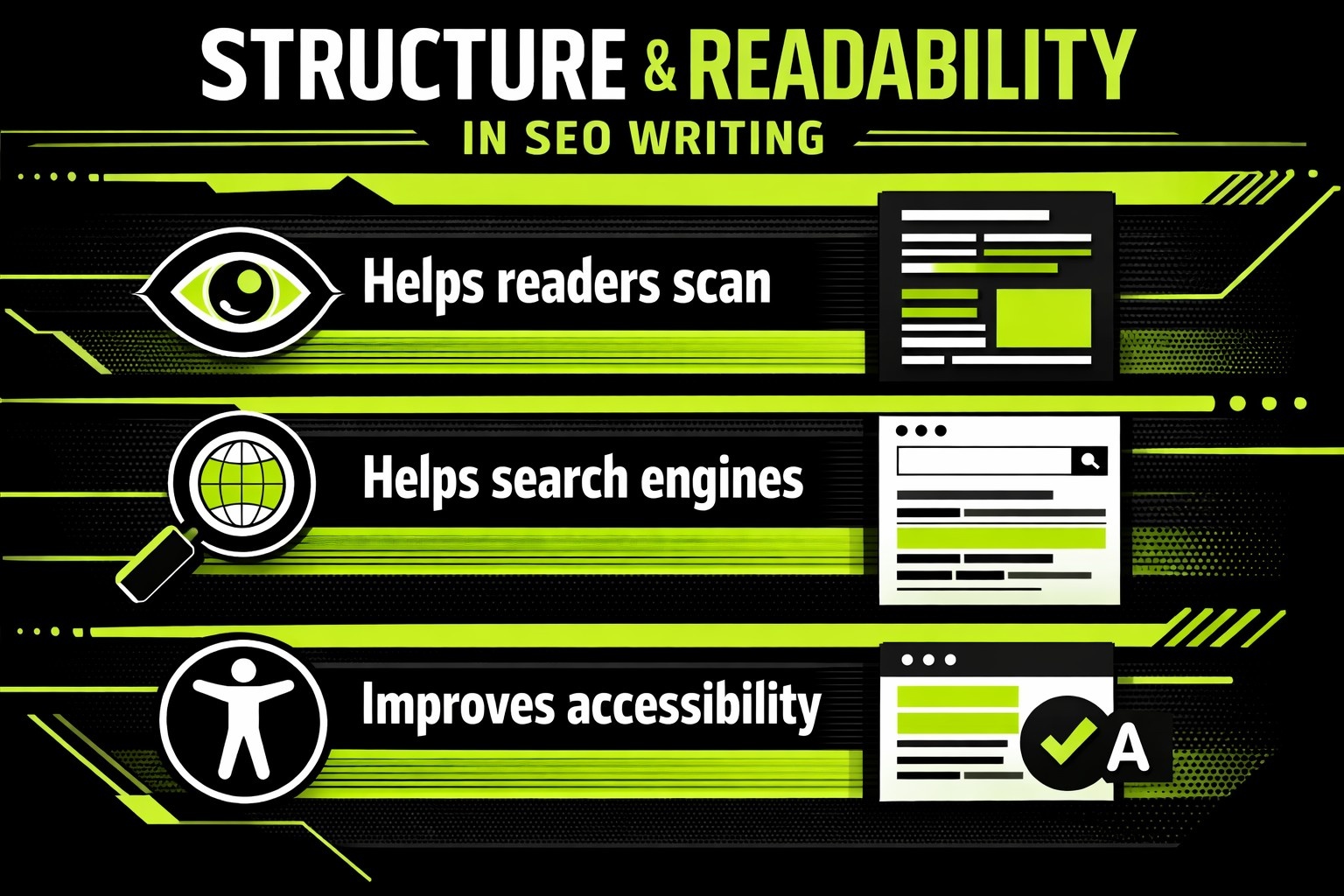
Strong structure:
- Helps readers scan and comprehend quickly
- Helps search engines interpret sections and hierarchy
- Improves accessibility and overall usability
Effective SEO content usually includes:
- One clear H1 that defines the page
- Logical H2 sections that break down the topic
- H3 subpoints where deeper explanation is needed
- Short, focused paragraphs
Readability reinforces structure. Pages that are difficult to read tend to lose attention quickly. SEO writing should feel approachable, not academic. That means clear language, natural transitions, and sentences that sound like something a real person would say.
Readability is not about simplifying ideas. It is about removing unnecessary friction.
Supporting Elements: Metadata, Links, and Visuals
SEO writing extends beyond the body text. Supporting elements help both users and search engines understand context.
Metadata influences whether someone clicks at all. Clear, honest title tags and supporting meta descriptions set expectations and signal relevance.
Internal links guide readers to related content and reinforce topical depth.
External links provide context, support claims, and signal credibility when used thoughtfully.
Visual elements such as images, charts, and diagrams can clarify complex ideas, improve engagement, and reduce cognitive load. From an SEO perspective, visuals should load quickly, include descriptive alt text, and add meaning rather than decoration.
Used well, these elements strengthen the content instead of distracting from it.
Common SEO Writing Mistakes and Limits of the Format
Most SEO writing mistakes come not from lack of effort, but from over-optimization. When the focus shifts too heavily toward technical signals, content often loses clarity and usefulness.
Where SEO Writing Goes Wrong
Writing for Keywords Instead of Readers
This happens when keywords dictate wording rather than meaning. The result is usually awkward phrasing, repetitive language, and headings written to satisfy algorithms instead of helping people navigate the page. If content feels uncomfortable to read, no level of optimization will compensate for that.
Ignoring Search Intent
SEO writing also fails when the format does not match the reason behind the search. Long educational guides rarely satisfy transactional queries, just as sales-driven pages fail informational searches. In most cases, aligning format with intent matters far more than content length.
Over-Optimizing Structure
Structure is meant to support clarity, but it becomes a problem when it replaces substance. Common signs include keyword-heavy headings, sections added only to increase length, and repeated ideas instead of deeper explanations. Structure helps organize meaning; it cannot create meaning on its own.
Copying Competitors Without Context
What works for another page may be effective for very different reasons. A competing article might target a different intent, speak to another audience, or rely on a site structure you do not share. Patterns can be useful references, but layouts and section logic should always be adapted rather than copied blindly.
When SEO Writing Is Not the Right Tool
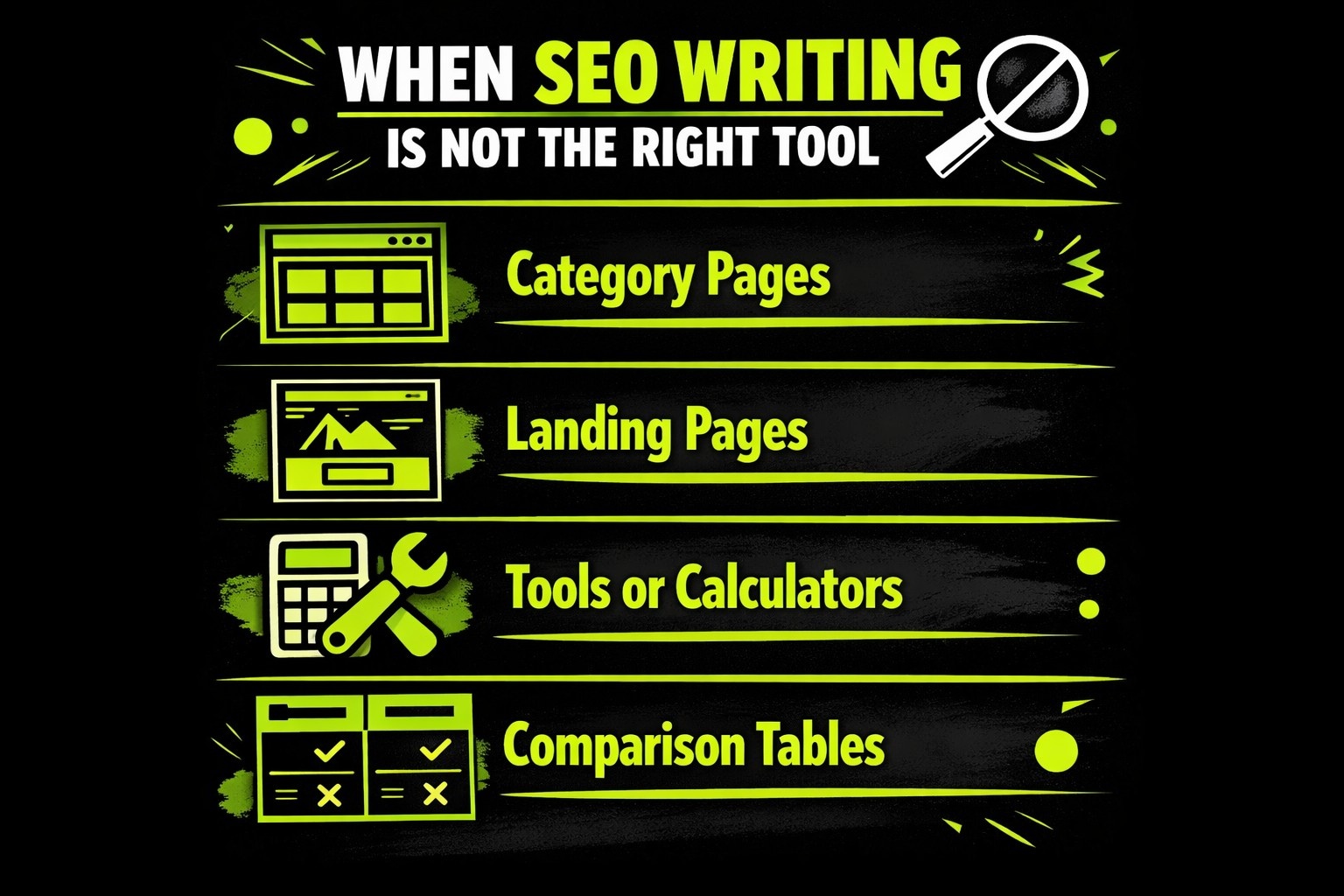
SEO writing is not a universal solution. Some queries are better served by formats that prioritize speed, clarity, or direct action, such as:
- Product or category pages
- Landing pages
- Tools or calculators
- Comparison tables
SEO writing works best for informational or exploratory intent. When search intent is high and action-oriented, usability and clarity usually matter more than long-form explanation.
Using SEO Writing Where It Creates Value
SEO writing is most effective when it plays a supportive role rather than trying to do everything at once. It creates value when it:
- Clarifies before persuading
- Builds trust through precision
- Supports decisions without adding friction
Used correctly, SEO writing reduces uncertainty and guides understanding. Used incorrectly, it adds noise instead of insight.
Conclusion
SEO writing works best when it stops trying to look like SEO writing. At its core, it is simply clear communication shaped by an understanding of how people search and how search engines interpret content. The writing itself should still feel human, purposeful, and easy to follow. If a reader finishes the page with a better grasp of the topic and a sense of direction, the content has done its job.
What separates effective SEO writing from forgettable content is intent. When you write with a clear reason, support it with structure, and focus on usefulness rather than shortcuts, visibility becomes a natural outcome. Search engines are no longer impressed by volume or repetition. They reward clarity, relevance, and trust. That is why SEO writing today is less about tricks and more about discipline, judgment, and understanding your audience well enough to answer the right questions in the right way.