


Quick Summary: SEO outsourcing is the practice of hiring external agencies or specialists to manage search engine optimization efforts instead of handling them in-house. Businesses outsource SEO to access specialized expertise, advanced tools, and proven strategies while focusing internal resources on core operations. This approach can reduce costs, accelerate results, and provide scalability without the overhead of building an internal team.
Search engine optimization determines whether potential customers find a business online or scroll past it. Yet mastering SEO requires constant adaptation to algorithm updates, technical expertise, content creation skills, and data analysis capabilities that most companies don’t have sitting on staff.
That’s where outsourcing comes in.
Instead of building an entire in-house team or letting SEO fall by the wayside, businesses hire external specialists to handle the heavy lifting. But what does that actually look like? And more importantly, does it work?
Here’s everything businesses need to know about SEO outsourcing in 2026.
What Is SEO Outsourcing?
SEO outsourcing means hiring an external agency or specialist to manage search engine optimization instead of handling it in-house. This allows businesses to tap into expert knowledge, proven strategies, and advanced tools to improve search rankings, increase website traffic, and save time while focusing on core operations.
The external provider handles tasks like keyword research, on-page optimization, technical SEO audits, link building, content creation, and performance tracking. Businesses essentially rent expertise without the overhead costs of hiring, training, and retaining full-time employees.
How It Differs from In-House SEO
With in-house SEO, companies build internal teams dedicated to one website. According to Search Engine Journal, in-house SEO typically focuses on long-term, holistic approaches rather than the mechanical implementations common in agencies managing 50+ websites simultaneously.
Outsourcing flips that model. External agencies bring cross-industry experience, established processes, and specialized teams. They’ve seen what works across dozens of clients and niches.
The trade-off? Less direct control and potential communication gaps. But for businesses without the budget or need for a full-time SEO team, outsourcing offers access to enterprise-level capabilities at a fraction of the cost.
Scale SEO With a Reliable Partner
SEO outsourcing helps businesses grow faster, but results depend on working with a team that can handle both strategy and execution.
LENGREO works as a long term SEO partner, managing everything from technical improvements to content and link building within one structured system.
- full cycle SEO strategy and execution
- dedicated specialists across key areas
- scalable processes for long term growth
If you want to scale SEO without losing control over results, get a free consultation with LENGREO.
Types of SEO Outsourcing Models
Not all outsourcing arrangements look the same. Businesses can choose different engagement models based on their needs, budget, and internal capabilities.
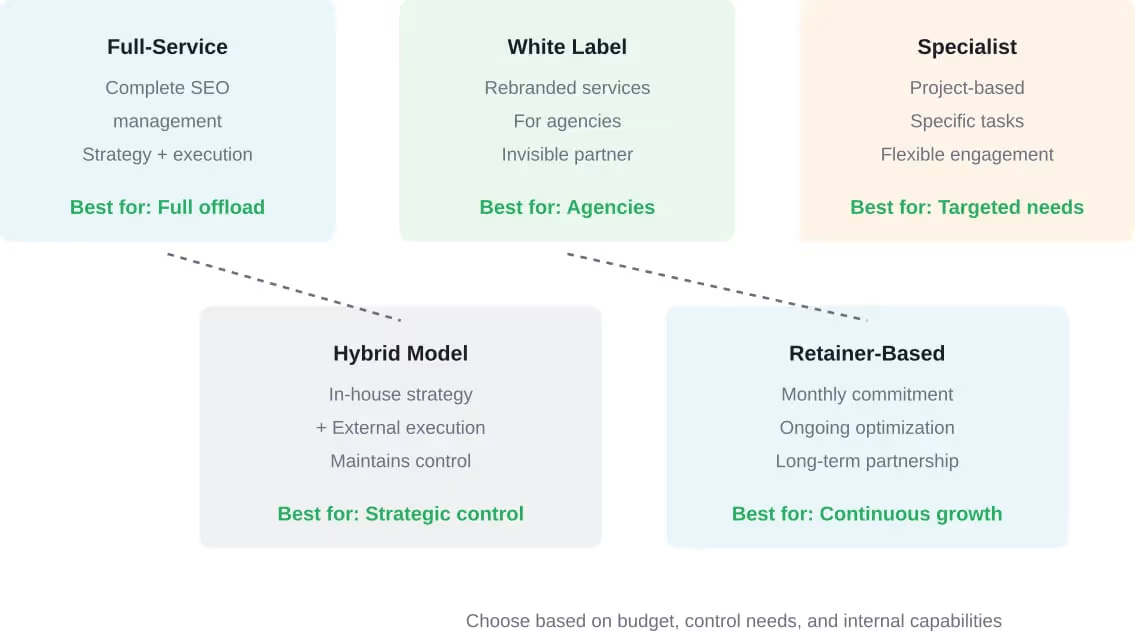
Full-Service SEO Agencies
These providers handle everything from strategy development to execution and reporting. Full-service agencies manage technical audits, content production, link building, local SEO, and ongoing optimization. They function as an external SEO department.
This model works well for businesses that want to completely offload SEO responsibilities and have the budget for comprehensive services.
White Label SEO Services
White label providers deliver SEO work that other agencies rebrand as their own. Marketing agencies often use white label services to offer SEO without building those capabilities internally.
The white label provider stays invisible to the end client. The agency maintains the client relationship while outsourcing fulfillment. According to Moz, at least 50 companies with over $1 million in annual gross revenue outsource almost all of their services.
Specialist Contractors
Some businesses hire individual specialists or boutique firms for specific tasks like technical audits, link building campaigns, or content optimization. This project-based approach gives businesses flexibility without long-term commitments.
In 2026, premium SEO consulting rates for AI-Search Optimization and Technical GEO specialists start from $150 to $500+ per hour, while general implementation tasks remain in the $75–$200 range. Project-based pricing works well for defined deliverables like website audits, local SEO setup, or keyword research for new products.
Hybrid Approaches
Many successful businesses blend in-house coordination with external execution. An internal marketing manager oversees strategy and brand alignment while outsourcing technical implementation, content creation, or link acquisition to specialists.
This hybrid model maintains strategic control while accessing specialized skills as needed.
Why Businesses Outsource SEO
The decision to outsource typically comes down to resources, expertise, and results. Here’s what drives companies toward external SEO help.
Access to Specialized Expertise
SEO encompasses dozens of disciplines—technical optimization, content strategy, link acquisition, analytics, local search, conversion optimization. Building that breadth of expertise in-house takes years and significant investment.
External agencies already have specialists across these areas. They’ve implemented strategies across industries and seen what works in real-world scenarios. That accumulated knowledge translates to faster results and fewer costly mistakes.
According to HubSpot research, 61% of marketers cite generating traffic and leads as their top challenge. Outsourcing gives businesses access to professionals who’ve already solved similar problems hundreds of times.
Cost Efficiency
Hiring a full-time SEO specialist means salary, benefits, training, software subscriptions, and ongoing professional development. For many businesses, especially small to mid-sized companies, that investment doesn’t make financial sense.
Outsourcing converts fixed costs into variable ones. Businesses pay for results and services delivered rather than maintaining overhead regardless of workload. When budgets tighten during economic downturns, outsourced services can scale down more easily than laying off employees.
Search Engine Journal notes that SEO remains one of the most valuable tools during recessions precisely because it delivers measurable returns at controlled costs.
Focus on Core Business
Company leadership has limited bandwidth. Time spent learning SEO intricacies is time not spent on product development, customer service, or strategic planning.
Outsourcing lets businesses focus internal resources on what they do best while specialists handle technical marketing execution. This division of labor typically produces better outcomes in both areas.
Scalability and Flexibility
Business needs change. A product launch might require intensive content creation one quarter, while the next focuses on technical optimization. Building an in-house team for peak capacity means paying for underutilized resources during slower periods.
External providers scale services up or down based on current needs. Project-based engagements offer even more flexibility, allowing businesses to purchase specific deliverables without ongoing commitments.
Advanced Tools and Technology
Professional SEO requires expensive software for keyword research, rank tracking, backlink analysis, technical audits, and competitive intelligence. Premium tools can cost $200+ monthly per subscription, and comprehensive SEO needs multiple tools.
Agencies already maintain these tool subscriptions across their client base. Businesses benefit from enterprise-level technology without the direct expense. According to HubSpot budget guidance, when businesses allocate $500 towards keyword research tools, they take advantage of everything those tools have to offer.
Common SEO Services That Get Outsourced
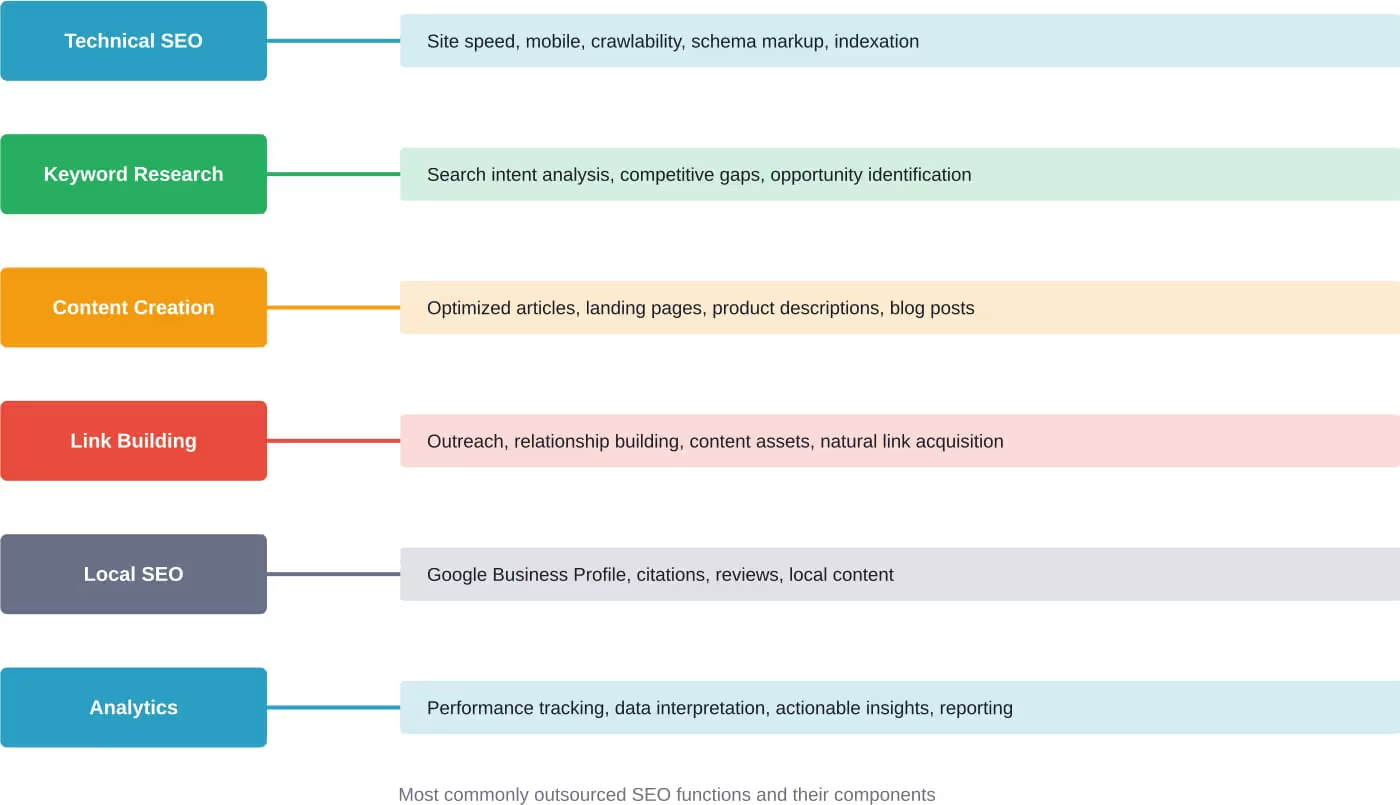
Businesses typically outsource these core SEO functions:
Technical SEO Audits and Fixes
Technical SEO addresses site speed, mobile optimization, crawlability, indexation, structured data, and security. These foundational elements require specialized knowledge and often developer coordination.
External specialists audit technical issues, prioritize fixes, and often handle implementation directly or work with development teams to resolve problems.
Keyword Research and Strategy
Effective keyword research goes beyond search volume. It requires understanding search intent, competitive landscapes, content gaps, and business priorities.
Agencies use advanced tools and frameworks to identify opportunities that drive qualified traffic rather than vanity metrics.
Content Creation and Optimization
SEO content needs strategic planning, keyword targeting, proper formatting, internal linking, and quality writing. Many businesses lack the time or expertise to produce consistent, optimized content.
Content outsourcing ranges from strategy and outlines to full article creation, editing, and publishing.
Link Building
According to Moz, link equity remains crucial for rankings. Using a link earning strategy, Sidecar Health saw a 77% increase in keywords in positions 1-3 in the SERPs after a few months.
But quality link building is time-intensive and requires outreach skills, relationship building, and content assets worth linking to. Most businesses outsource this function to specialists who already have established processes and contacts.
Local SEO
Local search optimization involves Google Business Profile management, citation building, review generation, and local content creation. For multi-location businesses, this becomes exponentially complex.
Moz recommends marking out 30 minutes to read through Google’s Guidelines for representing your business before engaging agencies, as this is fundamental to the process.
Analytics and Reporting
Tracking performance, interpreting data, and extracting actionable insights requires analytical skills many businesses don’t have in-house. External providers deliver regular reports showing progress toward agreed-upon KPIs.
According to Harvard Business School Online, search engine rankings serve as a critical marketing KPI since over 2.6 billion online buyers—more than 33% of the global population—discover and decide to purchase from companies online.
SEO Outsourcing Pricing Models
Understanding cost structures helps businesses budget appropriately and compare providers.
Monthly Retainers
Most full-service arrangements use monthly retainers ranging from $1,000 to $10,000+ depending on scope, competition, and business size. Retainers provide predictable costs and ongoing optimization.
This model works best for businesses committed to long-term SEO growth rather than one-time fixes.
Project-Based Pricing
Defined deliverables—like website audits, local SEO setup, or keyword research—use project pricing. Costs vary based on complexity but provide clear scope and budget certainty.
This approach suits businesses testing outsourcing or addressing specific gaps without ongoing commitments.
Hourly Rates
Consultants and small agencies sometimes charge hourly, typically $50 to $300+ per hour depending on expertise. This model offers flexibility but can lack cost predictability.
Performance-Based Pricing
Some providers tie fees to results—rankings achieved, traffic generated, or leads delivered. While appealing in theory, this model carries risks. Providers might pursue short-term tactics that violate guidelines or target low-value metrics.
Moz warns about SEO scams, noting that many companies outsource services without true experts on staff. Performance guarantees often signal providers using questionable methods.
| Pricing Model | Typical Range | Best For | Considerations |
|---|---|---|---|
| Monthly Retainer | $1,000-$10,000+ | Ongoing optimization | Predictable costs, long-term commitment |
| Project-Based | $500-$5,000+ | Specific deliverables | Clear scope, one-time investment |
| Hourly | $50-$300/hour | Consulting, flexible needs | Variable costs, hard to predict |
| Performance-Based | Varies widely | Risk-averse businesses | Risk of unethical tactics, unclear metrics |
Potential Drawbacks and Risks
Outsourcing isn’t without challenges. Businesses should understand potential downsides before committing.
Loss of Direct Control
External providers operate independently. Businesses have less visibility into daily activities and tactical decisions compared to in-house teams.
Mitigate this through clear communication channels, regular check-ins, and documented processes.
Communication Barriers
Working with overseas providers or large agencies can create communication gaps. Time zone differences, language barriers, or account manager turnover disrupt continuity.
Establish communication expectations upfront—preferred channels, response times, reporting frequency.
Quality Inconsistency
Not all agencies deliver equivalent quality. Some use inexperienced staff, cut corners, or overpromise results.
Vet providers thoroughly. Ask for case studies, client references, and specific examples of work similar to what your business needs.
Risk of Unethical Practices
Some providers use black-hat tactics that violate search engine guidelines—purchased links, keyword stuffing, cloaking. These might produce short-term gains but risk severe penalties.
According to Moz’s guidance on avoiding scams, businesses should verify that providers follow Google’s guidelines and avoid those guaranteeing specific rankings or using suspicious methods.
Dependency on External Partners
Heavy reliance on external providers creates vulnerability. If the agency closes, raises prices dramatically, or delivers poor results, businesses face disruption.
Maintain some internal SEO knowledge even when outsourcing. Understand the basics so you can evaluate provider recommendations and recognize problems early.
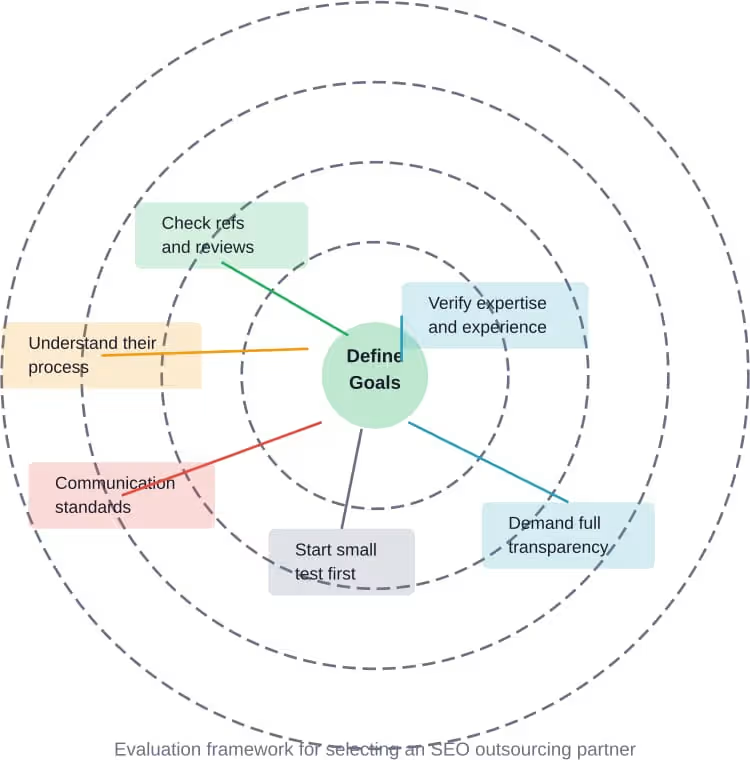
How to Choose the Right SEO Outsourcing Partner
Selecting the right provider determines success or frustration. Here’s what to evaluate.
Define Your Goals First
Before contacting agencies, clarify what success looks like. According to EDHEC’s guidance on digital marketing strategy, goals should be specific, trackable, and aligned with business priorities.
Do you need more organic traffic? Better rankings for specific keywords? Increased leads from local search? Clear objectives help identify providers with relevant expertise.
Verify Expertise and Experience
Ask potential providers:
- What industries have they worked in?
- Can they share case studies with measurable results?
- Who will actually work on your account?
- What’s their team structure?
Moz recommends ensuring that actual experts will work on your account, not just sales staff who make promises.
Check References and Reviews
Speak with current or former clients. Ask about communication quality, results delivered, and how the agency handles problems.
Online reviews provide additional perspective, but recognize that no provider pleases everyone. Look for patterns in feedback rather than isolated complaints.
Understand Their Process
Reputable providers should clearly explain their methodology, timeline, and deliverables. Red flags include:
- Vague answers about tactics
- Guaranteed rankings
- Promises of immediate results
- Reluctance to explain their approach
According to Moz, businesses should understand Google’s guidelines before hiring an agency, which takes about 30 minutes to read through the Guidelines for representing your business on Google.
Evaluate Communication and Reporting
Ask how often they report results, what metrics they track, and who your point of contact will be. Consistent communication prevents misalignment and catches problems early.
Start Small When Possible
Consider project-based work before committing to long-term retainers. A trial project reveals how the agency works, communicates, and delivers.
Ensure Transparency
Providers should clearly explain what they’re doing and why. You should receive access to analytics, understand which tactics they’re implementing, and see where budget goes.
Avoid agencies that withhold information or claim proprietary methods too sensitive to share.
Common Mistakes to Avoid
Businesses often stumble when outsourcing SEO. Here’s what to watch for.
Choosing Based on Price Alone
The cheapest provider rarely delivers the best results. Extremely low prices often mean inexperienced staff, automated tactics, or corner-cutting that produces poor outcomes.
Focus on value—what results will the investment generate—rather than lowest cost.
Lack of Clear Objectives
Without defined goals, neither party knows what success looks like. This leads to mismatched expectations and disappointing results.
Set specific, measurable targets before engaging providers.
Ignoring Red Flags
Warning signs include guaranteed rankings, unwillingness to explain tactics, lack of references, or pressure to sign immediately.
Trust your instincts. If something feels off, it probably is.
Poor Communication
Assuming the agency will handle everything without oversight creates problems. Regular communication ensures alignment and catches issues early.
Schedule consistent check-ins and insist on transparent reporting.
Not Maintaining Any Internal Knowledge
Complete dependence on external providers leaves businesses vulnerable. Understanding SEO basics helps evaluate recommendations and recognize when something’s wrong.
Is SEO Outsourcing Right for Your Business?
Outsourcing makes sense when:
- Internal resources are stretched thin
- Specific expertise is needed that doesn’t exist in-house
- Building a full team isn’t cost-effective
- Faster results matter more than complete control
- The business wants to focus on core competencies
It might not fit if:
- The business requires daily tactical control
- Budget is extremely limited (basic DIY might work better)
- Company culture strongly prefers all work in-house
- The industry is so niche that external providers won’t understand it
Many successful businesses use hybrid approaches—maintaining strategic oversight internally while outsourcing specialized execution.
Moving Forward with SEO Outsourcing
SEO outsourcing offers businesses a practical path to improved search visibility without the overhead of building comprehensive in-house teams. Access to specialized expertise, advanced tools, and proven strategies makes external providers attractive, especially for companies where SEO isn’t the core business.
But success requires careful provider selection, clear goal setting, and ongoing communication. The cheapest option rarely delivers the best results, and completely hands-off approaches often lead to disappointment.
Businesses that define objectives, vet providers thoroughly, maintain some internal knowledge, and establish transparent working relationships typically see the strongest outcomes from outsourcing arrangements.
The right external partner functions as an extension of your team—bringing skills and capacity while aligning with business goals and brand values. When that relationship works, outsourcing accelerates growth while freeing internal resources for strategic priorities.
For businesses struggling with SEO or unable to justify full-time hires, outsourcing deserves serious consideration. Start by clarifying what success looks like, then find providers with demonstrated expertise delivering those specific results.