


Quick Summary: Negative keywords are terms added to Google Ads and other PPC campaigns to prevent ads from showing for irrelevant searches. They help reduce wasted ad spend, improve click-through rates, and increase ROI by filtering out unqualified traffic. While primarily a paid search tool, negative keywords don’t directly impact SEO but can inform content strategy.
Ever wonder why advertisers sometimes pay for clicks from people searching for “free” products when they’re trying to sell premium services? That’s exactly what negative keywords prevent.
According to Google Ads Help, a negative keyword is “a type of keyword that prevents your ad from being triggered by a certain word or phrase.” When implemented correctly, these gatekeepers ensure ads only appear for searches that actually matter to a business.
Here’s the thing though—the term “negative keywords in SEO” creates some confusion. While negative keywords are primarily a paid search tool used in Google Ads and other PPC platforms, understanding them can inform broader digital marketing strategy.
Understanding Negative Keywords: The Basics
Negative keywords work as exclusion filters for paid advertising campaigns. According to Google’s official documentation, when advertisers add “free” as a negative keyword to their campaign, Google Ads won’t show their ad for any search containing that term.
The mechanism is straightforward. Search engines match user queries against both targeted keywords and negative keywords. If a negative keyword appears in the search query, the ad gets blocked—even if the query matches a targeted keyword.
Think of it this way: A company selling premium leather shoes might target “running shoes” but exclude “cheap,” “free,” “repair,” and “DIY.” This prevents their ads from appearing when someone searches for “cheap running shoes” or “DIY running shoe repair.”
But wait. Do negative keywords actually impact SEO rankings? The short answer: not directly.
The SEO Connection (Or Lack Thereof)
Negative keywords don’t influence organic search rankings. Google’s algorithms rank web pages based on content quality, relevance, backlinks, and hundreds of other factors—but not on PPC campaign settings.
That said, negative keyword research reveals valuable insights about search intent. Terms excluded from paid campaigns often indicate topics that won’t convert, which can inform content strategy and help avoid creating pages targeting low-value searches.
Search Engine Journal notes that overdoing keyword optimization can cause problems, but that refers to on-page SEO practices—not negative keyword implementation in paid campaigns.
Why Negative Keywords Matter for Digital Marketing
Wasted ad spend is one of the biggest challenges in paid search. Every irrelevant click costs money without generating revenue.
According to data from Moz, businesses using tens of thousands of negative keywords have saved between 5% to 40% on their PPC budgets. That’s not pocket change—for a company spending $10,000 monthly on Google Ads, a 20% reduction in wasted spend means $2,000 saved every single month.
Consider how Google perceives ad relevance. Search Engine Land points out that search irrelevance results in lower click-through rates and Quality Scores, which directly impact ad position and cost per click. An ad with good keyword-to-query alignment might cost $1 to $2 per click, while poor alignment can drive costs significantly higher.
Negative keywords improve three critical metrics:
- Click-through rate (CTR): Fewer irrelevant impressions mean a higher percentage of people who see the ad actually click it
- Quality Score: Google rewards relevant ads with better scores, leading to lower costs and better positions
- Conversion rate: Traffic from relevant searches converts at higher rates than unqualified visitors
Real talk: implementing negative keywords isn’t optional for serious paid search campaigns. It’s foundational.
Improve Targeting Across SEO and Paid Campaigns
Negative keywords are mainly used in paid campaigns, but they play a role in improving targeting and overall marketing efficiency.
LENGREO aligns SEO and paid strategies to attract the right audience and reduce wasted traffic, improving overall performance.
- keyword targeting and filtering strategy
- alignment between SEO and paid campaigns
- continuous optimization based on data
If you want better traffic quality and stronger results, get a free consultation with LENGREO.
Negative Keyword Match Types Explained
Negative keywords use three match types, each controlling how strictly the exclusion applies. According to Google Ads Help documentation, these match types function differently than positive keyword matches.
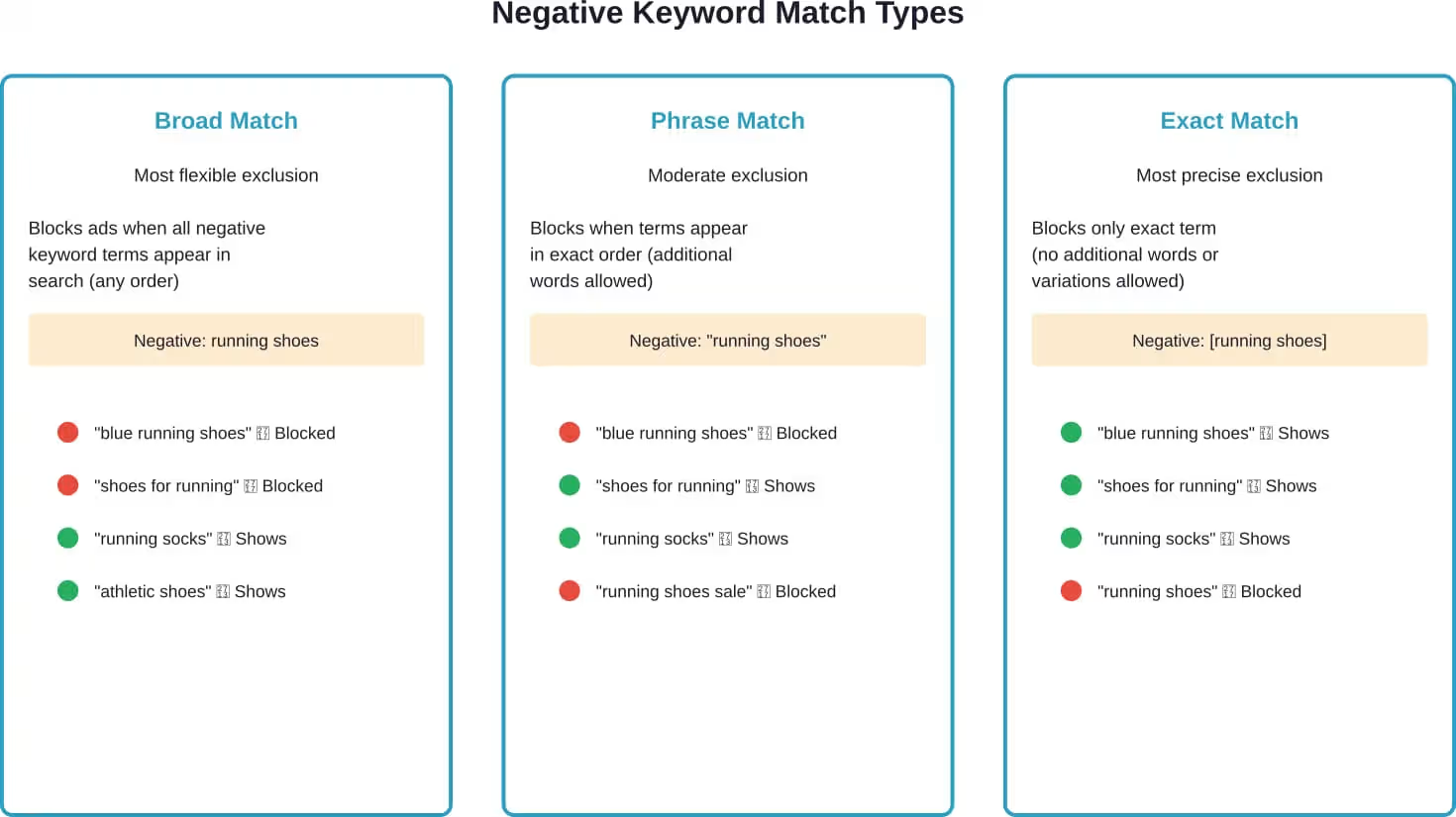
Negative Broad Match
The default type. Ads won’t show if the search query contains all the negative keyword terms, regardless of order. According to Google’s documentation, additional words in the query don’t prevent the block.
Example: Negative keyword “running shoes” blocks “blue running shoes” and “shoes running” but allows “running” or “shoes” alone.
Negative Phrase Match
Blocks ads when the negative keyword terms appear in the exact order specified. WordStream experts note this offers more control than broad match while remaining flexible.
Denoted with quotation marks: “running shoes”
This blocks “blue running shoes” but allows “shoes for running” since the word order differs.
Negative Exact Match
The most restrictive option. According to Google Ads Help, this blocks ads only when the search query matches the negative keyword exactly, with no additional words.
Denoted with brackets: [running shoes]
This blocks only “running shoes” as a standalone query, allowing “blue running shoes” or any variation with additional terms.
| Match Type | Symbol | Example | Blocks Query | Allows Query |
|---|---|---|---|---|
| Broad Match | None | tennis shoes | “red tennis shoes” | “tennis racket” |
| Phrase Match | “keyword” | “tennis shoes” | “buy tennis shoes” | “shoes for tennis” |
| Exact Match | [keyword] | [tennis shoes] | “tennis shoes” | “red tennis shoes” |
Where Negative Keywords Apply: Campaign Structure
Google Ads allows negative keywords at three different levels, each with distinct implications for campaign management.
Ad Group Level
The most granular option. Negative keywords added here only affect that specific ad group. This works well for fine-tuning individual product or service categories within a campaign.
Campaign Level
Negative keywords at this level apply to all ad groups within the campaign. According to Google’s campaign structure guidance, this is ideal for excluding terms irrelevant to the entire campaign objective.
Account Level (Negative Keyword Lists)
Google Ads Help documentation explains that negative keyword lists can be created once and applied across multiple campaigns. This prevents manually adding the same exclusions repeatedly.
For agencies or businesses managing numerous campaigns, negative keyword lists streamline workflow significantly. Common exclusions like “free,” “jobs,” “salary,” “DIY,” or “how to” often apply across most or all paid campaigns.
WordStream data shows that advertisers added 663% more keywords overall after initial assessment and optimization—indicating better traffic quality.
How to Find Negative Keywords
Building a comprehensive negative keyword list requires systematic research. Here are the most effective methods based on industry best practices.
Search Query Reports
The single most valuable source. Google Ads generates reports showing actual search queries that triggered ads. Moz experts call reviewing these reports for “cringe-worthy” queries one of the essential maintenance tasks.
Look for patterns. If “free,” “cheap,” or “DIY” appear frequently in non-converting searches, add them as negatives.
Google Keyword Planner
Coursera training materials explain that Google Keyword Planner can identify related terms that might be irrelevant. When researching positive keywords, note suggestions that don’t align with business objectives—these become negative candidates.
Competitor Analysis
Review what competitors target. Terms they avoid often indicate low-converting searches in the industry.
Customer Service Insights
Common misconceptions about products or services often surface in customer questions. These indicate searches to exclude.
For example, a company selling enterprise software might exclude “personal,” “individual,” “home,” or “student” after learning these searchers aren’t qualified leads.
Industry-Specific Terms
Every niche has irrelevant searches. E-commerce businesses commonly exclude “images,” “clip art,” “coloring pages,” or “wallpaper.” B2B companies often add “jobs,” “careers,” “salary,” and “resume.”
Best Practices for Negative Keyword Implementation
Effective negative keyword strategy goes beyond simply adding exclusions. These practices maximize results while avoiding common pitfalls.
Start Conservative, Expand Gradually
Overly aggressive negative keyword implementation can block legitimate traffic. Start with obvious exclusions, then expand based on actual performance data.
Search Engine Land recommends beginning with universal exclusions (“free,” “jobs,” “salary”) before adding industry-specific or product-specific terms.
Review Search Query Reports Weekly
New irrelevant searches appear constantly. Regular review prevents ongoing waste.
Set a recurring calendar reminder. Even 15 minutes weekly makes a difference.
Match Negative Keywords to Campaign Goals
What’s negative for one campaign might be positive for another. A company selling shoes and offering repair services should block “repair” from product campaigns but target it in service campaigns.
Use Shared Lists for Efficiency
According to Google Ads documentation, creating negative keyword lists prevents repetitive work across campaigns. Build lists for common exclusion categories like:
- Free/cheap seekers
- Job seekers
- Information-only searchers
- Competitor brand names (if not bidding on competitors)
- Inappropriate content terms
Don’t Over-Exclude
WordStream experts warn against excessive negative keywords that eliminate too much reach. Balance exclusion with opportunity.
Before adding a negative keyword, ask: “Could anyone searching this term potentially convert?” If there’s reasonable doubt, monitor it first rather than immediately excluding it.
Check for Conflicts
Negative keywords can accidentally block targeted positive keywords. If targeting “blue running shoes” but have “running shoes” as a broad match negative, the ad won’t show.
Google Ads flags some conflicts, but not all. Manual review helps catch problems.
Document Everything
Maintain a spreadsheet explaining why each negative keyword was added. Six months later, the reasoning might not be obvious—especially in team environments.
Common Negative Keyword Categories
While every business has unique needs, certain negative keyword categories apply broadly across industries.
| Category | Example Terms | Why Exclude |
|---|---|---|
| Price Qualifiers | free, cheap, discount, wholesale, clearance | Low intent to purchase premium products |
| Employment | jobs, careers, salary, hiring, resume | Seeking employment, not products/services |
| Educational | how to, tutorial, guide, course, learn | Information-seeking, not purchase intent |
| DIY Intent | DIY, homemade, make your own, build | Won’t purchase finished products |
| Media/Images | images, pictures, clip art, wallpaper, video | Looking for media files, not products |
| Used/Secondhand | used, secondhand, craigslist, ebay | Not buying new products |
| Repair/Parts | repair, fix, parts, troubleshoot | Servicing existing items (unless that’s the business) |
| Reviews/Comparisons | review, reviews, vs, comparison, alternative | Early research phase, low immediate intent |
Advanced Negative Keyword Strategies
Once basic implementation is solid, these advanced techniques can further optimize campaigns.
Geographic Exclusions
For local businesses, exclude location names outside the service area. A plumber in Austin should add “Dallas,” “Houston,” and other Texas cities as negatives.
Seasonal Adjustments
Some negative keywords make sense year-round; others vary seasonally. Tax preparation services might exclude “DIY” except during peak season when volume justifies tighter qualification.
Cross-Campaign Coordination
Search Engine Land emphasizes avoiding keyword cannibalization between organic and paid efforts. Similarly, coordinate negative keywords across PPC campaigns to ensure proper traffic routing.
If running separate campaigns for products versus services, negative keywords should funnel each search type to the appropriate campaign.
Competitor Brand Terms
Strategy varies here. Some businesses bid on competitor names; others exclude them. The decision depends on budget, market position, and competitive dynamics.
If excluding competitor terms, add brand names and common misspellings as negatives.
Audience-Based Exclusions
B2B companies often exclude consumer-focused terms. Enterprise software providers might add “personal,” “individual,” “home,” or “small” as negatives to avoid residential or small business searches.
Negative Keywords and SEO Strategy
While negative keywords don’t directly impact SEO rankings, the concept informs organic strategy in several ways.
Content Planning Insights
Terms excluded from PPC campaigns reveal topics that won’t drive business value. Avoid creating extensive SEO content targeting these areas.
If “free templates” consistently gets excluded from paid campaigns due to zero conversions, don’t invest heavily in organic content targeting that phrase.
Search Intent Understanding
Negative keyword research clarifies search intent nuances. This helps create better organic content aligned with user needs.
Understanding that “how to” searches rarely convert might influence content strategy—perhaps targeting these for top-of-funnel awareness rather than conversion-focused landing pages.
Avoiding Keyword Cannibalization
Search Engine Journal research on keyword cannibalization shows that siloed SEO and PPC efforts create inefficiencies. Sharing negative keyword insights between teams improves overall search strategy.
Competitor Research
Analyzing competitors’ PPC presence reveals what they target and likely exclude. This competitive intelligence shapes both paid and organic keyword strategies.
Measuring Negative Keyword Impact
Track specific metrics to quantify how negative keywords improve campaign performance.
Key Performance Indicators
- Wasted spend reduction: Calculate cost of clicks from irrelevant searches before and after implementation
- CTR improvement: Higher CTR indicates more relevant ad impressions
- Quality Score changes: Better relevance typically lifts Quality Scores over time
- Conversion rate increase: More qualified traffic converts at higher rates
- Cost per conversion decrease: The ultimate measure—less spent per desired action
According to Moz case study data, businesses implementing comprehensive negative keyword strategies have seen PPC budget savings ranging from 5% to 40%. The variation depends on campaign maturity, industry, and how aggressively negative keywords are applied.
Before and After Analysis
Document performance metrics before major negative keyword additions, then measure again after 30 days. This creates clear ROI evidence and justifies continued optimization investment.
Common Mistakes to Avoid
Even experienced marketers make these negative keyword errors.
Adding Negatives Too Broadly
Blocking entire keyword categories can eliminate valuable traffic. Someone searching “cheap running shoes” might still convert if the price is competitive—”cheap” doesn’t always mean unwilling to spend.
Test before broadly excluding price-related terms.
Never Reviewing or Updating
Set-and-forget approaches fail. Markets evolve, new products launch, search behavior shifts. Negative keywords require ongoing maintenance.
Ignoring Match Type Implications
Using broad match negatives when phrase or exact match would be more appropriate causes either over-blocking or under-blocking.
WordStream training emphasizes understanding match type mechanics before implementation.
Not Testing Exclusions
Before adding dozens of negative keywords simultaneously, test with a few to verify the impact matches expectations. Unexpected consequences become harder to trace when multiple changes happen at once.
Forgetting Mobile Considerations
Mobile searches often use different phrasing than desktop. Review mobile-specific search query reports separately to identify mobile-unique negative keywords.
Tools for Negative Keyword Management
Several tools streamline the discovery and management process beyond Google Ads’ native functionality.
Google Ads Search Query Reports
The foundational tool. Free with any Google Ads account and contains actual performance data.
Google Keyword Planner
Coursera training materials highlight this for discovering related terms that might need exclusion during initial research.
Third-Party PPC Tools
Platforms like WordStream, SEMrush, and others offer enhanced negative keyword identification, often using algorithmic suggestions based on performance patterns.
According to SEMrush guidance, their Keyword Magic Tool can identify negative keyword candidates while researching positive keywords—showing the full spectrum of related searches.
Spreadsheet Templates
Many PPC experts maintain master negative keyword spreadsheets organized by category, match type, and application level. These become reference documents preventing redundant research.
Industry-Specific Applications
Different industries face unique negative keyword challenges.
E-commerce
Common exclusions: “used,” “auction,” “ebay,” “etsy,” image-related terms, color names for products not offered in those colors.
Professional Services
Law firms, consultants, agencies typically exclude: “pro bono,” “free consultation,” “volunteer,” “intern,” “jobs,” geographic areas outside service range.
B2B/SaaS
Enterprise software and B2B services often exclude: “free,” “personal,” “individual,” “home,” “student,” competitor names (sometimes), open-source alternatives.
Local Services
Plumbers, contractors, repair services exclude: “DIY,” “how to,” “salary,” locations outside service area, “parts” (if not selling parts separately).
The Future of Negative Keywords
As Google Ads and other platforms evolve, negative keyword functionality continues developing.
AI and Automation
Google increasingly uses machine learning for campaign optimization. Some automation features can suggest negative keywords based on performance patterns, though manual review remains important.
Broader Match Type Changes
Google periodically adjusts how match types function. Recent years have seen broad match become more flexible (or less controllable, depending on perspective), making negative keywords even more critical for maintaining relevance.
Privacy and Tracking Changes
As privacy regulations limit tracking capabilities, the importance of efficient ad targeting increases. Negative keywords help maximize value from reduced data environments.
Conclusion: Making Negative Keywords Work
Negative keywords represent one of the most powerful optimization tools in paid search marketing. According to Google Ads documentation and industry research from Moz, WordStream, and Search Engine Land, proper implementation can reduce wasted spend by 5% to 40% while improving click-through rates, Quality Scores, and conversion rates.
The fundamentals are straightforward: identify irrelevant search terms, select appropriate match types, and add them as exclusions at the campaign, ad group, or account level. The execution requires consistent effort—reviewing search query reports, analyzing performance patterns, and refining negative keyword lists over time.
While negative keywords don’t directly impact SEO, the insights gained from negative keyword research inform broader digital marketing strategy. Understanding which searches don’t convert helps focus both paid and organic efforts on high-value opportunities.
Start building or refining negative keyword lists today. Even a basic implementation saves money immediately, and the benefits compound as lists become more comprehensive. Review search query reports this week, identify the top ten irrelevant searches, and add them as negatives. Then make it a weekly habit.
The question isn’t whether to use negative keywords—it’s how quickly implementation can begin reducing wasted spend and improving campaign performance.