


Keyword difficulty acts like a reality check during SEO planning. It shows how competitive a term is in the current search results and whether it’s worth the fight. The number itself may come from a tool, but the decision it informs is strategic – what’s the cost of ranking, and can the site realistically compete?
Keyword Difficulty Explained in Plain Terms
Keyword difficulty isn’t a guess – it’s an estimate of how much effort it’ll take to get a page into the top 10 search results for a specific term. It’s usually shown as a number from 0 to 100, with lower scores meaning less competition. Higher scores? That’s where the heavyweights live: domains with authority, backlinks, and deeply optimized content.
What the score reflects is not the keyword itself, but the strength of the pages that already rank for it. Tools like Semrush or Ahrefs look at how many quality links those pages have, how strong the websites are overall, and how well the content matches the search intent. If the front page is packed with long-form guides from massive brands, the bar’s going to be high.
It’s not just about math. Interpreting keyword difficulty depends on context – who’s asking the question. A KD score of 40 might be manageable for a B2B SaaS company with strong domain authority but way out of reach for a brand-new site. That’s why teams treat the number as a benchmark, not a barrier. It helps shape where to focus: go after what’s achievable now, build authority, and gradually move into more competitive territory.
Turning Keyword Difficulty Into Actionable Strategy at Lengreo
At Lengreo, we treat keyword difficulty as a directional tool, not just a filter. It helps us understand where we can compete right now and where we need to build. Before we commit to any keyword, we look at the full picture – search intent, competitive landscape, and how that term fits into the larger growth strategy. A low score isn’t enough on its own, and a high score doesn’t always mean “wait.”
We usually start by targeting low to mid-difficulty keywords that still carry commercial or transactional intent. These become the foundation of our content clusters – designed to generate qualified traffic, build authority, and create internal linking pathways to tougher, high-value terms. As the site gains momentum, we gradually expand into more competitive territory with content that’s backed by stronger technical and off-page signals.
This approach works especially well in complex verticals like SaaS, cybersecurity, and biotech, where keyword choices need to drive more than clicks. If you want to see how we apply this thinking across live campaigns, check out our updates on LinkedIn or Instagram.
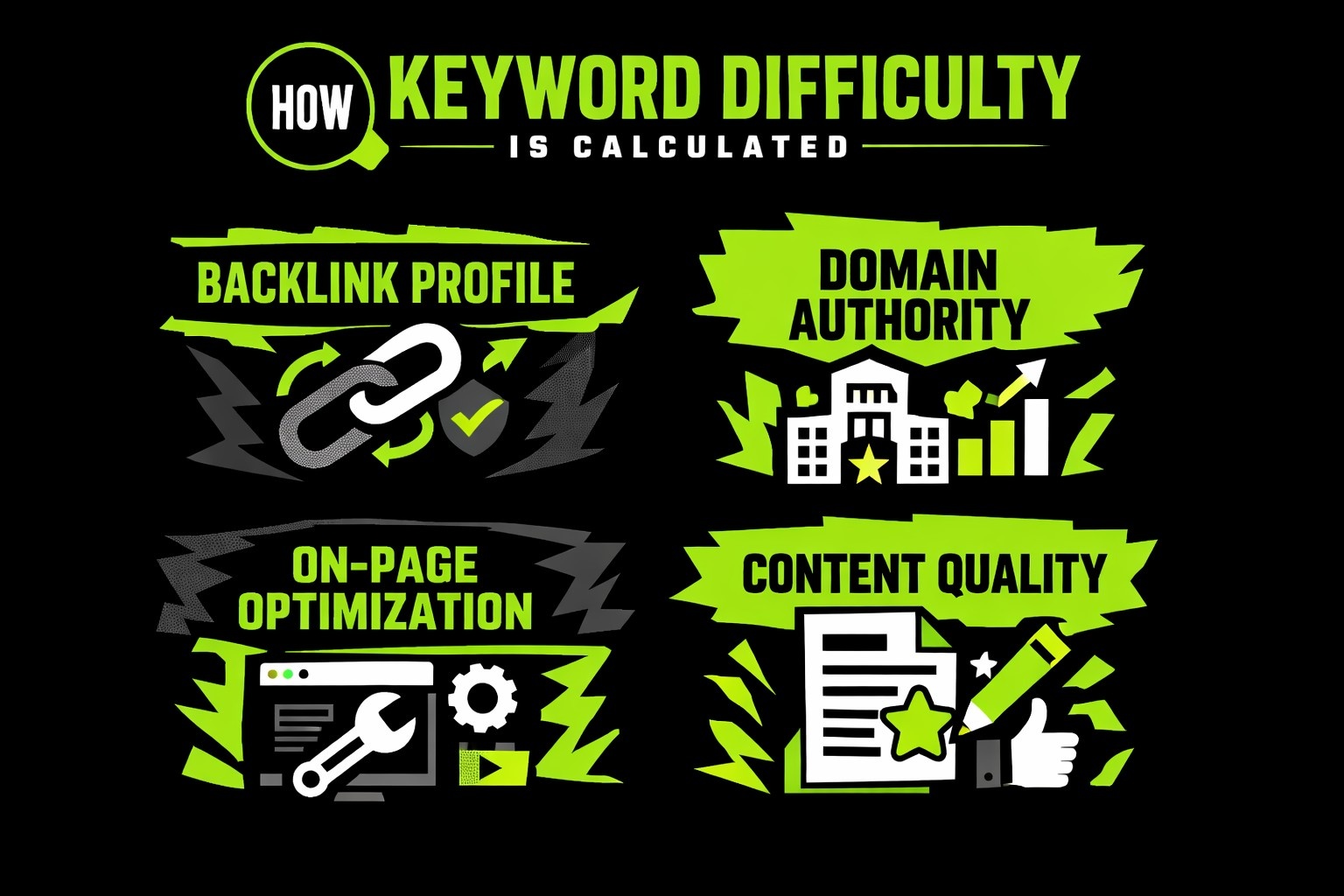
How Keyword Difficulty Is Calculated
There’s no single formula for keyword difficulty – each SEO tool has its own version. But under the hood, most of them are looking at the same core signals. The goal is to answer a simple question: how strong are the pages that already rank for this term? Here’s what usually goes into that calculation:
- Backlink profile of top pages: Tools scan the number and quality of links pointing to the top-ranking URLs. If those pages have a dense network of backlinks from trusted sites, the difficulty score climbs fast.
- Domain authority of competitors: It’s not just about one page – it’s about the entire domain. Pages from sites like Forbes or Wikipedia get a boost just by existing. Competing with that means bringing more than good content.
- On-page optimization signals: Tools check if the top pages are using the keyword in the title, headers, and body. If every result is tightly optimized, that adds another layer of competition.
- Content quality and intent alignment: This part is harder to measure, but it matters. If the top results genuinely answer the query well – with structured, comprehensive content – that raises the bar. You’re not just writing something better, you’re trying to beat content that’s already working.
- Traffic and engagement (sometimes): Some tools, like Semrush, may factor in estimated organic traffic to those pages or user engagement signals as part of the difficulty score. It’s less common, but it’s becoming part of the picture in newer tools.
It’s worth noting that Google doesn’t assign these scores. They’re built by SEO platforms trying to reverse-engineer what it takes to win. The number is just a tool. The real insight comes from understanding what’s behind it – and what it means for your own content strategy.
What Different KD Scores Actually Mean
Keyword difficulty scores are usually shown on a scale from 0 to 100. But the number alone doesn’t tell the whole story unless it’s tied to real expectations – and those vary depending on who’s doing the ranking. Here’s how most SEO teams interpret the ranges.
0-14: Very Easy
These are the low-hanging fruit. If a keyword falls in this range, it likely has little competition, weak pages ranking for it, or both. Even a newer site with decent content can get traction here without much link building. Great for building early momentum or targeting niche questions no one’s addressed properly.
15-29: Easy
Still very achievable, especially for small to mid-sized sites with a few links behind them. These often include long-tail queries or very specific product-related searches. Worth prioritizing if the intent aligns with actual business goals – visibility without conversion doesn’t pay the bills.
30-49: Possible
This is the middle zone. The competition is sharper, but not unmanageable. To rank here, the page needs more than just good structure – it needs strong content that hits search intent directly, plus a few trusted backlinks. For companies with growing authority, this range tends to offer the best balance of effort and return.
50-69: Difficult
Now the gloves are off. Keywords in this range are usually dominated by larger brands or long-established domains. To compete, a site needs consistent authority, a solid backlink profile, and standout content. It’s not impossible, but it does require planning and patience.
70+: Very Difficult
This is where enterprise players live. These keywords are usually part of broad, high-volume topics or highly competitive commercial spaces. Ranking here often takes years of domain growth, layered content ecosystems, and serious off-page SEO. It’s doable – but only for those who’ve already built serious authority or have the resources to do so.
Quick reality check
A KD score isn’t a yes/no button. A keyword with a score of 60 isn’t “bad” – it’s just not worth chasing if the site isn’t ready for it. Interpreting the number through the lens of a site’s current strength is what separates a keyword list from an actual strategy.
KD and Search Intent – Don’t Rank for the Wrong Thing
Keyword difficulty shows how hard it is to rank. But the real question is – rank for what? It’s one thing to land on the first page; it’s another to attract people who are actually ready to engage, convert, or buy. That’s where search intent steps in.
Without matching the keyword’s intent, even a low KD term can be a dead end. Search engines are trained to deliver not just results, but relevant answers. So if the content misses the point – even slightly – it won’t stick. Doesn’t matter how well it’s written or how easy the keyword looked on paper.
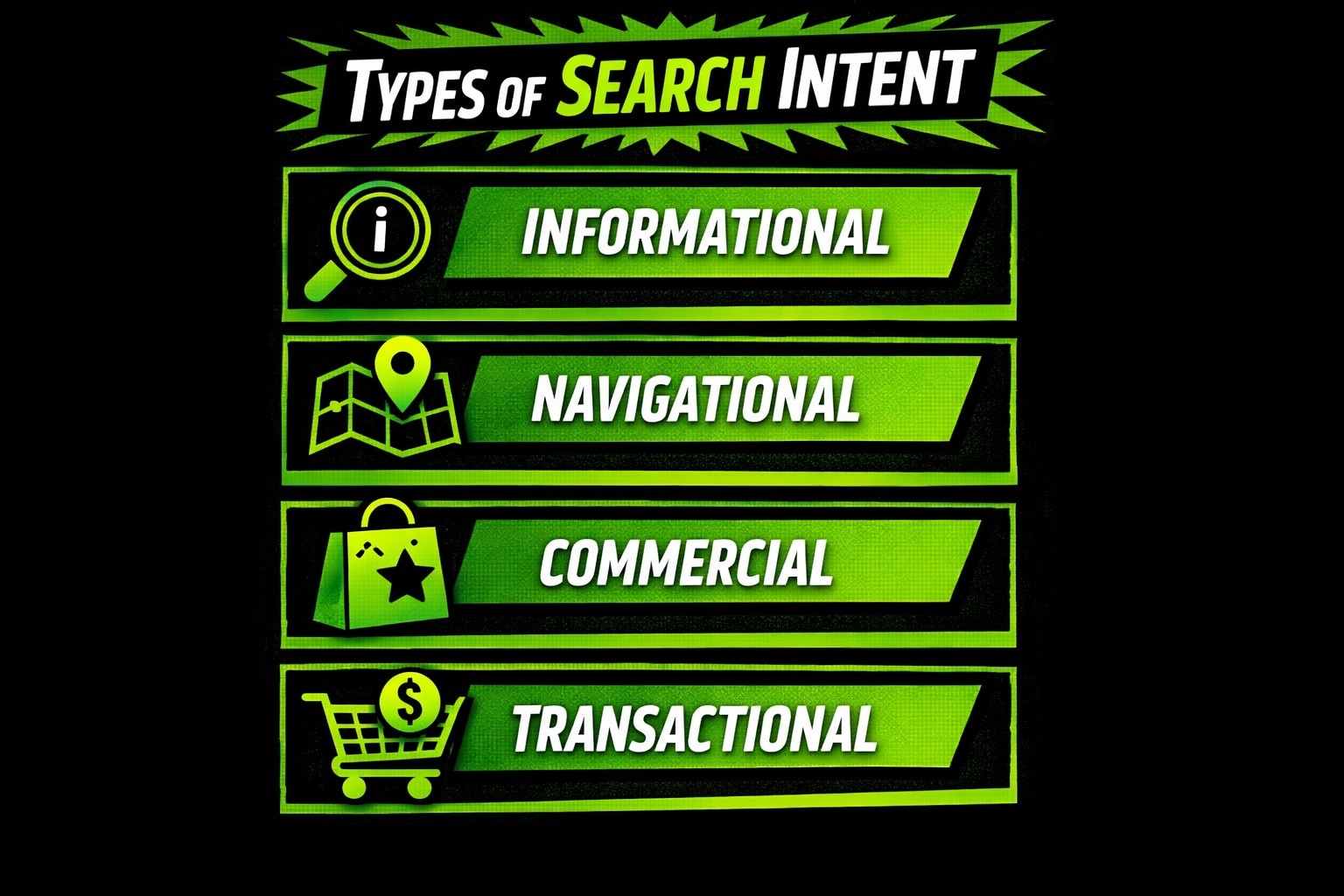
Types of Search Intent (And What They Signal)
Each keyword carries a different type of intent behind it. Good SEO teams don’t just chase scores – they read the intent like a map.
- Informational: These are “what is” or “how to” queries. The searcher wants answers, not products. Great for building trust and early awareness – but don’t expect direct conversions.
- Navigational: The person already knows where they want to go. Think branded searches like “Notion login” or “HubSpot pricing.” These are less about content competition and more about visibility.
- Commercial: These searchers are comparing options. Phrases like “best email software for startups” or “Ahrefs vs Semrush” fall here. Strong content here can nudge decisions.
- Transactional: This is the intent closest to revenue. The person is ready to act – buy, sign up, book a call. Keywords might include “buy,” “demo,” or specific product names.
Why It Matters When Paired With KD
A keyword with a difficulty score of 15 but purely informational intent might bring in traffic and zero leads. Meanwhile, a commercial keyword with a KD of 40 might actually drive pipeline – if the page delivers exactly what the searcher is hoping to find.
That’s why keyword difficulty and search intent should always be read together. Not all traffic is equal. Smart SEO doesn’t chase volume – it prioritizes relevance, timing, and fit.
Using KD in a Real SEO Strategy
Keyword difficulty isn’t just for filtering keywords – it’s a tool for shaping how a content strategy unfolds over time. Teams use it to separate what’s possible now from what needs to wait until domain authority, backlinks, or trust signals catch up. It’s less about avoiding hard keywords and more about sequencing efforts to get traction faster.
In most strategies, KD helps define which pages fall into the “quick-win” bucket and which are long-game investments. Low-difficulty, intent-aligned keywords become cluster content – helpful, specific, and easier to rank. These feed authority back into high-difficulty pillar pages that target broader, more competitive terms. The goal isn’t to rank once. It’s to build the kind of topical depth that search engines trust and reward repeatedly.
Choosing the Right KD Tool (And Why Scores Differ)
Keyword difficulty scores often vary between tools, and that’s expected. Each one calculates the number differently based on what it prioritizes. Some lean more on backlink profiles, others weigh domain authority or traffic estimates. The result is that a single keyword can show three different scores depending on where you check. Here’s a breakdown of how the most common tools tend to approach KD:
- Ahrefs: Focuses on the number of referring domains linking to the top-ranking pages. The score goes up when those links come from strong or well-known sites.
- Semrush: Combines backlink data with domain strength, and offers a version called Personal Keyword Difficulty (PKD), which tries to adjust the score based on the current authority of the user’s own site.
- Moz: Uses its own Domain Authority and Page Authority metrics to estimate how competitive a keyword is. These scores are based on overall link profiles and page structure.
- Other tools: Some platforms factor in organic traffic to ranking pages or changes in SERP results over time. These may be useful for spotting shifts in competitiveness or understanding how dynamic the topic is.
What matters isn’t the exact number – it’s how the tool defines it, and whether that logic fits the site’s current stage. The most useful KD score is the one applied consistently across research and content planning, not the one that looks the lowest on paper.
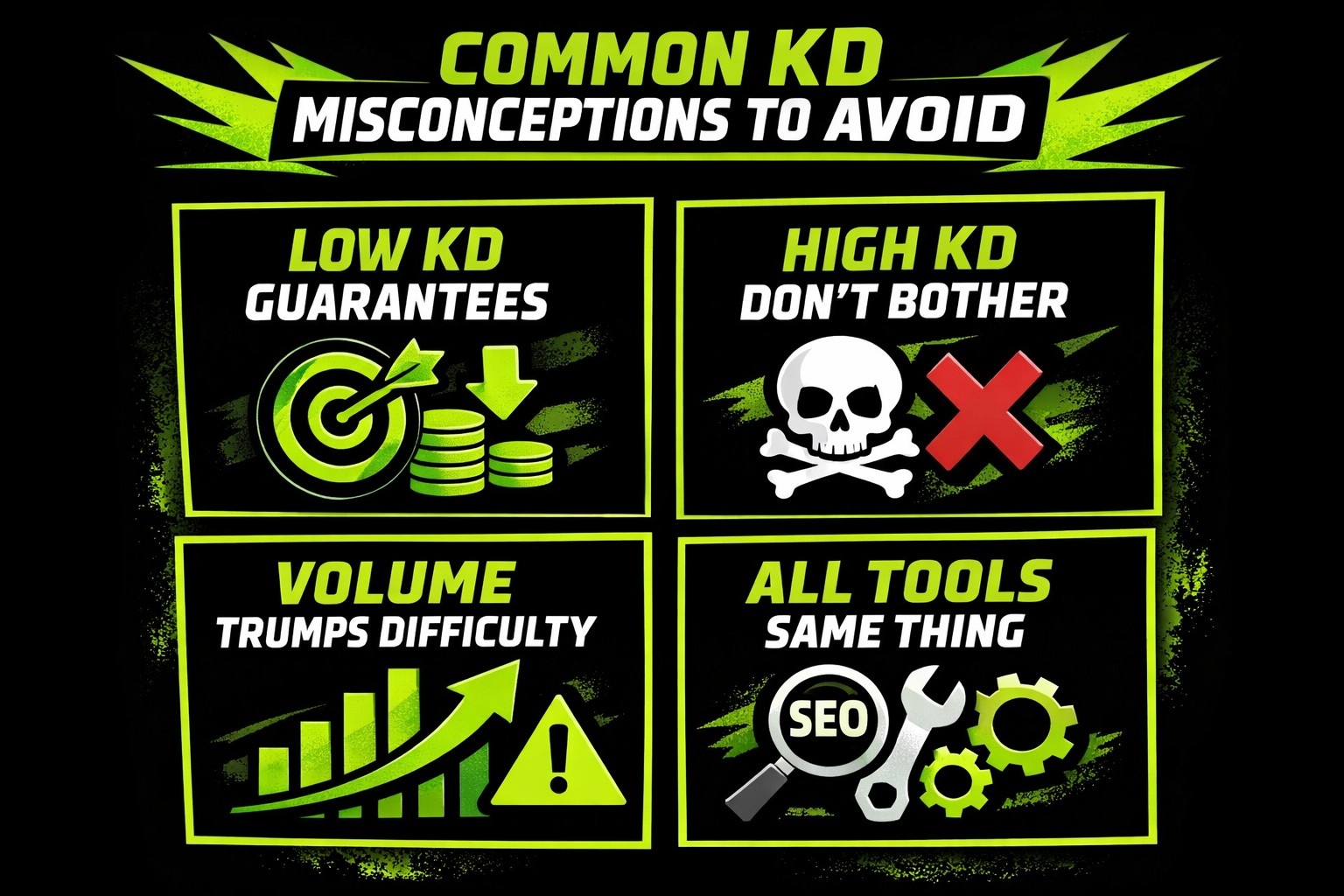
Common KD Misconceptions to Avoid
Keyword difficulty is helpful, but it’s also often misunderstood. Teams sometimes treat it like a greenlight system – low means go, high means stop. In reality, it’s a starting point, not a final answer. Here are a few ideas worth unlearning.
1. Low KD Guarantees Rankings
It doesn’t. A keyword with a KD of 10 might still go nowhere if the content doesn’t match what people are actually looking for. If intent is off, or the page structure misses the mark, even the lowest-difficulty terms won’t land.
2. High KD Means Don’t Bother
That’s not always true either. Some high-difficulty keywords are worth the effort – just not right away. These often become long-term targets built up over time through content clusters and link equity. A keyword scoring 70+ today might become viable next quarter once the domain has more weight behind it.
3. Volume Always Trumps Difficulty
Chasing high-volume keywords without factoring in KD is a shortcut to publishing content that never surfaces. A realistic, lower-volume keyword that aligns with search intent and has achievable competition can drive more conversions than a broad term that never ranks.
4. All Tools Mean the Same Thing
Not quite. KD scores from different platforms aren’t interchangeable. They reflect different data points and weighting systems. Comparing a 38 from one tool with a 38 from another won’t tell you much. It only works if the same tool is used consistently across the board.
5. KD Is Static
It shifts. As new pages rank, sites gain or lose authority, and backlinks get added, KD scores move too. Treating it like a set-and-forget metric leads to missed opportunities – or wasted effort.
The real value in KD isn’t the number – it’s the thinking it prompts. It helps teams ask better questions, prioritize smarter, and understand where the ceiling really is.
Conclusion
Keyword difficulty isn’t just a number on a dashboard – it’s a filter for focus. It helps teams spend time where they actually stand a chance to rank, and shows what kind of lift is needed to reach more competitive ground. The score only makes sense when it’s tied to context: domain authority, link profile, content depth, and above all, intent.
The smart approach isn’t to chase the lowest score or panic at the highest. It’s to understand where the line is right now – and how to move it. Used the right way, keyword difficulty becomes less of a barrier and more of a blueprint.