


Keyword analysis sounds technical, but the idea behind it is simple. It’s how you decide which search terms are actually worth your time.
Finding keywords is easy. Every tool can give you thousands of them. The hard part is figuring out which ones make sense for your site, your goals, and your resources. That’s where keyword analysis comes in.
Instead of chasing volume or trends, keyword analysis helps you look at keywords realistically. You weigh difficulty, intent, competition, and potential impact before committing to content or optimization work. Done right, it keeps your SEO focused, efficient, and tied to outcomes that matter.
Keyword Research vs Keyword Analysis: A Necessary Distinction
These two terms are often used interchangeably, but they serve different roles in SEO and should not be treated as the same thing.
Keyword research is about discovery. It focuses on uncovering what people are searching for, how often those searches happen, and what language users actually use. Research casts a wide net. It is meant to generate options, not decisions.
Keyword analysis is where judgment comes in. It takes the output of research and applies context. Instead of asking what exists, it asks what makes sense. Analysis considers your goals, your resources, your current authority, and the competitive landscape before deciding which keywords deserve attention.
Research answers the question of what people are searching for. Analysis answers a more important one: which of those searches should we realistically target, given our constraints and priorities.
Without analysis, keyword research produces long lists that feel productive but rarely turn into results. With analysis, those same lists become a focused plan. Keyword analysis exists to narrow options, not expand them.
What Keyword Analysis Means In Practical Terms
At its core, keyword analysis is the process of evaluating keywords to decide whether targeting them makes sense for your site right now.
This evaluation goes beyond surface metrics. You are not just looking at volume or difficulty in isolation. You are looking at how a keyword behaves in the real search environment.
Keyword analysis asks questions like:
- What does the searcher actually want?
- What kind of content ranks today?
- Who already owns this space?
- How hard would it be for us to compete?
- What happens if we succeed?
When these questions are skipped, SEO becomes reactive. When they are answered carefully, SEO becomes intentional.
How We Turn Keyword Analysis Into Real SEO Results At Lengreo
For us, keyword analysis is not a technical checkbox. It is where SEO decisions either start making business sense or fall apart.
At Lengreo, we focus on identifying keywords that can realistically drive outcomes, not just rankings. That means evaluating intent, SERP dynamics, competition, and business relevance before committing to content or optimization work. If a keyword looks good in a tool but leads to weak demand, heavy AI saturation, or unrealistic competition, we challenge it early.
This approach is especially important in B2B, SaaS, and competitive niches, where traffic alone rarely converts. Keyword analysis has to align with the buyer journey and the client’s growth stage, not just search volume.
We also treat keyword analysis as an ongoing process. As authority grows and search results change, priorities shift. That flexibility allows us to move from early wins to more competitive opportunities without wasting time or budget.
The result is a focused SEO strategy built around fewer, better keywords that are chosen to compete, convert, and scale.
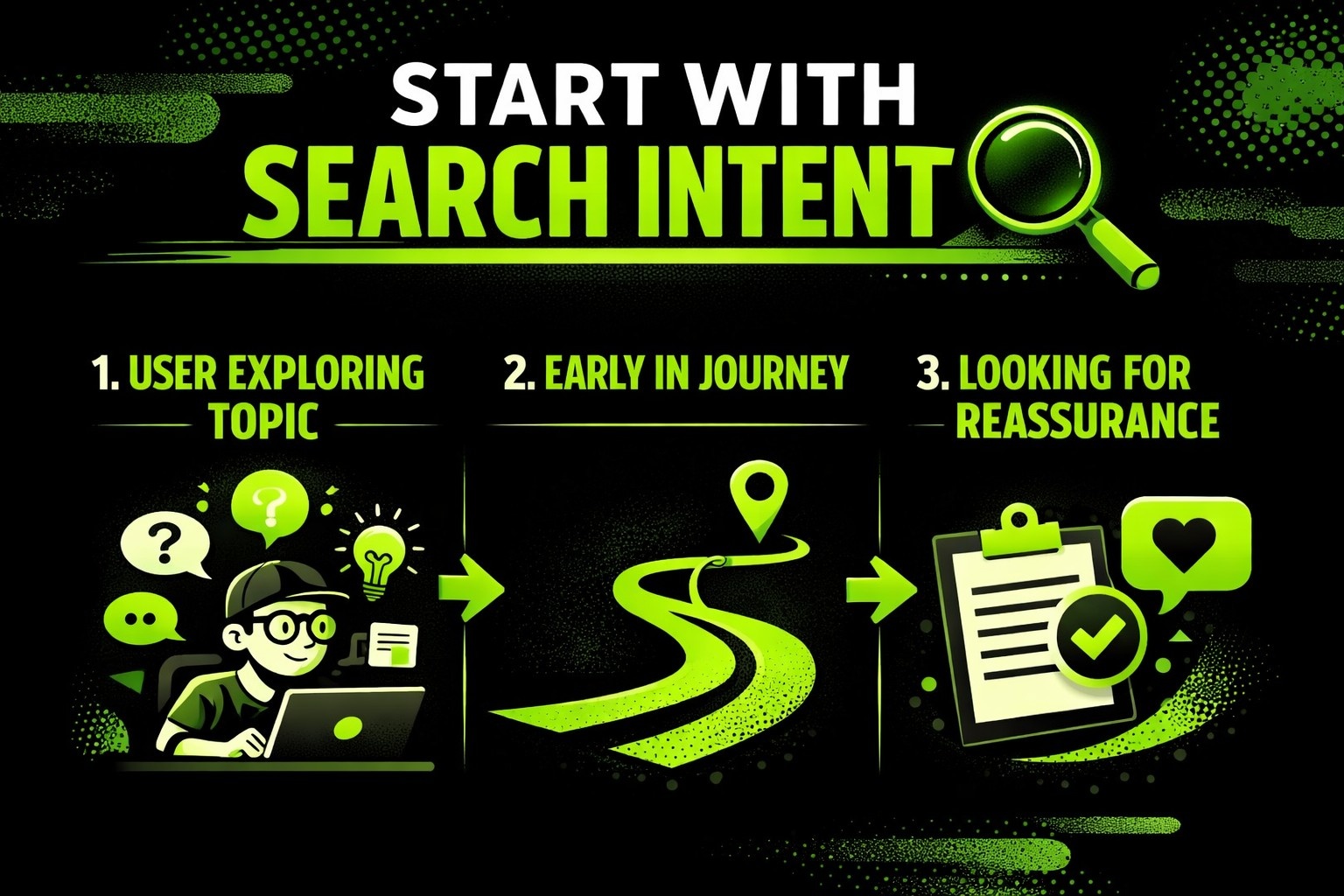
Start With Search Intent, Not Tools
Search intent is often oversimplified. Labels like informational or transactional are useful, but they are only the starting point.
Good keyword analysis focuses on understanding the situation behind the search.
Ask yourself:
- Is the user exploring a topic or narrowing options?
- Are they early in their journey or close to a decision?
- Are they looking for reassurance, comparison, or instruction?
Two keywords can share the same intent label and still require very different content strategies. Misreading intent leads to pages that rank briefly or not at all.
Before opening a keyword tool, understand the human behind the query.
Read the SERP Before You Trust Any Metric
One of the most reliable steps in keyword analysis is also the simplest. Open the search results and actually look at what is ranking.
The SERP often reveals more than any metric can. It shows you whether Google favors long-form guides, product pages, tools, videos, or something else entirely. You can quickly see how deep the ranking content goes, how well maintained it is, and whether the pages feel genuinely helpful or just adequate.
It also becomes obvious when AI answers, featured snippets, or other enhanced results dominate the page. In those cases, even a top ranking might not lead to meaningful traffic. You can also tell whether the results are controlled by well-known brands, authoritative publishers, or a mix of smaller sites.
If the SERP is crowded with strong, regularly updated content from authoritative sources, ranking will require more than basic optimization. On the other hand, when results look thin, outdated, or poorly aligned with the query, there may be room to compete even if difficulty scores appear high.
Keyword analysis begins in the SERP, not in a spreadsheet.
Understanding Keyword Difficulty Without Blind Trust
Keyword difficulty metrics are helpful, but they are estimates, not verdicts.
A keyword with a high difficulty score may still be viable if your site has strong topical relevance or existing authority in that area. A keyword with a low score can still be a poor choice if it attracts the wrong audience or delivers no meaningful outcome.
Use difficulty metrics as context, not commands.
Keyword analysis works best when you combine difficulty data with:
- SERP inspection
- Your site’s current authority
- Content quality gaps
- Realistic timelines
Difficulty should inform decisions, not make them for you.
Evaluating Search Volume With Realistic Expectations
Search volume often gets more attention than it deserves.
High-volume keywords are appealing on the surface, but they come with real tradeoffs. They are usually more competitive, more volatile, and increasingly affected by AI summaries and zero-click behavior. Even when rankings are achieved, the traffic does not always translate into meaningful engagement or results.
Lower-volume keywords often behave very differently. They tend to be more specific, easier to rank for, and closer to actual decision-making. Over time, they also contribute more effectively to building topical authority, especially when grouped within a clear content structure.
Keyword analysis is not about choosing between big or small keywords. It is about understanding what each keyword can realistically deliver and how it fits into a broader strategy.
Volume provides context. It does not define value.
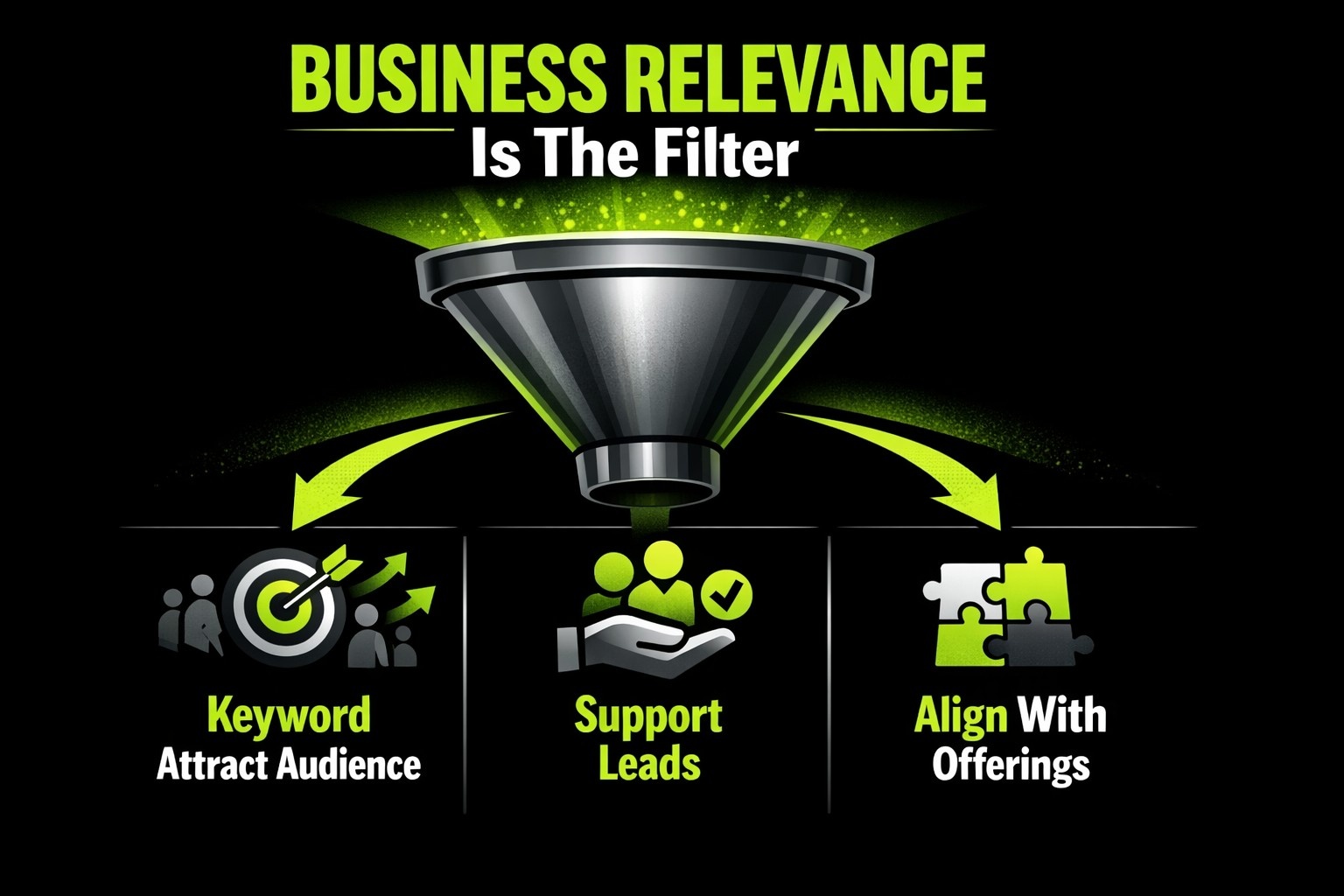
Business Relevance Is The Filter That Matters Most
A keyword can be easy to rank for and still be a bad choice.
This happens when keywords are selected for traffic potential instead of business alignment. Keyword analysis exists to prevent this.
Ask directly:
- Does this keyword attract the audience we want?
- Can it support leads, sales, or meaningful engagement?
- Does it align with our offerings or expertise?
If a keyword does not connect to a clear outcome, it should be questioned, no matter how attractive the metrics look.
SEO that ignores business relevance eventually collapses under its own weight.
How Keyword Analysis Fits Into Topical Authority
Keyword analysis should never be done in isolation. Every keyword needs to fit into a broader topic structure rather than standing alone as an individual target.
This requires thinking in clusters instead of single terms. A strong analysis process helps you identify primary keywords that define the core topics you want to own, while also selecting supporting keywords that naturally deepen coverage around those themes. It also prevents overlapping pages that target the same intent, which is a common cause of internal competition and stalled rankings.
When keywords reinforce each other within a clear structure, rankings tend to compound over time. When they compete internally, progress slows and authority becomes diluted. Keyword analysis exists to prevent that friction and keep topical growth intentional.
Where Bullet Lists Actually Help In Keyword Analysis
Used sparingly, lists can clarify decision-making. Overused, they flatten thinking. Here are a few places where lists genuinely add value.
Factors to Evaluate During Keyword Analysis
- Search intent and user expectation
- SERP composition and competition
- Keyword difficulty in context
- Search volume and traffic potential
- Business relevance
- Content effort required
Each factor alone is incomplete. Keyword analysis is about weighing them together.
Common Keyword Analysis Mistakes
- Prioritizing volume over intent
- Trusting difficulty scores without SERP review
- Targeting keywords too early
- Creating multiple pages for the same topic
- Chasing competitors instead of user needs
Most SEO failures can be traced back to one or more of these issues.
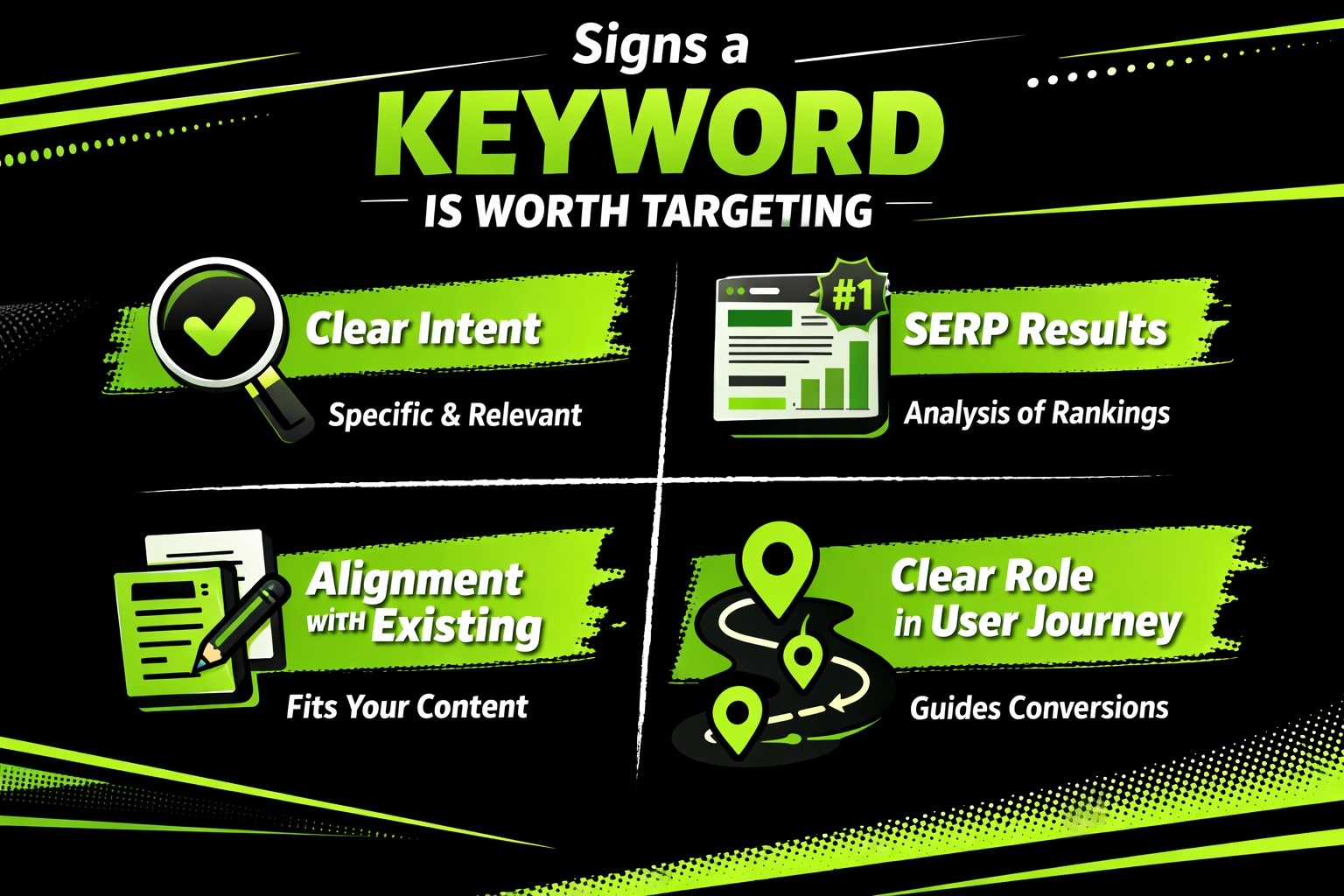
Signs a Keyword Is Worth Targeting
- Clear intent that matches your offering
- SERP results you can realistically compete with
- Alignment with an existing or planned topic cluster
- A clear role in the user journey
These signals matter more than raw metrics.
Keyword Analysis in an AI-Influenced Search Landscape
AI summaries and zero-click results have changed how keywords behave in search.
Some keywords now function primarily as visibility drivers rather than traffic drivers. Others have lost much of their click potential altogether, even when rankings are strong. Because of this, keyword analysis has to account for more than just traditional ranking outcomes.
You need to understand which keywords still send users to websites, which ones mainly contribute to brand presence, and which ones are better avoided because they deliver little value. This shift does not make keyword analysis obsolete. It makes it more strategic.
Keyword Analysis Is Not a One-Time Decision
Search evolves. Competition changes. Your site grows.
A keyword that made no sense six months ago may be viable today. A keyword that once performed well may decline as the SERP changes.
Revisiting keyword analysis regularly keeps SEO aligned with reality instead of assumptions.
It is not about changing direction constantly. It is about staying aware.
Final Thoughts: Keyword Analysis Is Strategic Restraint
Keyword analysis is not about finding more keywords. It is about choosing fewer, better ones.
It forces you to slow down, question assumptions, and connect SEO work to real outcomes. It prevents wasted content, misaligned priorities, and shallow growth.
In a search landscape crowded with content and tools, the ability to say no to the wrong keywords is often more valuable than chasing the right-looking ones.
That is what keyword analysis is really for.