


Quick Summary: Article submission is an off-page SEO technique where content is published on third-party websites, blogs, or article directories to generate backlinks and increase website visibility. According to Moz’s link building research, links represent votes of confidence from authoritative sites. When done correctly with high-quality content on reputable platforms, article submission can drive referral traffic and improve search rankings, though outdated mass-submission tactics are now considered harmful.
Article submission has been part of the SEO toolkit for years. But does it actually work anymore?
The landscape changed dramatically since the early 2010s when submitting articles to hundreds of directories was standard practice. Search engines got smarter. Low-quality link schemes got penalized. Yet the core concept—publishing valuable content on external platforms—remains relevant.
Here’s what actually matters about article submission in 2026.
What Article Submission Really Means
Article submission is the process of writing content and publishing it on third-party websites, blogs, or online platforms with the primary goal of generating inbound links back to your website.
It’s classified as an off-page SEO technique because the activity happens outside your own site. The content typically includes informative articles, how-to guides, or industry insights that provide value to readers on the host platform.
Most submissions include an author bio or contextual links pointing back to your website. These backlinks signal to search engines that other sites reference your content, which can improve your domain authority and rankings.
According to Moz’s link building guide, links represent votes of confidence from other authoritative brands and sites. That’s the theoretical foundation behind article submission.
How Article Submission Works in Practice
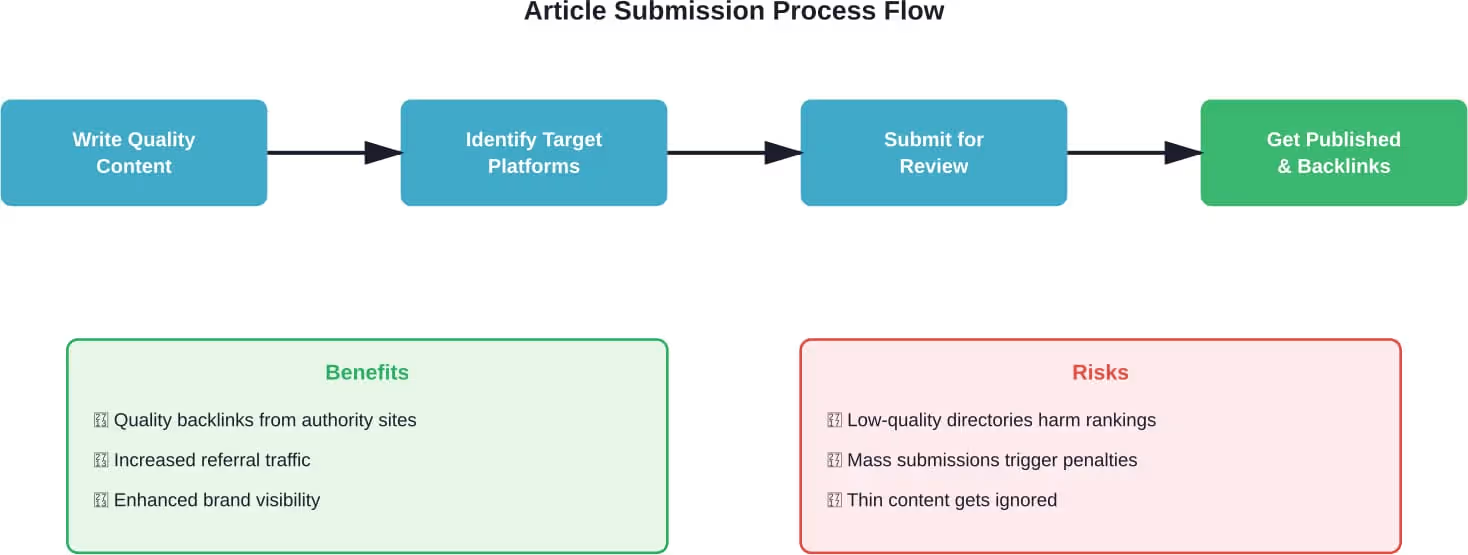
The mechanics are straightforward. Publishers identify reputable websites, blogs, or article directories that accept guest content. They then create original written content tailored to that platform’s audience and editorial standards.
After submission, the host site reviews the article. If approved, they publish it with attribution and typically allow one or more backlinks to the author’s website.
The quality of these links matters enormously. A backlink from Forbes or Entrepreneur carries substantially more weight than one from an obscure, low-traffic directory.
Types of Article Submission Platforms
Not all submission platforms are created equal. The type of site determines the value of the resulting backlink.
Article Directories
These are websites specifically designed to host submitted articles across various topics. Examples historically included EzineArticles and ArticlesBase.
Many directories lost credibility after Google’s algorithm updates targeted low-quality content farms. Some legitimate directories still exist, but they require high editorial standards.
Industry-Specific Platforms
Platforms catering to specific niches provide targeted audiences. A cybersecurity article on a tech security blog reaches relevant readers and generates contextually appropriate backlinks.
These platforms often have larger readerships and stricter quality requirements. Examples include industry publications like Forbes, Entrepreneur, and Inc.
Guest Blogging Sites
Many websites accept guest posts from external contributors. This overlaps significantly with article submission but typically involves more direct editorial relationships.
The content standards are usually higher, and the resulting backlinks carry more authority.
Does Article Submission Still Work in 2026?
The short answer? It depends entirely on execution.
Mass submission to low-quality directories is dead. That approach hasn’t worked since Google’s Penguin update started penalizing manipulative link schemes.
But strategic content placement on reputable platforms absolutely works. When done right, it’s essentially high-quality link building through content marketing.
Modern link-building outreach in 2025-2026 shows an average response rate of 1% to 3% due to increased AI-generated spam and stricter inbox filters. But targeting the right platforms with genuinely valuable content improves those odds substantially.
| Approach | Effectiveness 2026 | Risk Level |
|---|---|---|
| Mass directory submissions | Ineffective | High (penalty risk) |
| Quality guest posts on authority sites | Highly effective | Low |
| Industry-specific platforms | Effective | Low |
| Automated submission tools | Ineffective | High |
| Manual submission to vetted sites | Moderately effective | Low |
Build Authority in SEO
Article submission in SEO is often used to build backlinks and improve visibility, but results depend on how it fits into a broader SEO strategy. Submitting content without a clear plan rarely leads to meaningful rankings.
LENGREO helps businesses go beyond basic link building by creating structured SEO strategies that combine content distribution, authority building, and lead generation. Instead of relying on outdated tactics, the focus is on high quality placements and long term growth.
- content strategy and distribution planning
- authority building through quality backlinks
- SEO campaigns aligned with business goals
If you want to turn content into real SEO growth, get a free consultation with LENGREO.
Key Benefits When Done Correctly
Strategic article submission delivers several measurable advantages.
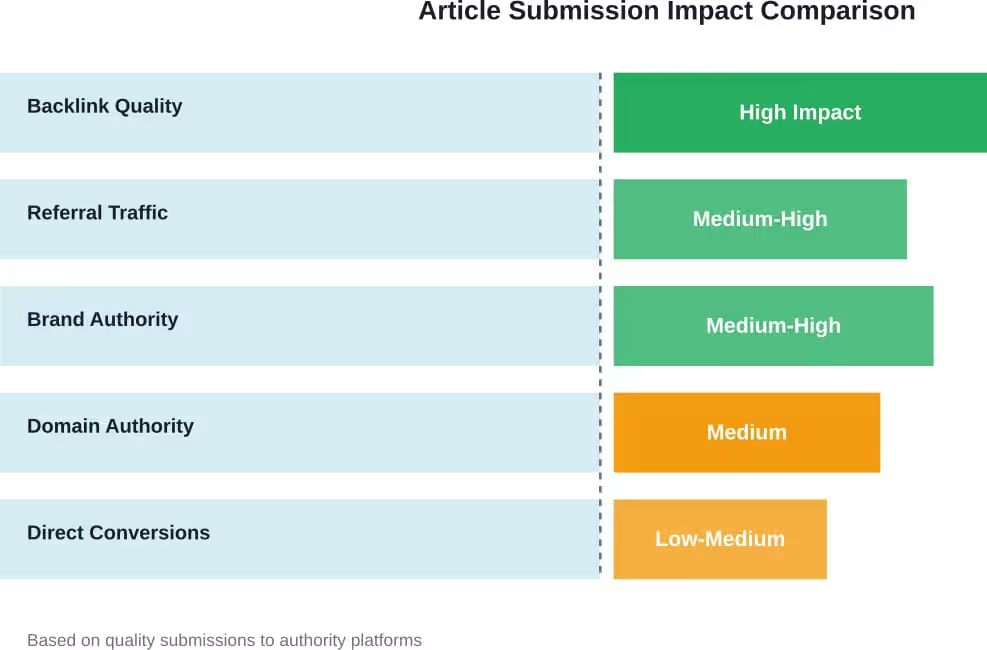
- Backlink Generation: The primary benefit remains acquiring inbound links from external domains. Search engines use these links as ranking signals.
- Referral Traffic: Articles published on high-traffic platforms drive readers back to your site. This traffic is often more engaged because readers already found value in your content.
- Brand Visibility: Publishing on recognizable platforms increases brand awareness and establishes thought leadership in your industry.
- Domain Authority: Over time, quality backlinks from authoritative sources can improve your site’s overall domain authority, making it easier to rank for competitive keywords.
Common Mistakes That Kill Results
Most article submission failures stem from outdated tactics or poor execution.
- Submitting to Low-Quality Directories: Hundreds of directories accept any content without editorial review. Links from these sites provide zero value and may trigger penalties.
- Duplicate Content: Submitting the same article to multiple platforms creates duplicate content issues. Search engines may ignore or devalue these pages.
- Over-Optimization: Stuffing articles with exact-match anchor text or excessive links looks manipulative. Natural, contextual links perform better.
- Ignoring Editorial Guidelines: Each platform has specific requirements. Failing to follow them results in rejected submissions and wasted effort.
- Prioritizing Quantity Over Quality: Ten backlinks from authoritative sites outperform 100 links from irrelevant, low-traffic directories.
Best Practices for Article Submission in 2026
Modern article submission requires a strategic, quality-focused approach.
- Target Reputable Platforms: Research sites with genuine readership, strong domain authority, and editorial standards. Check their existing content quality before submitting.
- Create Original, Valuable Content: Write comprehensive articles that provide genuine insights. Search engines in 2026 prioritize ‘Information Gain’ and specific answers over word count, with many top-ranking articles being concise (800-1,200 words) if they satisfy user intent efficiently.
- Follow Editorial Guidelines: Read and follow each platform’s submission requirements. Tailor content to their audience and tone.
- Use Natural Link Placement: Include backlinks where they add contextual value. One or two relevant links work better than forcing multiple URLs.
- Diversify Anchor Text: Use varied anchor text that sounds natural. Mix branded terms, generic phrases, and descriptive keywords.
- Monitor Results: Track referral traffic, backlink quality, and ranking changes. Focus on platforms that deliver measurable results.
Article Submission vs. Guest Blogging
These terms often get used interchangeably, but subtle differences exist.
Article submission traditionally involves platforms specifically designed to host submitted content, often with less direct publisher relationship.
Guest blogging typically involves reaching out to specific blogs or websites and proposing custom content. The editorial relationship is more personal and the content standards are usually higher.
In practice, the distinction matters less than the quality of the host platform and the value of the content.
| Factor | Article Submission | Guest Blogging |
|---|---|---|
| Platform relationship | Often transactional | Relationship-based |
| Content standards | Varies widely | Generally higher |
| Editorial process | Minimal to moderate | Collaborative |
| Link value | Depends on platform | Typically higher |
| Scalability | Easier to scale | More time-intensive |
Moving Forward with Article Submission
Article submission remains a viable off-page SEO technique in 2026, but the rules have changed dramatically since the early days of SEO.
Success requires treating it as content marketing rather than a link-building shortcut. Focus on creating genuinely valuable content for reputable platforms that reach your target audience.
The platforms matter enormously. A single backlink from an industry-leading publication outperforms dozens of directory links. Research thoroughly, submit strategically, and measure results consistently.
Ready to build authority through strategic content placement? Start by identifying five reputable platforms in your industry, study their content and guidelines, then create one exceptional article specifically for each. Quality execution beats volume every time.