


SEO title tags serve as the primary headline for a webpage in search engine results. They provide a concise summary of the page content to both search engines and users. These tags appear as clickable links in search engine results pages, browser tabs, and shared links across platforms.
Search engines rely on title tags to determine the topic of a page. Users scan them quickly to decide if the result matches their query. A well-structured title tag contributes to how a page is indexed and displayed.
Definition and Basic Structure
An SEO title tag is an HTML element that defines the title of a webpage. It resides in the head section of the code.
The standard format uses the <title> element. For example: <title>Page Content Summary Here</title>
This text becomes the default headline in search results. Search engines may alter it based on the query or page elements, but the original tag remains the starting point.
Title tags differ from other page elements. They focus on external display rather than on-page headings.
Difference from H1 Headings
H1 headings appear directly on the webpage as the main visible title. They structure content for readers on the site.
Title tags, however, target search results and browser displays. They prioritize relevance for external discovery.
Both elements should align in topic to maintain consistency. The title tag often mirrors the H1 closely but can vary to better suit search contexts.
Difference from Meta Descriptions
Meta descriptions provide additional text below the title in search results. They offer a brief overview to expand on the headline.
Title tags function as the main link text. Meta descriptions support it by adding context without being clickable themselves.
Search engines use both for snippet generation, but the title carries more weight in initial recognition.
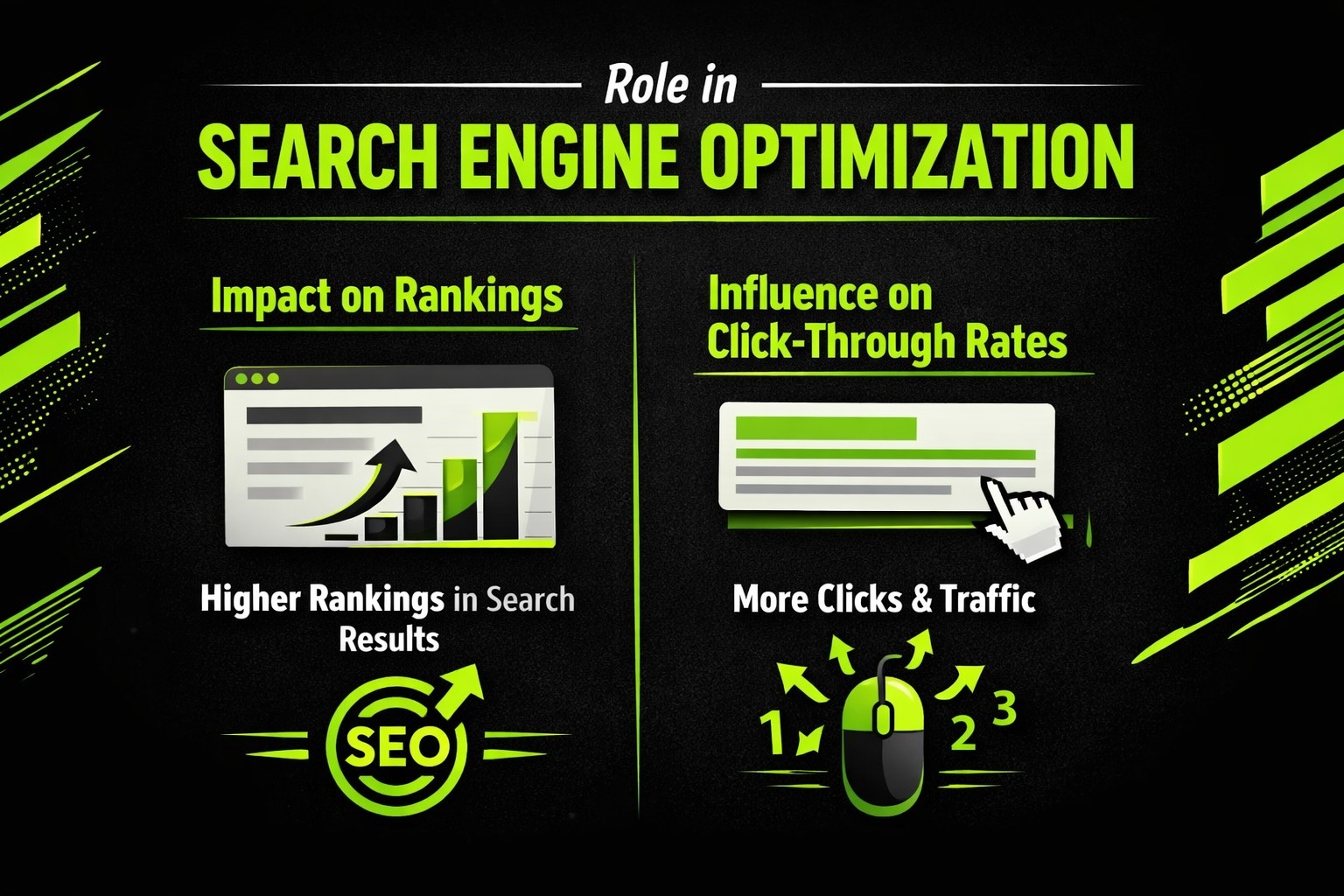
Role in Search Engine Optimization
Title tags influence how search engines interpret page content. They help categorize pages for relevant queries.
Including terms related to the page topic assists in matching user searches. Search engines evaluate the entire tag during indexing.
Clear title tags support accurate placement in results. They contribute to overall page relevance signals.
Impact on Rankings
Title tags provide context for page topics. Relevant terms in the tag align with ranking considerations.
Search engines assess multiple factors beyond titles. The tag works alongside content and other elements.
Consistent use across a site reinforces thematic structure. This aids in broader site evaluation.
Influence on Click-Through Rates
Users rely on displayed titles to evaluate results. Descriptive tags that match query intent encourage selection.
The title appears prominently in results lists. It shapes first impressions before any page visit.
Variations in display can affect user decisions. Tags that convey clear value tend to perform better in user selection.
SEO Title Tags in Professional Practice at Lengreo
At Lengreo, we treat SEO title tags as a core component of on-page optimization in every client project we handle at Lengreo. When we start with a website audit, one of the first things we do is go through all existing title tags to check that they give a clear and accurate summary of what each page actually covers, while including the terms that align with the queries we uncover during keyword research.
We then refine those tags to keep them at the right length, place the most relevant terms toward the front in a natural way, and use separators like pipes or hyphens to improve structure and readability. These adjustments fit seamlessly into the wider optimization work we perform – from content strategy and technical fixes to link building – and help drive better search visibility for client websites across various B2B sectors.
Key Characteristics of Effective Title Tags
Effective title tags balance technical constraints with content accuracy.
They remain concise while covering essential details. This ensures full display in most search interfaces.
Here is a summary of core characteristics:
- Concise length that fits standard display limits
- Natural inclusion of terms relevant to the page topic
- Accurate reflection of the specific content on the page
- Distinct formulation for each individual page on the site
- Clear structure that supports quick scanning
Length Considerations
Search displays vary by device and query. Titles that fit common widths avoid truncation.
Pixel-based rendering determines visible space. Wider characters consume more room than narrow ones.
Tools that preview display help verify appearance. Adjustments based on preview maintain visibility.
Keyword Integration
Relevant terms placed early in the tag signal primary focus. This supports query matching.
Natural placement prevents forced structures. Terms should fit the overall summary.
Overuse of terms can disrupt flow. Balanced integration maintains readability.
Uniqueness Across Pages
Each page requires its own distinct tag. This distinguishes content within the site.
Duplicate tags confuse internal differentiation. Unique tags clarify individual page purposes.
Site-wide consistency in style aids recognition. Variations reflect specific content differences.

Best Practices for Creation
Creating title tags involves reviewing page content and target queries.
Start with the core topic summary. Build around terms that describe the material.
Test variations for display and clarity. Monitor performance through search console data.
Prioritizing Relevance
The tag must match the actual page content. Accurate representation sets proper expectations.
Mismatch leads to poor user experience. Alignment supports sustained engagement.
Query context influences display. Tags that address common search patterns perform reliably.
Incorporating Structural Elements
Separators like pipes or hyphens organize components. They separate main topic from additional details.
Brand names often appear at the end when applicable. This maintains focus on content first.
Structural choices affect readability. Clean separation improves scanability.
Here are common structural approaches:
- Primary topic followed by separator and secondary detail
- Core terms at the start with modifiers toward the end
- Brand placement at the conclusion for recognition
- Consistent separator usage across the entire site
Avoiding Common Issues
Excessive length risks partial display. Concise phrasing preserves full visibility.
Repetitive terms dilute focus. Varied language keeps the tag informative.
Generic tags reduce distinction. Specific details highlight unique aspects.
Optimization in the Current Search Environment
Search systems evolve in how they handle titles. Original tags serve as base input.
Display may incorporate other page elements. This adapts to specific queries.
Optimization focuses on strong base tags. Clear originals provide reliable starting points.
Handling Display Variations
Search engines adjust titles for better query fit. This occurs across various content types.
Strong alignment between tag and content reduces major changes. Consistent elements remain stable.
Monitoring actual displays reveals patterns. Adjustments refine base tags over time.
Adaptation for AI-Driven Features
Emerging search features cite sources prominently. Clear titles aid in accurate representation.
Titles that cover broad intent aspects appear in summaries. Comprehensive phrasing supports inclusion.
Ongoing refinement matches evolving display needs. Base tags remain foundational.
Conclusion
SEO title tags remain a core element in webpage presentation. They bridge content and discovery through search interfaces.
Effective tags combine accuracy with structural clarity. They support both system understanding and user decisions.
Regular review ensures tags reflect current content. This maintains relevance in changing search landscapes.