An SEO specialist sits at the intersection of how people search and how websites are built. Their job is not about tricks or chasing algorithms. It is about understanding intent, shaping content, and making sure a site is easy for both users and search engines to navigate. When done well, SEO feels invisible. Pages load fast, answers are clear, and the right content shows up at the right moment.
In practice, the role is part analyst, part editor, part problem solver. One day might involve digging into search data to spot patterns. The next could be rewriting a page so it actually answers what people are asking, or working with developers to fix technical issues that quietly hold a site back. Good SEO specialists think long term. They care less about quick wins and more about steady, compounding growth that keeps working even when trends shift.
SEO Specialist Work in Practice at Lengreo
At Lengreo we work with SEO the way it is meant to work in practice, not as a standalone tactic, but as part of a broader marketing and growth system. Our role often starts where SEO specialists are most valuable: understanding how real people search, how decision-makers compare options, and how websites need to be structured so that visibility turns into meaningful business outcomes. We do not treat SEO as a checklist. We treat it as ongoing analysis, prioritization, and collaboration across content, technical setup, and lead generation.
At Lengreo we also see firsthand how the work of an SEO specialist connects to everything around it. Keyword research informs content strategy. Technical audits shape development decisions. Search intent insights influence how messaging is positioned across pages and campaigns. This is how SEO stops being about rankings alone and starts supporting traffic quality, conversion paths, and long-term growth. Our experience reinforces the core idea behind the SEO specialist role: when search strategy is grounded in user intent and aligned with business goals, the results compound over time rather than fading after a short spike.
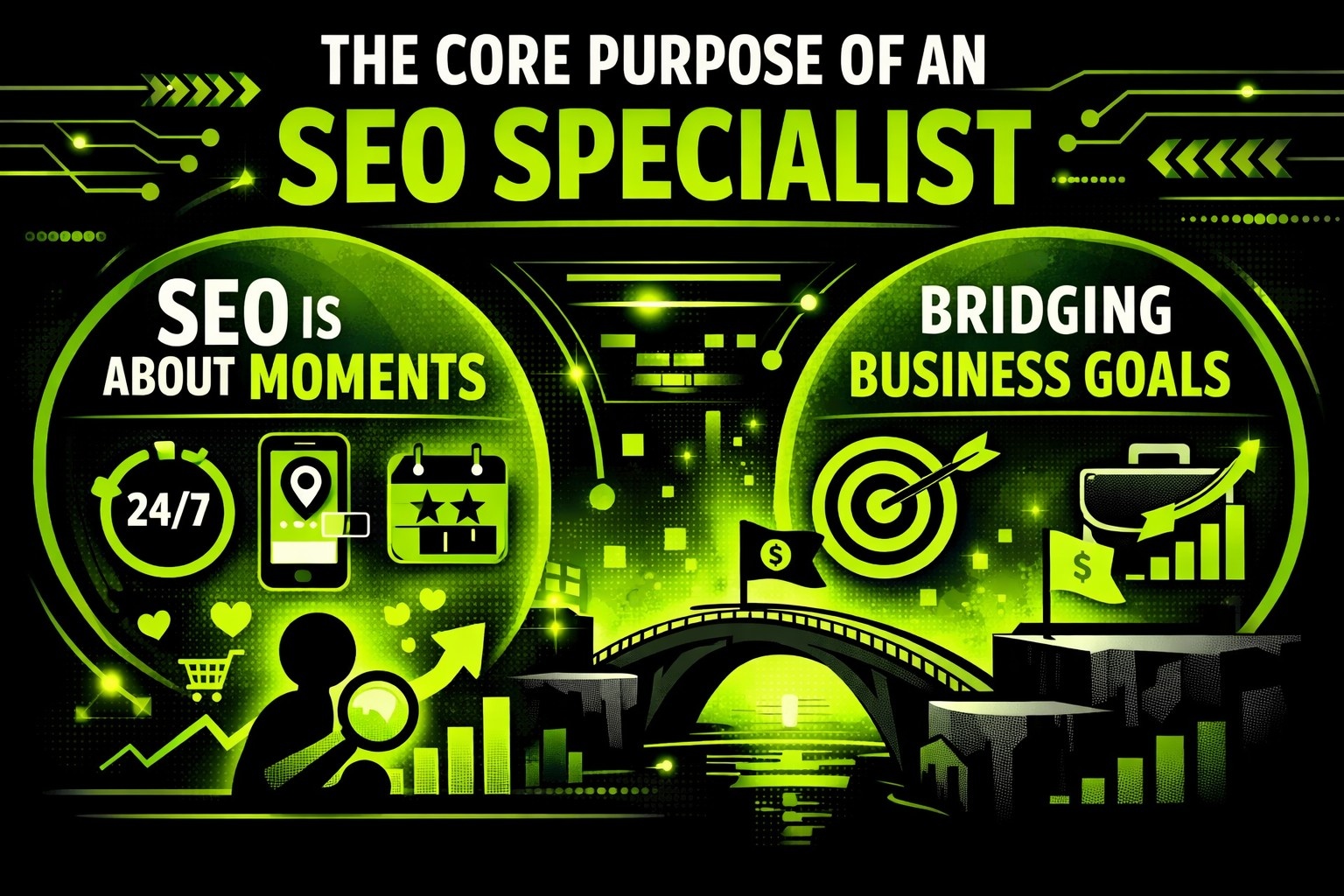
The Core Purpose of an SEO Specialist
At a surface level, it is easy to say that an SEO specialist helps a website rank higher in search results. That statement is not wrong, but it misses the real point of the role. Rankings are a byproduct. The real work is about alignment – between what people are looking for, what a business offers, and how search engines evaluate relevance and usefulness.
An SEO specialist exists to reduce friction in that relationship. When someone searches, they are expressing intent. The job is to recognize that intent, respect it, and make sure the website responds in a way that feels natural and genuinely helpful.
SEO Is About Moments, Not Keywords
Search behavior is driven by moments of need. Someone is stuck, curious, comparing options, or ready to act. SEO specialists focus on those moments rather than isolated keywords.
They look at questions like:
- Why is someone searching this phrase right now?
- What problem are they actually trying to solve?
- What would a satisfying answer look like?
When SEO is done well, the content does not feel optimized. It feels like it showed up exactly when it was needed.
Bridging Business Goals and Human Intent
One of the most important parts of the role is translation. SEO specialists translate human language into structured signals that search engines understand, without stripping away meaning or usefulness.
This bridge works in both directions:
- From users to businesses by revealing what people truly care about
- From businesses to users by shaping content around real needs instead of internal assumptions
An SEO specialist spends a lot of time reading between the lines of search queries. A short phrase often hides a bigger question, a concern, or a decision that someone is trying to make.
What SEO Specialists Actually Do Day to Day
The daily work of an SEO specialist rarely looks the same from one week to the next. That is part of what makes the role challenging and appealing.
Some days are analytical. Others are creative. Many involve collaboration across teams that do not always speak the same language.
Common responsibilities include:
- Researching how people search for topics related to a business
- Identifying keyword opportunities based on intent, competition, and value
- Auditing websites for technical issues that affect crawling and indexing
- Improving page structure, internal linking, and content clarity
- Working with writers to optimize existing content or plan new pages
- Monitoring performance through analytics and search tools
- Diagnosing traffic drops or ranking changes
- Developing link acquisition strategies that focus on quality, not volume
- Staying informed about algorithm changes and industry shifts
What matters most is not doing all of these tasks at once, but knowing which ones matter most at a given moment. Good SEO specialists prioritize based on impact, not checklists.
SEO Is Not One Skill, It Is a System
One of the biggest misconceptions about SEO is that it is a single discipline. In reality, it is a system made up of several interconnected areas. Ignoring one usually weakens the others.
Technical SEO
Technical SEO focuses on how a website is built and how search engines interact with it. This work happens mostly behind the scenes, but its impact is significant.
It includes things like:
- Site speed and performance
- Mobile usability
- Crawlability and indexing
- URL structure and internal linking
- Structured data and metadata
- Fixing errors that block search engines the wrong way
A technically sound site gives content a fair chance to rank. Without that foundation, even great content can struggle to perform.
On-Page SEO
On-page SEO is where content and structure meet intent. This is the part most people associate with SEO, but it goes far beyond placing keywords.
Strong on-page optimization involves:
- Matching content to what users are actually searching for
- Writing clear titles and descriptions that set expectations
- Structuring pages so information is easy to scan and understand
- Using internal links to guide both users and search engines
- Updating outdated pages so they stay relevant
This is where SEO becomes editorial. It requires judgment, not formulas.
Off-Page SEO
Off-page SEO is about reputation and trust. Search engines use external signals to understand whether a site deserves visibility.
This often includes:
- Earning links from relevant, credible websites
- Mentions and citations across the web
- Brand authority within a specific niche
The best off-page SEO strategies focus on relationships, quality content, and genuine value. Manipulative shortcuts tend to backfire over time.
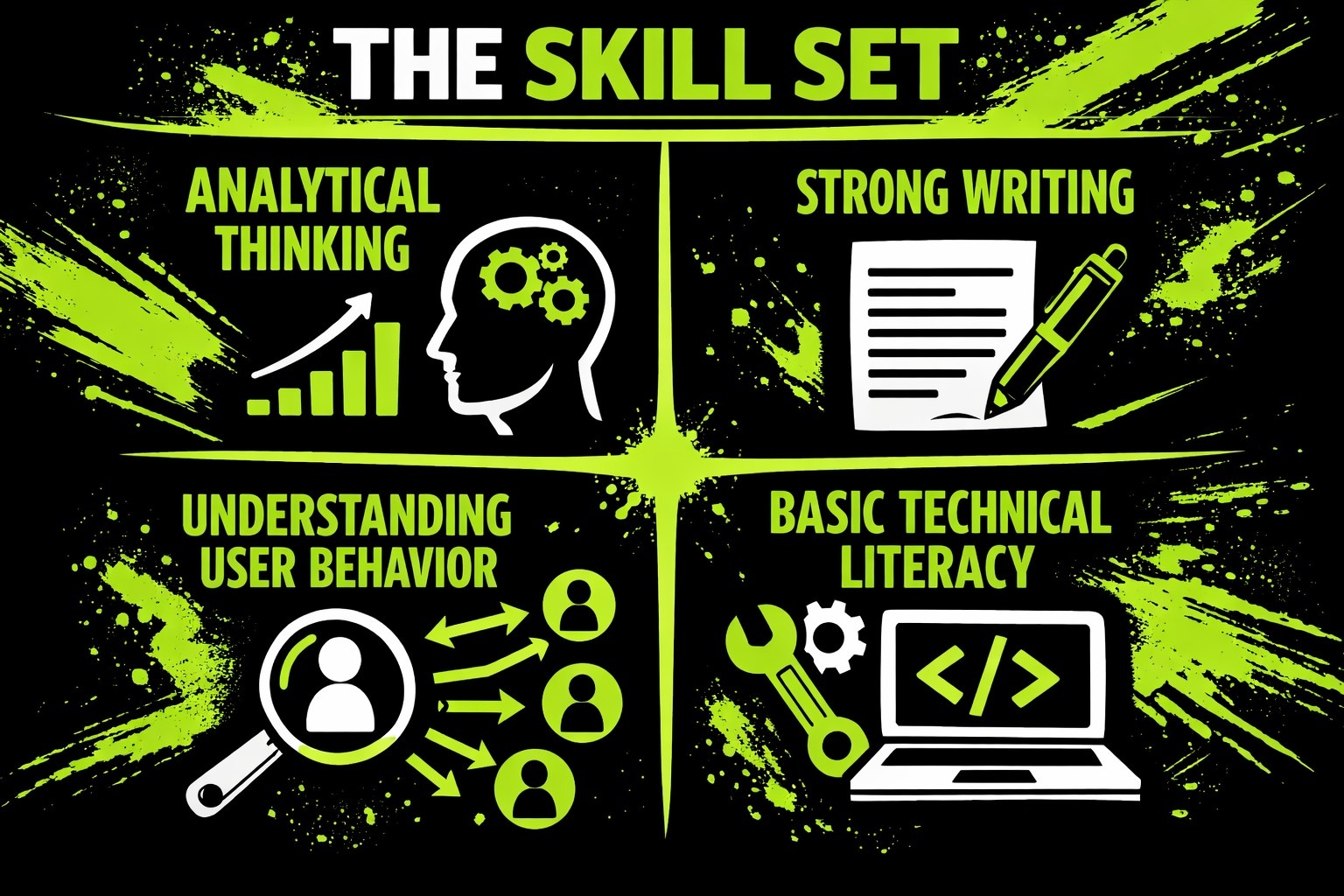
The Skill Set That Separates Good SEO Specialists From Average Ones
SEO rewards range, not narrow specialization. The most effective specialists tend to combine technical understanding with communication and critical thinking.
Key skills include:
Analytical Thinking and Comfort With Data
Strong analytical thinking allows an SEO specialist to notice patterns in traffic and rankings over time, understand what normal fluctuation looks like, and identify when something truly needs attention. It also helps them avoid overreacting to short-term changes. Instead of chasing every movement in a chart, they focus on trends that align with business goals and user behavior.
Strong Writing and Editing Instincts
Good writing instincts help an SEO specialist recognize when content is unclear, bloated, or misaligned with what users are actually searching for. Editing becomes a way to remove friction. Pages become easier to read, faster to understand, and more likely to satisfy the intent behind a search. When content feels natural and direct, search performance often improves as a result.
Understanding of User Behavior and Intent
This skill involves understanding whether a person is researching, comparing options, or ready to take action. It also means anticipating what information users expect to find and how they want it presented. When intent is misunderstood, even well-optimized pages can fail. When it is understood, content tends to perform with less effort.
Basic Technical Literacy Without Deep Coding
Knowing how search engines crawl pages, how site speed affects experience, and how internal linking supports discovery gives SEO specialists the ability to spot problems early. It also helps them explain why certain fixes matter, which is often more important than implementing the fixes themselves.
Ability to Prioritize Work Based on Impact
An experienced SEO specialist learns to focus on changes that create meaningful impact rather than chasing perfection. They weigh effort against potential gains, balance short-term wins with long-term improvements, and adjust priorities as data and business needs evolve. This skill prevents burnout and keeps SEO aligned with real outcomes.
Clear Communication With Non-SEO Stakeholders
Clear communication allows an SEO specialist to explain recommendations without jargon, connect SEO work to broader business goals, and set realistic expectations about timelines and results. When people understand the reasoning behind SEO decisions, they are far more likely to support and implement them.
What matters less than people think is memorizing tools or tactics. Tools change constantly. The ability to reason through a problem does not.
How SEO Specialists Use Data Without Becoming Slaves to It
SEO generates a lot of data. Rankings, impressions, clicks, sessions, conversions. It is easy to drown in numbers.
A good SEO specialist knows that data is a guide, not a goal.
They look for patterns rather than obsessing over individual fluctuations. They ask questions like:
- Is traffic growing in the areas that matter most to the business?
- Are users engaging with content or bouncing quickly?
- Which pages convert and which ones only attract curiosity?
- What changed before performance shifted?
SEO data only becomes valuable when it leads to decisions. Reporting without insight is noise.
Where SEO Specialists Work and How Roles Differ
SEO specialists can work in several different environments, each with its own rhythm.
In-House SEO
In-house specialists focus on a single website or brand. This allows for deep understanding of the business, products, and audience.
The work tends to be more strategic and long-term, but it can move slower due to internal processes.
Agency SEO
Agency specialists work with multiple clients across industries. This builds range quickly and exposes them to many site types and challenges.
The pace is faster, and communication skills are critical. Success often depends on explaining SEO value clearly to clients.
Freelance SEO
Freelancers operate independently, managing both SEO work and client relationships. This offers flexibility but requires strong self-discipline and business skills.
Many experienced SEO specialists eventually move into freelancing or consulting once they have a proven track record.
How SEO Specialists Fit Into a Broader Marketing Team
SEO works best when it is woven into the rest of a company’s marketing and product efforts. Rather than sitting in a silo, SEO specialists act as connectors. They help different teams understand how search behavior, content, and site structure influence visibility, traffic, and conversions.
The table below shows how SEO specialists typically collaborate with other teams and what that collaboration looks like in practice.
| Team | How SEO Specialists Work With Them | Why It Matters |
| Content writers and editors | SEO specialists share search insights, help shape topics, refine page structure, and edit content for clarity and intent alignment | Content performs better when it answers real search questions and matches how people look for information |
| Web developers and designers | They flag technical issues, explain SEO requirements, and collaborate on site structure, speed, and mobile usability | Technical decisions directly affect crawlability, indexing, and user experience |
| Paid search and advertising teams | SEO specialists exchange keyword data, intent insights, and performance trends | Shared insights help avoid overlap, improve targeting, and strengthen overall acquisition strategy |
| Product and UX teams | They contribute search-driven feedback on navigation, page flow, and user expectations | Better UX supports engagement, which reinforces both SEO and conversion goals |
| Sales and customer support | SEO specialists learn from real customer questions and objections, then reflect those insights in content | Search content becomes more relevant when it mirrors how customers actually think and speak |
When SEO is integrated this way, it stops competing with other channels and starts supporting them. The strongest SEO specialists understand that their impact grows when their work aligns with broader goals, timelines, and priorities across the organization.
How People Actually Become SEO Specialists
There is no single path into SEO. Most professionals arrive from adjacent fields.
Common entry points include:
- Content writing or editing
- Digital marketing roles
- Web development or design
- Analytics or research roles
Formal degrees help, but they rarely teach SEO directly. Most learning happens through hands-on work, experimentation, and continuous education.
Many SEO specialists build early experience by:
- Optimizing personal projects
- Helping small businesses or nonprofits
- Working in junior marketing roles
- Studying case studies and testing ideas
Progress in SEO is earned, not granted.

Career Growth and Long-Term Opportunities in SEO
SEO offers several growth paths depending on interests and strengths.
Some specialists move toward deeper technical roles. Others focus on content strategy, analytics, or leadership. Senior positions often involve managing teams or shaping company-wide search strategy.
Because SEO skills overlap with many areas of digital marketing, they remain highly transferable. Even when job titles change, the underlying expertise stays valuable.
Why SEO Continues to Matter Despite Constant Change
Search engines evolve constantly. Algorithms shift. New technologies appear. AI changes how information is discovered.
Yet SEO remains relevant because its core principle does not change. People still search. Businesses still need to be found. Answers still matter.
SEO specialists who focus on fundamentals rather than shortcuts adapt naturally. They do not chase every update. They build systems that survive them.
Final Thoughts
An SEO specialist is not a technician pushing buttons or a marketer chasing keywords. At its best, SEO is thoughtful, strategic work that respects both users and search engines.
It rewards patience, curiosity, and critical thinking. It demands constant learning, but it also offers long-term impact that few digital roles can match.
If you enjoy solving problems, understanding how people search, and shaping content that actually gets seen, SEO is not just a job title. It is a craft worth mastering.