


SEO gets talked about a lot, but rarely explained well. One agency promises rankings. Another talks about traffic. A third throws charts at you and hopes for the best. Somewhere between all that noise, business owners are left wondering what an SEO company actually does day to day.
At its core, SEO is not a trick and it is not a one-time task. It is ongoing work that blends research, technical decisions, content judgment, and constant adjustment. A good SEO company does not chase algorithms. It builds systems that help the right people find your business at the moment they are already looking.
This article breaks down what that work really looks like, without hype, shortcuts, or vague promises.
SEO Is Not a Single Task. It Is a System
One of the biggest misconceptions about SEO is that it is a checklist. Fix titles. Add keywords. Get backlinks. Done.
In practice, SEO is closer to maintaining a living system. Search engines change. User behavior changes. Competitors improve. Your own business evolves. An SEO company operates inside that moving environment and adjusts continuously.
Good SEO work connects three things:
- How people search
- How your website is built and presented
- How search engines interpret both
When those elements are aligned, growth follows naturally. When they are misaligned, even the best-looking website struggles to perform.
SEO Built for Growth at Lengreo
At Lengreo, SEO is not a standalone service or a box to tick. It is part of a broader growth system that connects visibility, demand, and revenue. Most businesses do not come to us asking for rankings. They want qualified leads, predictable pipelines, and marketing that supports sales. SEO works when it serves those goals, not when it chases metrics in isolation.
Our process starts with understanding the business behind the website. We look at how leads are generated, where deals slow down, and what kind of demand makes sense to pursue. From there, SEO, content, paid ads, outreach, and demand generation are aligned into one strategy. That is why we operate as an extension of our clients’ teams, not a vendor executing disconnected tasks.
We are transparent about results because they matter. We have helped software companies increase acquired clients by 400 percent, generated new opportunities for architecture and design firms, and reduced cost per lead for tech-driven businesses across Europe and the US. Those outcomes come from combining technical SEO, content strategy, outreach, and conversion optimization into a system that compounds over time.
We work with competitive industries where growth needs to be deliberate, including B2B, SaaS, biotech, cyber security, and software. Across SEO, lead generation, paid ads, and full digital strategy, the focus stays the same: build sustainable growth, stay transparent, and take responsibility for results. For a closer look at how we work day to day, we share insights and performance updates on LinkedIn and Instagram.
The First Step: Understanding Your Starting Point
Before anything is optimized, an SEO company needs context. That comes from a deep look at your current website and market position.
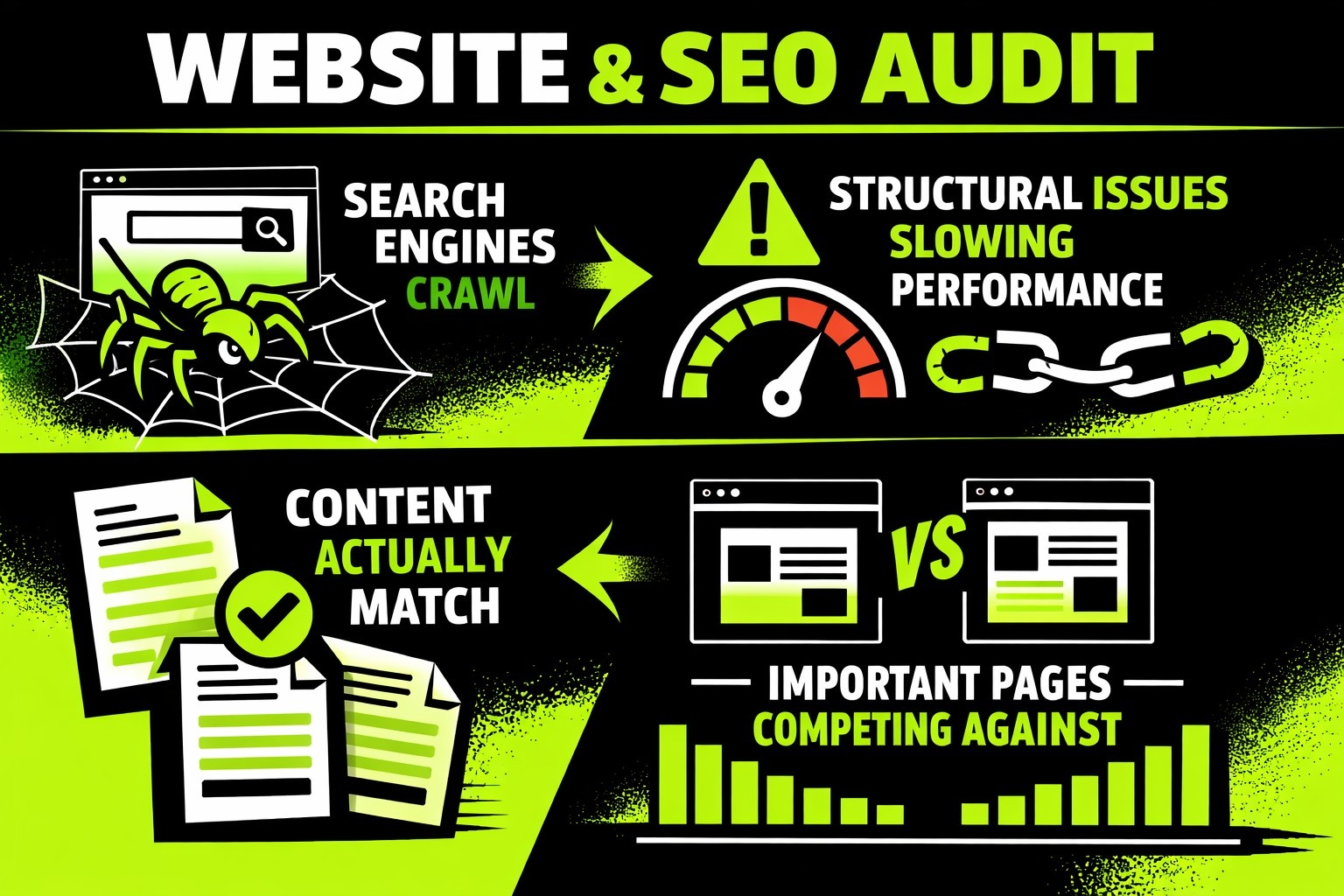
Website and SEO Audit
An audit is not just a technical scan. It is a diagnostic process that answers questions like:
- Can search engines crawl and understand the site properly?
- Are there structural issues slowing performance?
- Does the content actually match what people are searching for?
- Are important pages competing against each other?
- Are there obvious trust or usability gaps?
This includes technical elements like indexing, page speed, mobile usability, and internal linking. It also includes content quality, keyword focus, and overall clarity.
The purpose is not to overwhelm you with problems. It is to identify what is holding growth back and where effort will have the biggest impact.
Keyword Research That Goes Beyond Volume
Most people think keyword research is about finding popular phrases and placing them into content. That approach stopped working years ago. Search engines have become much better at understanding context, intent, and relevance. A competent SEO company treats keywords as signals, not targets. The goal is not traffic for traffic’s sake, but attracting the right audience at the right stage of decision making.
Effective keyword research connects what people search for with what a business actually offers. When that alignment is missing, rankings might come, but conversions usually do not.
Understanding Search Intent
Search intent answers a simple question: why is someone typing this into Google at this exact moment?
Some searches are purely informational. Others are comparative, where the user is weighing options. Some clearly signal buying intent. Treating all of them the same leads to mismatched pages, confused users, and poor conversion rates.
An SEO company groups keywords by intent and maps them to the right type of content. A service page should speak directly to buyers. A blog post should educate or guide. A comparison page should help users evaluate options. When intent and content type match, both rankings and engagement improve.
Competitive Context
Keywords also exist inside a competitive landscape. Ranking for a term means outperforming pages that already earn visibility. That requires understanding not just search volume, but competitive strength and opportunity.
Who Currently Ranks
This shows which companies and content types search engines already trust for a query.
What Those Pages Do Well
Structure, depth, clarity, and authority all influence why certain pages perform consistently.
Where They Fall Short
Gaps in coverage, outdated information, weak messaging, or poor user experience often create opportunities to compete.
Strong keyword strategy is not about chasing every term. It is about choosing battles that make sense for the business, then building content that is clearly better than what already exists.
On-Page SEO: Making Pages Clear, Not Stuffed
On-page SEO often gets reduced to metadata and keyword placement. In reality, it is about clarity.
Search engines reward pages that are easy to understand. So do users.
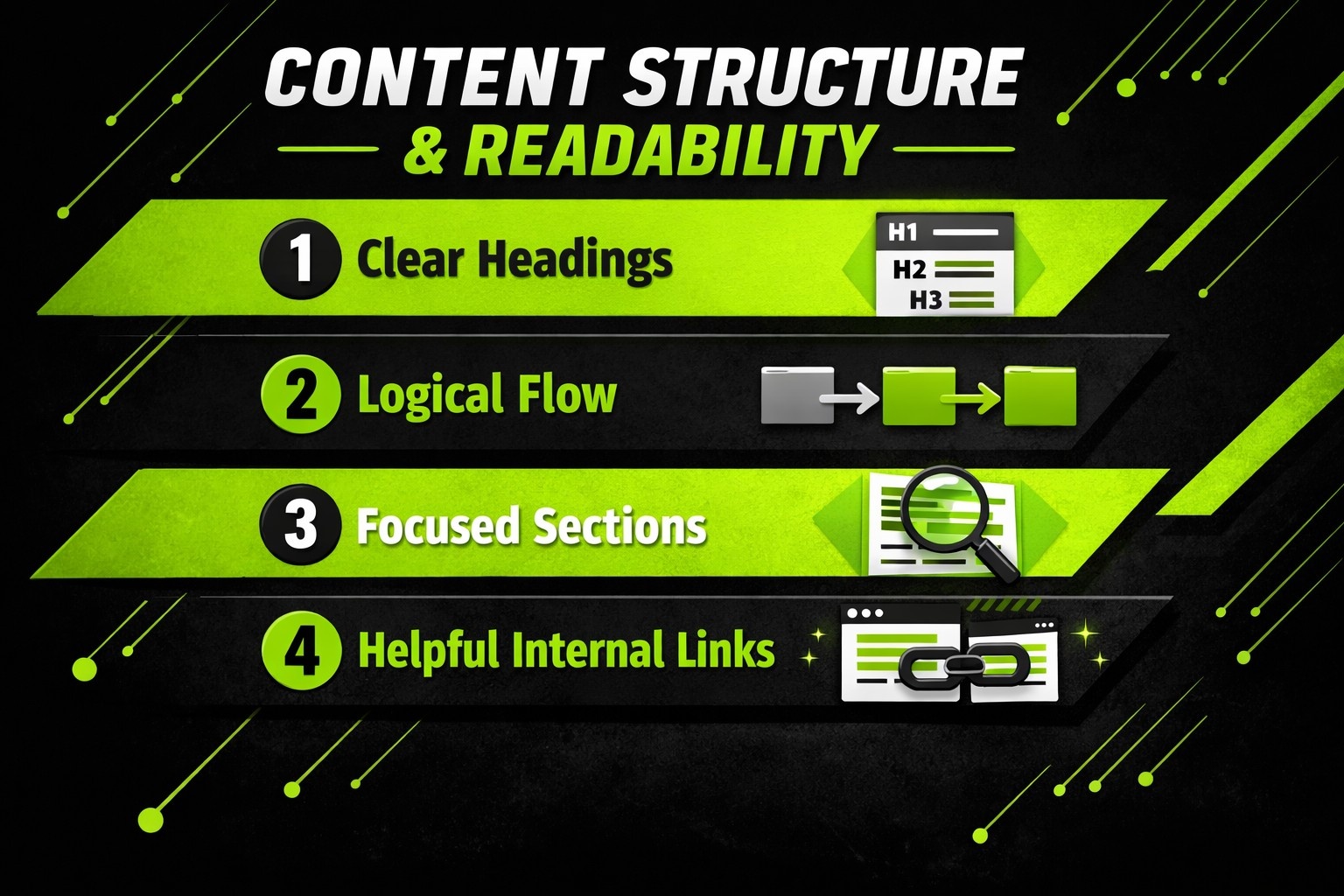
Content Structure and Readability
An SEO company improves how pages are structured:
- Clear headings
- Logical flow
- Focused sections
- Helpful internal links
The goal is to make it obvious what the page is about and who it is for.
Metadata With Purpose
Titles and meta descriptions are not just ranking factors. They influence click behavior. A well-written title sets expectations. A strong description earns the click.
This is where copywriting and SEO overlap. Technical accuracy alone is not enough.
Technical SEO: The Foundation Most People Never See
Technical SEO is rarely visible, but it affects everything.
A slow site, broken links, poor mobile experience, or confusing architecture can quietly suppress performance even if the content is good.
Core Technical Responsibilities
An SEO company typically handles or coordinates:
- Page speed optimization
- Crawl and index management
- HTTPS and security checks
- Mobile responsiveness
- Clean URL structures
- Sitemap and robots configuration
These fixes do not create instant spikes, but they remove friction. Over time, that stability makes growth easier and more predictable.
Content Strategy That Serves Both Users and Search
Content is not just blog posts. It includes service pages, landing pages, guides, FAQs, and supporting resources that help users understand what you offer and decide whether it is right for them.
Every piece of content should have a clear job to do. That might be answering a common question, comparing options, explaining a service, or reducing uncertainty before a decision. An SEO company helps define what content is needed and why, which prevents random publishing and keeps effort focused on outcomes that matter.
SEO is also not only about creating new pages. Older content often holds untapped potential. Updating structure, improving clarity, and aligning pages with current search intent can unlock growth faster than starting from scratch. This ongoing optimization is where many long-term SEO gains come from.
Off-Page SEO and Authority Building
Search engines look beyond your website to decide how trustworthy it is. That is where off-page SEO comes in. Authority is built not just by what you publish, but by how others reference, mention, and engage with your brand across the web.
Backlinks as Signals, Not Shortcuts
Links from other websites act as endorsements, but quality matters far more than quantity. A professional SEO company focuses on earning relevant industry links, editorial mentions, partnerships, citations, and digital PR coverage that signals real credibility. Buying links or relying on low-quality networks might work briefly, but it creates long-term risk. Sustainable growth depends on trust, not shortcuts.
Brand Signals and Reputation
Authority is also shaped by brand signals beyond links. Mentions, reviews, and a consistent presence across trusted platforms reinforce legitimacy in the eyes of both users and search engines. SEO does not operate in isolation. It works best when supported by strong brand visibility and reputation management.
Local SEO for Location-Based Businesses
For businesses serving specific areas, local SEO is often the highest-impact channel.
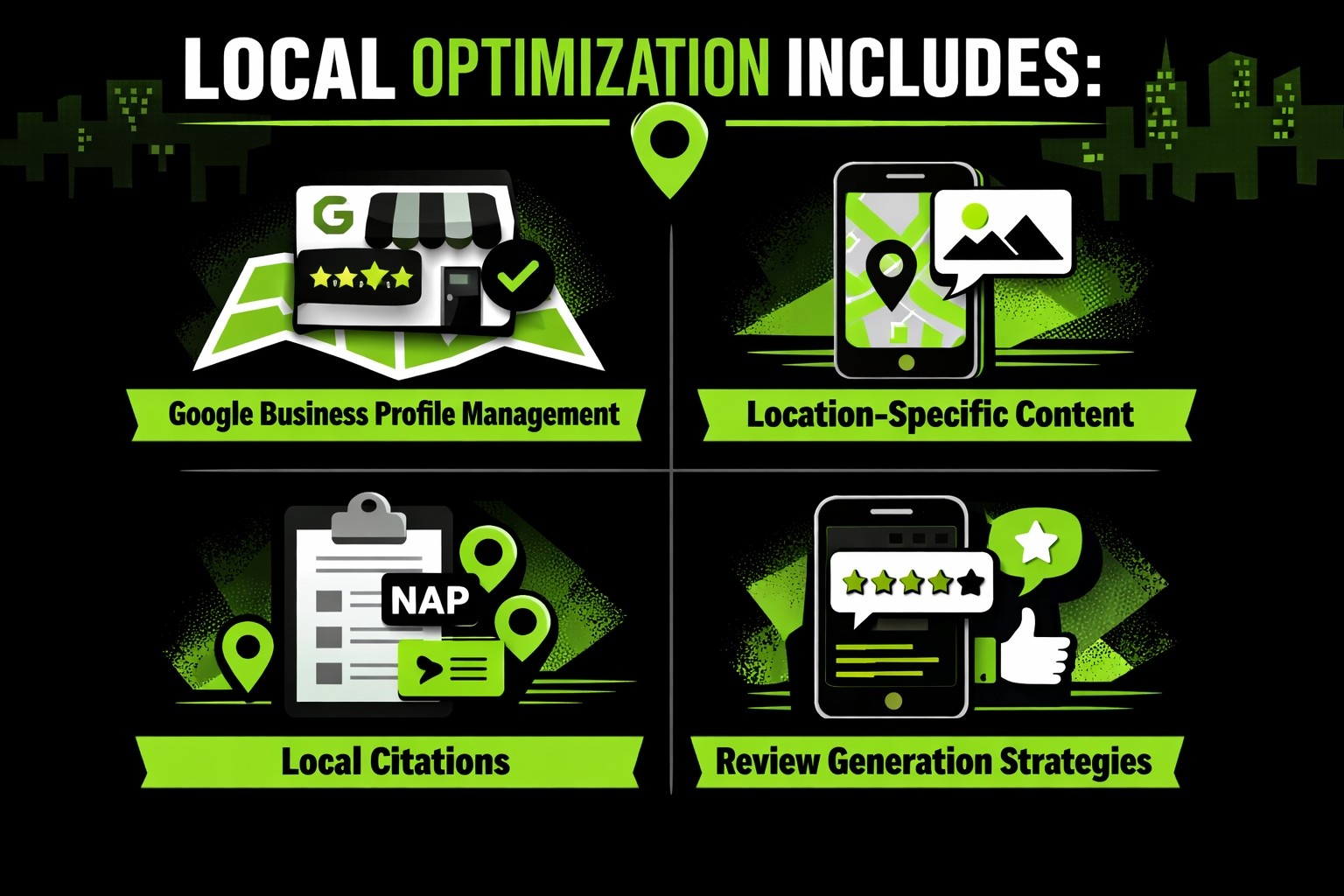
Local Optimization Includes
- Google Business Profile management
- Location-specific content
- Local citations and directories
- Review generation strategies
- Geographic keyword targeting
Local SEO connects online visibility with real-world action. Calls, visits, and inquiries often follow quickly when done well.
Conversion Rate Optimization: Turning Traffic Into Results
Traffic alone does not grow a business. Conversion does. Many SEO companies now include conversion rate optimization as part of their work because attracting visitors is only half the equation.
Conversion rate optimization focuses on improving how users interact with your site once they arrive. That can mean clarifying calls to action, improving page layouts, reducing friction in forms, strengthening trust signals, or simplifying navigation so users can move confidently toward a decision. Even small improvements in these areas can significantly increase the value of existing traffic without needing to attract more visitors.
Reporting, Measurement, and Iteration
SEO without measurement is guesswork. Without reliable data, it is impossible to know what is driving growth and what is holding it back.
A good SEO company tracks metrics that actually matter, including:
- Rankings for meaningful terms
- Organic traffic quality, not just volume
- Engagement metrics that show how users interact with content
- Conversions and assisted conversions tied to business goals
- Technical health trends over time
More importantly, a good partner explains what the data means. Reports should lead to decisions, not just charts and dashboards. Insights from performance data guide what gets expanded, what gets refined, and what should be deprioritized. SEO strategy evolves continuously based on results, with adjustments made as markets, competitors, and user behavior change.
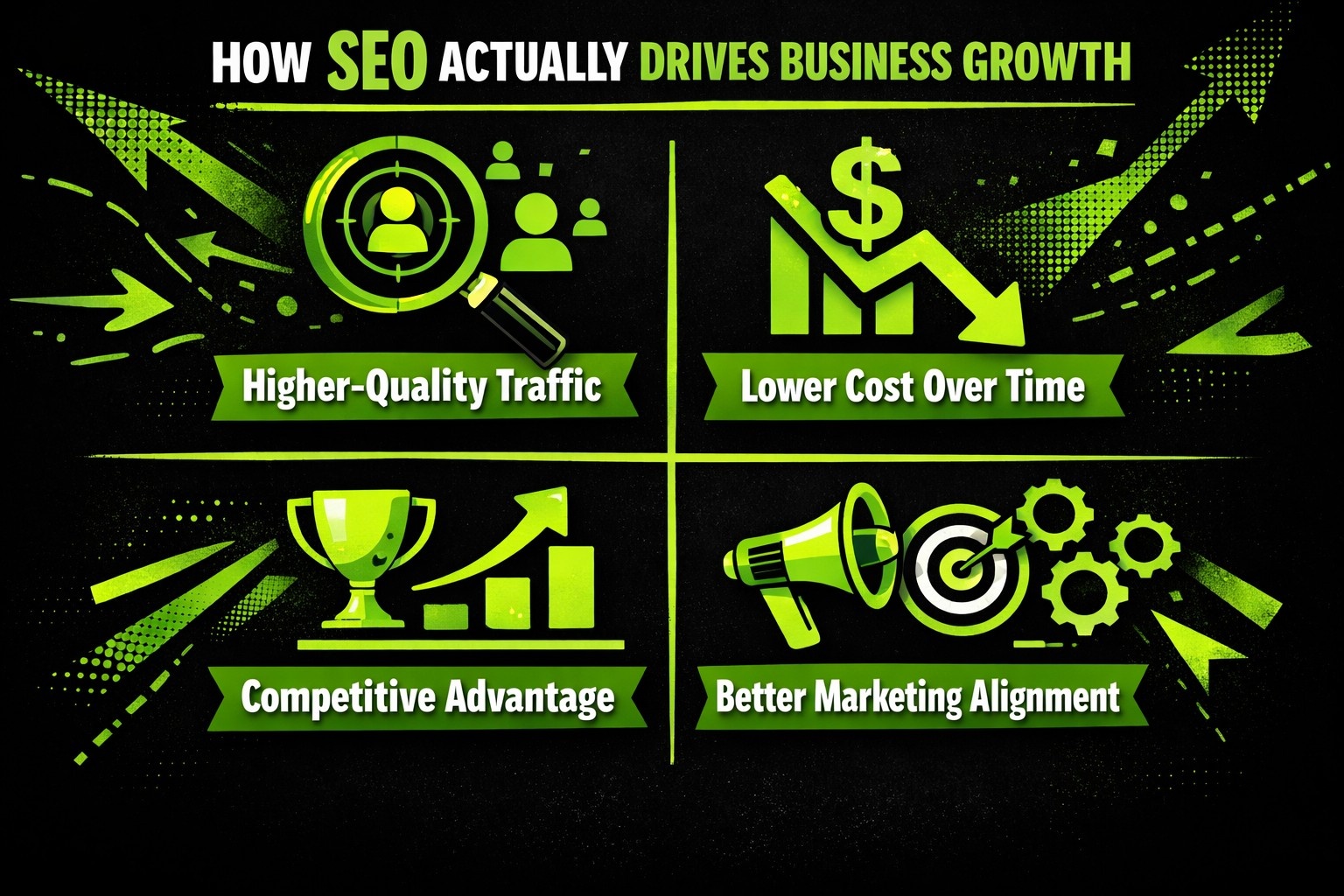
How SEO Actually Drives Business Growth
SEO supports growth in ways that compound over time.
Higher-Quality Traffic
People searching are already looking. That intent makes SEO traffic more patient, more informed, and more likely to convert compared to many outbound channels.
Lower Cost Over Time
Unlike paid ads, SEO does not shut off when spending stops. Well-built pages continue to attract visitors long after publication.
Competitive Advantage
Strong SEO creates defensibility. Rankings earned through consistent quality are harder to displace than ads or short-term tactics.
Better Marketing Alignment
SEO often improves messaging clarity across the business. It forces alignment between what you offer and how people describe their needs.
When Hiring an SEO Company Makes Sense
Not every business needs an SEO agency right away. In some cases, early growth can come from referrals, paid ads, or outbound sales. SEO becomes valuable when organic search starts to matter as a long-term growth channel and internal resources are no longer enough to manage it effectively.
Hiring an SEO company usually makes sense when:
- Organic traffic is a meaningful growth lever. Search demand already exists in your market, and visibility in search results can directly influence leads or sales.
- Internal resources are stretched. Your team lacks the time, tools, or specialized knowledge to manage SEO consistently alongside other priorities.
- Competition is strong. Competitors invest heavily in content, technical optimization, and authority building, making it difficult to keep up without focused effort.
- The website has grown complex. Multiple services, locations, or content sections introduce technical and structural challenges that require strategic oversight.
- Past SEO efforts stalled or plateaued. Rankings and traffic stopped improving, or results never materialized despite ongoing work.
An external SEO partner brings perspective, proven systems, and consistency. They help cut through internal bias, prioritize the right work, and keep momentum when growth depends on long-term execution rather than quick fixes.
What to Expect From a Good SEO Partner
A reliable SEO company does not promise instant results or guaranteed rankings. Those claims usually signal shortcuts that create risk later. Instead, a good partner focuses on building steady progress and making the work understandable at every stage. You should expect:
- Clear strategy. A well-defined plan that explains what is being prioritized, why it matters, and how each step supports broader business goals.
- Transparent communication. Regular updates, honest discussions about what is working or not, and no black-box tactics hidden behind vague reports.
- Ethical practices. Methods that follow search engine guidelines and protect your site’s long-term visibility instead of chasing short-term wins.
- Measurable progress. Reporting that connects SEO efforts to meaningful metrics like qualified traffic, leads, and conversions, not just rankings.
- Willingness to explain decisions. A partner who can clearly explain trade-offs, changes in strategy, and the reasoning behind recommendations.
The relationship should feel collaborative, not mysterious. A good SEO partner works with your team, adapts as the business evolves, and takes responsibility for outcomes rather than hiding behind jargon or dashboards.
Final Thoughts
An SEO company does much more than optimize pages. It connects user intent, technical structure, content strategy, and authority building into a single growth engine.
When done well, SEO becomes less about chasing algorithms and more about building a durable presence in your market. The work is methodical, sometimes slow, often invisible at first. But over time, it creates momentum that few other channels can match.
If your business depends on being found, understood, and trusted online, SEO is not optional. And the right SEO company helps turn that reality into consistent growth rather than constant guesswork.