


SEO tools are everywhere now. New ones launch every month, older platforms keep adding features, and most of them promise to be the one solution you will ever need. In reality, that rarely happens. The best SEO tools are not the ones with the longest feature list, but the ones that quietly fit into your workflow and help you make better decisions without slowing you down.
Some tools are great for research and planning. Others shine when it comes to tracking, technical cleanup, or understanding how people actually find your site. This guide is not about hype or rankings for the sake of it. It is about understanding what makes an SEO tool genuinely useful, so you can choose tools that support how you work instead of forcing you to adapt to them.
How Lengreo Uses SEO Tools to Drive Real Growth
At Lengreo we work with SEO tools as part of a broader system, not as standalone solutions. Tools help us see patterns faster, validate assumptions, and track performance across markets, but they never replace strategy or context. When we build SEO programs for B2B companies, especially in competitive or multi-region environments, we rely on a mix of rank tracking, keyword research, content analysis, and performance monitoring to understand what is actually happening, not just what looks good in a dashboard.
At Lengreo we also use SEO tools to connect visibility with outcomes. Rankings matter, but only when they translate into qualified traffic, leads, and conversations. That is why our SEO work often sits alongside demand generation, content strategy, and conversion optimization. Tools give us the data, but our role is to interpret it, filter out noise, and turn insights into actions that support real business goals, whether that means improving local visibility, scaling organic acquisition, or supporting long-term growth in competitive B2B niches.
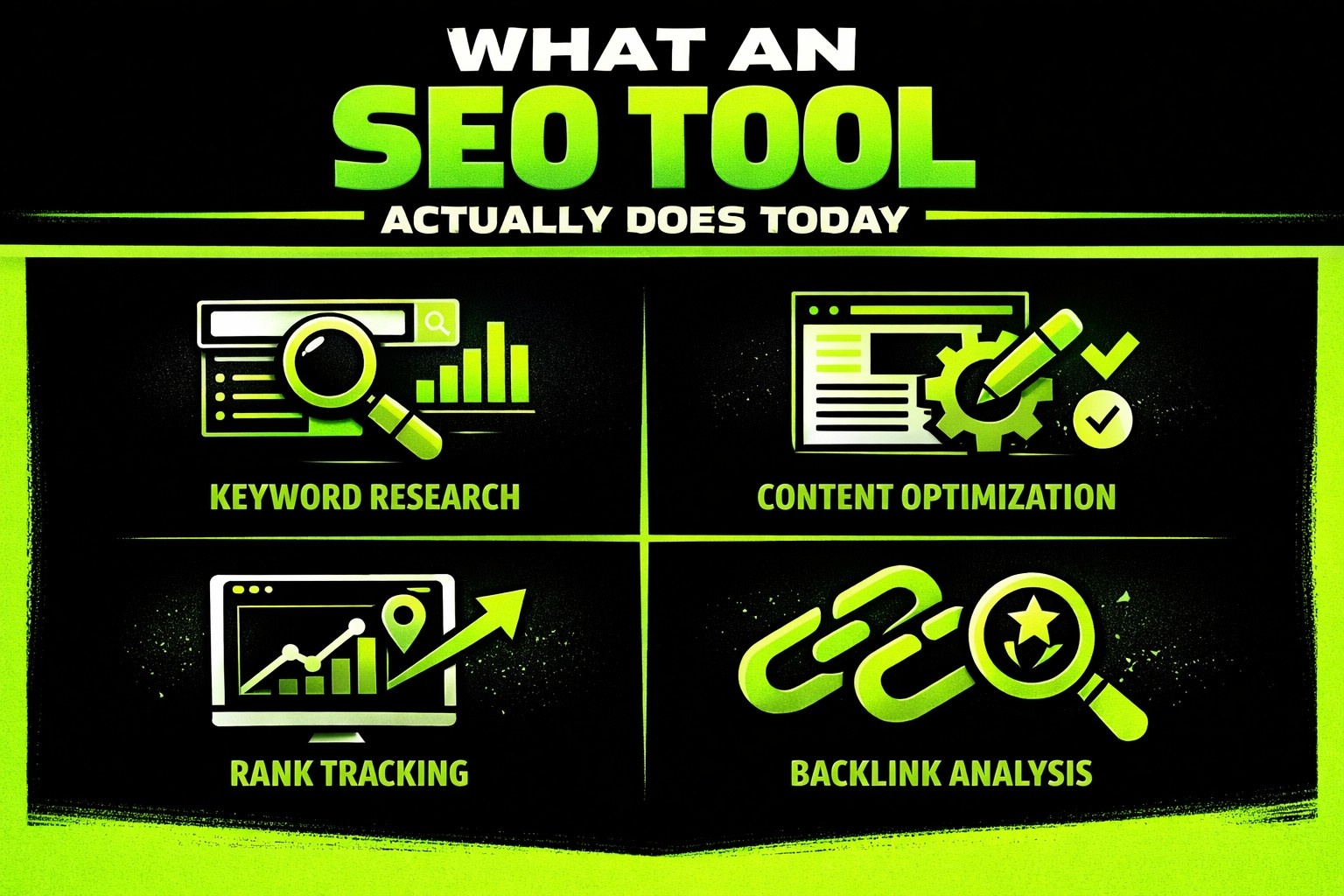
What an SEO Tool Actually Does Today
An SEO tool is no longer just about Google rankings. Search now spans classic search engines, AI-driven discovery, local results, and content recommendations inside platforms that are not traditional search engines at all.
Modern SEO tools usually fall into a few functional categories:
- Keyword research and search intent discovery
- Content optimization and on-page guidance
- Rank tracking and performance monitoring
- Competitor and backlink analysis
- Technical SEO auditing
- Automation and workflow support
- Local SEO management
No single tool does all of these equally well. The best setups usually involve a small stack where each tool has a clear job.
Why Free SEO Tools Still Matter More Than People Admit
Before paying for anything, it is worth saying this clearly – free tools still punch far above their weight.
Google’s own ecosystem remains one of the most powerful SEO toolsets available. Tools like Google Search Console, Google Trends, Google Keyword Planner, and autocomplete data give you direct signals from the search engine itself.
Paid tools become valuable once you need scale, comparison, or automation. But they work best when layered on top of these free foundations, not instead of them.
Content Optimization Tools That Actually Influence Rankings
Content optimization tools are often misunderstood. They are not there to stuff keywords or chase arbitrary scores. Their real value is helping you align content with what already works in search results, without copying competitors blindly.
Surfer SEO
Surfer SEO has become a standard tool for content-driven SEO teams. At its core, it analyzes top-ranking pages for a query and extracts patterns related to structure, topical coverage, and language usage.
What makes it useful is not the score itself, but the feedback loop. You can see where your content is thin, where you are overdoing things, and how your draft compares to real-world results.
Surfer works best when used as a refinement layer. It helps take a solid draft and make it stronger, but it cannot replace subject knowledge or good writing.
It is most useful for:
- Editorial blogs targeting competitive keywords
- Updating existing content that is stuck on page two
- Maintaining consistency across large content teams
Frase
Frase covers similar territory but approaches it from a research-first angle. Instead of starting with optimization metrics, it pulls information from current search results and helps structure content around questions, subtopics, and supporting context.
Frase is especially useful early in the writing process. It helps you understand what topics matter before you write, not just how to adjust text afterward.
It is a good fit for:
- Writers who want research support inside the editor
- Smaller teams that need content briefs fast
- SEOs working on informational or educational content
AI Assistants Are Tools, Not Authors
AI has changed SEO workflows, but not in the way headlines suggest. It has not replaced SEOs. It has replaced blank pages, repetitive tasks, and low-value busywork.
ChatGPT
ChatGPT has become the most flexible AI assistant in SEO. Its value is not in publishing raw output, but in how it supports thinking.
Used well, it can:
- Generate outlines based on search intent
- Rephrase content for clarity and flow
- Brainstorm keyword groupings and topical clusters
- Explain technical SEO issues in plain language
Used poorly, it creates generic content that looks fine but adds nothing new.
The best SEO professionals treat ChatGPT like a junior assistant. It helps move faster, but decisions still come from experience.
Rank Tracking and Performance Monitoring
Ranking data is one of those things that looks simple on the surface and gets complicated very fast once you work on real projects. Seeing a keyword move from position 12 to 9 feels good, but that number alone rarely tells the full story. What actually matters is where the ranking happens, on which device, and whether it reflects real visibility or just a narrow snapshot.
Modern rank tracking tools have moved far beyond daily position checks. The good ones focus on accuracy, context, and patterns over time, not just whether a keyword went up or down today.
Why Rank Tracking Needs More Context Than Ever
Search results are no longer uniform. Two people can search for the same keyword and see different results based on location, device, language, or even past behavior. Because of that, raw rankings without context can be misleading.
A solid rank tracking setup helps you answer questions like:
- Are we actually improving visibility in our target cities, or just nationally?
- Do mobile rankings tell a different story than desktop?
- Are ranking changes consistent across regions or isolated to one market?
- Is traffic loss coming from ranking drops or from SERP layout changes?
Without this layer of detail, it is easy to chase the wrong problems.
What Good Rank Tracking Looks Like in Practice
Effective rank tracking is less about volume and more about precision. Instead of tracking thousands of keywords just because you can, the focus shifts to tracking the right keywords in the right contexts.
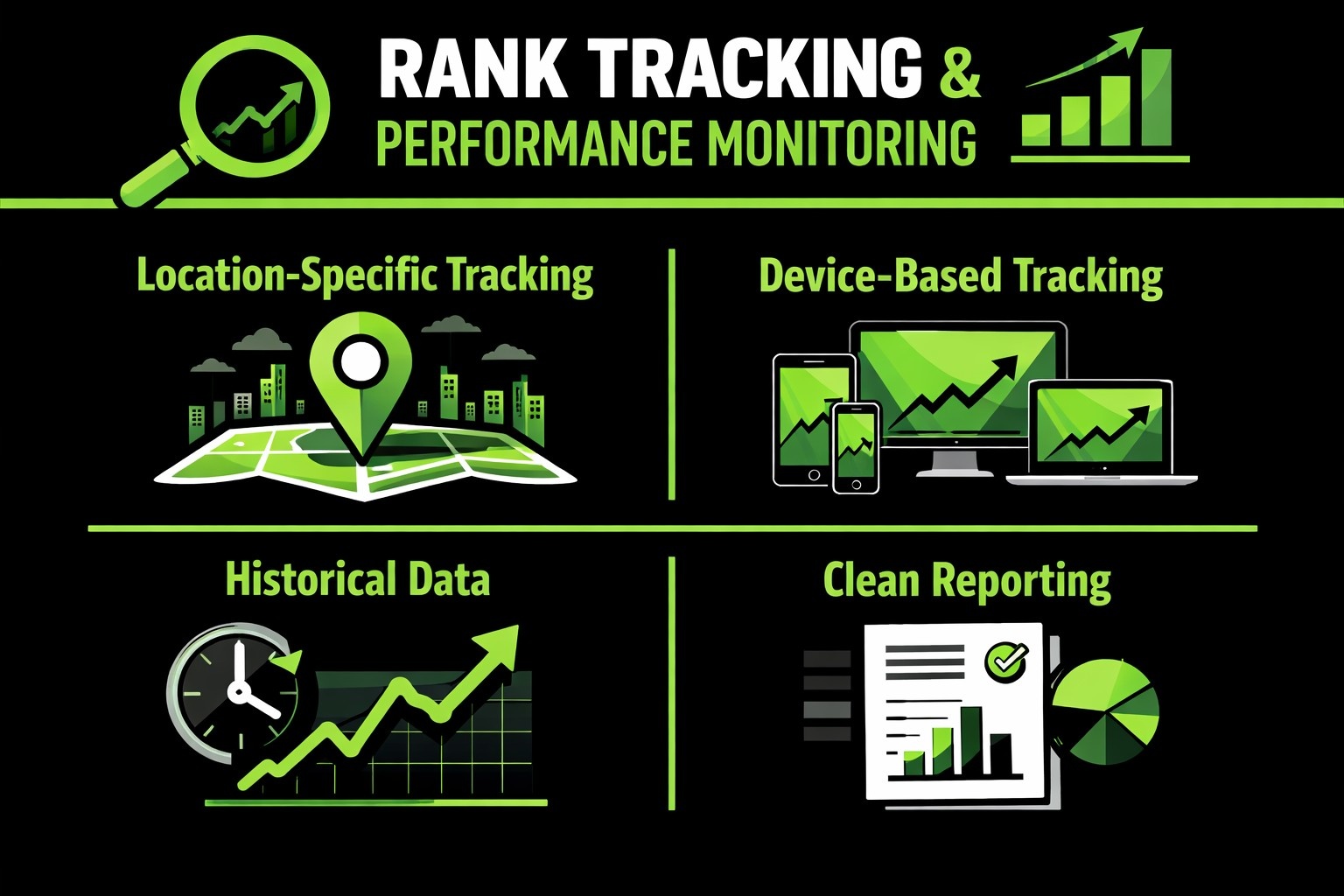
A good system usually includes:
- Location-specific tracking at country, city, or even zip code level
- Device-based tracking for mobile and desktop
- Historical data that shows trends, not just daily fluctuations
- Clean reporting that clients or stakeholders can actually understand
This is where tool choice starts to matter.
Zutrix
Zutrix focuses heavily on accurate rank tracking across devices, locations, and search engines. Its strength lies in clean reporting and reliable data rather than bloated feature sets.
For teams that care about understanding how rankings shift across cities, languages, or mobile versus desktop, accuracy matters more than novelty.
Zutrix is especially helpful for:
- Agencies reporting to clients
- Businesses targeting multiple regions
- SEOs who want ranking data they can trust
Competitor and Backlink Research Tools
Understanding why competitors rank is often more useful than obsessing over your own site in isolation.
Ahrefs
Ahrefs remains one of the most trusted tools for backlink analysis and competitor research. It excels at showing how sites earn authority, which pages attract links, and where growth is coming from.
Beyond backlinks, Ahrefs also helps uncover:
- Keywords competitors rank for that you do not
- Content formats that consistently attract links
- Pages that drive traffic without obvious optimization
It is one of the few tools that works equally well for beginners and advanced users.
Semrush
Semrush takes a broader approach. It combines SEO, paid search insights, content research, and site auditing into a single platform.
Semrush is useful when you need a wide-angle view. It helps teams see how SEO connects with advertising, content, and brand visibility across channels.
It is particularly useful for:
- Marketing teams managing multiple channels
- Businesses combining SEO and PPC strategy
- Competitive market analysis at scale
Technical SEO Tools That Keep Sites Healthy
Technical SEO rarely gets credit, but it quietly determines how much of your content can rank at all.
Screaming Frog
Screaming Frog remains one of the most practical technical SEO tools available. It crawls your site the way search engines do and surfaces issues related to structure, duplication, redirects, and metadata.
It is not flashy, but it is precise. Once you understand how to read its output, it becomes invaluable for audits and migrations.
Google Search Console
Google Search Console deserves special mention. It is the closest thing to a direct conversation with Google’s systems.
It shows:
- Indexing problems
- Search queries generating impressions
- Pages losing visibility over time
- Manual actions and security issues
No paid tool replaces this data.
SEO Automation and Workflow Tools
As SEO operations grow, automation becomes less about shortcuts and more about consistency.
Gumloop
Gumloop sits at the intersection of automation and AI. It allows SEOs to build workflows that connect data sources, analysis, and output without writing code.
For example, it can:
- Pull competitor data automatically
- Generate content outlines from live SERP data
- Send reports to dashboards or documents
- Reduce repetitive manual tasks
This kind of tool is most valuable to experienced SEOs who know exactly what they want automated.
Local SEO Tools for Real-World Visibility
Local SEO plays by a different set of rules than traditional organic search. Instead of competing with every site on the internet, you are competing with nearby businesses, map results, and Google’s interpretation of local intent. Visibility here is not just about rankings – it directly affects foot traffic, phone calls, and real customer actions.
What makes local SEO tricky is how many variables are involved. Search results change based on proximity, search phrasing, device type, and even time of day. A business can rank well organically and still be nearly invisible on maps, or show up in one neighborhood but disappear a few blocks away. Because of this, local SEO tools need to focus less on broad keyword coverage and more on location accuracy and business profile health.
Localo
Localo focuses specifically on improving Google Business Profile performance. It combines rank tracking, profile auditing, review management, and post creation into one place.
It is especially useful for businesses with physical locations where visibility on maps and local results directly affects revenue.
SEO Tools Are Only as Good as the Strategy Behind Them
The best SEO tools are not the most expensive or the most popular. They are the ones that fit how you actually work.
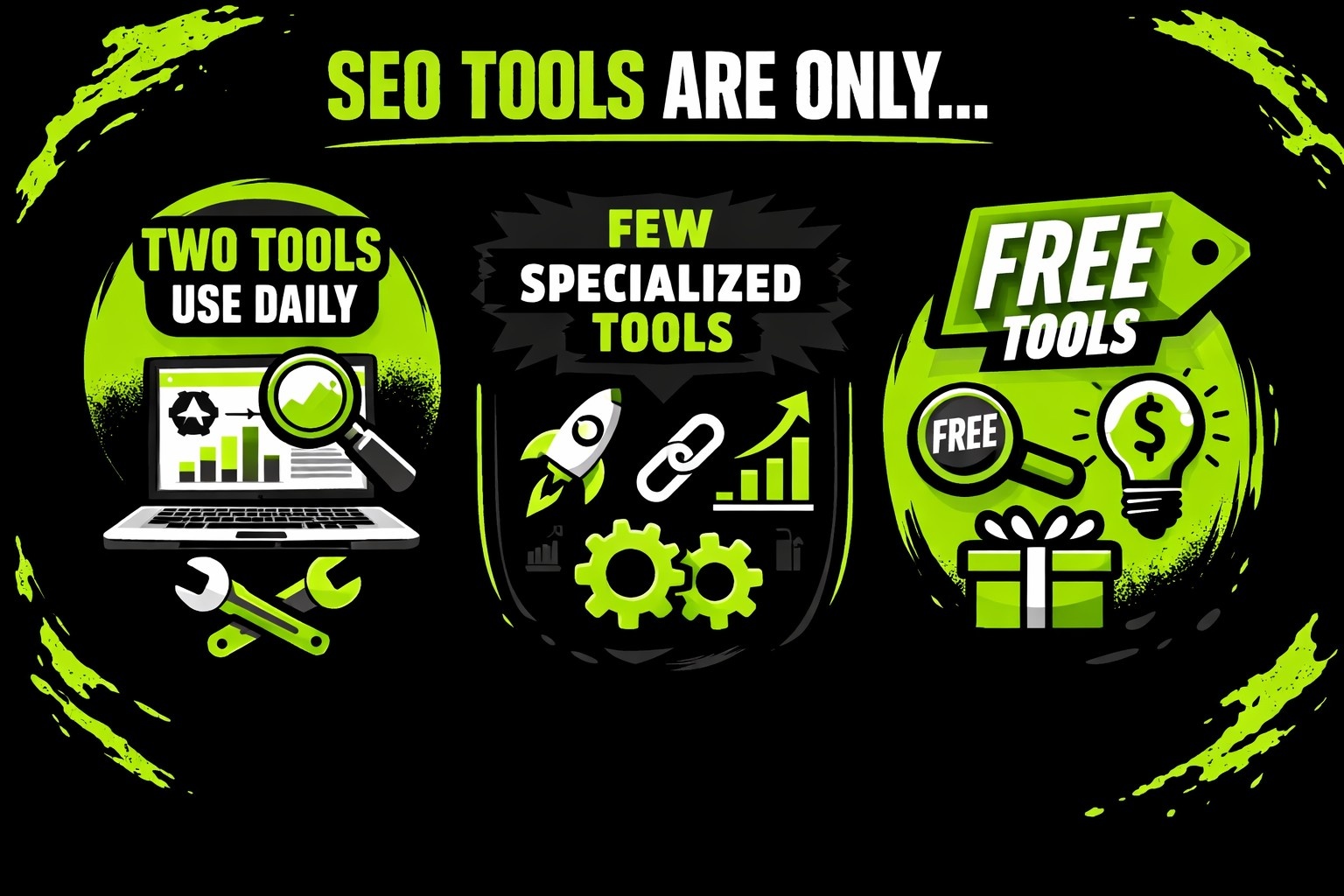
A strong SEO stack usually looks like this:
- One or two core tools you use daily
- A few specialized tools for specific tasks
- Free tools that anchor everything in real data
If a tool does not help you make better decisions, faster, it is not worth keeping.
Conclusion
The best SEO tools are not the ones with the most features or the loudest marketing. They are the ones that help you see clearly, move faster, and make better decisions without getting in your way. Good tools support your thinking instead of replacing it. They surface patterns you would otherwise miss and save time on work that should never be manual in the first place.
What matters most is how tools fit into your workflow. A small, well-chosen stack will always outperform a bloated setup you barely understand. As SEO keeps evolving across search engines, AI platforms, and local results, the tools you rely on should stay flexible, accurate, and grounded in real data. When that happens, tools stop feeling like software and start feeling like quiet teammates that make your work better.