


Not all keywords are worth chasing. Some bring traffic, but no clicks. Others convert but barely get searched. The real “best” keywords are the ones that align with what your audience is already trying to solve – not just what they’re typing into Google. Figuring out which keywords hit that balance isn’t about luck. It’s a mix of strategy, context, and knowing what matters most in your space. Let’s break that down.
What Makes a Keyword the “Best” for SEO?
There’s a difference between popular keywords and useful ones. The best-performing SEO terms aren’t always sitting at the top of the volume charts – they’re the ones that hit the right mix of relevance, timing, and intent. A high-volume keyword might bring thousands of views, but if it attracts the wrong audience or hits the wrong stage of the funnel, it does more harm than good. The strongest choices are usually the ones that mirror what buyers are already searching for when they’re closer to a decision, not just casually browsing.
That’s why top agencies don’t just plug words into a tool and sort by search volume. They look at the bigger picture – how that keyword fits the brand’s actual offering, what the competition looks like, and whether the people typing that phrase are likely to take action. Some of the best keywords don’t even sound that exciting out of context. But they convert. They lead somewhere. And in a field where SEO budgets are constantly under pressure, that’s the kind of performance that matters.

Choosing the Right Keyword Type at the Right Time
Not all keywords do the same job. Some are built to pull in clicks, others are meant to convert. Knowing which type to use – and when – makes all the difference.
1. Short-Tail Keywords
These are the broad, high-volume search terms. Things like “CRM software” or “running shoes.” They’re useful when building top-of-funnel visibility, but rarely bring in the most qualified traffic. Too much noise, not enough context. Unless a company’s operating at enterprise scale, chasing these without a layered strategy usually ends in wasted spend.
2. Long-Tail Keywords
Longer, more specific phrases like “best CRM software for small teams” or “waterproof running shoes for winter.” These bring in fewer people – but the right people. They tend to come with clear intent, which makes them ideal for pages built around conversions. When mapped to actual buyer questions, long-tails often outperform the bigger, flashier terms.
3. Branded vs Non-Branded
Branded keywords (e.g., “HubSpot CRM”) signal strong awareness and usually appear later in the decision journey. Non-branded terms help reach new audiences earlier. Both have value, but the mix should reflect where a brand sits in its market. If no one’s searching for the brand yet, leaning into discovery terms is the smarter play.
4. Local Keywords
Location-based queries matter more than people assume, especially in services. Phrases like “cybersecurity consulting in Berlin” or “B2B SEO agency Amsterdam” bring in users with immediate, practical intent. Local modifiers cut through generic noise and often lead to real conversations faster.
5. Question-Based Keywords
These are often ignored – and that’s a mistake. Queries like “how does marketing automation work?” or “is GDPR compliance required for US websites?” create opportunities to lead with clarity. They’re also strong candidates for featured snippets and zero-click results, which can build brand authority even before a user lands on the site.
Keyword strategy isn’t just about stacking traffic. It’s about using the right tool for the right job – and understanding that visibility without relevance rarely pays off.
The Lengreo Way: Turning Keyword Data into Qualified Leads
At Lengreo, we treat keyword strategy as a revenue tool – not a checkbox. Every campaign starts with aligning keywords to the client’s actual offering and audience behavior. We focus on intent, relevance, and how a search term fits into the broader sales journey. That’s how we help clients attract the right traffic, not just more of it.
Our team uses SEMrush and Ahrefs to analyze competitors, track keyword movement, and uncover missed opportunities. But research isn’t limited to tools – we also pull insights from client CRM data and live campaign feedback to prioritize terms that lead to qualified leads. For B2B clients, we often structure keywords around stages like awareness, evaluation, and purchase.
We regularly share examples and takeaways from our work on Instagram and LinkedIn. It’s where we break down real use cases, highlight performance wins, and show how tailored strategy outperforms guesswork.
How to Find the Best Keywords for Your Site
Finding the right keywords isn’t about volume hunting – it’s about matching what people actually care about with what the business can deliver. The process isn’t complicated, but it does require some thinking upfront and the right mix of tools and instinct.
- Start with your real topics, not guesses: Think in themes, not isolated terms. What problems are being solved? What do buyers type when they’re looking, comparing, or ready to act?
- Use tools, but read between the lines: Ahrefs, SEMrush, and Google Keyword Planner are useful – not magic. Look at the numbers, yes, but also look at how the SERP behaves. Are people clicking, or are they getting answers directly in search? That matters.
- Steal from competitors (smartly): Run their domains through a tool and pull top-ranking pages. See what keywords they’re ranking for that your site isn’t. That’s your gap list.
- Check intent, not just search volume: A keyword with 500 monthly searches and clear buying intent is worth more than one with 10,000 that brings in window shoppers. Scan the SERP to see what types of pages are ranking. If it’s all product pages, don’t write a blog post and expect it to compete.
- Use autocomplete and “People Also Ask” to surface what tools miss: Sometimes the most useful queries are buried just a few keystrokes deep in Google’s suggestions. These are gold for long-tails and FAQ content.
- Watch for patterns in what converts: If a few pieces of content are driving leads or demo requests, reverse-engineer the keywords. Then look for nearby variations to double down.
The strongest keyword strategies usually come from a mix of structured research and a decent amount of common sense. Tools can point in the right direction, but the sharpest insights tend to come from actually paying attention to how people search, ask, and decide.
Blog, eCommerce, Local: Keyword Strategy by Content Type
Different types of content need different keyword strategies – it’s one of the easiest things to overlook. A blog post and a product page might both show up in search results, but the intent behind those clicks is rarely the same. That’s why the best-performing sites don’t apply a one-size-fits-all approach. They shape their keyword selection around the content’s role.
In blog content, keywords tend to work best when they answer something specific. Long-tail questions, comparisons, and “how-to” phrases are strong here – not because they bring massive traffic, but because they pull in readers who actually care. These are the people searching with intent, even if they’re not ready to convert yet. Blogs built around these terms don’t just rank – they educate and nurture.
Product pages are different. Here, keywords need to match buyer behavior. Brand names, features, “best [X] for [Y],” and even review-based searches carry weight. It’s not about casting a wide net – it’s about catching people who already know what they want. And with local content, everything shifts again: a few hundred monthly searches with location modifiers often outperform vague national terms. Especially when the goal is leads, not just clicks.
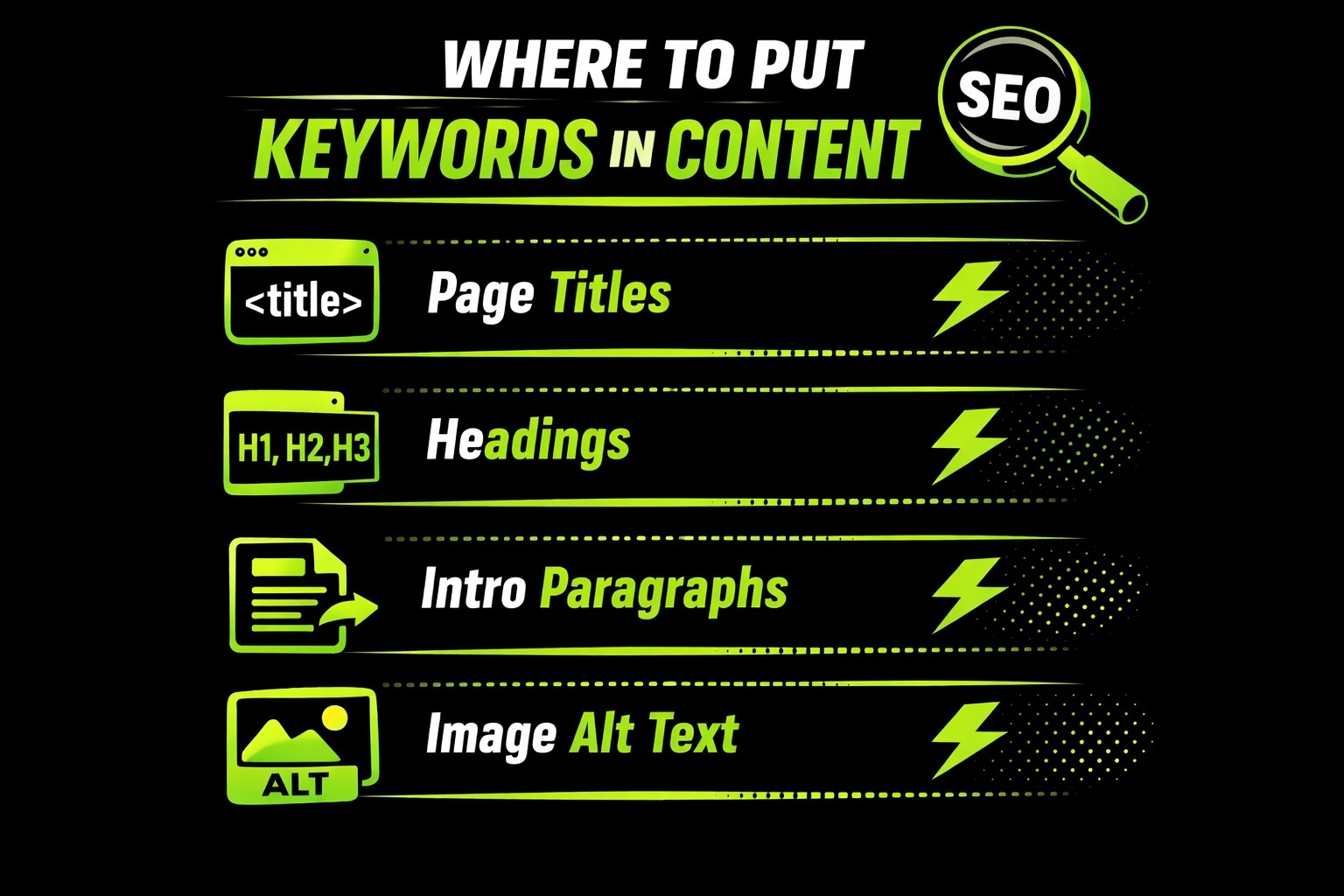
Where to Put Keywords in Your Content
Getting the keyword right is only half the equation. The other half is knowing where to place it so it actually works – for both people and search engines. Good SEO isn’t about stuffing words into a page. It’s about giving structure to content so relevance is clear from the first glance.
Page Titles and Meta Descriptions
These are the first things users see in search results, and they shape whether someone clicks or scrolls past. Including your primary keyword here is non-negotiable – but it has to feel natural. Forced phrasing is easy to spot and even easier to ignore. The goal isn’t just to rank. It’s to get the click.
Headings and Subheadings
Keywords in H1s and H2s signal structure. They tell both search engines and readers what the content is really about. A clean heading structure with relevant terms helps content scan better – and rank better. It also makes long pages easier to navigate, which improves time on page and lowers bounce.
Intro Paragraphs
The first 100 words matter more than most people realize. This is where intent is confirmed. If the keyword shows up early – and naturally – it tells search engines the content is on-topic. It also tells the reader they’re in the right place. Clarity here does a lot of heavy lifting.
Image Alt Text and File Names
Visual content gets overlooked in keyword planning, but it plays a role in visibility. Alt text should describe what’s in the image, but also reflect the surrounding topic. If the image supports the keyword, the alt tag should show it. Same goes for file names – no more uploading “screenshot-final-final2.png” and calling it a day.
URLs and Anchor Text
Keywords in URLs help with clarity and trust. People are more likely to click on a link if they know what it’s leading to. Same with anchor text – generic phrases like “click here” waste an opportunity. If the link supports a keyword, say so directly.
Smart keyword placement doesn’t mean repeating the same phrase five times on a page. It means using the right words in the right places – where they guide the reader, reinforce the topic, and show up naturally.
Tracking and Updating Keyword Performance Over Time
A keyword that worked six months ago won’t always hold up. Algorithms shift, competitors get smarter, and user behavior moves faster than most sites can keep up with. That’s why tracking isn’t optional – it’s the only way to know if what worked yesterday still deserves a spot today.
The smartest teams treat keywords like live assets. They monitor rankings through tools like Ahrefs, SEMrush, or Google Search Console – not just to check position, but to spot trends. If a key page starts slipping, the fix isn’t always more backlinks. Sometimes the intent has changed. Or a competitor published something sharper. Or your own content got stale without anyone noticing.
Performance data tells the real story. Bounce rates, time on page, and conversion paths show whether a keyword is pulling the right traffic – not just traffic. And when something flatlines? Updating content with clearer structure, fresher stats, or tighter intent matching often brings it back. SEO isn’t set-and-forget. The sites that win are the ones that adjust early and often, before the drop-off becomes a problem.
Common Keyword Mistakes That Still Cost Teams Time and Traffic
Even strong strategies can go sideways if the basics get overlooked. Most keyword mistakes aren’t technical – they’re about context, timing, and using the right word in the wrong way. Here are a few that still show up way too often:
- Prioritizing volume over intent: Big numbers are tempting, but if the searcher isn’t looking for what the page delivers, it’s a wasted visit. Traffic without alignment doesn’t move the needle.
- Stuffing the keyword everywhere: When a term shows up in every heading, image alt tag, and sentence, it reads like a template – not like something written for people. That kind of overload helps no one.
- Reusing the same keyword across pages: One of the most common slip-ups. If several URLs compete for the same term, Google won’t know which one to rank – and neither will users.
- Skipping updates: Search intent shifts. SERPs change. A keyword that performed well last year might be irrelevant today. Letting high-potential content sit stale is a missed opportunity.
- Ignoring format clues in the SERP: If the top results are videos, product pages, or featured snippets, a plain blog post won’t compete. Keyword targeting should always match the expected content type.
It’s not about avoiding risk – it’s about removing friction. The best SEO results usually come from keeping things clear, not clever.
Conclusion
The best keywords for SEO aren’t just the ones that show up on reports with big numbers – they’re the ones that fit. Fit your audience, your content, your offer, and the moment in the buyer’s journey. That’s why strong keyword strategies don’t come from templates. They come from paying attention: to the way people search, how they decide, and what kind of content they actually trust.
Every business has a slightly different mix that works. What matters is knowing how to find that mix, test it, and adjust as things shift. That’s how results are built – not in one campaign, but over time, by consistently showing up with the right message, in the right place.