


There’s no shortage of outdated SEO tactics still floating around, but meta keywords might be the king of them all. Once a go-to method for signaling to search engines what your page was about, these little snippets of code have since been demoted to near irrelevance. So why are we still talking about them?
Because, surprisingly, a lot of people still use them. And even more wonder if they should.
This guide is here to clear things up. Not just to give you a definition, but to walk through how meta keywords got left behind, where they sometimes still live, and what really matters today if you’re trying to rank.
Let’s Start with the Basics: What Are Meta Keywords?
Meta keywords are a type of HTML tag that used to sit in the header of a webpage. They were designed to tell search engines what the page was about using a comma-separated list of keywords.
Here’s how they looked:
<meta name=”keywords” content=”seo, digital marketing, meta tags, search engine optimization”>
Simple. Tidy. And in the early 2000s, kind of effective.
At the time, search engines weren’t as sophisticated. They relied heavily on signals like meta tags to understand a page. So if you wanted your page to rank for “best hiking backpacks,” dropping that phrase into your meta keywords was a solid step.
But then the internet got smarter. And so did Google.
A Quick Note From Us at Lengreo
We’ve been doing this long enough to watch meta keywords go from a real ranking factor to a footnote. At Lengreo, we help companies build strategies that reflect how search actually works now, not how it worked ten years ago. That means focusing on metadata that still matters, building structure with purpose, and making sure search engines understand your content without leaning on outdated tags.
When we create or optimize websites, we don’t waste time stuffing invisible keywords into the header. Instead, we look at how to craft titles that get clicks, schema that boosts visibility, and content that aligns with what users are really searching for. Every tactic we use, from local SEO to technical audits, is built to get results in today’s landscape.
And we know no two businesses are the same. That’s why we don’t offer cookie-cutter solutions. If you’re running a SaaS company, a cybersecurity platform, or something totally niche, we’ll meet you where you are and help search engines do the same. Meta keywords might be dead, but smart SEO is very much alive.
Why Meta Keywords Fell Out of Favor
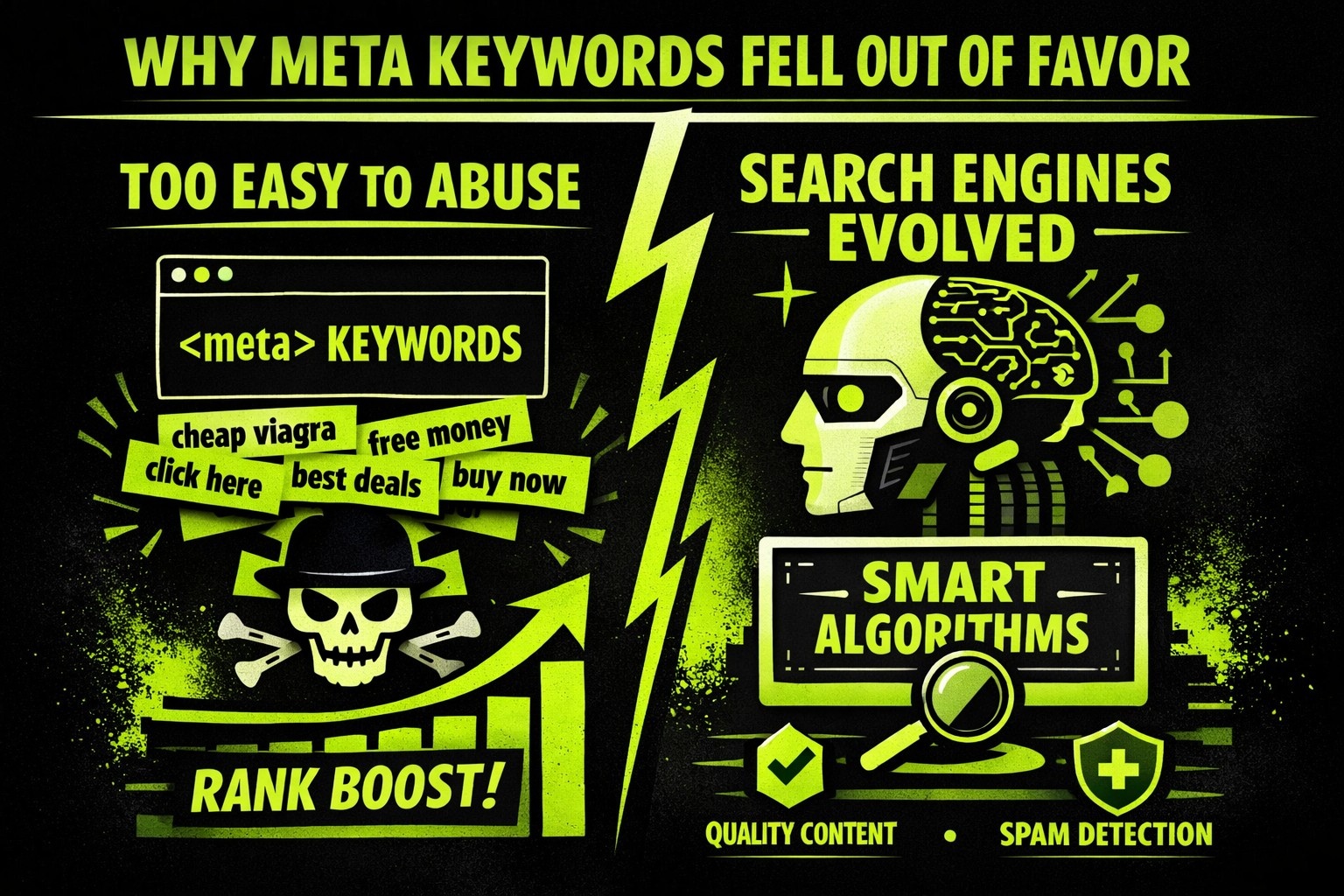
There are two reasons meta keywords fell out of use.
The first one is they were too easy to abuse. It didn’t take long for people to start keyword stuffing. Pages began to look like this:
<meta name=”keywords” content=”cheap flights, cheap airline tickets, discount airfare, low cost flights, flight deals, best airfare, cheap flights again”>
Simply put, not exactly subtle.
The second one is that search engines evolved. Google realized that meta keywords were a weak signal. Anyone could write anything there, whether the page actually had that content or not. So they moved on to better signals, like page content, link quality, and user behavior.
As early as 2009, Google announced they stopped using meta keywords as a ranking factor. Other search engines may have followed suit over time, but this primarily applies to Google and Bing. Once-important tags became irrelevant.
So… Are Meta Keywords Dead?
Not exactly dead, but definitely ignored by major search engines. Meta keywords aren’t going to help your rankings in Google or Bing, and in many cases, using them won’t hurt either. They just don’t matter.
That said, they’re not completely useless in every context. Some content management systems (CMS) or internal search tools still make use of them.
If you’re managing a large content site and need a way to organize topics for your own team, you might use meta keywords to tag pages internally. Just don’t confuse that with actual SEO impact.
Do Meta Keywords Have Any Role in 2026 SEO?
In a word: no. But let’s break that down a bit. Where They Still Pop Up?
There are a few places you might still see meta keywords hanging around:
- Old websites that haven’t been updated.
- CMS platforms that include a field for them by default.
- Templates that auto-fill the tag without being asked.
In these cases, meta keywords aren’t hurting anything (unless they’re totally spammy), but they’re also not helping.
Where They Might Still Be Used
There are limited cases where meta keywords are used in:
- Enterprise CMS for internal search or tagging.
- On-site search engines that rely on custom metadata.
- Closed ecosystems that index based on tags (rare).
But if we’re talking about Google, Bing, or any modern external SEO strategy? They’re a non-factor.
What to Focus On Instead of Meta Keywords
Just because meta keywords are outdated doesn’t mean keywords themselves don’t matter. They absolutely do. The difference is where and how you use them.
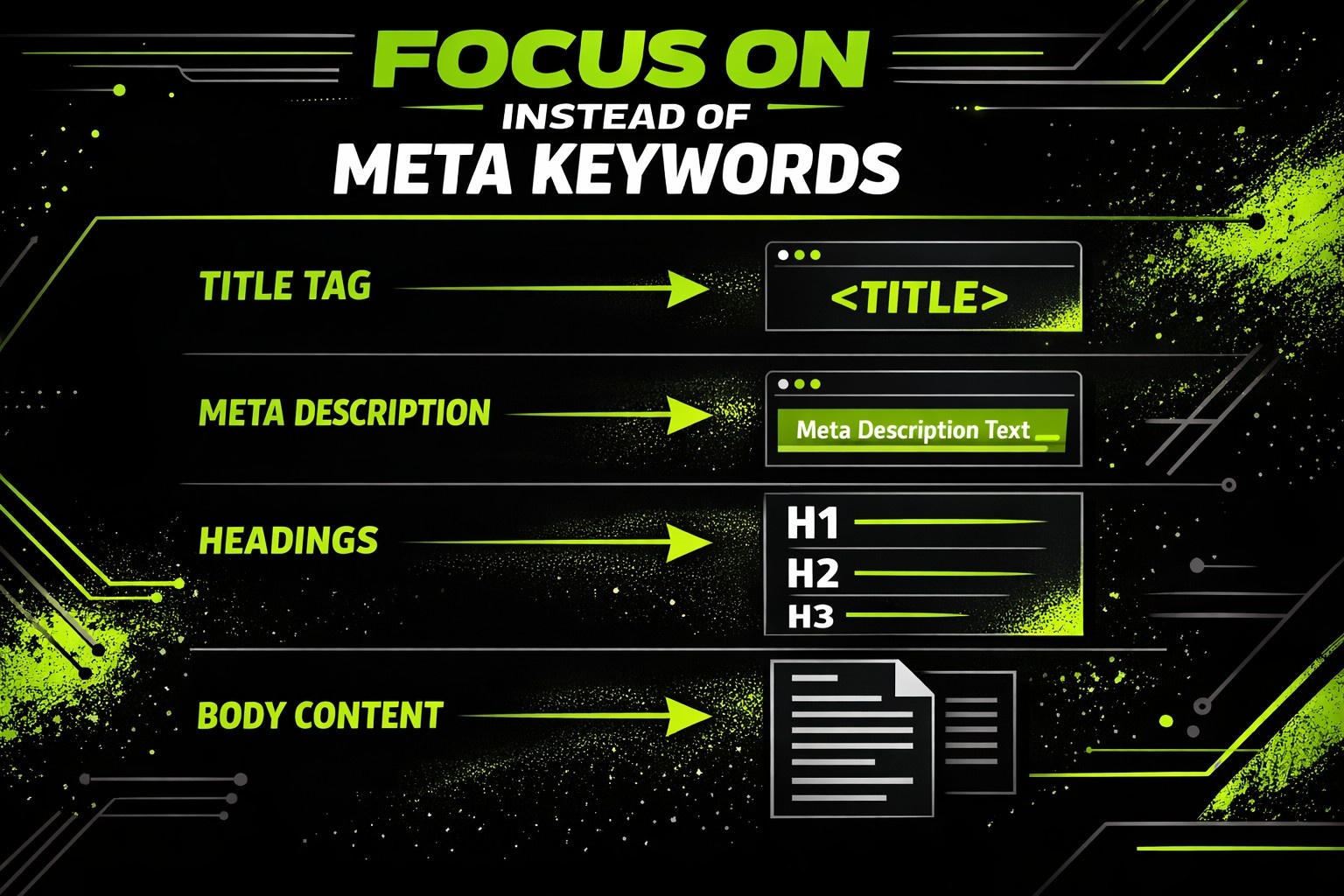
Here are the areas where keyword placement actually matters in 2026:
- Title tag: This is your clickable link in search results. Keep it short, clear, and include your primary keyword.
- Meta description: While not a ranking factor, this influences click-through rates. Use it to explain why someone should visit your page.
- Headings (H1, H2, etc.): Break up your content with clear headings that reflect the topic and use natural keyword phrases.
- Body content: Google reads your content in full. Use your keywords naturally, and include related terms to show topical depth.
- Alt text for images: Helps with accessibility and gives search engines more context about your content.
- URL slugs: A clean, descriptive URL that includes the page topic can support your SEO strategy.
Keyword Stuffing: Still a Bad Idea
It’s tempting to squeeze in as many variations of a phrase as you can. Resist that urge. Today’s search algorithms are way more focused on relevance and user experience than frequency counts.
Here’s what keyword misuse might look like:
“Our cheap flight deals help you find cheap flights for every destination. If you want cheap airfare and low cost flights, our cheap flights tool helps.”
Google’s algorithms are designed to detect and devalue pages that overuse keywords unnaturally. Instead, try:
“Looking for affordable flights? Our tool compares deals across major airlines so you can find the best option without overpaying.”
Still clear. Still keyword-friendly. But far more natural and helpful.
Does Removing Meta Keywords Break Anything?
Short answer: nope.
If you have meta keywords on your pages, feel free to remove them. Nothing bad will happen. They’re not used by search engines for crawling, indexing, or ranking. They’re invisible to users. It’s just clutter in your code.
If you’re managing a large site and cleaning up metadata, removing meta keywords can actually improve maintainability and performance slightly by simplifying your HTML.
That said, if your internal tools depend on them, make sure you’re not deleting something your team uses.
Best Practices for Metadata in 2026
If you’re optimizing a page today, these are the tags you should still care about:
Title Tag
Your title tag is still one of the most important pieces of on-page SEO. Ideally, keep it under 60 characters or around 580 pixels so it doesn’t get cut off in search results. Start with your main keyword to signal relevance early. If you’re considering adding your brand name, do it only when it actually adds context or trust for the user. Otherwise, save the space for something more useful.
Meta Description
Think of the meta description as your chance to give searchers a quick, helpful preview of your content. Aim for around 120 to 160 characters, which usually gives enough room to get your message across without being chopped off. Write it in a way that aligns with what users are looking for, and keep the tone human – like you’re genuinely trying to help, not just checking an SEO box.
Robots Meta Tag
This tag gives you control over what search engines can do with a page. You can tell them not to index it, or not to follow its links. Just be mindful of conflicts. For example, if you block a page in your robots.txt file and also set it to “noindex,” Google might not even see the noindex instruction at all. It’s all about making sure your technical signals don’t contradict each other.
Canonical Tag
The canonical tag helps prevent duplicate content issues by pointing to the version of a page you want search engines to treat as the original. If you’ve got similar content across different URLs – like filtered category pages or print-friendly versions – the canonical tag helps consolidate them. Just make sure each page has the correct one, or you might accidentally tank the visibility of a page you meant to prioritize.
Open Graph / Twitter Card Tags
These tags don’t affect rankings, but they do influence how your content appears when shared on social media. Setting them up lets you control the preview – the title, image, and description that show up in places like Facebook, LinkedIn, or Twitter. Without them, platforms just pull whatever they find, and that usually doesn’t look great. It’s a small detail that can make a big difference in engagement.
Schema Markup
Schema is where things get a bit more technical, but it’s incredibly useful. By adding structured data to your pages, you help search engines understand what’s on the page. Whether it’s a product, an FAQ, or an event, schema markup can unlock those rich results you see in search – like stars, sitelinks, or other enhanced features. It won’t directly boost rankings, but it can definitely boost visibility and clicks.
Keyword Strategy Without Meta Keywords
You don’t need meta keywords to build a strong keyword strategy. In fact, modern SEO focuses more on intent than individual phrases.
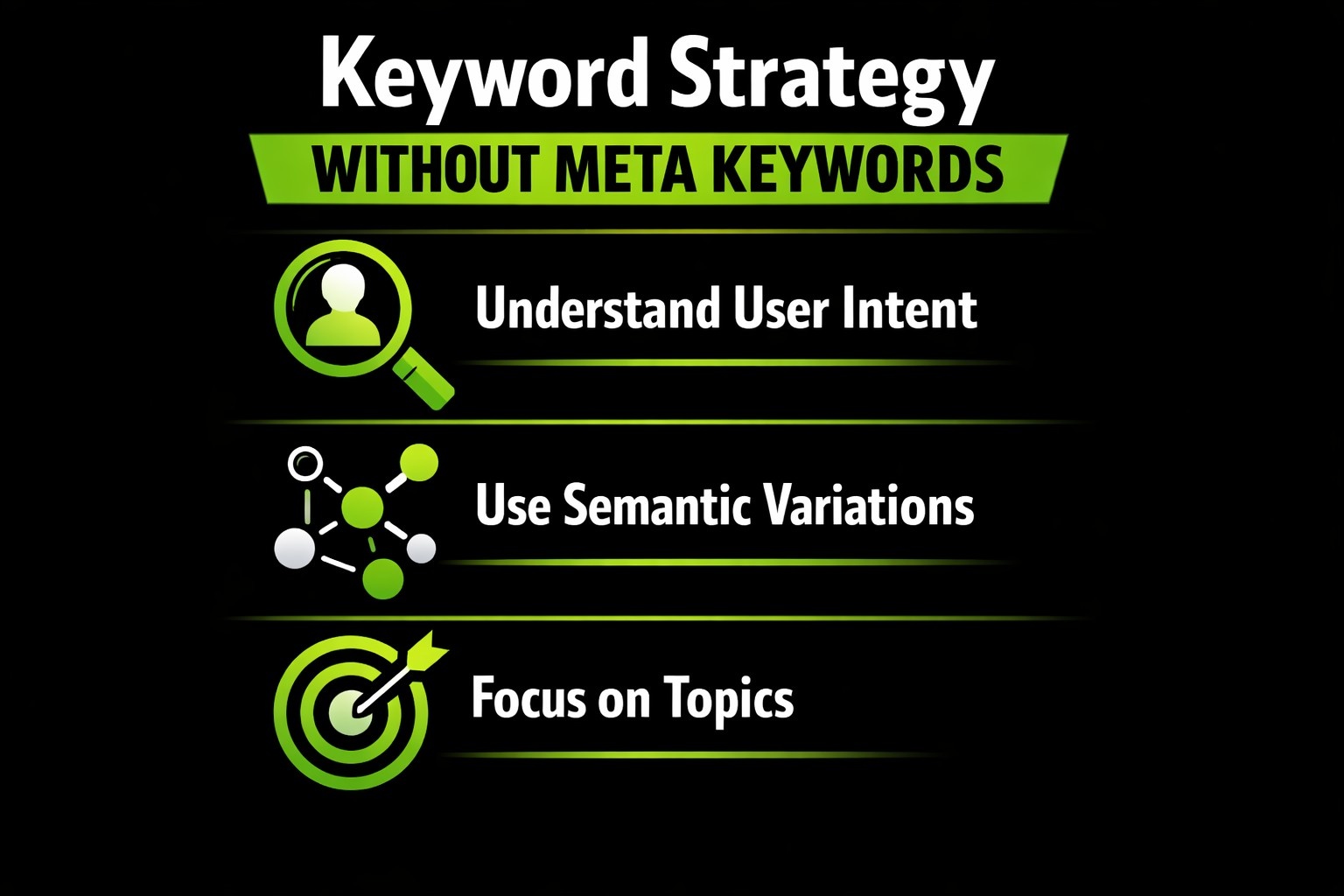
Here’s how to approach keyword planning in 2026:
Understand User Intent
Is someone trying to:
- Learn something?
- Buy something?
- Compare options?
- Find a location?
Tailor your content to that intent, not just the keyword.
Use Semantic Variations
Search engines now group related terms. Instead of repeating one phrase, include:
- Synonyms
- Related questions
- Long-tail phrases
- Supporting terms
Example: If you’re targeting “email marketing tools,” also use phrases like “newsletter software,” “automation platforms,” and “email campaign features.”
Focus on Topics, Not Just Terms
Content that explores a topic in depth will naturally rank for more related queries than one that’s focused on a single phrase.
Use tools to identify subtopics, questions, and angles that your audience is searching for.
What Google Says (and Doesn’t Say)
Google has been very clear: they do not use the meta keywords tag for rankings.
That’s not a theory. It’s on record. Google Search Central has confirmed this repeatedly over the years, and it hasn’t changed.
So if you’re seeing advice that recommends adding meta keywords as an “SEO boost,” it’s probably outdated or just wrong.
That said, Google does pay attention to:
- Content clarity
- Site structure
- Relevance
- Mobile usability
- Page speed
- Backlinks
- Schema markup
- Internal linking
That’s where your efforts should go.
Bottom Line: Should You Use Meta Keywords?
Here’s a quick cheat sheet:
Use them if:
- Your CMS or internal tools require them for organization.
- You have a legacy system that hasn’t been updated.
- You’re managing on-site search that depends on them.
Don’t use them if:
- You’re doing it purely for SEO.
- You’re copying outdated templates.
- You’re trying to game search engines (that ship has sailed).
Want better rankings? Skip the keyword tag. Focus on writing good content, using strong metadata, and understanding your users.
Final Thoughts
Meta keywords had their moment, but that moment passed over a decade ago. If they’re still part of your SEO workflow in 2026, it’s time for an update.
Think of them like floppy disks in a cloud storage world. Nostalgic? Maybe. Useful? Not really.
The good news? There are way better tools and tactics now. And by focusing on what search engines actually care about – relevance, experience, structure – you’ll be way ahead of anyone still stuffing invisible keywords into their headers.
Search has evolved. Your strategy should too.