Quick Summary: Website development for tradesmen involves creating professional online platforms that showcase work portfolios, capture leads, and establish credibility. The right website serves as a 24/7 digital salesperson, converting site visitors into paying customers while building trust through testimonials and clear service descriptions. Most tradesman website require mobile-responsive design, easy contact forms, and fast loading speeds to compete effectively in local markets.
The construction and trades industry has shifted dramatically. Potential customers don’t flip through phone books anymore—they search online. And if a tradesman doesn’t have a professional website, they’re invisible to a massive chunk of the market.
Here’s the thing though: most tradesmen aren’t web developers. They’re skilled electricians, plumbers, builders, and contractors who know their craft inside and out. But when it comes to establishing an online presence, many feel lost or overwhelmed by the options.
This guide breaks down everything needed to understand website development for tradesmen, from essential features to realistic costs, and what actually drives leads from website visitors.
Why Tradesmen Need Professional Websites
The days of relying solely on word-of-mouth and truck decals are fading. Not gone—word-of-mouth remains powerful—but incomplete without a digital component.
A professional tradesman website acts as a digital business card that works around the clock. When someone hears about a contractor from a neighbor at 9 PM, they’ll Google the business name immediately. No website? That’s a lost opportunity before the conversation even starts.
Community discussions consistently highlight the same pain point: tradesmen lose jobs to competitors simply because the competitor had a more professional online presence. Fair? Maybe not. Reality? Absolutely.
Displaying customer reviews on websites can significantly boost credibility. Customer reviews are recognized as important trust signals that influence purchasing decisions, making testimonials and ratings essential components of any tradesman site.
The 24/7 Salesperson Concept
Think of a website as an employee who never sleeps, never takes holidays, and works every single day answering the same questions potential customers ask.
That means showcasing completed projects with before-and-after photos, listing services clearly, displaying contact information prominently, and building trust through testimonials—all without requiring anyone to pick up the phone until the prospect is ready.
Build a Better Tradesmen Website With Lengreo
Lengreo builds and improves websites, then connects them with SEO, paid ads, tracking, and lead generation. For tradesmen, this means a website that clearly shows services, service areas, project examples, availability, reviews, and quote request options.
The focus is to help local clients understand what you do and contact you without extra steps. Lengreo can help organize service pages, improve traffic setup, and make quote or call requests easier to complete.
Need a Website That Helps Clients Request a Quote?
Lengreo can help with:
- building or redesigning your website
- improving SEO and paid traffic setup
- setting up tracking and website structure
- refining service, area, and quote pages
👉 Contact Lengreo to discuss your website and setup.
Essential Features for Tradesman Websites
Not every website needs complex features. But certain elements prove critical for trades businesses specifically.
Mobile-Responsive Design
Most people search for local tradesmen from their phones. A site that doesn’t display correctly on mobile devices will frustrate visitors and send them straight to competitors.
Mobile-responsive design means the website automatically adjusts layout, text size, and images to fit whatever screen size someone’s using—phone, tablet, or desktop. This isn’t optional anymore; it’s foundational.
Portfolio and Work Showcase
Tradesmen sell transformations. A plumber fixes leaks and upgrades bathrooms. An electrician rewires homes and installs modern lighting. A builder constructs extensions and renovates kitchens.
Potential customers want to see evidence of quality work. Photo galleries showcasing completed projects, ideally with before-and-after comparisons, build confidence faster than any written description.
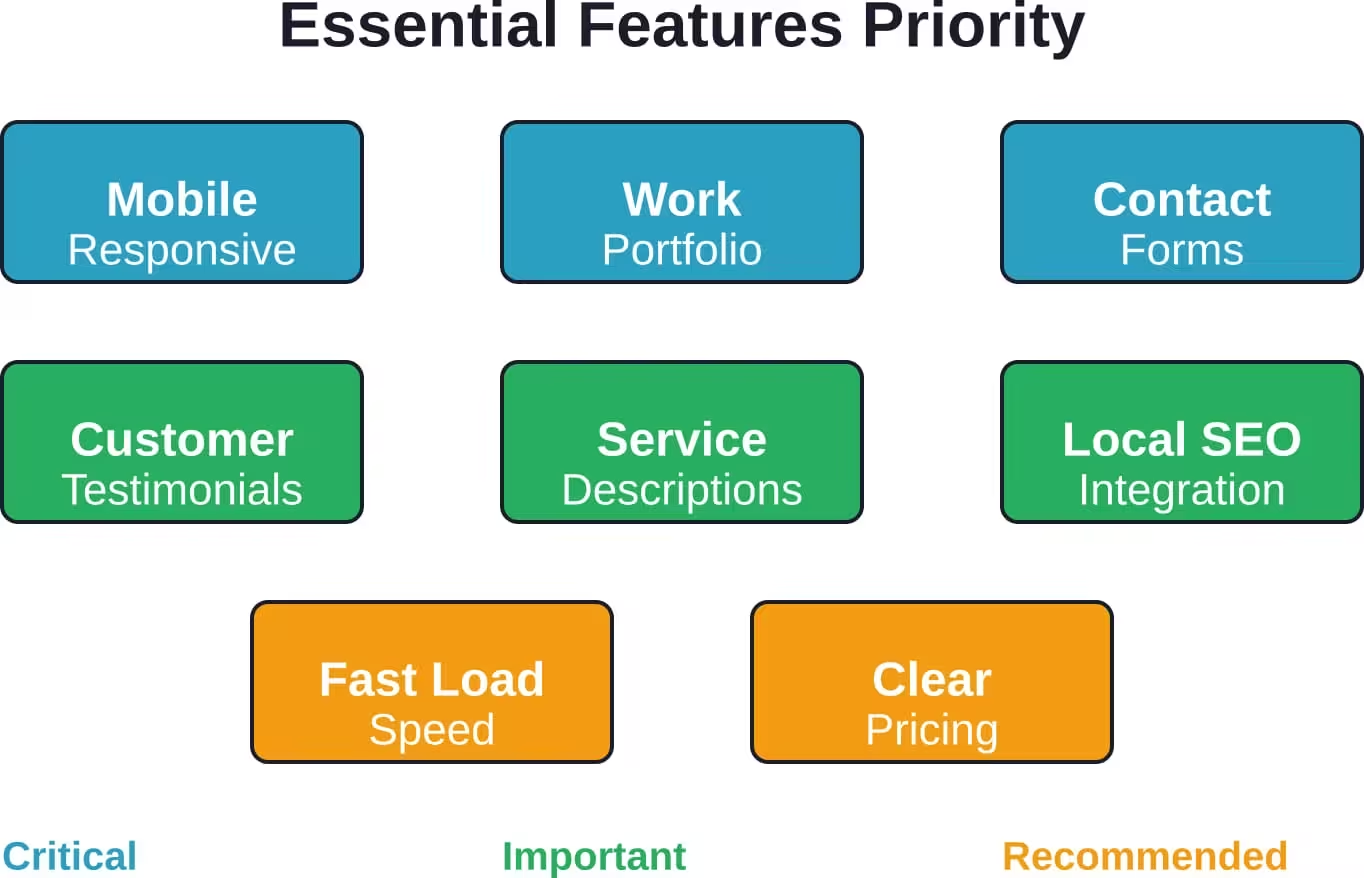
Contact Forms and Clear Calls to Action
The entire purpose of a tradesman website boils down to one thing: making it easy for customers to get in touch.
Contact forms should be simple—name, phone, email, brief description of the job. Don’t ask for a life story. Every extra field reduces the likelihood someone completes the form.
Phone numbers should appear prominently on every page, ideally in the header. Mobile visitors should be able to tap the number and call immediately.
Customer Testimonials and Reviews
Social proof matters enormously in the trades. People hire tradesmen they trust, and reviews from previous customers build that trust.
Dedicated testimonial sections, star ratings, and even video testimonials from satisfied customers demonstrate credibility in ways that self-promotion never can.
Website Development Options for Tradesmen
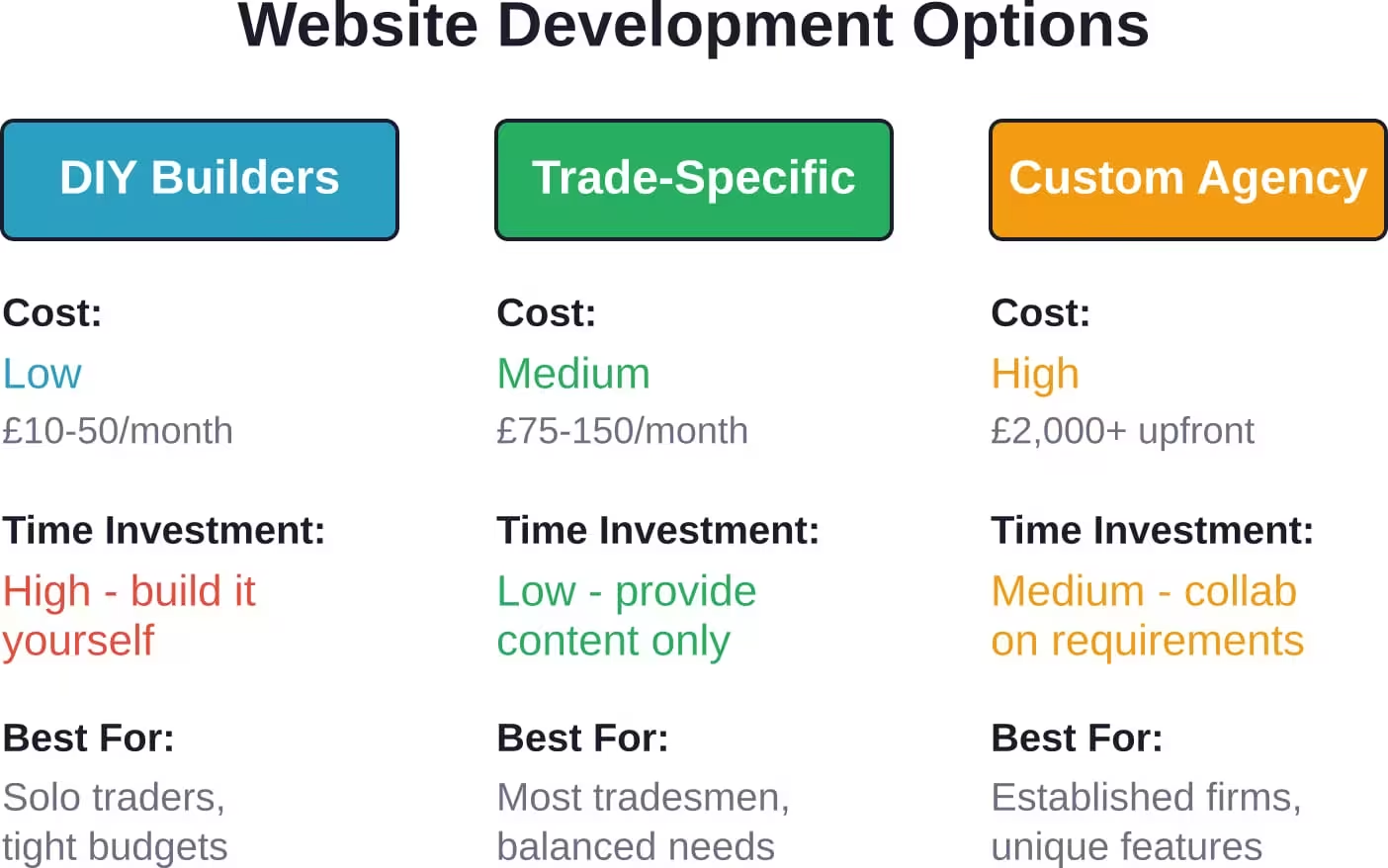
Three main paths exist for building a tradesman website, each with distinct advantages and trade-offs.
DIY Website Builders
Platforms designed for non-technical users allow tradesmen to build sites themselves using drag-and-drop interfaces. These tools provide templates specifically for contractors and trades businesses.
The advantage? Lower upfront costs and complete control over content updates. The disadvantage? Time investment, learning curve, and results that sometimes look DIY rather than professional.
Specialized Tradesman Website Services
Several companies focus exclusively on building websites for contractors and tradesmen. These services understand the specific needs of trades businesses—portfolio showcases, quote request forms, service area maps, and mobile-first design.
Subscription models are common, with monthly fees covering hosting, maintenance, and ongoing updates. Some services offer unlimited redesigns until the client is satisfied, ensuring the final product matches expectations.
Custom Web Design Agencies
Full-service agencies build completely custom websites tailored to specific business needs. This option provides maximum flexibility and professional polish but comes with higher costs.
Custom development makes sense for larger trades businesses with unique requirements or those looking to integrate advanced features like online booking systems or customer portals.
What Drives Costs in Website Development
Understanding pricing helps tradesmen make informed decisions and avoid overpaying for features they don’t need.
Design Complexity
Template-based designs cost less than fully custom designs. A template provides a pre-built structure that gets customized with specific colors, logos, and content. Custom design means starting from scratch, which requires significantly more designer time.
For most tradesmen, quality templates work perfectly fine. The focus should be on content quality—great photos of work, clear service descriptions, compelling testimonials—rather than elaborate design flourishes.
Functionality and Features
Basic websites display information and collect contact form submissions. Advanced features like online quote calculators, customer login areas, or integrated booking systems increase development costs considerably.
Most trades businesses don’t need complex functionality initially. Start simple, prove the website generates leads, then consider adding advanced features if they’ll provide clear ROI.
Ongoing Maintenance and Updates
Websites require ongoing maintenance—software updates, security patches, content changes, and performance optimization. Some services include this in monthly fees; others charge separately.
Factor maintenance into the total cost of ownership. A website that costs less upfront but requires expensive developer time for every small change might cost more long-term than a slightly pricier option with unlimited content updates included.
Local SEO for Tradesman Websites
Building a website is only half the battle. It needs to appear in search results when local customers search for relevant services.
Local SEO focuses on making businesses visible for geographically-relevant searches like “plumber in Manchester” or “electrician near me.”
Google Business Profile Optimization
A complete Google Business Profile (formerly Google My Business) is foundational for local visibility. This free listing appears in Google Maps and local search results, displaying business hours, location, phone number, photos, and reviews.
Keeping this profile updated and encouraging satisfied customers to leave reviews significantly impacts local search rankings.
Location-Specific Content
Website content should mention specific service areas naturally. Instead of just “we provide plumbing services,” write “we provide plumbing services throughout Birmingham, Solihull, and surrounding areas.”
Dedicated pages for different service areas help capture searches from customers in those specific locations.
Mobile Performance and Page Speed
Google prioritizes fast-loading, mobile-friendly websites in search rankings. Sites that take too long to load or don’t work properly on phones get pushed down in results.
Optimizing image sizes, minimizing code bloat, and using quality hosting ensures the site performs well on all devices.
Converting Website Visitors Into Customers
Traffic means nothing if visitors leave without contacting the business. Conversion optimization focuses on turning browsers into buyers.
Clear Value Propositions
Within seconds of landing on the site, visitors should understand what the business does, who it serves, and why they should choose this tradesman over competitors.
Vague statements like “quality workmanship” don’t differentiate. Specific claims backed by evidence—”20 years installing central heating in period properties” or “fully insured and (such as Gas Safe in the UK or relevant State Licenses in the US)”—build confidence.
Trust Signals Throughout
Certifications, insurance badges, industry association memberships, and customer review scores all serve as trust signals that reduce hesitation.
Displaying these prominently, especially near contact forms and phone numbers, reassures potential customers they’re making a safe choice.
Multiple Contact Options
Different customers prefer different contact methods. Some want to call immediately. Others prefer filling out a form. Some might want to send a quick text or WhatsApp message.
Providing multiple easy ways to get in touch increases the likelihood someone will actually reach out rather than bouncing to a competitor’s site.
Common Mistakes Tradesmen Make With Websites
Learning from others’ mistakes saves time and money.
Using Low-Quality Photos
Blurry, poorly-lit photos of completed work undermine credibility rather than building it. Investment in decent photography—even just a good smartphone camera used properly—pays dividends.
Before-and-after shots work particularly well, showing the transformation the tradesman delivered.
Overcomplicating Navigation
Visitors should find what they need within two clicks maximum. Complex menu structures with nested categories confuse rather than help.
Most tradesman sites need just a handful of pages: Home, Services, Portfolio/Gallery, About, and Contact. That’s it.
Neglecting Mobile Users
Testing the website thoroughly on actual mobile devices—not just desktop browsers resized—catches issues before customers encounter them.
Buttons too small to tap, text too tiny to read, or forms that don’t work on phones will send mobile visitors straight to competitors.
Forgetting to Update Content
Outdated information erodes trust. If the copyright footer still says 2025 or the latest project photos are from 2020, visitors question whether the business is still active.
Regular content updates, even small ones, signal an active, professional operation.
Measuring Website Performance
What gets measured gets improved. Tracking the right metrics shows whether the website is delivering value.
Visitor and Lead Tracking
Basic analytics reveal how many people visit the site, which pages they view, how long they stay, and where they came from.
More importantly, tracking form submissions, phone calls (using tracking numbers), and other conversions shows the actual business impact.
Return on Investment
If the website costs $100 per month and generates three extra jobs worth $500 each, that’s a 1,400% monthly return. The math is straightforward when tracked properly.
Many tradesmen don’t systematically ask new customers how they found the business. Adding this simple question to the intake process quantifies the website’s contribution.
| Metric | What It Measures | Target Range | Why It Matters |
|---|---|---|---|
| Monthly Visitors | Site traffic volume | 100-500+ | Awareness and reach |
| Bounce Rate | Single-page visits | 40-60% | Content relevance |
| Avg. Session Duration | Time on site | 1-3 minutes | Engagement level |
| Conversion Rate | Visitors who contact | 2-8% | Lead generation effectiveness |
| Cost Per Lead | Marketing spend ÷ leads | $10-50 | Marketing efficiency |
Future-Proofing Tradesman Websites
Technology changes rapidly, but certain principles remain constant.
Choosing platforms and services that receive regular updates ensures the site won’t become outdated or vulnerable to security issues. Proprietary systems that lock businesses into specific vendors create risk; widely-used platforms provide more flexibility and options.
Content management systems that allow easy updates without developer involvement give tradesmen control over their own web presence. Being able to add new project photos, update service descriptions, or change contact information quickly matters more than elaborate features that never get used.
Professional website design and user experience improvements have been shown to enhance business outcomes and customer satisfaction. Organizations across industries recognize the value of investing in digital infrastructure and usability. The same principle applies to tradesman websites—investment in usability and professional design pays returns through better customer engagement and higher conversion rates.
Taking the Next Step
Website development for tradesmen doesn’t need to be complicated or expensive to be effective. The fundamentals matter most: mobile-friendly design, clear presentation of services, quality photos of work, and easy ways for customers to make contact.
Whether building a site independently using modern tools, subscribing to a trade-specific website service, or investing in custom development, the goal remains the same—creating a professional online presence that builds trust and converts visitors into customers.
The tradesmen who establish strong digital presences now position themselves ahead of competitors still relying solely on traditional marketing. With more customers searching online before making hiring decisions, a professional website has shifted from optional to essential.
Start by assessing specific business needs and budget constraints, then explore options that align with those requirements. The best website is one that actually gets built and launched rather than a perfect site that never makes it online.
Ready to establish a professional online presence? Research the approaches outlined here, review examples from each category, and choose the path that fits both budget and technical comfort level. The investment in a quality tradesman website pays for itself many times over through new customer acquisition and enhanced credibility in competitive markets.