Quick Summary: Website development for smoke shops requires specialized e-commerce platforms with built-in age verification, compliant payment gateways, and inventory management tailored to regulated tobacco products. Professional smoke shop websites combine responsive design, secure customer data handling, and marketing tools optimized for local SEO. Development costs range from $3,000 for template-based solutions to $15,000+ for custom builds, with ongoing maintenance and compliance updates essential for long-term success.
The tobacco retail landscape has shifted dramatically. Physical smoke shops now compete against digital storefronts, subscription services, and national chains with massive online presences. According to the FDA, more than 95% of U.S. adults who smoke daily started by age 21, underscoring why compliance and age verification remain non-negotiable elements of any smoke shop website.
But compliance alone won’t drive sales. Modern smoke shop websites need to balance regulatory requirements with user experience, payment processing challenges, and the marketing constraints unique to tobacco products. This guide breaks down exactly what works—and what doesn’t—when building an online presence for tobacco and vape retailers.
Why Smoke Shops Need Specialized Web Development
Generic e-commerce templates fail smoke shops in three critical areas: age verification enforcement, payment gateway compatibility, and inventory management for regulated products. These businesses operate under federal oversight from the FDA and TTB (Alcohol and Tobacco Tax and Trade Bureau), with additional state-level licensing requirements in most jurisdictions.
According to 2019 Youth Risk Behavior Survey data, 32.7% of high school students currently used electronic vapor products, while 6.0% smoked cigarettes. These statistics drive strict regulations on online tobacco sales, requiring retailers to implement verification systems that go beyond simple checkbox confirmations.
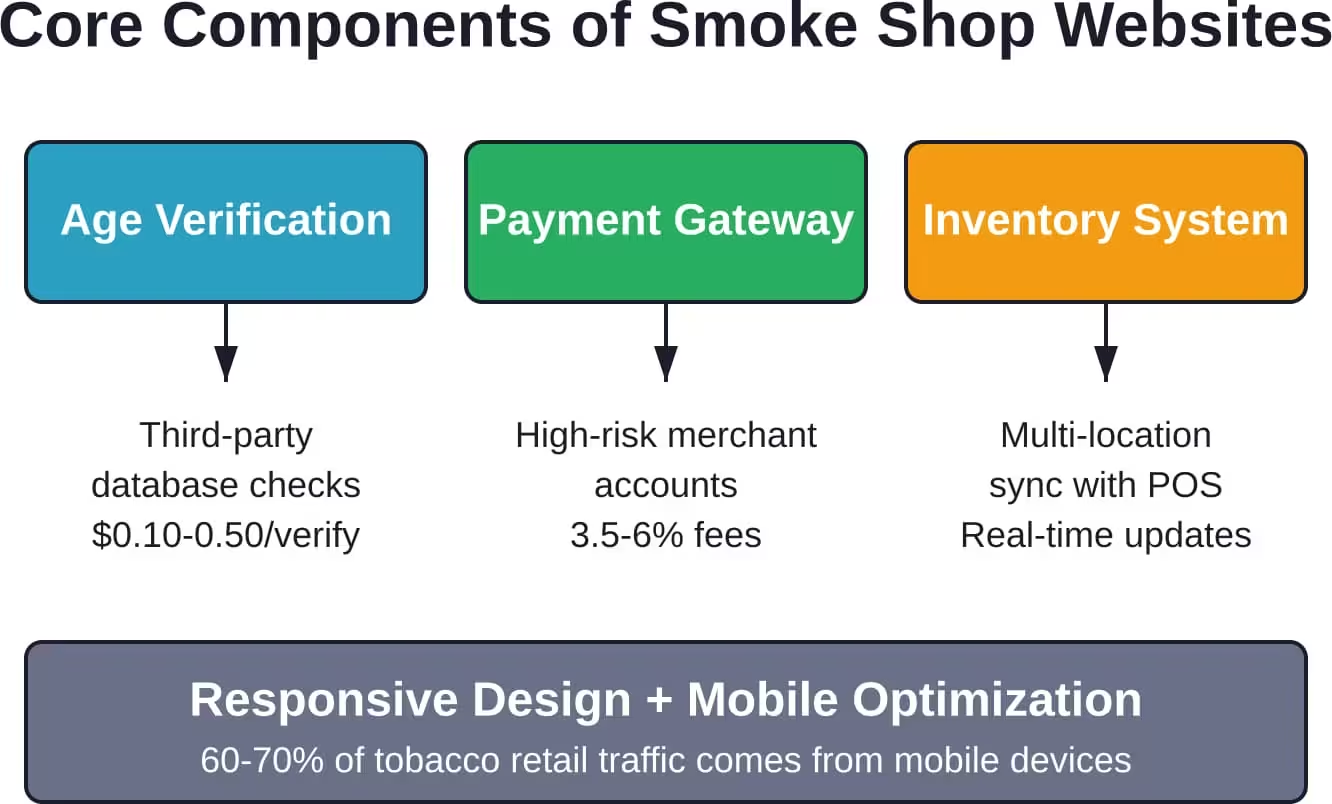
Payment processing presents another barrier. Traditional merchant account providers often categorize tobacco businesses as high-risk, leading to higher transaction fees (typically 3.5-6% versus 2.5-3% for standard retail), rolling reserves, and occasional account terminations without warning.
Real talk: off-the-shelf website builders rarely address these pain points out of the box.
Build a Website That Handles Compliance and Drives Sales
Most website setups don’t account for how smoke shops actually operate. You’re dealing with age verification, restricted payment providers, and product categories that need to be clearly structured without creating friction for the buyer. Lengreo handles website development as a structured process, not just a design task. They start with business analysis and research, move through prototyping and development, and finish with launch and support. This helps avoid the common issues smoke shop websites run into, where important details are missed early and become problems later.
Plan, Build, and Launch a Website Without Guesswork
Lengreo approaches each website with a focus on how the project is planned and delivered:
- Clear process from discovery and research to development and launch
- Ongoing communication during design and implementation stages
- Careful testing and quality assurance before going live
- Reliable post-launch support to handle final adjustments
Contact Lengreo to build a smoke shop website that is properly planned, developed, and ready to work from day one.
Essential Features for Smoke Shop Websites
Any smoke shop website worth building needs these core components working in harmony.
Age Verification Systems
Federal law requires retailers to verify that buyers are 21 or older before completing tobacco sales. Simple pop-ups asking users to confirm their birthdate don’t meet compliance standards for online transactions.
Effective verification systems integrate with third-party databases that cross-reference government records, including:
- Driver’s license verification through DMV databases
- Credit bureau age validation
- Social Security number authentication for edge cases
- Real-time ID document scanning for mobile purchases
These services typically cost $0.10-0.50 per verification, with volume discounts available. But they’re not optional—the FDA can impose penalties on retailers who sell to minors, even unintentionally through inadequate online controls.
Compliant Payment Gateway Integration
Payment processing for tobacco products requires specialized merchant accounts. Standard processors like Stripe and Square restrict or prohibit tobacco sales in their terms of service.
Smoke shops need gateways that explicitly support tobacco retail, such as:
- PaymentCloud (high-risk specialist)
- Durango Merchant Services
- Host Merchant Services
- BankCard USA
These providers understand the regulatory environment and won’t suddenly freeze accounts during peak sales periods. The tradeoff? Higher fees and longer approval processes—expect 2-4 weeks for account setup versus 24-48 hours with standard processors.
Inventory Management for Multi-SKU Product Lines
Smoke shops typically carry thousands of SKUs across multiple categories: cigarettes, cigars, vaping hardware, e-liquids, rolling papers, and accessories. Effective inventory systems need to track:
- Flavor variants for e-liquids and tobacco products
- Nicotine strength options
- Hardware compatibility (batteries, coils, tanks)
- Supplier relationships and wholesale pricing
- Stock levels across multiple physical locations
Advanced platforms sync inventory between point-of-sale systems and the web store in real-time, preventing overselling while automatically updating product availability.
Platform Options: Comparing Development Approaches
Smoke shops have three main paths for website development, each with distinct tradeoffs in cost, flexibility, and time-to-launch.
Template-Based Builders
Platforms like Shopify, WooCommerce, and specialized solutions (10Web, Instapage) offer pre-built themes designed for tobacco retail. These reduce development time from months to weeks but come with inherent limitations.
Template advantages:
- Lower upfront costs ($2,000-5,000 including theme and plugins)
- Faster launch timeline (2-4 weeks)
- Built-in hosting and security updates
- App ecosystems for age verification and marketing tools
The downside? Limited customization options and potential plugin conflicts. When a critical age verification plugin updates and breaks compatibility with the payment gateway, stores can lose hours or days of sales while developers troubleshoot.
Custom Development
Custom-built platforms offer maximum control over functionality, design, and integration with existing business systems. Development agencies specializing in smoke shop websites (like DB Managers, referenced in competitive research) build bespoke solutions on frameworks like Magento, Laravel, or Django.
Custom development makes sense for:
- Multi-location chains needing centralized management
- Wholesalers requiring B2B portals alongside retail storefronts
- Shops with unique product lines or business models
- Retailers planning extensive custom features
Expect to invest $15,000-50,000 and wait 3-6 months for launch. But the result is a platform that scales with business growth without hitting arbitrary limitations.
Dropshipping Platforms
Services like SmokeDrop enable retailers to launch online stores without holding inventory. The platform connects to verified suppliers who handle fulfillment while the retailer focuses on marketing and customer acquisition.
Market data suggests the global smoke shop market will reach $9.4 billion by 2025, creating opportunity for dropshipping entrants. However, margins are typically thinner (15-25% versus 40-60% for direct retail), and retailers have less control over shipping times and product quality.
Dropshipping works best as a testing ground—retailers can validate product demand before committing to bulk inventory purchases.
| Platform Type | Upfront Cost | Launch Time | Customization | Best For |
|---|---|---|---|---|
| Template Builders | $2,000-5,000 | 2-4 weeks | Limited | Single-location shops, quick launches |
| Custom Development | $15,000-50,000 | 3-6 months | Unlimited | Multi-location chains, unique needs |
| Dropshipping | $500-2,000 | 1-2 weeks | Moderate | Testing markets, low initial capital |
Design Considerations for Tobacco Retail
Effective smoke shop web design balances aesthetics with functionality, all while navigating marketing restrictions on tobacco products.
Visual Hierarchy and Product Discovery
Smoke shops sell diverse product categories with varying profit margins. Strategic design guides customers toward high-margin items (vaping hardware, premium cigars, accessories) while maintaining intuitive navigation for commodity products (cigarettes, basic rolling papers).
Key design elements include:
- Prominent search functionality (60% of online shoppers use search immediately)
- Category filtering by product type, brand, flavor, and price
- Related product recommendations based on purchase history
- Wish lists and favorites for comparison shopping
Here’s where many smoke shop sites fail: they treat all products equally. A pack of generic cigarettes gets the same visual weight as a $150 vape mod. Strategic design differentiates premium products through placement, imagery, and layout.
Mobile-First Development
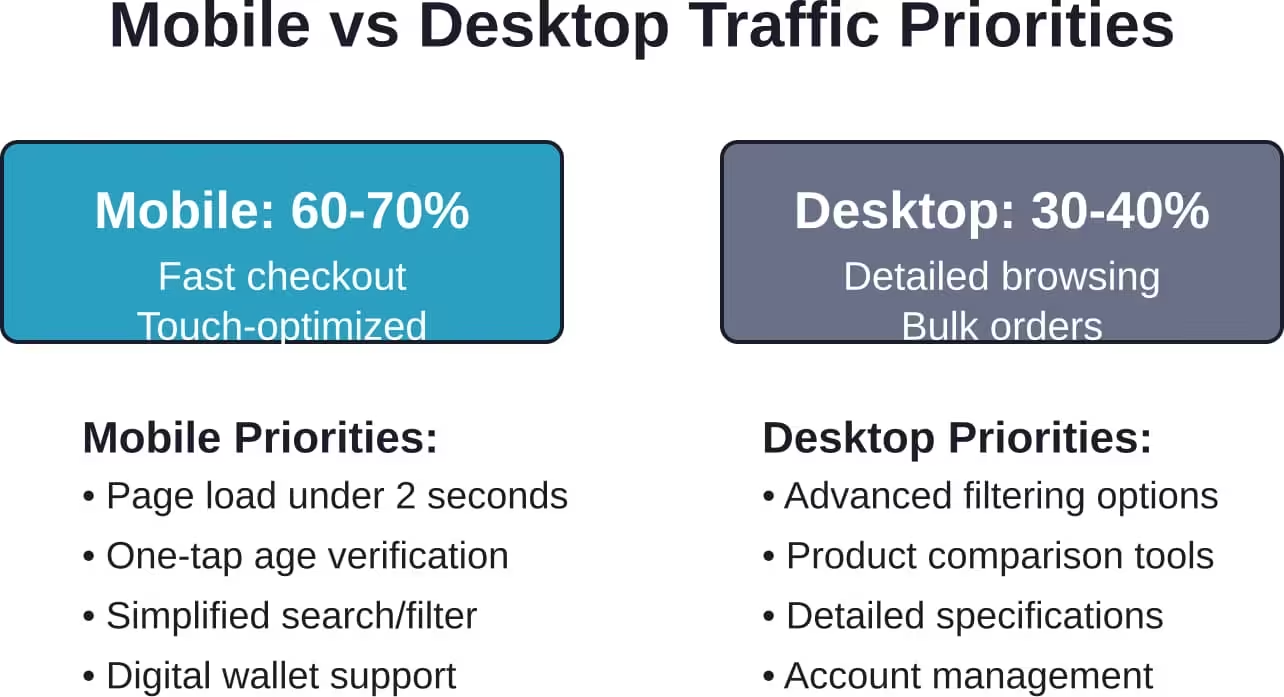
Industry analyses indicate 60-70% of smoke shop traffic originates from mobile devices. Yet many tobacco retail sites still prioritize desktop experiences, leading to frustrated mobile users who abandon carts at higher rates.
Mobile optimization requirements:
- Touch-friendly navigation with minimum 44×44 pixel tap targets
- Simplified checkout flows (ideally 3 steps or fewer)
- Mobile-optimized age verification that doesn’t require typing long form data
- Click-to-call functionality for customer service
- Apple Pay and Google Pay integration
Page load speed matters critically on mobile networks. Sites loading in under 2 seconds see conversion rates 3-5× higher than those taking 5+ seconds.
Compliance-Friendly Marketing
The FDA restricts tobacco advertising, particularly anything that might appeal to minors. According to 2019 Youth Risk Behavior Survey data, 50.1% of high school students had ever used electronic vapor products, making youth access prevention a regulatory priority.
Design restrictions include:
- No cartoon imagery or mascots
- No claims about health benefits or reduced harm
- No celebrity endorsements or athlete sponsorships
- Warning labels on all product pages
Smart smoke shop websites work within these constraints by emphasizing product variety, competitive pricing, and convenience rather than lifestyle associations or aspirational messaging.
SEO and Marketing Strategies for Smoke Shops
Digital marketing for tobacco products operates under significant constraints. Google Ads prohibits tobacco advertising, and Facebook restricts most tobacco-related content. This pushes smoke shops toward organic search, local SEO, and email marketing.
Local Search Optimization
Most smoke shop customers search for locations near them—”smoke shop near me,” “vape store [city name],” “cigars in [neighborhood].” Local SEO focuses on capturing this high-intent traffic.
Critical local ranking factors:
- Google Business Profile optimization with accurate hours, photos, and categories
- Consistent NAP (name, address, phone) across all directories
- Local citations in Yelp, Yellow Pages, and industry directories
- Customer reviews (respond to all reviews within 48 hours)
- Location pages for multi-store operations
State licensing databases (like those maintained by the Colorado Department of Revenue for tobacco retailers) provide authoritative backlinks and citation sources. Ensure business listings match licensing documentation exactly.
Content Marketing Within Compliance
Educational content helps smoke shops rank for informational queries while building topical authority. Effective content topics include:
- How-to guides (e.g., “How to Clean a Vape Tank,” “Cigar Storage Best Practices”)
- Product comparisons (objective, data-driven, no health claims)
- Industry news and regulatory updates
- Beginner guides for new tobacco users
Avoid making any health claims, reduced-risk statements, or cessation-related promises. The FDA scrutinizes tobacco marketing closely, and even well-intentioned educational content can trigger violations if it crosses regulatory boundaries.
Email Marketing and Retention
Email remains one of the few unrestricted marketing channels for tobacco retailers. Build subscriber lists through:
- Age-gated newsletter signups
- Account creation incentives
- Post-purchase follow-up sequences
- Abandoned cart recovery
Segment lists by product preference—vapers want different content than cigar enthusiasts. Personalized emails generate 6× higher transaction rates than generic broadcasts.
Security and Compliance Requirements
Tobacco retailers face heightened scrutiny around data security and regulatory compliance. A breach exposing customer purchase history (including age verification records) creates both legal liability and reputational damage.
Data Protection Standards
Smoke shop websites must meet PCI DSS (Payment Card Industry Data Security Standard) requirements for processing credit card transactions. This includes:
- SSL/TLS encryption for all data transmission
- Secure hosting environments with regular vulnerability scanning
- No storage of full credit card numbers or CVV codes
- Strong password policies and two-factor authentication for admin access
The OWASP Foundation provides security frameworks specifically for web authentication and session management—critical components when handling age verification credentials.
Regulatory Reporting
The PACT Act (amending the Jenkins Act) requires tobacco sellers to report cigarette and smokeless tobacco shipments to state tax authorities by the 10th day of each calendar month. Online retailers who fail to comply face fines up to $1,000 or six months imprisonment per violation.
Website platforms should integrate with compliance software that:
- Automatically logs all tobacco sales with customer location data
- Generates monthly reports in formats required by state agencies
- Archives transaction records for the legally required retention period
- Flags suspicious orders (bulk purchases, shipping to restricted areas)
The TTB (Alcohol and Tobacco Tax and Trade Bureau) maintains resources on permit requirements and reporting obligations—retailers should consult these guidelines during development.
Ongoing Maintenance and Updates
Website development doesn’t end at launch. Smoke shops need continuous maintenance to address security patches, regulatory changes, and evolving customer expectations.
Monthly maintenance tasks include:
- Security updates for CMS, plugins, and dependencies
- Age verification system testing and compliance audits
- Performance monitoring and speed optimization
- Broken link checks and SEO health scans
- Inventory sync verification
Quarterly tasks:
- Review and update product descriptions for SEO
- Analyze conversion funnel for drop-off points
- Test checkout process on multiple devices and browsers
- Update age verification to reflect regulatory changes
- Backup and disaster recovery testing
Many smoke shops budget $500-1,500 monthly for ongoing maintenance, with higher costs for custom platforms requiring developer involvement.
Conclusion
Building a smoke shop website in 2026 requires balancing regulatory compliance, technical complexity, and customer experience. The right approach depends on business size, budget, and growth plans—but certain fundamentals apply universally.
Start with compliant age verification and payment processing as non-negotiable requirements. Build on a platform that can scale with the business, whether that’s a well-configured template system or custom development. Prioritize mobile experience, given where the majority of traffic originates. And plan for ongoing maintenance, because regulations and security requirements evolve constantly.
The smoke shops that succeed online don’t try to work around restrictions—they build them into the foundation of their digital presence. They understand that compliance isn’t just legal protection; it’s a competitive advantage that builds customer trust.
Ready to launch or upgrade a smoke shop website? Research platforms that explicitly support tobacco retail, identify payment processors with experience in the industry, and budget realistically for both development and maintenance. The investment pays off through expanded reach, higher average order values, and 24/7 sales that physical locations can’t match.