Quick Summary: Website development for realtors requires a professional online presence that showcases properties, captures leads, and builds trust with clients. Modern real estate websites incorporate IDX/MLS integration, mobile responsiveness, and lead management tools. With 100% of homeowners beginning their property search online according to the National Association of REALTORS®, a well-designed website has become essential for real estate professionals to compete effectively in today’s market.
The real estate industry has fundamentally shifted. Buyers don’t start their journey at open houses anymore—they start on their phones, scrolling through listings at midnight.
And if your online presence can’t capture their attention in those critical first moments, you’ve already lost them to a competitor. Many homeowners begin their property search online, making a professional website no longer optional but essential for survival.
Here’s the thing though—building a website that actually converts requires more than just uploading property photos and hoping for the best. The global proptech market is projected to grow from $44.59 billion in 2026 to $104.57 billion by 2034 according to MIT Sloan Executive Education, and real estate professionals who embrace these technological advances will dominate their markets.
This guide breaks down everything needed to develop a high-performing real estate website that generates leads, establishes authority, and turns visitors into clients.
Why Real Estate Professionals Need Their Own Website
Relying solely on brokerage websites or third-party listing platforms creates a dangerous dependency. When agents build their presence on someone else’s platform, they’re essentially renting their business foundation.
A dedicated website establishes independent brand identity. Clients remember you, not just the brokerage logo. This becomes especially critical for agents planning to build long-term referral networks or eventually transition to independent operations.
Control over lead data represents another massive advantage. Third-party platforms often retain ownership of contact information and client interactions. With a personal website, every lead belongs directly to the agent, creating a valuable asset that compounds over time.
The National Association of REALTORS® emphasizes that an online presence has become a vital component of marketing strategy, noting that today’s consumers demand accurate information quickly and conveniently. Real estate professionals must harness online marketing capabilities to meet these ever-increasing needs.
Build a Clear Realtor Website With Lengreo
Lengreo builds and improves websites, then connects them with SEO, paid ads, tracking, and lead generation. For realtors, this means a website that presents listings, service areas, property types, buyer and seller pages, reviews, and contact forms in a clear structure.
The focus is to help people find the right information before they call or send a message. Lengreo can help organize key pages, improve traffic setup, and make property inquiries easier to complete.
Need a Website That Supports Property Inquiries?
Lengreo can help with:
- building or redesigning your website
- improving SEO and paid traffic setup
- setting up tracking and website structure
- refining listing, location, and contact pages
👉 Contact Lengreo to discuss your website and setup.
Essential Features Every Realtor Website Must Have
Not all real estate websites perform equally. The difference between a site that generates leads and one that collects digital dust comes down to specific features.
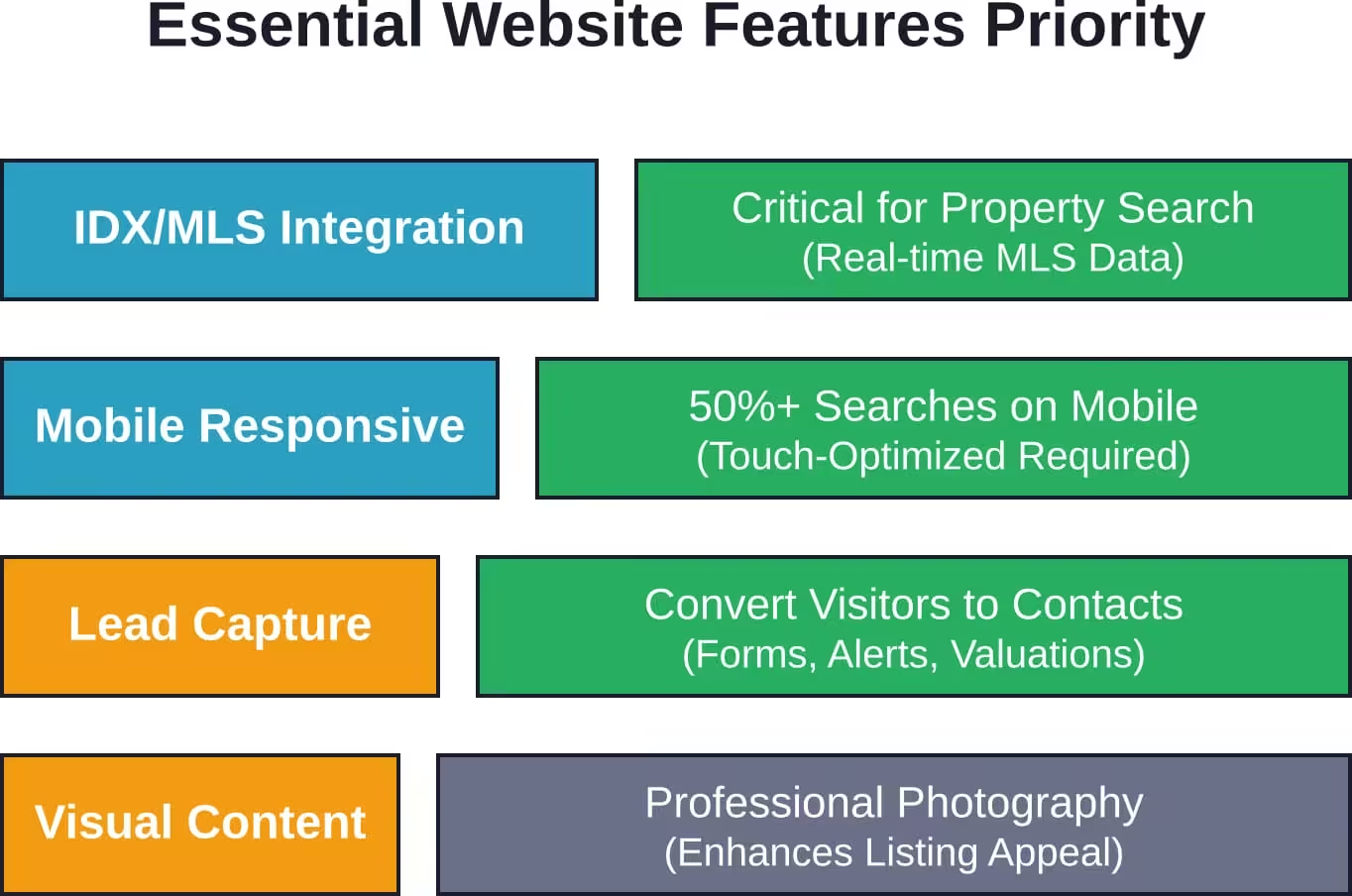
IDX/MLS Integration
Internet Data Exchange (IDX) integration stands as the single most important technical feature for real estate websites. This functionality allows agents to display MLS listings directly on their personal sites, providing visitors with real-time property data.
Without IDX integration, agents are stuck manually uploading listings—a time-consuming process that guarantees outdated information. Buyers expect to search properties the same way they search on major portals, with filters for price, bedrooms, location, and other criteria.
Real talk: if your website doesn’t offer property search functionality comparable to major listing sites, visitors will immediately bounce to competitors who do.
Mobile Responsiveness
More than half of property searches now happen on mobile devices. A website that looks professional on desktop but breaks on smartphones destroys credibility instantly.
Mobile responsiveness means more than just shrinking content to fit smaller screens. Touch-friendly navigation, fast load times, and easily tappable contact buttons make the difference between a frustrated visitor and a captured lead.
Lead Capture Tools
Every page represents an opportunity to convert anonymous visitors into identifiable leads. Strategic placement of contact forms, property alert signups, and home valuation tools creates multiple conversion pathways.
But wait. There’s a balance to strike here. Aggressive popups that block content within seconds of arrival frustrate users and increase bounce rates. The best lead capture strategies offer genuine value—property updates, market reports, or neighborhood guides—in exchange for contact information.
High-Quality Visual Content
Real estate is inherently visual. Professional photography, virtual tours, and neighborhood videos showcase properties far more effectively than text descriptions ever could.
Community discussions frequently emphasize that agents with superior visual content consistently outperform competitors with similar listings but inferior presentation. Investing in professional photography and videography pays for itself through faster sales and higher listing acquisition rates.
Website Builder Platforms vs Custom Development
Real estate professionals face a fundamental choice: use a specialized website builder platform or invest in custom development. Each approach offers distinct advantages depending on budget, technical skills, and business goals.
Specialized Real Estate Website Builders
Platforms designed specifically for real estate offer pre-built templates, integrated IDX functionality, and tools tailored to agent workflows. These solutions eliminate technical complexity, allowing agents to launch professional sites without coding knowledge.
According to available data, monthly prices for real estate website builders generally range from $17 to $159 depending on the plan and features needed. This pricing typically includes hosting, domain registration, and ongoing platform updates.
Josh Jerman of Hawaii Life Real Estate Brokers in Maui describes his experience building a website on a simplified platform: “It’s as simple as it gets,” says Jerman, who had previously hired a web developer for 20 hours to build a website for his business. The simplified approach saved both time and money while delivering comparable functionality.
Popular platforms offer multiple pre-built real estate templates (40+) designed around common agent needs—luxury property showcases, team pages, neighborhood guides, and client testimonials. These templates provide professional design without requiring graphic design skills.
Custom Development
Custom development offers maximum flexibility and unique branding opportunities. Agents with specific workflow requirements or distinctive market positioning may find off-the-shelf platforms too restrictive.
That said, custom development requires significantly higher upfront investment and ongoing maintenance costs. Changes and updates require developer involvement, creating dependencies that slow down content updates and feature additions.
For most agents, especially those establishing their first independent web presence, specialized platforms provide better return on investment. Custom development makes more sense for established teams with complex requirements and dedicated marketing budgets.
Building Your Real Estate Website: Step-by-Step Process
Launching a professional real estate website doesn’t require technical expertise, but it does require strategic thinking about audience, content, and conversion pathways.
Define Your Target Audience and Niche
Generic real estate websites blend into the background. Sites that speak directly to specific buyer or seller segments stand out.
Luxury property specialists need dramatically different websites than first-time homebuyer advocates. Investors seeking rental properties have different priorities than families relocating for schools.
Identifying the primary audience shapes every subsequent decision—design aesthetic, content focus, featured properties, and messaging tone. This clarity also improves search engine optimization by targeting specific keyword phrases rather than competing for impossibly broad terms.
Choose a Domain Name
Domain names represent permanent branding decisions. The ideal domain is short, memorable, and clearly identifies the agent or team.
Many agents default to firstnamelastname.com, which works perfectly for personal brand building. Teams might choose TeamName.com or CityRealEstateExperts.com depending on positioning strategy.
The National Association of REALTORS® partnered with .RealEstate to launch a digital experience for real estate professionals, helping real estate professionals build, launch, and manage their online presence in one place. This partnership provides agents with domain options specifically designed for the industry.
Select and Customize Templates
Templates provide the foundation, but customization creates differentiation. Stock templates used without modification signal low effort to potential clients.
Customization priorities include:
- Brand colors that align with business cards and other marketing materials
- Professional headshots and team photos
- Unique about page copy that tells the agent’s story
- Neighborhood-specific landing pages for target markets
- Testimonial sections featuring actual client reviews
Configure IDX/MLS Integration
IDX setup varies by platform but generally involves connecting to the local MLS through approved IDX providers. Most real estate website builders offer streamlined setup processes with step-by-step guidance.
After initial connection, agents customize search interfaces, map displays, and property detail pages. The goal is seamless integration that makes it appear as though all listings belong directly to the agent’s site rather than being pulled from external sources.
Create Essential Pages and Content
Beyond property listings, several core pages establish credibility and provide conversion opportunities.
- Home Page: The first impression must immediately communicate who the agent serves and why visitors should choose them. Featured listings, recent sales, and clear calls to action create multiple engagement pathways.
- About Page: Buyers and sellers want to know who they’re working with. Professional background, community involvement, and personal story build trust and relatability.
- Neighborhood Guides: Location-specific content attracts targeted organic search traffic and demonstrates local expertise. These pages rank well for “[neighborhood name] real estate” searches.
- Resources and Blog: Educational content establishes authority while improving search visibility. First-time homebuyer guides, market update posts, and local market insights provide value beyond property listings.
- Contact Page: Multiple contact methods (phone, email, contact form, scheduling link) reduce friction for potential clients preferring different communication channels.
Conversion Optimization Strategies
Traffic without conversions wastes marketing investment. Strategic optimization transforms visitors into leads and clients.
Clear Calls to Action
Every page should guide visitors toward a specific next step. Ambiguous navigation and missing calls to action leave visitors uncertain about how to proceed.
Effective calls to action are specific and action-oriented: “Schedule Your Free Home Valuation,” “Get Pre-Approved in 10 Minutes,” or “Download Our First-Time Buyer Guide.” These work better than generic “Contact Us” buttons.
Fast Load Times
Page speed directly impacts both user experience and search rankings. Sites that take more than three seconds to load lose significant percentages of visitors before content even appears.
Image optimization represents the easiest win for most real estate sites. High-resolution property photos can be compressed significantly without visible quality loss. Modern image formats and lazy loading techniques ensure fast initial load times even for image-heavy pages.
Trust Signals and Social Proof
First-time visitors are naturally skeptical. Trust signals reassure them they’re dealing with legitimate professionals.
Client testimonials, professional certifications, association memberships, and recent sales showcase credibility. Video testimonials carry even more weight than written reviews.
Local SEO Optimization
Real estate is inherently local. Websites must be optimized for geographic search terms to capture buyers and sellers in target markets.
Location-specific content, Google Business Profile optimization, and local backlinks from community organizations improve visibility for searches like “real estate agent in [city]” or “homes for sale in [neighborhood].”
The National Association of REALTORS® provides extensive educational resources on digital marketing, including certification programs for social media and online marketing strategies. NAR offers Digital Marketing: Social Media Certification courses with member pricing available.
Legal and Compliance Considerations
Real estate websites must comply with multiple regulatory frameworks governing advertising, fair housing, and consumer protection.
Fair Housing Act Compliance
The U.S. Department of Housing and Urban Development enforces the Fair Housing Act, which prohibits discrimination in housing based on race, color, national origin, religion, sex, familial status, and disability.
Website content, property descriptions, and targeting must carefully avoid language that could be construed as discriminatory. HUD provides guidance clarifying that real estate professionals can discuss crime rates and school quality with prospective buyers without violating the Fair Housing Act, but marketing materials must not suggest preference or limitation based on protected characteristics.
Truth in Advertising
The Federal Trade Commission requires that advertising be truthful and non-deceptive, that advertisers have evidence to back up their claims, and that advertisements cannot be unfair.
The FTC has sent warning letters to mortgage advertisers whose ads potentially violated federal law. Real estate professionals must ensure claims about services, pricing, or outcomes are substantiated and clearly disclosed.
Accessibility Requirements
The Department of Housing and Urban Development emphasizes digital accessibility, stating that HUD is committed to providing access to websites and digital applications for all visitors with disabilities.
Websites should include alt text for images, keyboard navigation support, sufficient color contrast, and compatibility with screen readers. These accommodations not only support compliance but also expand potential client reach.
Ongoing Maintenance and Content Strategy
Launching a website marks the beginning, not the end, of effective online presence. Consistent updates and fresh content keep sites relevant and improve search rankings.
Regular Content Publishing
Search engines favor sites that demonstrate ongoing activity. A blog with monthly market updates, neighborhood spotlights, and homebuyer education builds authority while attracting organic traffic.
NAR emphasizes that being active online means more than a stagnant profile page or intermittent social media posting. Agents need to craft an online presence that presents them as industry experts.
Performance Monitoring
Website analytics reveal what’s working and what isn’t. Tracking visitor sources, popular pages, and conversion rates guides optimization efforts.
Key metrics to monitor include:
- Unique monthly visitors
- Average session duration
- Lead capture form submissions
- Property inquiry requests
- Phone call conversions
- Mobile vs desktop traffic split
Security and Updates
Website platforms require periodic security updates and feature enhancements. Neglected sites become vulnerable to security breaches and compatibility issues.
Most managed platforms handle these updates automatically, while custom sites require ongoing developer involvement to maintain security and functionality.
| Feature | Builder Platforms | Custom Development |
|---|---|---|
| Typical Cost | $17-$159/month | $3,000-$15,000+ upfront |
| Launch Time | 1-2 weeks | 2-4 months |
| IDX Integration | Pre-built, simplified setup | Custom implementation required |
| Design Flexibility | Template-based with customization | Unlimited customization |
| Maintenance | Handled by platform | Requires developer |
| Best For | Individual agents, small teams | Large teams, unique requirements |
Integrating with Your Overall Marketing Strategy
A website doesn’t exist in isolation. It forms the hub of a comprehensive digital marketing ecosystem.
Social Media Integration
Social platforms drive traffic to websites while websites provide the detailed information and conversion tools social media lacks. Property posts on Instagram, Facebook, and LinkedIn should link back to detailed listing pages.
Social share buttons on property listings and blog posts expand content reach organically as visitors share interesting properties or helpful articles.
Email Marketing Connection
Website lead capture forms feed email marketing lists. Automated drip campaigns nurture these leads over time, staying top-of-mind until prospects are ready to transact.
Market update newsletters, new listing alerts, and educational series provide ongoing value that keeps past and potential clients engaged.
Paid Advertising Landing Pages
Google Ads, Facebook Ads, and other paid campaigns should direct traffic to specific landing pages designed for conversion rather than generic home pages.
A first-time homebuyer campaign links to a first-time buyer landing page with targeted content and relevant calls to action. Seller campaigns link to free home valuation landing pages.
Common Mistakes to Avoid
Real estate website development involves numerous pitfalls that undermine effectiveness.
Neglecting Mobile Experience
Testing only on desktop while most visitors use mobile creates a disconnect between development and reality. Always preview and test on actual mobile devices before launch.
Information Overload
Cramming every possible detail onto the home page overwhelms visitors. Clean, focused pages with clear hierarchy guide visitors more effectively than dense walls of text.
Outdated Content
Nothing signals neglect faster than a blog with the last post from two years ago or a “recent sales” section showing properties from 2023. If a section can’t be maintained regularly, it shouldn’t exist on the site.
Missing Contact Information
Some sites bury contact information behind multiple clicks or require form submissions for basic inquiries. Phone numbers and email addresses should be prominently displayed on every page, typically in the header or footer.
Ignoring Analytics
Launching a website without installing analytics is like driving blindfolded. Google Analytics and similar tools provide essential data about visitor behavior, traffic sources, and conversion patterns.
Moving Forward With Your Real Estate Website
The real estate market continues its digital transformation, and agents who build strong online presences position themselves for sustained success. With 100% of homeowners beginning their search online according to the National Association of REALTORS®, professional websites have transitioned from nice-to-have marketing tools to fundamental business infrastructure.
The global proptech market’s projected growth to $104.57 billion by 2034 signals ongoing innovation in real estate technology. Agents who embrace these tools early gain competitive advantages that compound over time through improved lead generation, operational efficiency, and client experience.
Website development doesn’t require massive budgets or technical expertise anymore. Modern platforms have democratized professional web presence, allowing individual agents to create sites that rival large brokerage operations in functionality and polish.
The key is starting. An imperfect website launched today generates more leads than a perfect website that remains perpetually in planning. Initial launches can be refined over time based on analytics data and client feedback.
Begin by identifying the primary audience and selecting a platform aligned with budget and feature requirements. Configure IDX integration to provide real property search functionality. Create core pages that establish credibility and provide conversion pathways. Then launch, monitor performance, and continuously optimize based on results.
The agents who dominate their markets in 2026 and beyond will be those who recognized that professional online presence isn’t optional—it’s foundational. Your website represents the first impression for the majority of potential clients. Make it count.