

Quick Summary: Website development for private schools requires balancing visual appeal with functionality, security, and compliance. Modern school websites must support enrollment goals, communicate mission effectively, and protect student data while meeting accessibility standards and cybersecurity requirements.
Private schools face a unique challenge: the website isn’t just a digital brochure. It’s the first impression for prospective families, a communication hub for current parents, and often the deciding factor in enrollment decisions.
Research indicates that approximately 57% of parents eliminate schools from consideration based solely on their website experience. That’s before they ever schedule a tour or speak with admissions. The stakes? Higher than ever.
Core Elements Every Private School Website Needs
School websites serve multiple audiences simultaneously—prospective families researching options, current parents seeking updates, alumni staying connected, and faculty accessing resources. Each group expects different functionality.
The foundation starts with mobile-first design. Families browse on phones during commutes, on tablets during weekend research sessions. A responsive design isn’t optional anymore.
Clear navigation matters more than clever creativity. Prospective families need to find tuition information, admission requirements, and contact details within seconds. Current families want calendars, announcements, and emergency updates immediately accessible.
Mission-Aligned Visual Identity
Private schools aren’t selling a product—they’re communicating values, culture, and educational philosophy. The website design should reflect that unique character through color schemes, photography, and typography that align with the school’s mission.
Generic stock photos of diverse students studying together? Families see through that instantly. Authentic imagery showcasing actual students, campus facilities, and real classroom moments builds trust and connection.
Security and Compliance Requirements
Here’s where it gets serious. Educational institutions handle sensitive student data, and federal regulations don’t offer wiggle room.
FERPA (Family Educational Rights and Privacy Act) governs how schools manage student information. Website development must include secure parent portals, encrypted data transmission, and carefully controlled access to student records and directories.
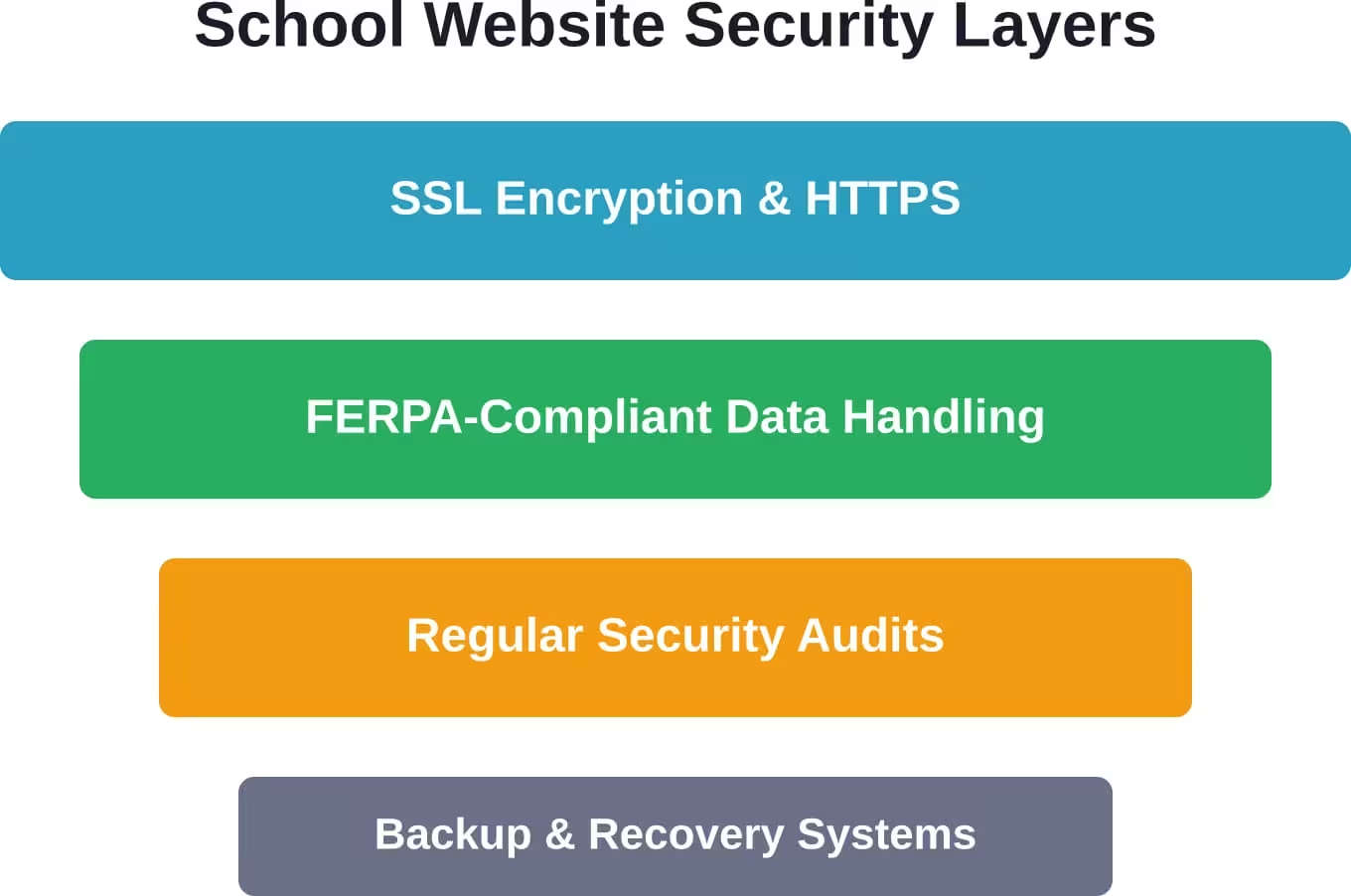
Cybersecurity threats targeting K-12 institutions have escalated dramatically. CISA provides resources specifically for educational organizations, including toolkits derived from Cybersecurity Performance Goals. The State and Local Cybersecurity Grant Program (SLCGP) provides $1 billion over 4 years for state, local, and tribal governments and eligible entities—worth noting for schools managing tight technology budgets.
Beyond federal requirements, accessibility compliance matters both legally and ethically. Research shows that as many as one in five British people have a disability, yet less than 1% of website homepages are likely to meet accessibility standards for this population. Private schools must do better.
Enrollment-Focused Functionality
The website should work as an enrollment engine. That means strategic conversion pathways—clear calls to action, simplified inquiry forms, and streamlined application processes.
But wait. Conversion optimization doesn’t mean aggressive marketing tactics. Private school families want substance: detailed academic program information, faculty credentials, student outcomes, and authentic glimpses into school culture.
| Feature | Purpose | Impact on Enrollment |
|---|---|---|
| Virtual Tours | Remote campus exploration | Increases inquiry-to-tour conversion |
| Inquiry Forms | Capture prospective family data | Builds admission funnel |
| Event Registration | Open house and visit scheduling | Drives campus engagement |
| Online Applications | Streamlined admission process | Reduces application friction |
Content Management Considerations
Schools need to update content frequently—announcements, calendars, news, faculty changes. The content management system must be intuitive enough for non-technical staff to publish updates without developer intervention.
Single-click publishing across multiple channels? That’s not luxury—it’s efficiency. When the communications director can update the homepage, send a parent email, and post to social channels simultaneously, that’s time saved for mission-critical work.
Performance and Technical Infrastructure
Slow websites lose families. Period. When a prospective parent clicks from a search result or social media ad, the site needs to load in under three seconds.
Technical infrastructure includes hosting that handles traffic spikes (think admission decision day or emergency announcements), content delivery networks for fast global access, and optimized images that don’t sacrifice visual quality.
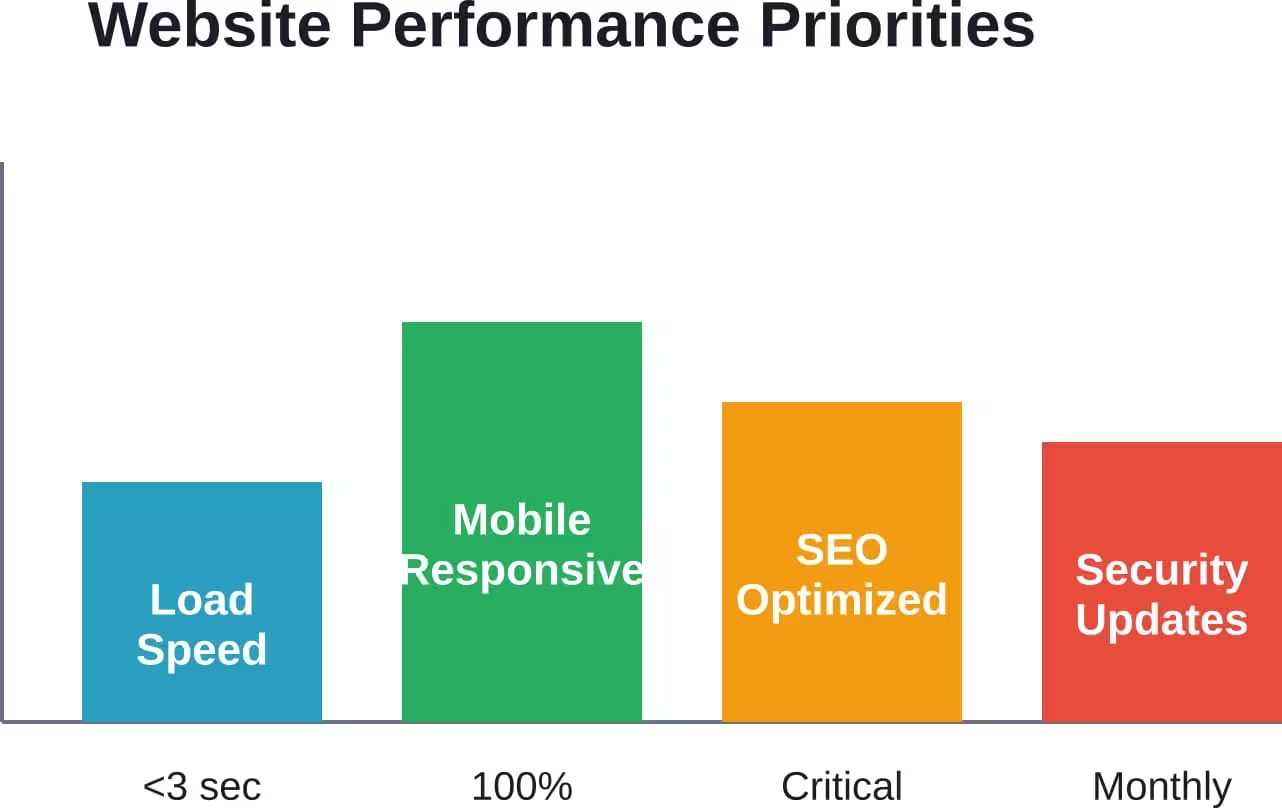
SEO strategy matters, too. Families search for “private schools near me,” “best independent schools in [city],” and program-specific terms like “Montessori elementary” or “classical Christian education.” The website structure, content, and technical optimization need to support visibility for those searches.
Get A School Website That Turns Visitors Into Applications
Most private school websites look fine but don’t really help parents move forward. If programs are unclear or the path to apply isn’t obvious, interest drops before it becomes an inquiry.
Lengreo builds websites around how parents actually search and decide. They handle the full process – from research and structure to development and launch – with a focus on clear navigation, usable content, and conversion. The goal is simple: make the site support admissions, not just exist online.
Start Getting More Applications From Your Website
What you get with Lengreo:
- Clear structure to understand programs fast
- Custom build instead of templates
- Full delivery from research to launch
If your website isn’t bringing consistent applications, talk to Lengreo and fix it.
Moving Forward with Confidence
Private school website development isn’t a one-time project—it’s an ongoing strategic investment in enrollment, community building, and mission communication.
The schools that succeed online combine visual excellence with technical rigor, compliance awareness with user experience, and enrollment focus with authentic storytelling. Start by assessing current website performance against enrollment goals, security requirements, and user needs. Then build a development roadmap that prioritizes highest-impact improvements first.