


Quick Summary: Website development for private colleges requires a strategic approach that balances academic credibility with enrollment goals. The most effective college websites prioritize mobile-first design, fast page speeds, accessibility compliance, and clear pathways for prospective students. Success comes from integrating enrollment management tools, showcasing campus culture authentically, and maintaining accreditation transparency—all while optimizing for search engines and user experience.
A website serves as the virtual front door for private colleges. It’s where prospective students form their first impression, where parents evaluate academic credibility, and where the institutional brand either shines or falters.
The stakes couldn’t be higher. With more parents focused on getting their kids into college than ever before, competition among private institutions has intensified. Your website doesn’t just need to exist—it needs to convert visitors into applicants.
Here’s the thing though—building an effective college website isn’t about throwing together a few pages with campus photos and program descriptions. It requires a comprehensive development strategy that addresses technical performance, user experience, accessibility standards, and enrollment marketing.
Why Website Development Matters for Private College Enrollment
Private colleges operate in a unique position within American higher education. According to the U.S. Department of Education, the United States has no Federal Ministry of Education exercising single national control over postsecondary educational institutions. This decentralized structure means private institutions enjoy considerable independence and autonomy—but they also face intense competition for students.
Your website functions as the primary research tool for prospective students and their families. Before they visit campus, before they request information, they’re evaluating your institution online.
But wait. What exactly are they looking for?
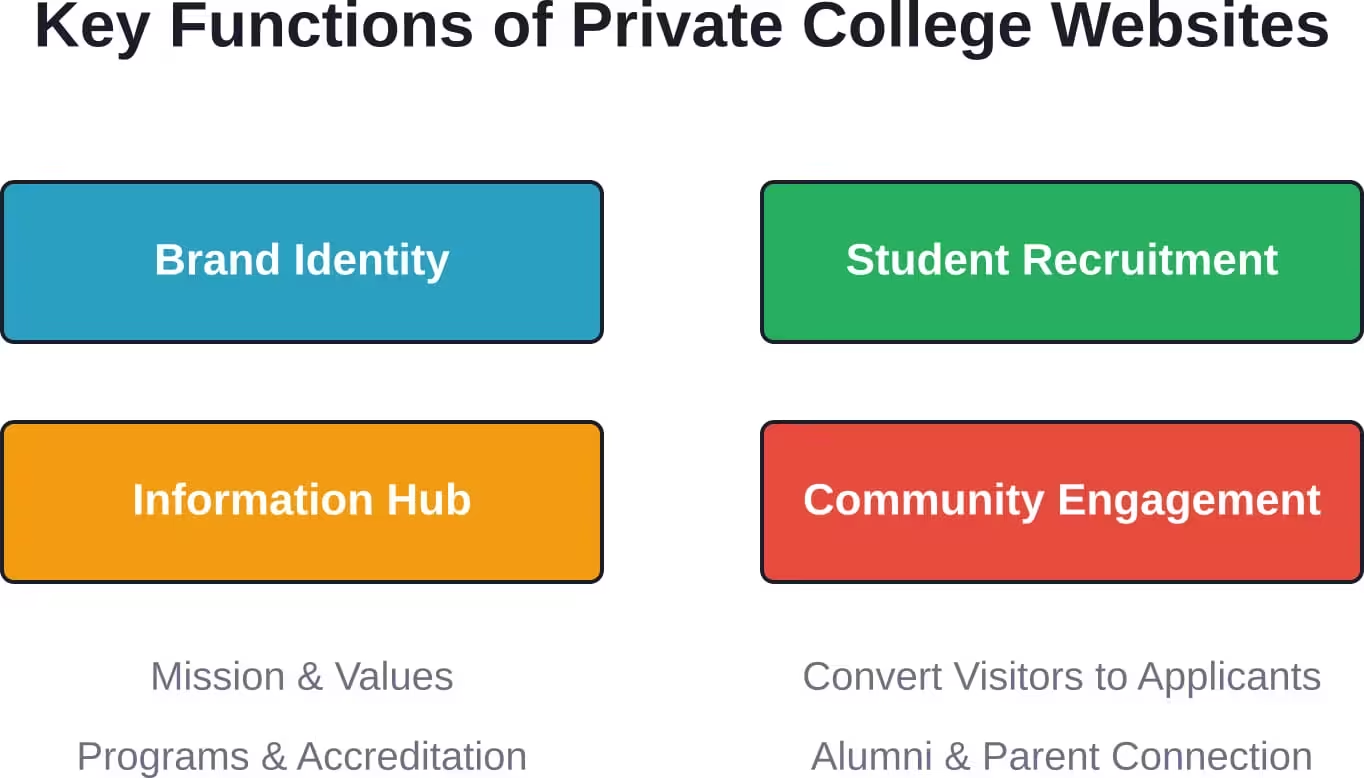
Prospective families want to understand your institution’s mission and values. They’re comparing academic programs, researching outcomes, evaluating campus culture, and—critically—determining whether your college feels like the right fit. All of this happens through your website before any personal contact occurs.
College graduates earn significantly more than those with only a high school diploma. Parents understand this, which drives them to research institutions thoroughly. Your website needs to answer their questions before they even ask.
Get a College Website Built to Support Real Conversions
A private college website usually carries too much weight. It has to explain programs, build trust, guide applicants, and still stay simple enough for someone to act without overthinking it. When that balance breaks, interest drops off long before an application is submitted.
Lengreo works on website development with that exact problem in mind. They don’t treat the site as a standalone asset, but as part of how leads are generated and handled. For private colleges, that means structuring information clearly, supporting different user paths, and making sure the website actually moves visitors toward inquiries and next steps.
Turn Website Traffic Into Real Inquiries
Lengreo builds websites around how users navigate decisions, not just how pages look:
- Clear page hierarchy that helps visitors move from exploration to inquiry without confusion
- Structured content that separates key information and makes it easier to scan
- Prototyping and iterative design to validate layout and flow before full build
- Flexible development using JavaScript and WordPress based on project scope
- Performance-focused setup to keep the site stable and responsive under traffic
If you need a website that actually supports inquiries and next steps, talk to Lengreo and get it built the right way.
Essential Features for Higher Education Web Development
Effective web design for higher education institutions requires specific technical and functional elements. These aren’t optional add-ons—they’re foundational requirements that separate successful college websites from those that underperform.
Mobile-First Design Architecture
Mobile traffic dominates web usage across all demographics. Prospective students research colleges primarily on their phones, switching to desktop only when they’re ready to complete longer application forms.
Real talk: if your website doesn’t deliver an excellent mobile experience, you’re losing applicants before the recruitment process even begins. Mobile-first design means building for small screens first, then scaling up—not the reverse.
Responsive design ensures your site adapts fluidly across devices. Navigation should be thumb-friendly, content readable without zooming, and forms optimized for mobile completion.
Page Speed Optimization
A significant percentage of users abandon pages that load slowly, with research suggesting over half leave if pages take more than three seconds. That means many prospective students leave before seeing your campus, programs, or value proposition.
Page speed optimization involves multiple technical factors. Image compression, code minification, caching strategies, and content delivery networks all contribute to faster load times. For higher education institutions competing for enrollment, every second counts.
Accessibility Compliance
Private colleges must ensure their websites meet accessibility standards. This isn’t just about compliance—it’s about inclusive education and reaching all prospective students.
Web accessibility means implementing proper heading structures, providing alt text for images, ensuring sufficient color contrast, enabling keyboard navigation, and including captions for video content. These practices expand your potential applicant pool while demonstrating institutional values.
Search Engine Optimization Integration
Prospective students discover colleges through search engines. If your institution doesn’t appear when families search for programs, locations, or educational specialties, you’re invisible to potential applicants.
SEO for private colleges involves technical optimization, content strategy, and local search presence. This means optimizing page titles and meta descriptions, creating valuable content around program offerings, building authoritative backlinks, and maintaining accurate directory listings.
| Website Element | Purpose | Impact on Enrollment |
|---|---|---|
| Mobile-First Design | Reaches students on preferred devices | Prevents abandonment from poor UX |
| Fast Load Times | Keeps visitors engaged | Reduces bounce rate by 50%+ |
| Accessibility Features | Serves all prospective students | Expands addressable market |
| SEO Optimization | Increases organic discovery | Drives qualified traffic |
| Clear CTAs | Guides visitors to action | Converts browsers to applicants |
Content Strategy for Private College Websites
Technical excellence means nothing if your content doesn’t resonate with prospective students and families. Website development for private colleges must integrate a strategic approach to messaging, storytelling, and information architecture.
Showcasing Institutional Mission and Values
Private colleges distinguish themselves through mission-driven education. Your website should communicate what makes your institution unique—whether that’s religious affiliation, pedagogical approach, campus culture, or educational philosophy.
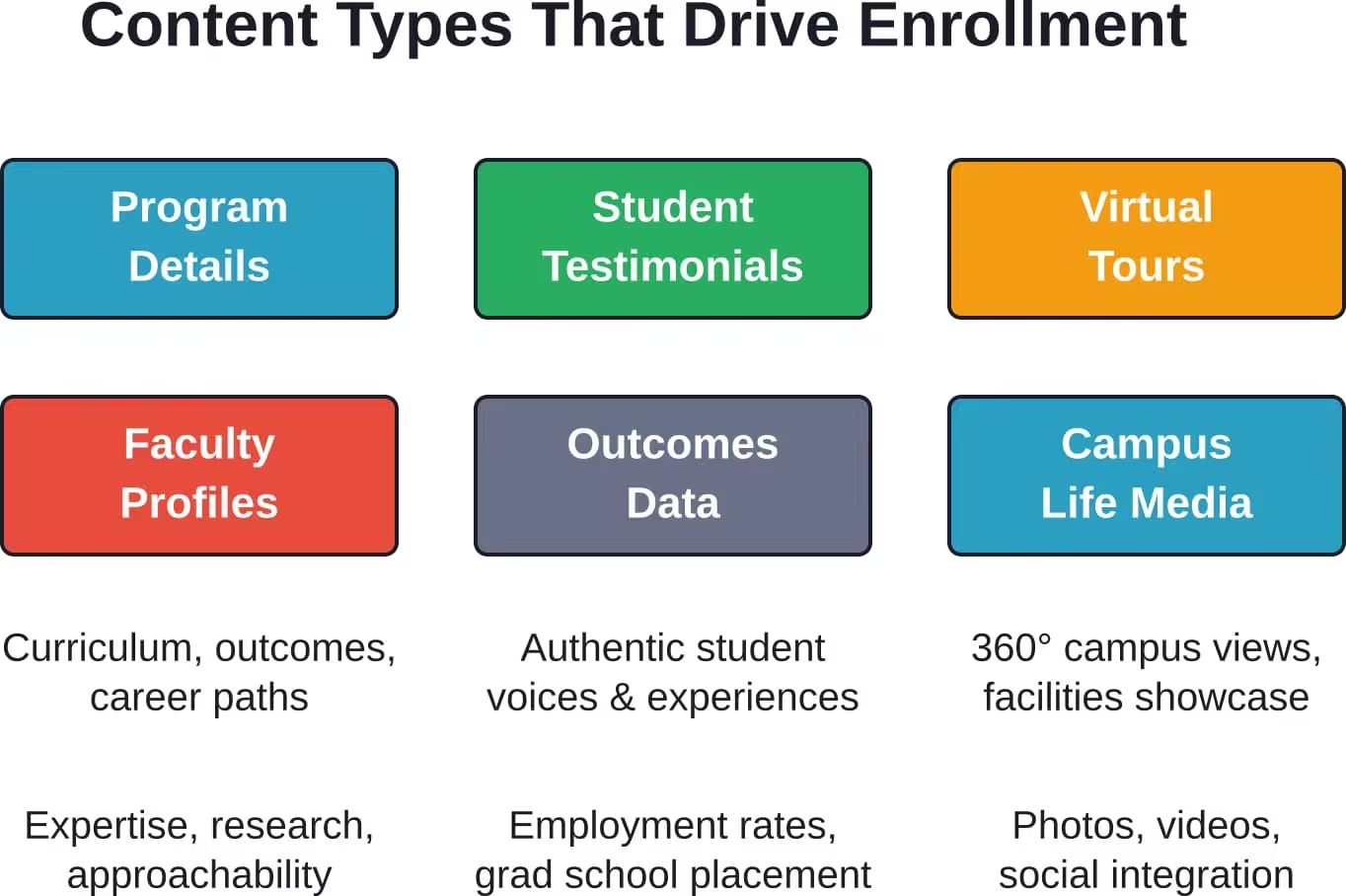
This communication happens through multiple touchpoints. Your homepage sets the tone. Program pages detail how mission translates into curriculum. Campus life sections show values in action. Faculty profiles demonstrate expertise aligned with institutional priorities.
But here’s where most colleges stumble: they talk about themselves rather than addressing prospective student needs. Effective content balances institutional identity with student-centered messaging.
Highlighting Accreditation and Quality Assurance
According to the U.S. Department of Education, accreditation ensures that institutions of higher education meet acceptable levels of quality. In the United States, accreditation involves non-governmental entities as well as federal and state government agencies.
Prospective students and parents need reassurance about educational quality. Your website should prominently display accreditation information, program-specific certifications, and quality indicators like graduation rates, job placement statistics, and graduate school acceptance rates.
Transparency builds trust. Don’t bury accreditation details in obscure footer links—feature them where families are evaluating programs and making enrollment decisions.
Creating Authentic Campus Experience Content
Families want to understand daily life at your institution. Static descriptions don’t cut it anymore. Prospective students expect authentic glimpses into campus culture through photos, videos, student testimonials, and virtual tours.
User-generated content adds credibility that polished marketing can’t match. Student blogs, social media integration, and day-in-the-life videos help prospective students envision themselves at your college.
Visual storytelling matters enormously in higher education marketing. Campus snapshots offer prospective students a look at what their daily lives could look like at your institution.
Enrollment Management Integration
Your website isn’t separate from enrollment strategy—it’s the central hub. Effective website development for private colleges integrates digital marketing, lead generation, and applicant nurturing directly into site functionality.
Strategic Calls-to-Action
Every page should guide visitors toward enrollment-related actions. Request information forms, schedule visit buttons, application links, and contact admissions prompts need strategic placement throughout the site.
But positioning matters. Calls-to-action work best when they align with user intent at specific journey stages. Homepage visitors aren’t ready to apply—they’re exploring. Program page visitors might be ready to request information. Scholarship page visitors could be ready to schedule a visit.
Lead Capture and CRM Integration
Forms on your website should feed directly into enrollment management systems. When prospective students request information, that data needs to flow seamlessly into admissions workflows for timely follow-up.
Automated email sequences, personalized content recommendations, and nurture campaigns all depend on tight integration between website and enrollment platforms. This technical connectivity transforms your site from a brochure into an enrollment engine.
Application Portal Accessibility
The application process should be accessible, intuitive, and mobile-friendly. Complex, outdated application systems create friction that costs enrollments.
Modern application portals allow students to save progress, upload documents easily, and complete forms on any device. Integration with common application platforms can expand your applicant pool while reducing barriers to entry.
Choosing the Right Development Approach
Private colleges face important decisions about website development strategy. The approach chosen affects long-term costs, maintenance requirements, flexibility, and performance.
Custom Development vs. Platform Solutions
Custom website development offers maximum flexibility and unique branding opportunities. Development teams build exactly what your institution needs without platform limitations.
That said, custom development costs more upfront and requires ongoing technical resources for maintenance and updates. For institutions without dedicated web development staff, this creates dependencies on external agencies.
Platform solutions designed specifically for higher education offer faster implementation and built-in features for enrollment management, content publishing, and digital marketing. These platforms understand education-specific needs and include tools many colleges require.
The tradeoff? Less design flexibility and ongoing subscription costs. For many private colleges, though, education-focused platforms deliver better ROI than custom builds.
Content Management Capabilities
Non-technical staff need the ability to publish content, update pages, and manage digital assets without developer assistance. The content management system determines whether marketing and admissions teams can operate independently or depend on IT for every change.
User-friendly content management systems let teams publish content everywhere with a single click and create pages in minutes. This agility matters when responding to enrollment marketing opportunities, updating program information, or launching time-sensitive campaigns.
Scalability and Future Growth
Your website platform should accommodate institutional growth. Adding programs, launching new enrollment initiatives, expanding digital marketing, or integrating emerging technologies shouldn’t require complete rebuilds.
Scalable architecture grows with your institution. This means considering not just current needs but anticipated developments over the next 3-5 years.
| Development Approach | Best For | Considerations |
|---|---|---|
| Custom Build | Large institutions with technical teams | Higher cost, maximum flexibility, ongoing maintenance needs |
| Education Platform | Mid-size colleges focused on enrollment | Faster launch, education-specific features, subscription model |
| WordPress + Plugins | Smaller colleges with limited budgets | Lower cost, requires technical knowledge, security concerns |
| Hybrid Approach | Institutions needing custom + platform benefits | Balanced cost, selective customization, complex integration |
Ongoing Website Management and Optimization
Launch isn’t the finish line—it’s the starting point. Effective private college websites require continuous optimization, testing, and refinement based on performance data and user behavior.
Analytics and Performance Monitoring
Data reveals how prospective students interact with your site. Which pages do they visit? Where do they drop off? What content drives application starts?
Analytics platforms track visitor behavior, conversion rates, traffic sources, and engagement metrics. This data informs content strategy, design improvements, and enrollment marketing tactics.
Regular reporting keeps stakeholders informed about website performance and demonstrates ROI for digital investments.
A/B Testing for Conversion Optimization
Small changes often produce significant results. Testing different headlines, call-to-action buttons, form placements, or page layouts identifies what resonates most with prospective students.
A/B testing removes guesswork from optimization. Rather than assuming what works, colleges can test variations and implement what data proves effective.
Security and Compliance Maintenance
College websites handle sensitive information—student inquiries, application data, financial aid details. Security isn’t optional.
Regular software updates, security patches, SSL certificates, and vulnerability scanning protect institutional data and student privacy. Compliance with data protection regulations adds another layer of required maintenance.
Content Freshness and SEO Updates
Search engines favor websites that publish fresh, relevant content regularly. Stale websites with outdated information slip in rankings, reducing organic visibility.
Content calendars, regular program updates, news publication, and seasonal enrollment marketing content keep sites active. This ongoing effort compounds over time, building domain authority and search visibility.
Mobile App Considerations for Student Engagement
Many private colleges complement their websites with mobile applications that serve enrolled students. Some enrollment-focused platforms offer mobile apps that can enhance engagement with families.
Mobile apps excel at push notifications, offline functionality, and personalized experiences. For current students and parents, apps provide convenient access to grades, schedules, campus news, and communications.
The question for each institution: does a mobile app align with enrollment and retention goals, or would those resources produce better results invested in website optimization?
For smaller private colleges, website excellence typically delivers higher ROI than app development. For larger institutions with resources to maintain both, apps can enhance the student experience and improve retention.
Working with Higher Education Web Design Companies
Most private colleges partner with specialized agencies rather than building sites entirely in-house. Higher education web design companies bring experience from multiple college projects, understanding enrollment challenges and technical requirements specific to academic institutions.
What to Look for in an Education-Focused Agency
Not all web development companies understand higher education. Specialized agencies know accreditation requirements, enrollment marketing strategies, accessibility standards for educational institutions, and the unique stakeholder dynamics colleges navigate.
Portfolio review reveals whether agencies have delivered results for similar institutions. Case studies should demonstrate enrollment impact, not just visual design. Conversion rate improvements, organic traffic growth, and application increases matter more than awards.
References from current college clients provide insight into working relationships, responsiveness, and post-launch support quality.
Budget Expectations for College Website Projects
Website development budgets for private colleges vary widely based on scope, customization, and platform choices. Community discussions suggest project budgets ranging from modest platform implementations to comprehensive custom builds.
Platform-based solutions typically involve lower upfront costs but ongoing subscription fees. Custom development requires larger initial investments but may offer lower long-term operating costs for institutions with in-house technical teams.
Beyond build costs, colleges should budget for content creation, photography, video production, ongoing hosting, security, maintenance, and optimization. The website is never truly “finished”—it requires continuous investment.
Defining Success Metrics and Goals
Before development begins, establish clear success metrics tied to enrollment objectives. Are you trying to increase application volume? Improve yield rates? Attract students from specific geographic regions or program areas?
Measurable goals might include organic search traffic growth, information request form submissions, application starts, campus visit registrations, or time spent on key pages.
These metrics should be tracked consistently and reviewed quarterly to assess website performance and guide optimization priorities.
Common Mistakes to Avoid
Private colleges often make predictable mistakes during website development. Learning from these common pitfalls saves time, money, and enrollment opportunities:
- Prioritizing aesthetics over functionality: Beautiful design matters, but not at the expense of usability, speed, or conversion optimization. The best-looking site fails if prospective students can’t find program information or complete inquiry forms.
- Ignoring mobile users: Designing primarily for desktop, then adapting for mobile as an afterthought, creates poor mobile experiences. Given mobile traffic dominance, this approach costs enrollments.
- Neglecting SEO from the start: Treating search optimization as a post-launch addition rather than a foundational requirement limits organic visibility. SEO considerations should inform site architecture, URL structure, and content strategy during development.
- Creating committee-designed homepages: When every department demands homepage presence, the result is cluttered pages that serve no one well. Effective homepages prioritize prospective student needs over internal political compromises.
- Insufficient content planning: Launching with placeholder content or thin program descriptions wastes the new site’s potential. Content development should parallel technical development, not follow it.
- Lacking conversion strategy: Websites without clear calls-to-action and conversion pathways function as digital brochures rather than enrollment tools. Every page should guide visitors toward meaningful actions.
Future Trends in Higher Education Web Development
The landscape continues evolving. Staying ahead of emerging trends positions private colleges to compete effectively for prospective students.
Artificial intelligence integration is expanding across higher education. AI chatbots answer prospective student questions instantly, provide personalized content recommendations, and qualify leads for admissions teams. The U.S. Department of Education announced in January 2026 its intent to establish the Accreditation, Innovation, and Modernization negotiated rulemaking committee to develop regulations that examine emerging technologies in accreditation and quality assurance.
Personalization technology enables websites to adapt content based on visitor behavior, interests, and enrollment stage. A prospective student researching business programs sees different content than someone exploring education degrees.
Video content dominates engagement metrics. Virtual campus tours, student testimonial videos, faculty introductions, and program overviews consistently outperform text-based content for prospective student engagement.
Voice search optimization becomes increasingly important as students use voice assistants to research colleges and programs. This requires adapting SEO strategies for natural language queries.
Progressive web apps blur the line between websites and mobile applications, offering app-like experiences without requiring downloads. For colleges hesitant to build separate mobile apps, progressive web apps provide a middle path.
Conclusion
Website development for private colleges demands more than technical competence—it requires understanding the unique intersection of academic credibility, enrollment marketing, and student experience.
The most successful college websites balance institutional mission with prospective student needs. They showcase academic quality and accreditation transparency while creating clear pathways from curiosity to application. They perform flawlessly on mobile devices, load quickly, and remain accessible to all visitors.
But technical excellence alone doesn’t drive enrollment. Content strategy, authentic storytelling, strategic calls-to-action, and enrollment management integration transform websites from information repositories into active recruitment tools.
The investment in effective website development pays dividends through increased organic visibility, higher conversion rates, and stronger applicant pipelines. For private colleges competing for students in an increasingly digital-first world, the website isn’t just part of the marketing strategy—it is the foundation upon which all other enrollment efforts build.
Start by assessing your current website against the standards outlined here. Identify gaps in mobile experience, page speed, content quality, or conversion optimization. Prioritize improvements that align most directly with enrollment objectives.
Whether you’re planning a complete rebuild or optimizing an existing site, focus on prospective student needs first. Your institutional priorities matter, but enrollment success comes from answering the questions families ask, addressing their concerns, and making their journey from awareness to application as frictionless as possible.
Ready to transform your private college’s digital presence? The right website development strategy starts with honest assessment of current performance, clear definition of enrollment goals, and commitment to continuous improvement beyond launch day.