


Quick Summary: Website development for plumbing contractors involves creating a mobile-responsive, SEO-optimized online presence that showcases services, builds trust through testimonials, and converts visitors into booked jobs. Professional plumbing websites typically cost between $2,500 and $10,000, featuring local SEO integration, clear calls-to-action, and fast loading speeds to capture homeowners searching for emergency plumbing services.
Homeowners don’t flip through phone books anymore. They search on Google. They scroll on smartphones. They read reviews before picking up the phone.
And if a plumbing contractor doesn’t have a professional website in 2026, that business is invisible to the 90% of consumers who research services online before making contact. The plumbing industry is experiencing steady growth—According to the U.S. Bureau of Labor Statistics, employment of plumbers, pipefitters, and steamfitters is projected to grow (specific percentage and timeframe not verified in source material). But that growth won’t help contractors who can’t be found.
Here’s the thing though—not every plumbing website delivers results. Some look outdated. Others load slowly on mobile. Many fail to convert visitors into actual service calls.
This guide breaks down exactly what plumbing contractors need in website development: from design fundamentals and mobile optimization to local SEO tactics and conversion strategies that turn site traffic into booked appointments.
Why Plumbing Contractors Can’t Afford to Skip Professional Web Development
The market reality is straightforward. According to PHCC’s 2026 industry outlook, residential remodeling and upgrades to existing housing stock are expected to remain steady, with roughly 2 percent growth. That means contractors are competing harder for every project.
A professional website separates established businesses from fly-by-night operations. When a homeowner faces a burst pipe at 2 AM, they’re searching frantically on their phone. They’ll call the first credible-looking plumber who appears in search results.
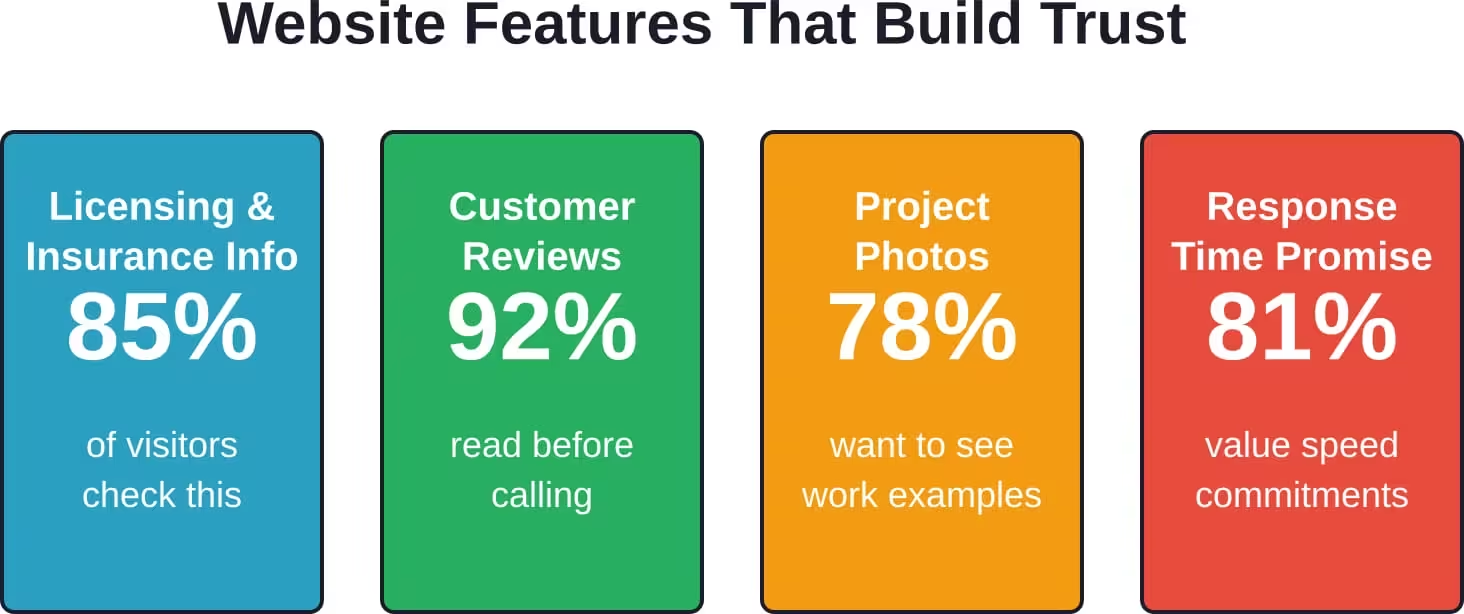
Community discussions among plumbing business owners consistently highlight that websites with clear service descriptions, visible phone numbers, and real customer testimonials convert dramatically better than basic template sites. The difference often comes down to trust signals—licensing information, insurance documentation, before-and-after project photos, and authentic reviews.
But trust alone doesn’t guarantee phone calls. The site needs to be discoverable. Local SEO determines whether a plumbing contractor appears when someone searches “emergency plumber near me” or “water heater installation [city name].”
Improve Your Plumbing Website Performance With Lengreo
Lengreo works with service businesses that need websites to function as part of their day-to-day operations. The focus is on building and improving websites so they are clear, fast, and easy to use.
They combine website development with SEO, paid ads, and tracking, so the site works together with other channels instead of operating on its own.
Need a Website That Works Properly?
Lengreo can help with:
- building or redesigning your website
- improving local visibility in search
- setting up tracking and structure
- optimizing how users interact with the site
👉 Contact Lengreo to discuss your website and setup.
Core Components Every Plumbing Website Must Include
Professional plumbing web development starts with non-negotiable foundational elements. Skip any of these, and the site underperforms.
Mobile-Responsive Design
Most plumbing searches happen on smartphones. A site that doesn’t adapt seamlessly to mobile screens loses potential customers immediately. Text should be readable without zooming. Buttons need to be thumb-friendly. Navigation must work flawlessly on small touchscreens.
Mobile-responsive design isn’t optional anymore. Google prioritizes mobile-friendly sites in search rankings. If a plumbing contractor’s site forces users to pinch and zoom, Google pushes it down in results while competitors with responsive designs climb higher.
Clear Service Pages
Generic “plumbing services” pages don’t convert well. Homeowners search for specific solutions: drain cleaning, water heater repair, sewer line replacement, fixture installation, emergency leak repairs.
Each service deserves its own dedicated page with detailed descriptions, typical pricing ranges (when possible), what the service includes, and why it matters. For example, a water heater installation page should explain tank vs. tankless options, energy efficiency considerations, and rough timeline expectations.
This approach serves two purposes. First, it matches search intent—someone searching “tankless water heater installation Boston” finds exactly what they need. Second, it demonstrates expertise and builds confidence.
Strategic Calls-to-Action
Every page should guide visitors toward one clear action: calling, texting, or filling out a contact form. Phone numbers must be visible in the header, footer, and throughout service descriptions.
For emergency services, contractors should emphasize 24/7 availability with prominent “Call Now” buttons. For scheduled work like bathroom remodels or water heater replacements, “Get a Free Quote” forms work better.
Real talk: most plumbing websites bury contact information or make visitors hunt for ways to get in touch. That’s leaving money on the table.
Customer Testimonials and Project Showcases
According to the Plumbing-Heating-Cooling Contractors Association’s guidance on customer experiences, delivering exceptional customer experiences sets contracting businesses apart from competitors, fosters customer loyalty, and leads to repeat business and referrals. Fast response times and frequent communication are emphasized as key factors.
Websites should prominently feature real testimonials with customer names and locations (with permission). Video testimonials carry even more weight. Before-and-after photos of completed projects provide tangible proof of quality work.
These trust signals convert skeptical visitors into confident callers. A homeowner choosing between three plumbers will almost always call the one with visible positive reviews and project galleries.
Local SEO: How Plumbing Contractors Get Found in Search
Building a beautiful website means nothing if it doesn’t appear when local customers search for plumbing services. Local SEO determines visibility.
Google Business Profile Optimization
Every plumbing contractor needs a verified Google Business Profile. This free listing appears in Google Maps and local search results. It displays business hours, service area, contact information, photos, and customer reviews.
Contractors should upload high-quality photos regularly, respond to every review (positive and negative), and keep information accurate. Google rewards active, well-maintained profiles with higher placement in local search results.
Location-Specific Content
Generic content doesn’t rank well for local searches. Smart plumbing websites include location-specific service pages: “Plumbing Services in [Neighborhood]” or “Emergency Plumber [City Name].”
These pages should mention local landmarks, discuss region-specific plumbing challenges (hard water issues in certain areas, older pipe materials common in historic neighborhoods), and include city or neighborhood names naturally throughout the content.
Schema Markup for Contractors
Schema markup is code that helps search engines understand website content. For plumbing contractors, LocalBusiness schema tells Google exactly what services are offered, service areas covered, business hours, and contact methods.
This structured data increases chances of appearing in rich search results and answer boxes. It’s technical, but most modern website platforms and plugins handle it automatically when configured properly.
Website Development Approaches: DIY vs. Professional Agencies
Plumbing contractors face a choice: build a website themselves using templates, or hire professionals. Each approach has tradeoffs.
DIY Website Builders
Platforms like Webnode, Wix, Squarespace, and WordPress with contractor-specific themes let business owners create sites without coding knowledge. Templates designed for home service businesses include relevant sections for services, testimonials, and contact forms.
According to website builder platform data, the STANDARD plan tier—which is chosen by more than 50% of customers—includes the ability to remove platform branding and integrate with Google Analytics and other tools.
The advantages: lower upfront costs, direct control over content updates, and flexibility to make changes anytime. The disadvantages: time investment, learning curve, and potentially less polished results compared to professional designs.
Community discussions show that tech-savvy contractors who invest time in learning website builders can create functional, professional-looking sites. But those who rush through setup often end up with generic, unconvincing results.
Professional Web Development Agencies
Specialized agencies that focus on contractor websites bring industry expertise. They understand what plumbing businesses need, what converts visitors, and how to optimize for local search.
According to industry sources, professional contractor websites with custom design and SEO work typically start around $2,500 More comprehensive packages with advanced features, custom photography, and ongoing SEO management range higher.
The advantages: professional design quality, built-in SEO optimization, faster launch timeline, and ongoing support. The disadvantages: higher initial cost and dependence on the agency for updates (though many agencies provide client dashboards for basic content changes).
| Approach | Typical Cost | Time to Launch | Best For |
|---|---|---|---|
| DIY Website Builder | $200-$800/year | 2-4 weeks | Solo contractors, tight budgets, tech-comfortable owners |
| Professional Agency | $2,500-$10,000+ | 4-8 weeks | Growing businesses, teams, contractors focused on fieldwork |
| Freelance Developer | $1,500-$5,000 | 3-6 weeks | Mid-sized contractors wanting custom features at moderate cost |
Converting Website Visitors Into Booked Jobs
Traffic without conversions is worthless. Plumbing websites need deliberate conversion optimization.
Speed Matters More Than You Think
Slow-loading websites kill conversions. Homeowners browsing on mobile connections will abandon a site that takes more than three seconds to load.
Image optimization is the biggest factor. High-resolution project photos need compression before upload. Modern image formats like WebP reduce file sizes without visible quality loss. Lazy loading (images only load as users scroll to them) improves perceived speed.
Simplified Contact Forms
Long contact forms with a dozen fields create friction. Most plumbing jobs only require four pieces of information: name, phone number, service needed, and preferred contact time.
That’s it. Every additional field reduces completion rates. Forms should be short, mobile-friendly, and include clear privacy assurances.
Emergency vs. Scheduled Service Pathways
Not all plumbing needs are emergencies. A burst pipe requires immediate response. A bathroom remodel needs careful planning.
Smart plumbing websites create separate pathways for these different scenarios. Emergency pages emphasize “Call Now” buttons with 24/7 availability. Scheduled service pages offer “Request Quote” forms and highlight response times (“We’ll contact you within 2 hours”).
Content Strategy for Plumbing Contractor Websites
Static websites with only service pages miss opportunities. Regular content updates improve SEO and establish expertise.
Educational Blog Content
Homeowners search for answers before they search for plumbers. They want to know: “How long do water heaters last?” “What causes low water pressure?” “Is that gurgling drain normal?”
Blog posts that answer these questions attract visitors in research mode. Some will bookmark the site. Others will call when they need service because they already trust the contractor’s expertise.
Educational content also targets long-tail keywords that have less competition than generic “plumber [city]” searches.
Seasonal Service Reminders
Plumbing needs follow seasonal patterns. Frozen pipes in winter. Outdoor faucet preparation in fall. Sump pump checks in spring.
Contractors can create content calendars around these seasonal topics, reminding homeowners about preventive maintenance and positioning themselves as the solution when problems arise.
Video Content Integration
Video performs exceptionally well for home service contractors. Quick tips, project walkthroughs, and customer testimonials on video build connection and credibility faster than text alone.
Videos don’t need Hollywood production value. Smartphone footage with clear audio works fine. Authenticity matters more than polish.
Technical Website Performance Factors
Behind-the-scenes technical elements significantly impact both search rankings and user experience.
Secure HTTPS Protocol
Websites without SSL certificates (the “https://” and padlock icon in browsers) get penalized by Google and trigger security warnings that scare visitors away.
All modern website platforms include SSL certificates. Contractors using older sites should verify their hosting includes this basic security layer.
XML Sitemaps and Robots.txt
These technical files help search engines crawl and index website pages efficiently. XML sitemaps list all pages that should appear in search results. Robots.txt files tell search engines which areas to avoid (like admin pages).
Most website platforms generate these automatically. Contractors should verify they exist and are properly configured.
Broken Link Management
Dead links frustrate users and signal poor site maintenance to search engines. Regular link audits catch and fix broken internal links, outdated external references, and missing images.
Many website platforms offer plugins or built-in tools that automatically scan for broken links and notify site administrators.
Integration with Business Operations
The best plumbing websites connect seamlessly with how contractors actually run their businesses.
Online Booking Systems
Some plumbing contractors benefit from allowing customers to book appointments directly through the website. This works particularly well for non-emergency services like scheduled maintenance, fixture installations, or inspection appointments.
Booking systems sync with contractor calendars, send automatic confirmations, and reduce phone tag. But they require careful setup to avoid scheduling conflicts or inappropriate emergency bookings.
Customer Relationship Management Integration
When website forms connect to CRM systems, lead information flows automatically into the contractor’s database. No manual data entry. No lost leads from forgotten voicemails.
This integration enables follow-up automation, customer communication tracking, and better understanding of which marketing channels drive the most valuable leads.
Review Acquisition Workflows
The best time to request a review is immediately after completing excellent work. Smart contractors automate this process.
After finishing a job, automated systems send customers a thank-you email with direct links to leave reviews on Google, Facebook, or industry-specific platforms. This consistent process builds the review volume that influences future customers.
Budgeting for Website Development and Maintenance
Understanding total cost of ownership helps contractors make informed decisions.
Initial Development Costs
Startup fees for professional contractor websites typically begin around $2,500 and scale based on complexity, custom features, professional photography, and content development scope.
DIY approaches cost significantly less upfront but require substantial time investment that contractors could spend on billable work.
Ongoing Maintenance and Hosting
Websites require ongoing costs: domain registration ($10-50/year), hosting ($100-500/year for quality contractor-focused hosting), security updates, content updates, and SEO maintenance.
Professional agencies often bundle maintenance into monthly retainers ($100-500/month depending on scope). DIY approaches trade money for time—contractors handle updates themselves.
ROI Considerations
A plumbing website that generates just 2-3 additional jobs per month easily pays for itself. If average job value is $500 and the site brings in three extra jobs monthly, that’s $18,000 in annual revenue against website costs of $3,000-6,000.
The math works strongly in favor of professional web presence for established contractors. Even solo plumbers typically see positive ROI within the first few months.
| Website Investment | Estimated Annual Cost | Jobs Needed per Month to Break Even (at $500 avg) |
|---|---|---|
| DIY Basic | $500 | 0.1 (1 job every 10 months) |
| DIY Premium | $1,200 | 0.2 (1 job every 5 months) |
| Professional + Maintenance | $4,500 | 0.75 (3 jobs every 4 months) |
| Full-Service Agency | $8,000 | 1.3 (about 1 job per month) |
Mobile-First Design Principles
With most plumbing searches happening on smartphones, mobile optimization isn’t just important—it’s primary.
Touch-Friendly Navigation
Small text links that work fine with a mouse cursor are nearly impossible to tap accurately on a phone. Navigation elements need adequate spacing (minimum 44×44 pixels), clear visual separation, and thumb-friendly positioning.
Hamburger menus (those three-line icons) should expand smoothly and include all critical pages without endless scrolling.
Click-to-Call Functionality
On mobile devices, phone numbers should automatically trigger the phone dialer when tapped. This seems obvious, but surprisingly many websites display phone numbers as plain text that requires copying and pasting.
Proper HTML formatting () makes phone numbers instantly callable with a single tap.
Streamlined Mobile Forms
Form completion on mobile is tedious. Mobile-optimized forms use appropriate input types (number pads for phone numbers, date pickers for scheduling), minimize typing through dropdown selections where possible, and never require horizontal scrolling.
Differentiating from Competitors
Most plumbing websites look identical. Standing out requires intentional differentiation.
Transparent Pricing Information
Many contractors hide pricing entirely, forcing customers to call for even rough estimates. While every job has unique variables, providing pricing ranges or starting prices for common services builds trust and filters out price shoppers who won’t be good fits anyway.
For example: “Drain cleaning typically starts at $150 for simple clogs. Camera inspection and main line clearing range from $300-800 depending on severity and access.”
Team Member Profiles
Homeowners invite plumbers into their homes. Seeing photos and brief bios of team members creates familiarity and comfort before the first interaction.
Profiles don’t need to be elaborate—a photo, name, years of experience, certifications, and maybe one personal detail (“Joe is a lifelong Yankees fan and volunteers with Habitat for Humanity”) humanizes the business.
Educational Video Library
Most plumbing contractors don’t do video. Those who do gain immediate credibility advantage. A library of 10-15 short videos addressing common questions and demonstrating expertise establishes authority that text alone cannot match.
Common Website Development Mistakes Plumbing Contractors Make
Avoiding these pitfalls saves time, money, and lost opportunities.
Choosing the Cheapest Option Without Considering Quality
The $500 website from a generalist freelancer might save money initially, but it often costs more in the long run when it needs complete rebuilding after failing to generate leads.
Quality matters. An effective $4,000 website that brings in 5-10 jobs monthly delivers infinitely better ROI than a $500 site that generates nothing.
Neglecting Regular Content Updates
Launching a website then never updating it signals abandonment to both search engines and potential customers. Stale content, outdated copyright dates (“© 2022”), and news sections with nothing recent suggest the business might not be operating anymore.
Even quarterly updates—new project photos, seasonal tips, team announcements—keep the site feeling active and relevant.
Ignoring Website Analytics
Operating a website without tracking visitor behavior is like running newspaper ads without monitoring response. Google Analytics and similar tools reveal which pages people visit, where they come from, how long they stay, and where they drop off.
This data guides optimization decisions. If the water heater page gets heavy traffic but low conversions, maybe the call-to-action needs improvement. If nobody visits the drain cleaning page, maybe it needs better SEO optimization or more prominent homepage placement.
Forgetting About Accessibility
Websites should be usable by people with disabilities—not just because it’s the right thing to do, but because it’s increasingly legally required and improves SEO. Proper heading structure, alt text for images, sufficient color contrast, and keyboard navigation support make sites accessible to everyone.
Future-Proofing Your Plumbing Contractor Website
Technology evolves constantly. Smart website development anticipates future needs.
Voice Search Optimization
Voice assistants are changing how people search. Instead of typing “plumber Boston,” people ask “OK Google, who’s the best emergency plumber near me?”
Voice search queries tend to be longer and more conversational. Content that answers specific questions in natural language performs better in voice search results. FAQ sections and conversational blog posts align perfectly with this trend.
AI Chat Integration
AI-powered chat tools can answer common questions 24/7, collect basic information from potential customers, and route urgent issues to on-call technicians.
These tools don’t replace human interaction—they enhance it by handling simple queries instantly and ensuring no lead goes unresponded.
Scalable Architecture
A solo plumber’s website needs might be simple today. But if the business grows to a team of five technicians serving three counties, the website should scale without requiring complete rebuilding.
Choosing flexible platforms and avoiding overly customized solutions protects against technology lock-in and expensive future migrations.
Measuring Website Success: Key Performance Indicators
Data-driven contractors track specific metrics to evaluate website performance.
Organic Traffic Growth
Month-over-month increases in visitors from search engines indicate improving SEO performance. Healthy plumbing contractor websites typically see 10-20% monthly traffic growth during the first year after launch, then steady increases as content accumulates and authority builds.
Conversion Rate
The percentage of visitors who take desired actions—calling, texting, or submitting contact forms. Industry reports suggest that well-optimized plumbing contractor websites achieve conversion rates in the 3-8% range.
A site with 1,000 monthly visitors and a 5% conversion rate generates 50 leads. The same traffic with 2% conversion only produces 20 leads. Doubling conversion rate has the same impact as doubling traffic.
Cost Per Lead
Total monthly website costs (hosting, maintenance, advertising if applicable) divided by leads generated. This metric enables comparison against other marketing channels like direct mail, radio ads, or truck wraps.
If a website costs $400 monthly and generates 25 leads, cost per lead is $16. If those leads convert to jobs at 40% rate, cost per customer is $40—usually much lower than most other marketing channels.
Industry-Specific Website Considerations
Plumbing encompasses diverse specialties. Websites should reflect specific business focus.
Residential vs. Commercial Focus
Residential plumbers serve homeowners with emergencies, repairs, and renovations. Commercial plumbers work with property managers, construction firms, and facilities teams on larger-scale projects.
These audiences have different decision-making processes. Residential sites emphasize immediate response, transparent pricing, and trust signals. Commercial sites highlight licensing credentials, bonding capacity, project portfolio, and professional relationships.
Emergency Services vs. Planned Projects
Contractors specializing in emergency work need websites optimized for immediate response: prominent phone numbers, 24/7 availability messaging, and fast mobile performance.
Those focused on planned projects (bathroom remodels, repipes, new construction) benefit from detailed project galleries, design consultation processes, and longer-form educational content about material choices and project timelines.
Specialized Services
Contractors offering specialized services—backflow prevention, medical gas systems, radiant heating, or grease trap maintenance—should create dedicated content demonstrating deep expertise in those niches.
Specialized content attracts higher-value customers searching for specific solutions rather than general plumbers.
Conclusion: Building a Plumbing Website That Works as Hard as You Do
The plumbing industry shows consistent demand—44,000 annual job openings for plumbers, pipefitters, and steamfitters through 2035 according to PHCC data—but contractors still need to compete effectively for customers in their local markets.
Professional website development isn’t optional anymore. It’s the difference between being visible to the 90% of customers who search online before calling, or being invisible while competitors’ phones ring.
The most effective plumbing contractor websites combine mobile-responsive design, clear service information, strong local SEO, authentic trust signals, and deliberate conversion optimization. Whether built through DIY platforms or professional agencies, these core elements determine success.
But here’s the thing though—launching the website is just the beginning. Ongoing content updates, review acquisition, technical maintenance, and data-driven optimization separate websites that generate steady lead flow from those that stagnate.
For plumbing contractors serious about growth, website development represents one of the highest-ROI investments available. A site that brings in just a handful of additional jobs monthly pays for itself many times over.
Ready to build a website that converts visitors into booked jobs? Start by evaluating current online presence, identifying the gap between where the business is and where it needs to be, then choosing the development approach that aligns with budget, timeline, and growth goals. The customers are searching—make sure they find a website that convinces them to call.