


Quick Summary: Website development for physical therapists involves creating a professional, HIPAA-compliant online presence that attracts new patients, establishes credibility, and supports practice growth. According to APTA, digital health technologies are transforming physical therapy delivery, making an effective website essential for competing in a market expected to grow. A well-designed physical therapy website must include mobile-friendly design, clear service descriptions, online scheduling, and proper security measures to meet both patient expectations and regulatory requirements.
The physical therapy landscape has shifted dramatically. Patients now research providers online before booking appointments, and around 75% of people judge professional credibility based on website quality alone.
For physical therapists, this means a poorly designed website doesn’t just lose a few clicks—it actively sends potential patients to competitors. But here’s the thing: building an effective website isn’t about flashy graphics or complex features. It’s about creating a functional, trustworthy digital presence that converts visitors into scheduled appointments.
According to the American Physical Therapy Association, digital health integration has become essential to modern practice. The organization notes that emerging technologies—from remote monitoring to telehealth platforms—are transforming how physical therapists deliver care and connect with patients.
Why Physical Therapists Need a Professional Website
The numbers tell a clear story. Almost 63% of healthcare searches happen on tablets, and practices without user-friendly websites lose more than half their potential patient base.
A professional website serves three critical functions for physical therapy practices:
- First, it establishes immediate credibility: When someone searches for physical therapy services, the quality of what appears in those search results determines whether they keep reading or click the back button. Clean design, fast loading times, and clear information signal professionalism before the first appointment.
- Second, it provides 24/7 patient access: Patients want to schedule appointments, verify insurance acceptance, and review service offerings on their own schedule—not during office hours. A functional website handles these tasks automatically.
- Third, it supports practice growth: The physical therapy market continues expanding, with employment projections showing a growth in the number of physical therapists of 15 percent from 2022 to 2032. Practices that establish strong online visibility now position themselves ahead of this increased competition.
Essential Features for Physical Therapy Websites
Not all websites deliver equal results. The most effective physical therapy websites share specific features that directly support patient acquisition and practice operations.
Mobile-Responsive Design
Mobile functionality isn’t optional anymore. With nearly two-thirds of searches happening on smartphones, websites must work flawlessly across all screen sizes.
Responsive design ensures navigation menus, appointment forms, and contact information remain accessible whether someone visits from a desktop computer, tablet, or phone. This means buttons large enough to tap accurately, text readable without zooming, and pages that load quickly on cellular connections.
Clear Service Descriptions
Patients need to understand what treatments are available and which conditions the practice specializes in treating. Vague descriptions like “comprehensive therapy services” don’t answer the questions someone with chronic back pain or a sports injury actually asks.
Effective service pages explain specific treatments—manual therapy, sports rehabilitation, post-surgical recovery—in plain language. They outline what patients can expect during sessions and how treatment addresses their specific concerns.
Online Scheduling Integration
The easier it is to book an appointment, the more appointments get booked. Simple as that.
Online scheduling systems let patients view available time slots and book directly from the website. This removes friction from the appointment process and reduces the workload on front desk staff who would otherwise handle scheduling calls throughout the day.
Insurance and Payment Information
Cost concerns influence healthcare decisions significantly. Patients want to know upfront whether their insurance is accepted and what out-of-pocket expenses they might face.
Clear information about accepted insurance providers, payment options, and billing practices reduces uncertainty and helps patients make informed decisions about seeking care.
HIPAA Compliance for Physical Therapy Websites
Healthcare websites operate under stricter regulations than standard business sites. The Health Insurance Portability and Accountability Act establishes specific requirements for handling patient information electronically.
According to CMS, HIPAA Administrative Simplification standards apply to all healthcare providers who conduct electronic transactions—which includes any practice accepting insurance payments or maintaining electronic patient records.
For website development, this means implementing several security measures:
- SSL certificates that encrypt data transmitted between browsers and servers
- Secure contact forms that protect patient information submitted through the website
- Proper access controls for any patient portal features
- Business associate agreements with website hosting providers and third-party services
The compliance dates for various electronic transaction standards took effect on January 1, 2012, The compliance date for ASC X12 Version 5010 and NCPDP Version D.0 was January 1, 2012; however, CMS enforcement discretion was extended to June 30, 2012. Electronic remittance advice (ERA) operating rules took effect on January 1, 2014.
These aren’t suggestions—they’re federally mandated requirements. Practices must ensure their website development partner understands and implements appropriate HIPAA safeguards.
Integrating Telehealth Capabilities
The APTA has emphasized that telehealth shouldn’t be for emergencies only. The organization’s advocacy work highlights how telehealth by physical therapists and physical therapist assistants has proven both appropriate and effective for delivering care while expanding patient access.
Research published on PubMed demonstrates the effectiveness of telerehabilitation in physical therapy, providing evidence that impacts clinical decision-making and patient outcomes. This became particularly clear during the COVID-19 pandemic, when telehealth adoption expanded rapidly across all states.
For website development, telehealth integration means:
- Secure video conferencing capabilities that meet HIPAA requirements
- Clear information about which services are available via telehealth
- Separate scheduling options for in-person versus virtual appointments
- Instructions for patients on technical requirements and how to prepare for virtual sessions
Before implementing telehealth features, practices must review state and federal regulations. The APTA maintains resources on state telehealth laws, regulations, and guidance, which vary significantly across jurisdictions. As of August 25, 2021, APTA noted that many state laws and regulations were still evolving following rapid expansion during the public health emergency.
| Telehealth Feature | Website Requirement | Compliance Consideration |
|---|---|---|
| Virtual appointments | HIPAA-compliant video platform | Business associate agreement required |
| Online intake forms | Encrypted data transmission | Secure form processing |
| Patient portal | Authentication and access controls | Protected health information safeguards |
| Exercise videos | Secure hosting and delivery | Copyright and patient privacy |
Search Engine Optimization for Physical Therapists
Building a website accomplishes nothing if potential patients can’t find it. Search engine optimization determines whether the practice appears when someone searches for physical therapy services in the local area.
Local SEO matters most for physical therapy practices because patients typically seek providers within a reasonable driving distance. This means optimizing for location-based searches like “physical therapy near me” or “sports injury treatment [city name].”
Key SEO elements include:
- Google Business Profile optimization: This free tool controls how the practice appears in Google Maps and local search results. Complete profiles with accurate hours, location, services, and regular updates perform better than bare-bones listings.
- Location-specific content: Pages that mention the neighborhoods, cities, and regions served help search engines understand geographic relevance. But this needs to feel natural—stuffing location names into awkward sentences triggers spam filters instead of boosting rankings.
- Service-specific pages: Separate pages for different treatment types allow targeting specific search queries. Someone searching for “TMJ physical therapy” finds more relevant information on a dedicated TMJ treatment page than a general services overview.
- Technical performance: Page load speed affects both search rankings and user experience. Slow websites rank lower and lose visitors who won’t wait for pages to load.
Content Strategy That Converts
Website content does more than fill space between headers and footers. Strategic content educates potential patients, demonstrates expertise, and guides visitors toward booking appointments.
The homepage needs to accomplish several tasks simultaneously: explain who the practice serves, what services are offered, why someone should choose this practice over competitors, and how to take the next step. That’s a lot of ground to cover without overwhelming visitors.
Effective homepage content typically includes:
- A clear headline that immediately communicates the practice focus
- Brief description of the most common conditions treated
- Prominent call-to-action buttons for scheduling appointments
- Trust indicators like credentials, years of experience, or patient testimonials
- Location and contact information visible without scrolling
Service pages provide deeper detail about specific treatments. These pages target both search engines and patients researching particular conditions. Someone recovering from ACL surgery wants to know about post-surgical rehabilitation protocols, expected recovery timelines, and how treatment progresses through different phases.
Educational blog content serves a different purpose. Regular posts about injury prevention, exercise tips, and treatment approaches establish expertise while providing content that attracts organic search traffic. This content brings visitors to the website who might not yet be actively seeking treatment but could become patients when needs arise.
Choosing the Right Development Approach
Physical therapists face several options for website development, each with distinct trade-offs in cost, customization, and control.
| Development Option | Best For | Typical Investment |
|---|---|---|
| Custom development | Practices with specific requirements or extensive integrations | Higher upfront cost, maximum flexibility |
| Website builder platforms | Solo practitioners or small clinics with straightforward needs | Lower cost, template-based design |
| Healthcare-specific platforms | Practices prioritizing HIPAA compliance and industry features | Mid-range cost, built-in compliance |
| Agency services | Practices wanting full-service support including ongoing marketing | Variable cost, comprehensive service |
Template-based builders offer speed and affordability but limit customization. These platforms work well for straightforward practice websites that don’t require complex integrations or unique functionality.
Custom development provides maximum flexibility but requires larger investment and longer development timelines. This approach makes sense for multi-location practices, those with specialized service offerings, or clinics that need extensive third-party integrations.
Healthcare-specific platforms split the difference, offering templates designed specifically for medical practices with built-in HIPAA compliance features. These solutions cost more than general website builders but less than full custom development while addressing industry-specific requirements.
Set Up a High-Quality Physical Therapy Website
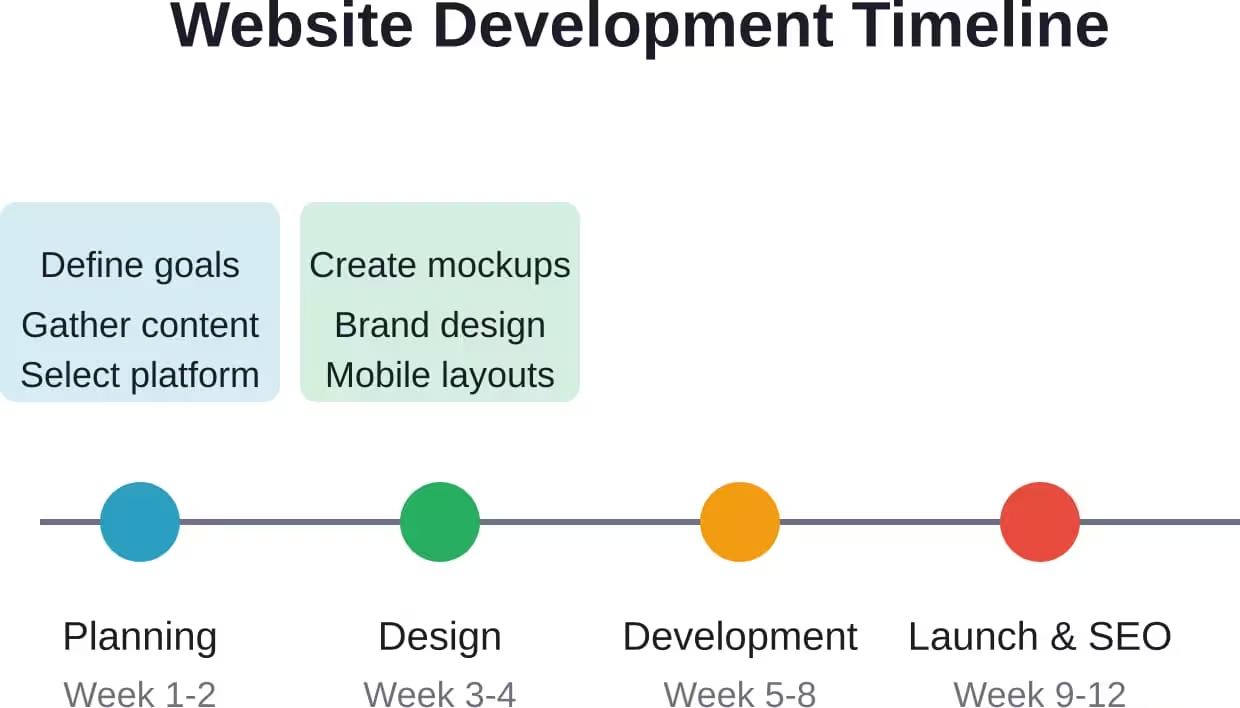
A website should be properly developed and tested before it goes live. Lengreo builds websites with clearly defined requirements and a structured development process that includes planning, development, and testing. Using JavaScript and WordPress, they deliver solutions that adapt to different project requirements.
Start Your Website Project With a Clear Scope
With Lengreo, your website development includes:
- A complete build based on defined requirements
- Development using JavaScript and WordPress
- Quality assurance before launch
- Post-launch support for final adjustments
👉Contact Lengreo to get your website built and ready to go live.
Common Website Development Mistakes to Avoid
Even well-intentioned website projects run into predictable problems. Recognizing these common mistakes helps practices avoid costly delays and disappointing results:
- Prioritizing aesthetics over functionality: A beautiful website that loads slowly, breaks on mobile devices, or buries contact information behind multiple clicks won’t convert visitors into patients. Function comes first.
- Using stock photos that look like stock photos: Generic images of models in lab coats don’t build trust. Real photos of the actual practice, staff, and facility create authentic connections with potential patients.
- Neglecting accessibility: Websites should work for everyone, including people using screen readers or navigating with keyboards instead of mice. Accessibility isn’t just good practice—it’s increasingly a legal requirement.
- Forgetting ongoing maintenance: Websites aren’t set-it-and-forget-it assets. Software updates, security patches, content refreshes, and performance monitoring require ongoing attention.
- Skipping analytics setup: Without tracking visitor behavior, there’s no way to know what’s working and what needs improvement. Analytics reveal which pages attract traffic, where visitors drop off, and how people find the site.
Measuring Website Performance
Data drives improvement. Tracking the right metrics shows whether the website effectively supports practice goals and where opportunities for optimization exist.
Key performance indicators for physical therapy websites include:
- Conversion rate: The percentage of visitors who complete desired actions—scheduling appointments, submitting contact forms, or calling the office. Industry reports suggest typical healthcare website conversion rates range from 2-5%, though this varies widely based on traffic sources and website design.
- Traffic sources: Understanding whether visitors arrive from search engines, social media, direct navigation, or referral links helps focus marketing efforts on the most productive channels.
- Page performance: Which pages attract the most traffic? Where do people spend the most time? Which pages have high bounce rates where visitors leave immediately? This data reveals content strengths and weaknesses.
- Mobile versus desktop usage: Tracking device breakdown shows how patients actually access the site and whether mobile optimization efforts are reaching the right audience.
- Local search visibility: Rankings for location-specific searches determine how easily nearby patients can find the practice online.
Moving Forward with Website Development
The physical therapy market continues evolving, with digital presence becoming increasingly critical to practice success. Patients expect to research providers, verify insurance, and schedule appointments online before ever visiting in person.
Practices that invest in professional website development position themselves to capture this growing demand. But effective websites aren’t one-time projects—they require ongoing attention, regular updates, and continuous optimization based on performance data.
Start by assessing current digital presence honestly. Does the existing website work well on mobile devices? Can patients easily find information about services and schedule appointments? Does the site appear prominently in local search results?
Identify gaps between the current state and what an effective website should deliver. Prioritize improvements based on what will most directly impact patient acquisition and practice operations.
Whether choosing template platforms, custom development, or healthcare-specific solutions, ensure the development partner understands both physical therapy practice needs and healthcare compliance requirements. The right website becomes a practice asset that consistently attracts new patients and supports sustainable growth.