Quick Summary: Website development for ophthalmology practices requires HIPAA-compliant infrastructure, ADA-accessible design, patient portal integration, and mobile-first architecture. Over 75% of office-based clinicians use ONC-certified EHRs, making seamless system integration essential. A well-designed ophthalmology website drives patient engagement, reduces administrative burden, and supports regulatory compliance including MIPS reporting requirements.
Building a website for an ophthalmology practice isn’t like launching a standard business site. The stakes are different.
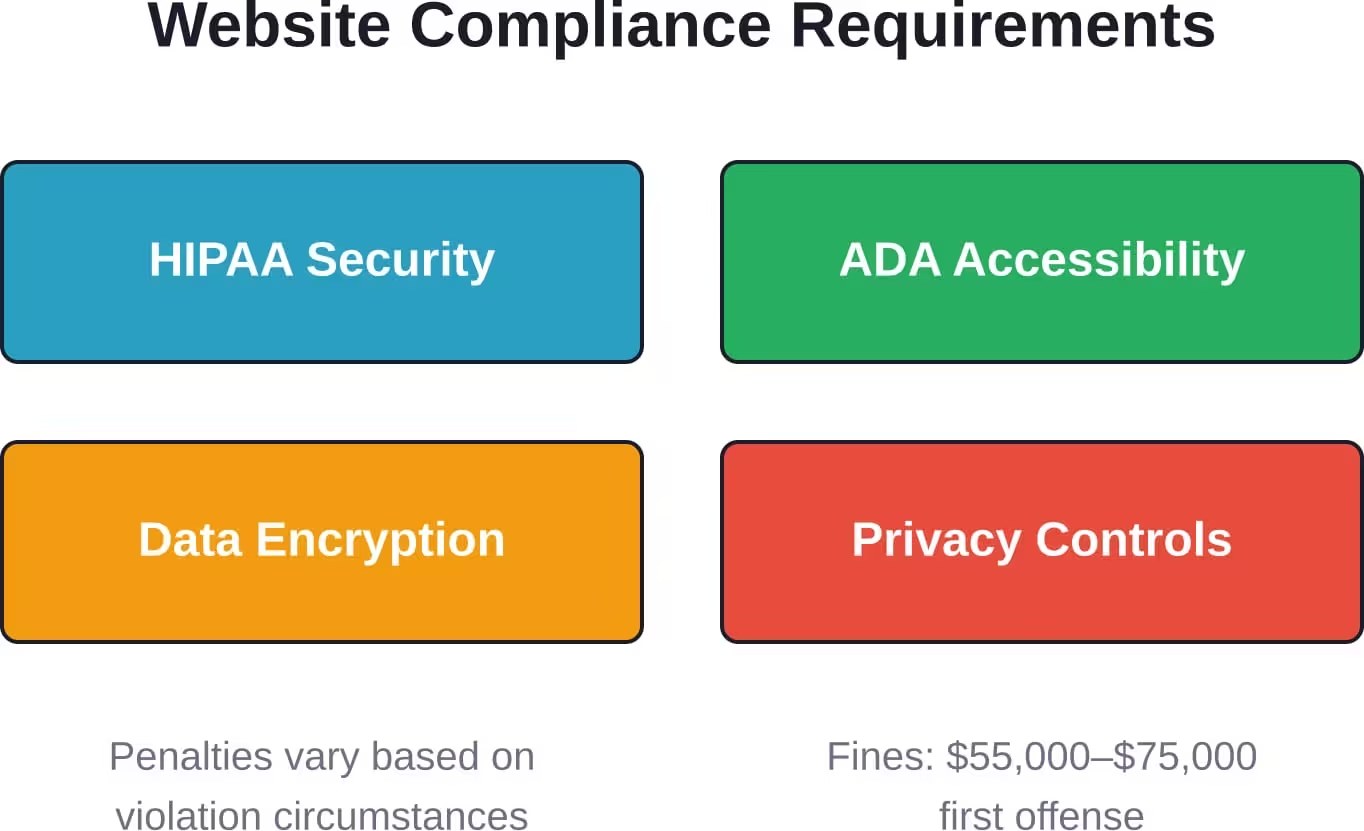
Healthcare websites operate under strict regulatory frameworks that govern everything from data transmission to patient communications. HIPAA violations carry penalties that vary significantly depending on factors such as the date of the violation, whether the covered entity knew or should have known of the failure to comply, or whether the failure was due to willful neglect. Penalties may not exceed a calendar year cap for multiple violations of the same requirement. That’s not theoretical—these are enforceable standards from the Department of Health and Human Services.
But compliance is just the baseline. A properly developed ophthalmology website serves as a patient acquisition engine, an administrative hub, and a digital front door for the practice. According to industry research, 75% of website visitors judge a business and its brand credibility based solely on website design.
Core Infrastructure Requirements for Medical Websites
The technical foundation of an ophthalmology website differs significantly from consumer-facing sites.
HIPAA Security Standards
The HIPAA Security Rule establishes national standards protecting electronic protected health information (ePHI). Any system that transmits, stores, or processes patient data must implement appropriate safeguards.
Here’s what that means in practice: encrypted data transmission (SSL/TLS certificates are mandatory, not optional), secure hosting environments with audit controls, and documented security policies. The Privacy Rule permits healthcare providers to communicate electronically with patients through email and portals, provided reasonable safeguards are applied.
Cloud-based systems have become standard, with remote hosting offering advantages over local server infrastructure. However, business associate agreements (BAAs) are required with any vendor handling ePHI—including website hosting providers, form processors, and analytics services.
ADA Compliance and Accessibility
Website accessibility isn’t optional. Non-compliance with ADA guidelines carries substantial financial penalties. First-offense fines have been reported to range from $55,000 to $75,000.
Accessible design includes keyboard navigation support, screen reader compatibility, sufficient color contrast ratios, and alternative text for images. These requirements affect every element from appointment forms to patient education content.
Build a Clear Ophthalmology Website With Lengreo
Lengreo builds and improves websites, then connects them with SEO, paid ads, tracking, and lead generation. For ophthalmology practices, this means a website that explains eye care services, doctors, locations, appointment options, and patient information in a clear way.
The focus is to help patients understand what service they need and how to book without moving through confusing pages. Lengreo can help organize key pages, improve traffic setup, and make the appointment path easier to follow.
Need a Website That Helps Patients Book?
Lengreo can help with:
- building or redesigning your website
- improving SEO and paid traffic setup
- setting up tracking and website structure
- refining service, doctor, and appointment pages
👉 Contact Lengreo to discuss your website and setup.
Patient Portal Integration and Functionality
Patient portals have shifted from nice-to-have features to essential infrastructure. Recent 2024-2025 digital health benchmarks indicate that over 91% of patients now expect and prioritize online scheduling as a primary factor in provider selection.
The American Academy of Ophthalmology research indicates that portal scheduling implementation can significantly reduce phone call volume. Some practices report potential staffing reductions following portal deployment.
Essential Portal Features
Portal registration takes between 10 and 15 minutes to complete, whether done online or in-office. That registration friction point requires careful design—practices should prominently display expected completion time to set appropriate expectations.
Core functionality should include:
- Online appointment scheduling with provider-specific availability
- Prescription refill requests with pharmacy integration
- Secure messaging with clinical staff (compliant with HIPAA communication standards)
- Access to test results and medical records
- Pre-visit form completion to reduce check-in time
- Insurance verification and payment processing
The selection criteria matter. Portals must integrate seamlessly with existing practice management systems and electronic health records. Over 75% of office-based clinicians and 96% of hospitals in the United States use ONC-certified EHRs, making compatibility non-negotiable.
Information Blocking Regulations
Recent enforcement changes impose significant penalties for information blocking practices. MIPS participants who are subject to the disincentive for information blocking would be assigned a PI score of 0%. Under the default scoring system for MIPS, the PI score contributes up to 25 points to your MIPS final score, which can range from 0 to 100 points.
Information blocking violations carry significant civil monetary penalties. Website systems must facilitate, not impede, patient access to their electronic health information.
Mobile-First Design Architecture
Mobile traffic dominates healthcare searches. Responsive design isn’t about making desktop sites shrink gracefully—it’s about building for mobile first, then enhancing for larger screens.
Touch targets need adequate spacing (minimum 44×44 pixels), forms must work with mobile keyboards and autofill, and page load times become critical on cellular connections. Google’s mobile-first indexing means the mobile version determines search rankings, not the desktop experience.
Performance Optimization
Medical websites often struggle with performance due to embedded patient portals, insurance verification tools, and content management systems. Target metrics include:
| Metric | Target | Impact |
|---|---|---|
| First Contentful Paint | <1.8 seconds | Perceived load speed |
| Largest Contentful Paint | <2.5 seconds | Main content visibility |
| Cumulative Layout Shift | <0.1 | Visual stability |
| Total Blocking Time | <200ms | Interactivity |
Image optimization becomes particularly important for ophthalmology sites that showcase before/after surgical results or educational diagrams. Modern formats like WebP reduce file sizes without sacrificing quality.
Search Engine Optimization for Local Markets
Ophthalmology practices operate in geographically constrained markets. Most patients won’t travel more than 15–20 miles for routine eye care.
Local SEO strategies center on Google Business Profile optimization, location-specific content, and citation consistency across directories. The practice name, address, and phone number (NAP) must match exactly across all platforms.
Content Strategy for Eye Care
Educational content serves dual purposes: ranking for informational searches and establishing clinical authority. Target topics include common conditions treated (cataracts, glaucoma, macular degeneration), procedures offered (LASIK, lens replacement, retinal surgery), and insurance/payment questions.
But here’s the thing—generic content doesn’t rank. Ophthalmology websites need depth on specific subspecialties rather than shallow coverage of everything. A retina specialist should publish comprehensive content on retinal conditions, not generic eye health tips.
EHR Integration and Interoperability
The Interoperability Standards Advisory provides guidance on healthcare data exchange standards. Websites must support data flow between patient portals, practice management systems, and electronic health records.
HL7 FHIR (Fast Healthcare Interoperability Resources) has become the standard for modern healthcare data exchange. API-based integrations enable real-time appointment availability, automated insurance verification, and seamless record access.
Choosing Compatible Systems
Not all website platforms support healthcare-specific integrations. Selection criteria should include:
| Requirement | Why It Matters |
|---|---|
| ONC-certified EHR compatibility | Required for MIPS reporting and meaningful use |
| HL7 FHIR API support | Modern standard for healthcare data exchange |
| Business associate agreement | HIPAA compliance for vendor relationships |
| Two-factor authentication | Security requirement for portal access |
| Audit logging | Required for HIPAA Security Rule compliance |
Real talk: most generic website platforms can’t handle these requirements without extensive customization. Healthcare-specific platforms build these capabilities natively.
Conversion Optimization for Patient Acquisition
A website that ranks well but doesn’t convert visitors into patients fails at its primary purpose.
Strategic Call-to-Action Placement
Appointment request buttons should appear above the fold on every page. Phone numbers need click-to-call functionality on mobile devices. Contact forms must be simple—asking for insurance details upfront kills conversion rates.
The homepage should answer three questions immediately: What services does the practice offer? Where is it located? How can appointments be scheduled?
Trust Signals and Credibility Markers
Medical websites need stronger trust signals than consumer sites. Effective elements include:
- Provider credentials prominently displayed (board certifications, medical school, fellowship training)
- Professional photography of doctors and facilities
- Patient testimonials and reviews (properly anonymized to avoid HIPAA issues)
- Accepted insurance plans listed clearly
- Hospital affiliations and professional memberships
Patients researching cataract surgery or LASIK procedures are making significant healthcare decisions. The website needs to convey competence and professionalism at every touchpoint.
Ongoing Maintenance and Updates
Website development isn’t a one-time project. Healthcare regulations evolve, technology standards change, and content requires regular updates.
Security patches need prompt application—healthcare sites are frequent targets for cyberattacks due to valuable patient data. Software updates for content management systems, plugins, and security certificates require ongoing attention.
Content freshness affects search rankings. Regular blog posts, updated service pages, and new patient education materials signal active practice management to both search engines and potential patients.
Building the Digital Foundation
Website development for ophthalmology practices demands specialized expertise that balances regulatory compliance, technical integration, and patient experience design.
The investment extends beyond initial development costs. Ongoing compliance monitoring, security updates, content management, and system integration require sustained attention. But the returns justify the investment—reduced administrative burden, improved patient acquisition, and enhanced practice efficiency.
The practices that thrive digitally don’t treat websites as afterthoughts. They recognize that the website serves as the central hub connecting patients, clinical systems, and practice operations.
Ready to build a website that meets healthcare compliance standards while driving patient growth? Consult with healthcare-specialized web development firms that understand the unique requirements of ophthalmology practices and can deliver compliant, high-performing solutions.