Quick Summary: Website development for nursing homes requires HIPAA-compliant design, accessible interfaces meeting Section 508 standards, and features that build trust with families researching care options. A modern nursing home website must include mobile optimization, clear service descriptions, virtual tours, resident testimonials, and secure patient portal integration while addressing the unique regulatory and transparency challenges facing long-term care facilities.
Nursing homes face a credibility challenge that most healthcare providers don’t encounter. Families researching care options arrive at nursing home websites skeptical, worried, and determined to find any red flags before making what might be one of the hardest decisions of their lives.
A website for a nursing home isn’t just a digital brochure. It’s a trust-building tool that must balance regulatory compliance, accessibility requirements, and the emotional weight of the decision families face. The difference between a converting website and one that drives visitors away often comes down to how well the design addresses these specific concerns.
Why Nursing Home Websites Need Specialized Development
Generic healthcare website templates fall short for nursing facilities. The aging services industry faces unique challenges that demand specialized approaches to web design and functionality.
According to authoritative data from LeadingAge, Baby Boomers (born between 1946 and 1964) are driving unprecedented demand for aging services. Many in this population have multiple chronic healthcare conditions, and projections show significant growth in demand for aging services. This surge is expected to create substantial growth in home care employment opportunities.
But here’s the thing: families researching nursing homes are often in crisis mode. They need information fast, they need transparency, and they need reassurance. A slow-loading website with buried contact information or vague service descriptions will send them straight to a competitor.
Google discovered that if a web page takes more than three seconds to load, over 50% of visitors leave the site. For nursing home websites, that stat is particularly damaging because those visitors represent families who need immediate help.
Build a Clear Nursing Home Website With Lengreo
Lengreo builds and improves websites, then connects them with SEO, paid ads, tracking, and lead generation. For nursing homes, this means a website that explains care options, rooms, amenities, staff, visiting details, costs, and contact paths in a clear way.
The focus is to help families find important information without feeling lost. Lengreo can help organize key pages, improve traffic setup, and make inquiry or tour booking steps easier to follow.
Need a Website That Helps Families Inquire?
Lengreo can help with:
- building or redesigning your website
- improving SEO and paid traffic setup
- setting up tracking and website structure
- refining care, room, and inquiry pages
👉 Contact Lengreo to discuss your website and setup.
Essential Compliance and Security Requirements
HIPAA compliance isn’t optional for nursing home websites. According to the Centers for Medicare & Medicaid Services (CMS), HIPAA requires HHS to establish national standards for electronic transactions to improve the efficiency and effectiveness of the nation’s health care system.
These standards apply to all HIPAA covered entities, including health plans, health care clearinghouses, and health care providers who conduct electronic transactions. Any provider who accepts payment from any health plan or insurance company must comply with HIPAA.
Key Standards for Electronic Transactions
Effective 2025-2026, CMS has transitioned to the updated ASC X12 Version 8010 standards and HL7 FHIR (Fast Healthcare Interoperability Resources) Release 5 for electronic transactions to enhance data interoperability.
The National Institute of Standards and Technology (NIST) provides cybersecurity guidance specifically for healthcare organizations. According to NIST’s updated guidance published in July 2022, the revised draft publication aims to help organizations comply with the HIPAA Security Rule.
Real talk: compliance isn’t just about avoiding fines. It’s about protecting resident data and building trust with families who are handing over sensitive information about their loved ones.
Section 508 Accessibility Standards
CMS.gov is committed to making its electronic and information technologies accessible to people with disabilities, striving to meet or exceed the requirements of Section 508 of the Rehabilitation Act (29 U.S.C. 794d), as amended in 1998.
Section 508 is a federal law that requires agencies to provide people with disabilities equal access to electronic information and data comparable to those who do not have disabilities. For nursing home websites, this means ensuring screen reader compatibility, keyboard navigation, proper color contrast, and alternative text for images.
Core Website Features for Nursing Facilities
What separates a functional nursing home website from an exceptional one comes down to addressing visitor needs at every stage of their research journey.
Service Transparency and Care Information
Families want specific information about care levels, staffing ratios, activities, meal programs, and medical services. Vague language like “compassionate care” doesn’t cut it. Visitors need concrete details: What’s the staff-to-resident ratio during night shifts? What medical specialists visit regularly? What happens during a medical emergency?
Content should anticipate the hardest questions families are afraid to ask. Address concerns about memory care protocols, end-of-life planning, resident rights, and complaint procedures upfront.
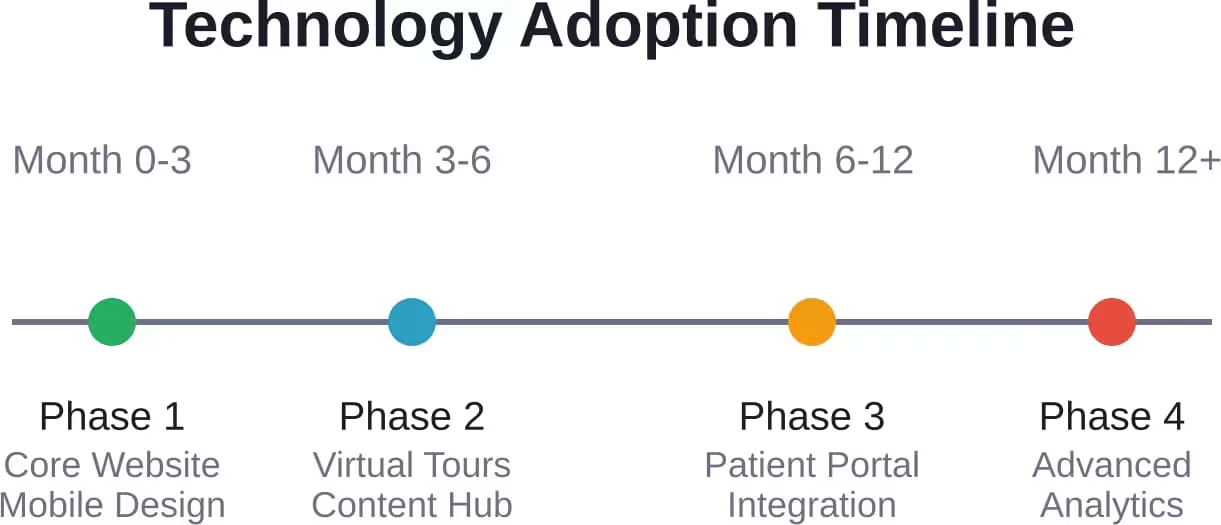
Virtual Tours and Facility Showcases
High-quality photos and video tours give families confidence before they schedule an in-person visit. Show resident rooms (with permission), common areas, dining spaces, outdoor areas, and therapy facilities. Video testimonials from current residents and families carry enormous weight.
But wait. Make sure any resident or family member featured has signed proper release forms. HIPAA applies to any identifiable health information.
Mobile-First Design
Industry analyses indicate that mobile traffic dominates healthcare website visits. Families research nursing homes during lunch breaks, from hospital waiting rooms, or late at night when worry keeps them awake. The website must function flawlessly on smartphones and tablets.
According to LeadingAge, demand on bandwidth from internet users increases by 50% year over year, making responsive design and optimized media essential. Heavy images and uncompressed videos that slow mobile load times will cost conversions.
Technology Integration for Modern Nursing Homes
Research published on PubMed shows that electronic health records (EHRs) enhance nursing home quality and financial performance. EHR implementation in long-term care facilities has been found effective in the facilities that adopted them, causing improved management of clinical documentation that enabled better decision making.
Patient Portal Integration
Families want real-time updates about their loved ones. Secure patient portals integrated into the website allow families to view care plans, review medication schedules, communicate with staff, and stay informed without constant phone calls.
Implementation of handheld EMR notepads has been shown to reduce nursing documentation time, according to LeadingAge data. That efficiency translates to more direct care time and better family communication.
Online Admission and Inquiry Forms
Streamline the inquiry and admission process with secure online forms that collect necessary information while respecting privacy regulations. Forms should be easy to complete on mobile devices, save progress, and trigger immediate follow-up from admissions staff.
Digital Marketing Integration
A beautiful website means nothing if families can’t find it. Search engine optimization, local search optimization, and digital advertising must be built into the website from day one.
Local SEO for Nursing Homes
Most families search for nursing homes within a specific geographic area. The website must be optimized for local search terms like “nursing home in [city]” or “skilled nursing facility near me.”
Google Business Profile optimization, consistent NAP (name, address, phone) information across directories, and locally-focused content help nursing homes appear in local search results and map packs.
Content Marketing and Family Resources
Educational content positions the nursing home as a trusted resource. Blog posts, guides, and resources about choosing nursing homes, understanding Medicare coverage, recognizing signs that a loved one needs care, and navigating difficult conversations provide value to families early in their research journey.
This content builds trust before families ever contact the facility. It also provides fresh content for search engines and social media sharing opportunities.
Choosing the Right Development Approach
Nursing homes face a build-versus-buy decision when developing websites. Custom development offers maximum flexibility but requires significant investment. Semi-custom platforms provide templates designed for senior living with some customization options. Industry sources suggest project costs between $3,500 and $5,500 for smaller websites using semi-custom designs, between $5,500 and $10,000 for small custom projects or larger semi-custom sites, and more than $10,000 for large websites.
Website maintenance and marketing budgets vary based on facility size and growth goals.
Specialized Healthcare Web Agencies
Working with agencies that specialize in nursing home and senior living websites offers advantages. These agencies understand HIPAA compliance, Section 508 accessibility requirements, and the unique trust-building elements nursing home websites need.
They’ve solved common problems like secure form integration, patient portal connections, and mobile optimization for the senior living demographic multiple times. That experience accelerates timelines and reduces costly mistakes.
Ongoing Website Management and Updates
Website development isn’t a one-time project. Content must stay current, security patches must be applied, and new features should be added as technology evolves and family expectations change.
Senior living organizations have increasingly invested in workforce and staffing scheduling systems. This digital transformation trend means nursing home websites must continually evolve to integrate new technologies.
Regular content updates about events, staff recognition, resident activities, and facility improvements keep the website fresh and give families reasons to return. Fresh content also signals to search engines that the site is active and relevant.
| Website Element | Update Frequency | Priority Level |
|---|---|---|
| Security patches | Immediate | Critical |
| Compliance documentation | Quarterly | High |
| Staff directory and photos | Monthly | High |
| Blog content and resources | Weekly | Medium |
| Event calendar | Weekly | Medium |
| Photo galleries | Monthly | Low |
Measuring Website Performance
Track metrics that matter for nursing home websites. Vanity metrics like total page views don’t reveal whether the website is converting visitors into inquiries and admissions.
Key performance indicators include inquiry form submissions, phone calls from click-to-call buttons, virtual tour views, time spent on key pages like services and pricing, and the percentage of visitors who view multiple pages.
Google Analytics and healthcare-compliant tracking tools provide insights into visitor behavior without violating HIPAA regulations. Set up conversion tracking for form submissions and phone calls to understand which marketing channels drive the most valuable traffic.
Conclusion
Website development for nursing homes demands a specialized approach that balances regulatory compliance, emotional sensitivity, and conversion optimization. The facilities that succeed in attracting and converting families online are those that view their website not as a digital afterthought but as a critical trust-building tool.
With Baby Boomers (born between 1946 and 1964) driving growth in demand for aging services, the nursing homes that invest in professional, compliant, family-focused websites today will capture the growing market tomorrow. HIPAA compliance, Section 508 accessibility, mobile optimization, and transparent communication aren’t optional extras. They’re the foundation of effective nursing home websites in 2026 and beyond.
Start by auditing the current website against the standards outlined here. Identify gaps in compliance, accessibility, mobile performance, and trust-building content. Then work with specialized healthcare web developers who understand the unique challenges nursing facilities face to build a website that converts concerned families into confident admissions.