

Quick Summary: Website development for MSMEs is essential for survival in 2026. A professional website serves as a 24/7 sales engine, builds credibility with customers who research online before purchasing, and levels the playing field against larger competitors. Affordable solutions like WordPress, website builders, and custom development options enable even micro-enterprises to establish a strong digital presence without breaking the bank.
The digital storefront has replaced the physical one for most purchase decisions. MSMEs without a website in 2026 aren’t just invisible—they’re considered untrustworthy.
Research shows that 82% of consumers check a business’s website before making a purchase decision, particularly in tier-two and tier-three cities where digital adoption is accelerating. That website isn’t a luxury item gathering digital dust. It’s the first handshake with potential customers.
But here’s where most MSMEs stumble: they either overspend on features they don’t need, or they cheap out with a template that screams unprofessional. Finding the middle ground—a website that looks credible, functions reliably, and doesn’t drain the business account—matters more than ever.
Why MSMEs Can’t Ignore Website Development Anymore
The business landscape shifted permanently during the pandemic years. Customers got used to researching everything online first. That behavior stuck.
A professional business website does three critical jobs. First, it establishes credibility instantly—88% of users are less likely to return after a bad website experience, meaning poor design actively costs sales. Second, it operates 24/7 without breaks, showcasing products and capturing leads while the owner sleeps. Third, it levels the playing field; a well-designed MSME website can look just as professional as a multinational’s.
The U.S. Small Business Administration recognizes this shift. Through programs like the Small Business Development Centers, they provide training and counseling specifically for digital transformation, helping MSMEs understand how technology—including AI tools and digital platforms—enables small businesses to compete more effectively in today’s economy.
Without a website, MSMEs face tangible disadvantages. Customers can’t verify legitimacy easily. Google searches return nothing, sending potential buyers straight to competitors. Marketing efforts hit walls because there’s nowhere to send traffic.
Build a Clear MSME Website With Lengreo
Lengreo builds and improves websites, then connects them with SEO, paid ads, tracking, and lead generation. For MSMEs, this means a website that explains products, services, pricing, locations, and contact options in a way visitors can understand quickly.
The focus is to make the website useful for everyday business, not just present online. Lengreo can help organize key pages, improve traffic setup, and create clearer paths for visitors to send inquiries, book calls, or request quotes.
Need a Website That Supports Daily Business?
Lengreo can help with:
- building or redesigning your website
- improving SEO and paid traffic setup
- setting up tracking and website structure
- refining product, service, and contact pages
👉 Contact Lengreo to discuss your website and setup.
Understanding What Makes an Effective MSME Website
Not all websites are built equal. The difference between a site that converts and one that bounces visitors comes down to specific features.
Fast loading speed ranks at the top. Pages that take more than three seconds to load lose half their visitors before anything renders. Mobile responsiveness follows close behind—more than 60% of web traffic now comes from smartphones, and Google penalizes sites that don’t work on mobile devices.
Clear navigation matters enormously. Visitors should find what they need within two clicks maximum. Confusing menus or buried contact information frustrates users who simply leave.
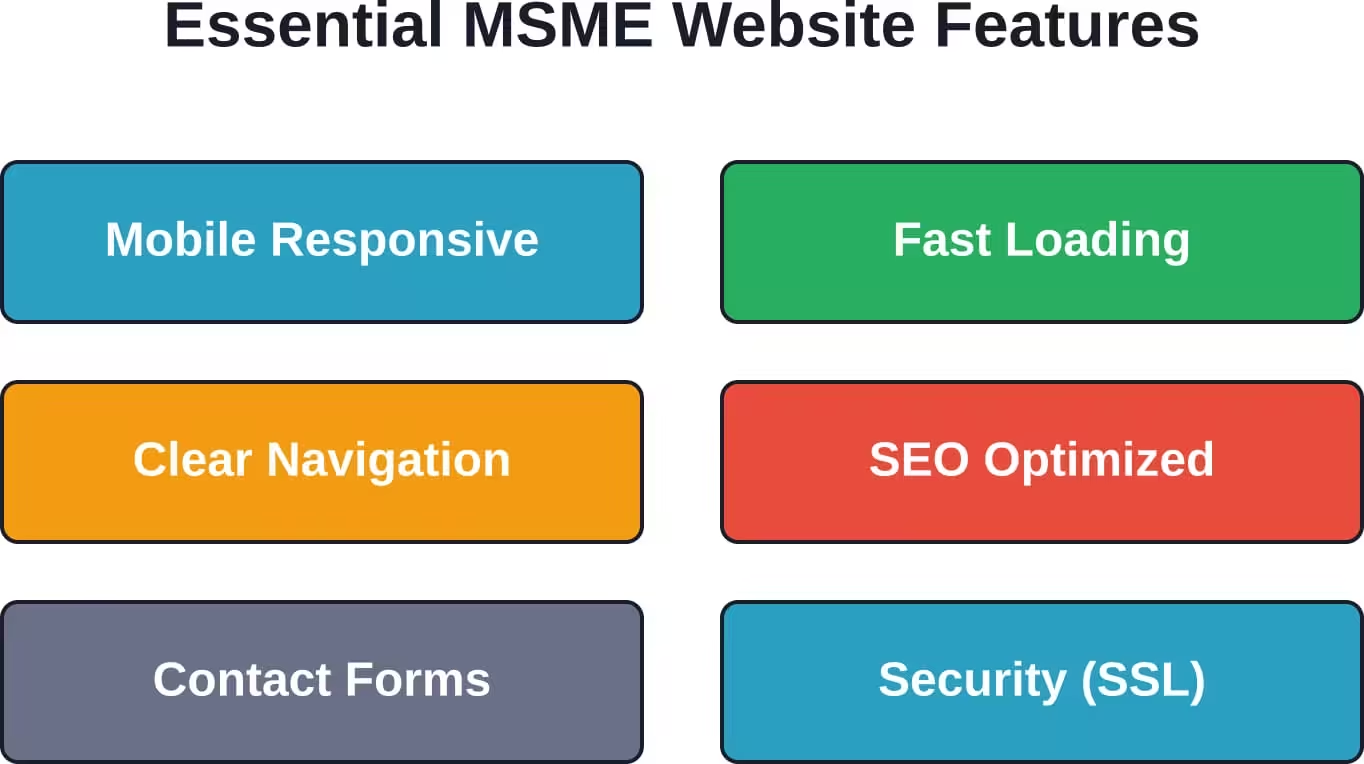
SEO optimization can’t be an afterthought. Basic on-page SEO—proper headings, meta descriptions, alt text for images—determines whether the site appears in search results at all. Contact forms and clear calls-to-action convert browsing into leads.
Security certificates (SSL) have become non-negotiable. Browsers now flag non-HTTPS sites as “not secure,” immediately destroying trust. The certificate itself costs little or nothing through most hosting providers.
Choosing the Right Website Development Approach
MSMEs face three main paths: DIY website builders, WordPress development, or custom coding. Each suits different needs and budgets.
Website Builders for Quick Deployment
Platforms like Wix, Squarespace, and Shopify let non-technical owners build sites through drag-and-drop interfaces. Templates provide professional designs out of the box. Setup typically takes days, not weeks.
The trade-off comes in customization limits and ongoing costs. Most builders charge monthly fees that accumulate over years. Advanced features often require premium tiers. Moving to another platform later becomes difficult because content gets locked in.
WordPress: The MSME Sweet Spot
WordPress is widely used as a website platform for good reason. It balances ease of use with flexibility. Thousands of themes provide professional designs. Plugins add functionality without coding.
For MSMEs specifically, WordPress offers scalability. Start with a simple five-page site, then add e-commerce, booking systems, or membership areas as the business grows. Content management stays simple enough for team members to handle updates.
Hosting costs remain modest—shared hosting for small sites runs $5-15 monthly. Premium themes and plugins might add one-time costs of $50-200. The platform itself is free and open-source.
Custom Development for Specific Needs
Some MSMEs need functionality that templates can’t provide—custom calculators, complex integrations, unique workflows. Custom development delivers exactly what’s needed, but requires hiring developers and higher budgets.
This path makes sense when the website is the product (SaaS platforms, web applications) or when very specific business processes need automation. For standard business websites, it’s usually overkill.
Cost Breakdown: What MSMEs Should Actually Budget
Website development costs vary wildly, causing confusion. Breaking down the components helps MSMEs budget realistically.
| Component | Budget Option | Mid-Range Option | Premium Option |
|---|---|---|---|
| Domain Name | $10-15/year | $15-30/year | $30-100/year |
| Hosting | $50-100/year | $150-300/year | $500-1,200/year |
| Design/Theme | $0-50 (free/basic) | $50-150 (premium) | $1,500-5,000 (custom) |
| Development/Setup | $0-300 (DIY/basic) | $500-2,000 | $3,000-15,000+ |
| SSL Certificate | $0 (included) | $0 (included) | $0-200 |
| Total First Year | $60-465 | $715-2,480 | $5,030-21,500 |
The budget option works perfectly for local service businesses, consultants, and MSMEs needing basic online presence. Mid-range suits growing businesses wanting professional polish and more features. Premium makes sense for businesses where the website directly generates revenue.
Ongoing maintenance adds $200-1,000 annually for updates, backups, and minor changes. Skipping maintenance leaves sites vulnerable to security breaches and performance degradation.
The Website Development Process for MSMEs
Understanding the process prevents scope creep and budget overruns. Professional development follows distinct phases.
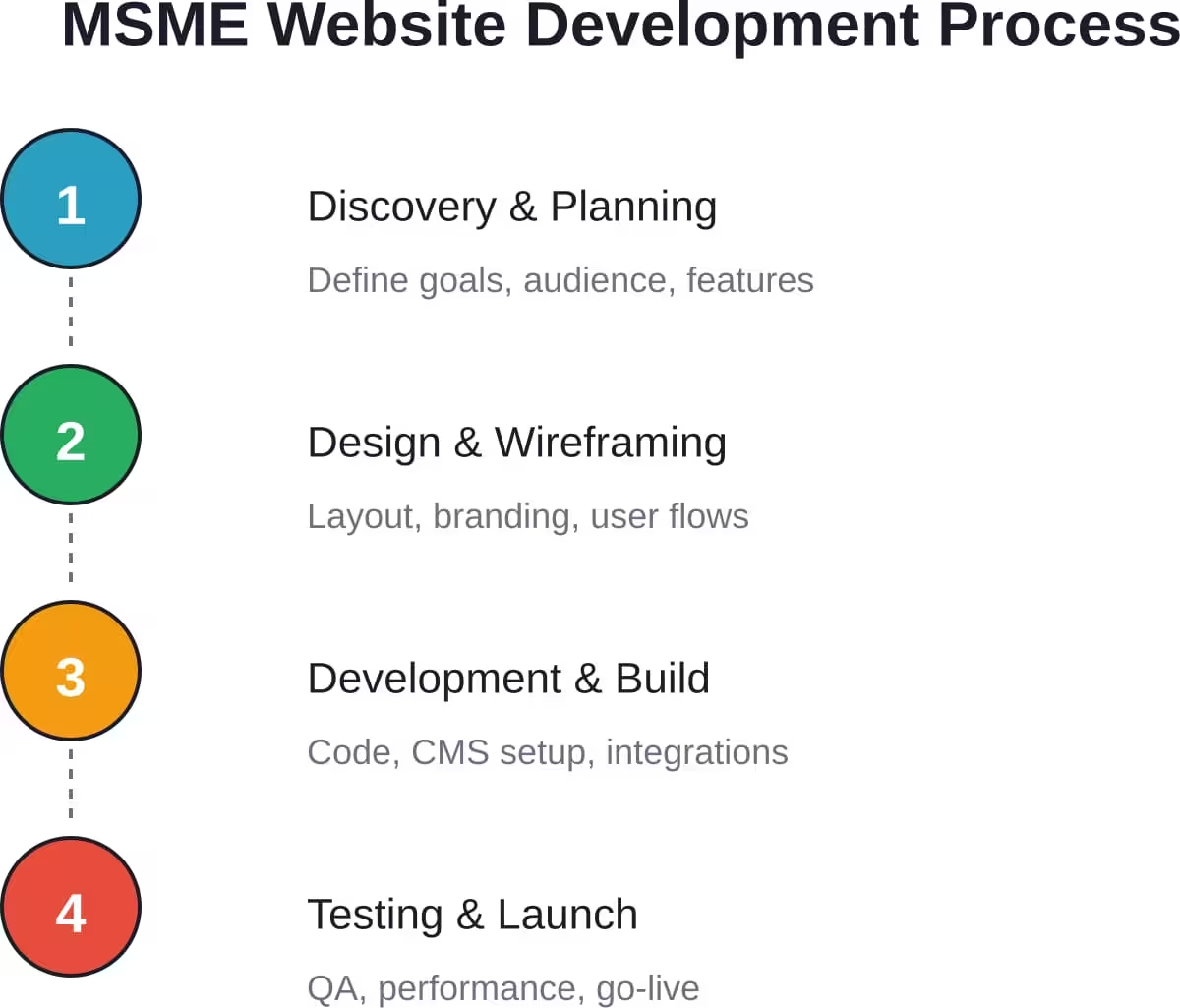
Discovery involves understanding the business model, target customers, and competitive landscape. What actions should the website drive? Who visits and what do they need? What differentiates this MSME from competitors?
Design translates business requirements into visual layouts. Wireframes map page structures. Brand elements—colors, fonts, imagery—get defined. This phase prevents expensive revisions later by getting alignment upfront.
Development brings designs to life. Pages get built, content gets added, forms get connected. Plugins and integrations get configured. This phase takes the longest but proceeds smoothly when earlier phases were thorough.
Testing catches issues before customers see them. Does the site work on different devices? Do forms submit correctly? Are load times acceptable? Security vulnerabilities get patched. Only after thorough testing does the site go live.
Common Mistakes MSMEs Make With Website Development
Learning from others’ mistakes saves money and headaches. Several patterns repeat across failed MSME websites.
- Choosing price over value tops the list. A $200 website from a freelancer marketplace often means amateur work, stolen templates, or no support when problems arise. Conversely, paying $20,000 for a five-page brochure site wastes capital that could fund marketing.
- Ignoring mobile users kills conversions. Testing only on desktop computers misses how most visitors actually access the site. Navigation that works with a mouse becomes unusable on touchscreens. Text sized perfectly for monitors becomes microscopic on phones.
- Skipping SEO from the start creates technical debt. Retrofitting proper URL structures, heading hierarchies, and page speeds costs more than building correctly initially. Sites invisible in search results don’t generate leads regardless of design quality.
- Feature bloat overwhelms visitors and budgets. Adding every possible bell and whistle—chatbots, popups, videos, animations—creates slow, confusing experiences. Start with core functionality and add features based on actual user behavior data.
The Domino’s Pizza accessibility lawsuit illustrates what happens when development shortcuts create exclusions. Their website wasn’t accessible to blind customers using screen readers, resulting in legal costs that dwarfed what proper development would have cost initially.
Digital Marketing Integration for MSME Websites
A website alone doesn’t generate business. It needs traffic, which requires integrated digital marketing.
Research on digital marketing ROI in SMEs indicates the importance of digital channels for small business performance. This underscores how critical the marketing-website connection has become globally, particularly where SMEs comprise significant portions of the business sector.
Search engine optimization drives organic traffic over time. Proper technical setup, quality content, and strategic keywords help the site appear when potential customers search. This takes months to build momentum but provides the best long-term return.
Social media marketing channels traffic from platforms where target audiences already spend time. Posts link back to specific product pages or blog articles. Consistent social presence builds brand awareness that converts when visitors reach the website.
Email marketing nurtures leads captured through website forms. Automated sequences provide value while keeping the MSME top-of-mind. This only works when the website effectively captures email addresses through compelling offers.
Paid advertising delivers immediate traffic but requires ongoing budget. Google Ads and Facebook Ads can target precise demographics and interests. The website must convert that expensive traffic or money gets wasted.
Accessibility and Legal Requirements
Website accessibility isn’t just good practice—it’s increasingly legally required. Sites must work for people with disabilities using assistive technologies.
Basic accessibility includes proper heading structure, alt text for images, keyboard navigation support, and sufficient color contrast. These requirements don’t add significant cost when implemented during initial development.
GDPR, CCPA, and similar privacy regulations require clear disclosures about data collection. Cookie consent mechanisms, privacy policies, and secure data handling have moved from optional to mandatory in most jurisdictions.
Security extends beyond SSL certificates. Regular updates patch vulnerabilities. Strong passwords and two-factor authentication protect admin access. Backup systems ensure recovery from attacks or failures.
Measuring Website Success for MSMEs
What gets measured gets improved. MSMEs need specific metrics to track whether the website investment pays off.
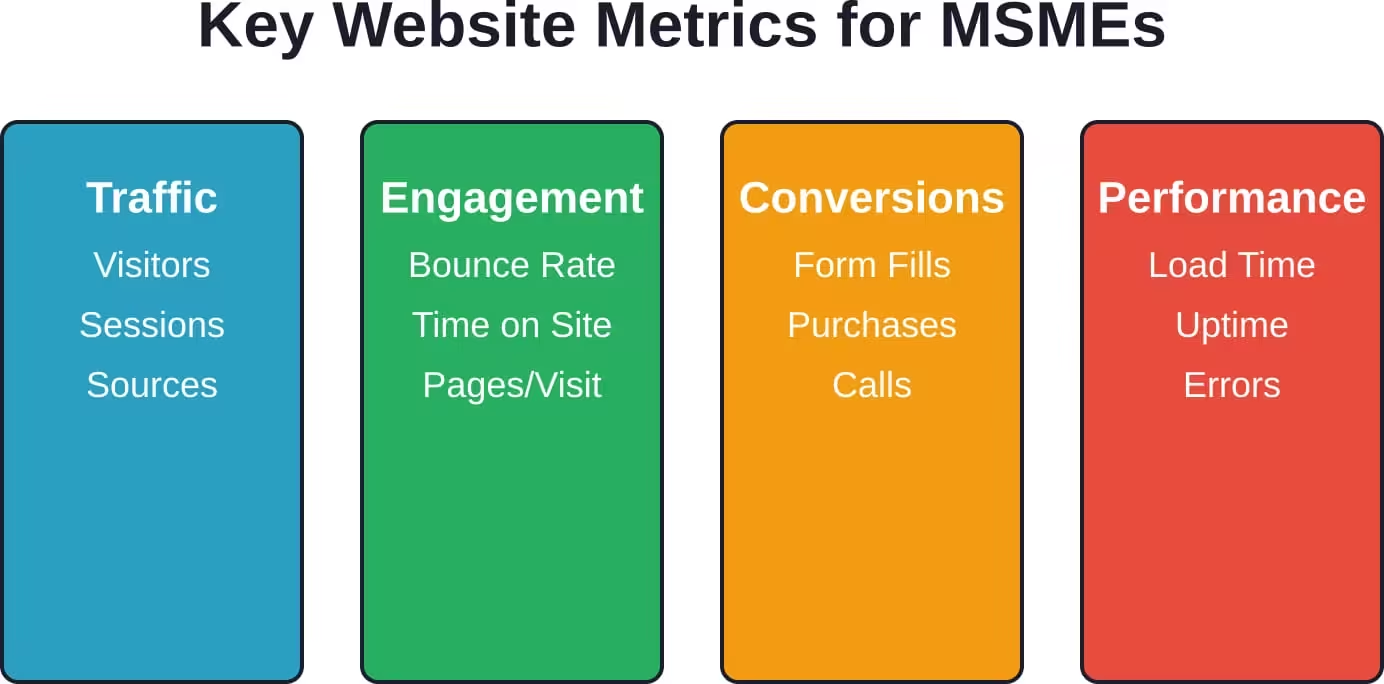
Traffic metrics show whether marketing efforts work. Google Analytics tracks visitor numbers, where they come from, and which pages they view. Declining traffic signals problems with marketing or search rankings.
Engagement metrics reveal content quality. High bounce rates mean visitors don’t find what they expected. Time on site and pages per visit indicate genuine interest versus quick exits.
Conversion tracking connects website activity to business results. How many contact forms get submitted? What percentage of visitors complete purchases? Which pages drive phone calls? Without tracking conversions, ROI remains invisible.
Performance monitoring prevents technical issues from killing conversions. Page load times, uptime percentages, and error rates should be monitored continuously. The U.S. Small Business Administration provides guidance on digital infrastructure and performance standards—benchmarks commercial MSMEs should aim to meet as well.
Future-Proofing MSME Websites
Technology changes rapidly. Building sites that adapt prevents costly rebuilds every few years.
Responsive design started as best practice; it’s now mandatory. But future-proofing extends beyond mobile compatibility. Voice search optimization matters as smart speakers proliferate. Progressive web app capabilities let websites function more like native apps.
AI integration is accelerating. Chatbots handle common customer questions automatically. AI-powered search helps visitors find products faster. The SBA notes that small businesses can use AI tools and applications to find solutions for various business challenges, emphasizing how these technologies help small businesses do more with less.
Content management flexibility prevents lock-in. Headless CMS architectures separate content from presentation, making it easier to redesign or even change platforms later without losing content investments.
API-first architecture allows integration with future tools. When inventory systems, CRM platforms, or payment processors need connecting, well-architected sites accommodate additions without ground-up rebuilds.
Taking Action on Website Development
The MSMEs that thrive in 2026 treat their website as infrastructure, not expense. It’s the foundation for all digital marketing, the first impression for most customers, and the always-on sales team working 24/7.
Start by defining what success looks like. Is it generating 50 qualified leads monthly? Selling products directly online? Establishing credibility with enterprise clients? Clear goals shape every development decision.
Choose the development approach that matches current needs and budget, not aspirations. A well-executed WordPress site beats a half-finished custom build every time. Scale up as revenue justifies investment.
Resources like the U.S. Small Business Administration’s Small Business Development Centers provide free counseling and training to help MSMEs navigate technology decisions, develop business plans, and access funding for digital transformation initiatives.
The businesses that wait for perfect timing never launch. Those that start with good-enough solutions and improve iteratively build momentum, gather data, and adapt based on real customer behavior.
Website development for MSMEs isn’t about having the fanciest site on the internet. It’s about having a professional, functional platform that builds trust, showcases value, and makes doing business easy. That’s achievable at almost any budget when approached strategically.
The question isn’t whether MSMEs can afford website development. It’s whether they can afford to remain invisible while competitors capture customers searching online right now.