


Quick Summary: Website development for medical practices requires HIPAA-compliant platforms that prioritize patient trust, accessibility, and seamless appointment booking. According to healthit.gov, 99% of hospitals now enable electronic patient access, making robust digital infrastructure essential for competitive practices. The right medical website balances security requirements with user experience to convert visitors into patients.
Medical practice websites are no longer optional. Industry reports suggest over 77 percent of patients search online before booking an appointment, and nearly 60 percent say a provider’s website influences whether they trust the practice.
But here’s the thing—most medical websites fail at their core job. They’re either too complex to maintain, non-compliant with healthcare regulations, or so generic they couldn’t convince a patient to pick up the phone.
This guide walks through what actually matters when building a medical practice website in 2026. From HIPAA compliance fundamentals to platform selection and patient conversion features, these are the elements that separate websites that generate appointments from those that just exist.
Why Medical Websites Require Different Development Standards
Healthcare websites operate under constraints that e-commerce sites and corporate pages don’t face. The regulatory environment, patient privacy expectations, and accessibility requirements create a development landscape that demands specialized knowledge.
HIPAA Compliance Is Non-Negotiable
The Health Insurance Portability and Accountability Act sets federal standards for protecting patient health information. According to HHS.gov, HIPAA penalties vary based on factors such as the date of violation and whether the violation was due to willful neglect, with calendar year caps applied for multiple violations of identical requirements.
Real talk: most practice websites don’t directly handle Protected Health Information (PHI) on their public pages. But the moment a site includes patient portals, appointment scheduling with personal details, or contact forms collecting health information, HIPAA obligations activate.
The HIPAA Security Rule requires specific technical safeguards for electronic PHI. These include access controls, audit controls, integrity controls, and transmission security. Any website collecting patient data must implement encryption for data in transit and at rest, maintain audit logs, and establish user authentication protocols.
Business Associate Agreements (BAAs) become essential when third-party services process PHI. Website hosting providers, form processors, appointment scheduling tools, and analytics platforms that access PHI must sign BAAs accepting liability for HIPAA compliance.
Accessibility Standards Impact Design Choices
Medical websites serve patients with diverse abilities. Federal regulations and practical ethics demand accessible design that accommodates visual, auditory, motor, and cognitive disabilities.
The Web Content Accessibility Guidelines (WCAG) 2.1 Level AA represents the standard most healthcare organizations target. This includes requirements for keyboard navigation, screen reader compatibility, sufficient color contrast, text alternatives for images, and clear content structure.
Many practices face legal exposure from inaccessible websites. Analyses indicate healthcare providers increasingly encounter accessibility-related complaints and lawsuits, particularly when online scheduling or patient portal features exclude users with disabilities.
Build a Medical Practice Website With Lengreo
Lengreo builds and improves websites, then connects them with SEO, paid ads, tracking, and lead generation. For medical practices, this means a website that makes services, doctors, locations, appointment options, and patient information easy to find.
The focus is to help patients understand where to go, what to book, and how to contact the practice without confusion. Lengreo can help organize the structure, key pages, and traffic setup so the website supports real appointment requests.
Need a Website That Helps Patients Book Faster?
Lengreo can help with:
- building or redesigning your website
- improving SEO and paid traffic setup
- setting up tracking and website structure
- refining service, doctor, and appointment pages
👉 Contact Lengreo to discuss your website and setup.
Essential Features That Convert Visitors Into Patients
A compliant website that nobody uses serves no practice goals. The development strategy must balance regulatory requirements with features that encourage appointment booking and patient engagement.
Online Appointment Scheduling
According to healthit.gov data from 2024, hospitals widely adopted patient engagement capabilities including secure messaging and other digital communication features. Patient expectations for digital scheduling have become universal.
Effective scheduling systems integrate directly with practice management software, display real-time availability, send automated confirmations and reminders, and accommodate new patient intake forms within the booking flow.
The implementation matters. Scheduling tools that require account creation before showing available times create unnecessary friction. The best systems show openings immediately and collect essential information progressively.
Patient Portal Integration
According to healthit.gov data, 96% of hospitals enabled patients to download health information in 2024, while over 90% of hospitals that reported patient app access supported FHIR API access for those apps. Standalone practice websites increasingly need similar capabilities.
Patient portals allow secure access to test results, medication lists, visit summaries, and billing information. Modern implementations use FHIR (Fast Healthcare Interoperability Resources) APIs to enable third-party app connections, giving patients control over their health data.
Portal integration requires careful planning. Single sign-on capabilities, mobile-responsive interfaces, and clear onboarding workflows determine whether patients actually use portal features or ignore them.
Telemedicine Capabilities
Medicare coverage expanded significantly for telehealth services. According to CMS documentation, Medicare covers virtual check-ins using the permanently established HCPCS code G2012 and G2010, and has expanded coverage to include more comprehensive RTM (Remote Therapeutic Monitoring) codes as of 2025-2026.
Telemedicine website integration ranges from simple video call links to sophisticated platforms with virtual waiting rooms, document sharing, and integrated payment processing. The complexity required depends on specialty and patient population.
HIPAA-compliant video platforms require end-to-end encryption and BAAs. Consumer video tools like standard Zoom or FaceTime don’t meet healthcare privacy standards without enterprise healthcare agreements.
Trust Signals and Credibility Markers
Medical websites must establish trust before patients share personal information or book appointments. Several elements consistently improve conversion rates.
Provider credentials, certifications, and professional photos humanize the practice. Patient testimonials (with proper consent and HIPAA compliance) provide social proof. Clear information about accepted insurance, location details with maps, and transparent pricing for common services reduce decision friction.
Security badges, privacy policy links, and HIPAA compliance statements reassure patients about data protection. These elements should be visible without cluttering the interface.
Choosing the Right Development Platform
Platform selection determines long-term maintenance costs, scalability, and feature availability. Medical practices face a choice between website builders, content management systems, and custom development.
Website Builders vs. Content Management Systems
Website builders like Wix and Squarespace offer visual editing, hosting included, and pre-built templates. They work well for small practices with straightforward needs and limited technical resources.
But limitations emerge quickly. Custom functionality often requires premium add-ons. Integration with practice management systems may be restricted. HIPAA compliance typically demands enterprise plans with BAAs, increasing costs beyond advertised pricing.
Content management systems like WordPress provide more flexibility. Thousands of healthcare-specific plugins enable appointment scheduling, patient portals, and compliance features. The platform scales from single-provider practices to multi-location health systems.
The tradeoff involves maintenance responsibility. WordPress requires regular updates, security monitoring, and technical knowledge. Many practices hire developers or agencies to manage WordPress installations rather than handling updates internally.
Specialized Healthcare Website Platforms
Healthcare-focused website platforms build HIPAA compliance, appointment scheduling, and patient engagement features into their core offerings. These solutions often integrate directly with popular electronic health record (EHR) systems.
The advantages include reduced compliance burden, healthcare-specific design templates, and support teams familiar with medical practice workflows. Pricing typically reflects the specialized nature—expect higher monthly costs than general website builders.
Lock-in risk exists with proprietary platforms. Migrating to different systems later may prove difficult if the practice outgrows the platform or seeks different features.
| Platform Type | Best For | HIPAA Compliance | Maintenance Burden |
|---|---|---|---|
| Website Builders | Small practices, limited budgets | Enterprise plans only | Low |
| WordPress CMS | Growing practices, custom needs | Requires configuration | Moderate to high |
| Healthcare Platforms | Compliance-focused practices | Built-in | Low |
| Custom Development | Large systems, unique workflows | Full control | High |
Mobile Responsiveness Is Not Optional
Healthcare website traffic increasingly comes from mobile devices, representing a significant portion of patient interactions. Google’s mobile-first indexing means mobile experience directly impacts search rankings.
Responsive design adapts layouts to screen size, but true mobile optimization goes further. Touch-friendly button sizes, simplified navigation for small screens, and accelerated mobile page loading separate adequate from excellent mobile experiences.
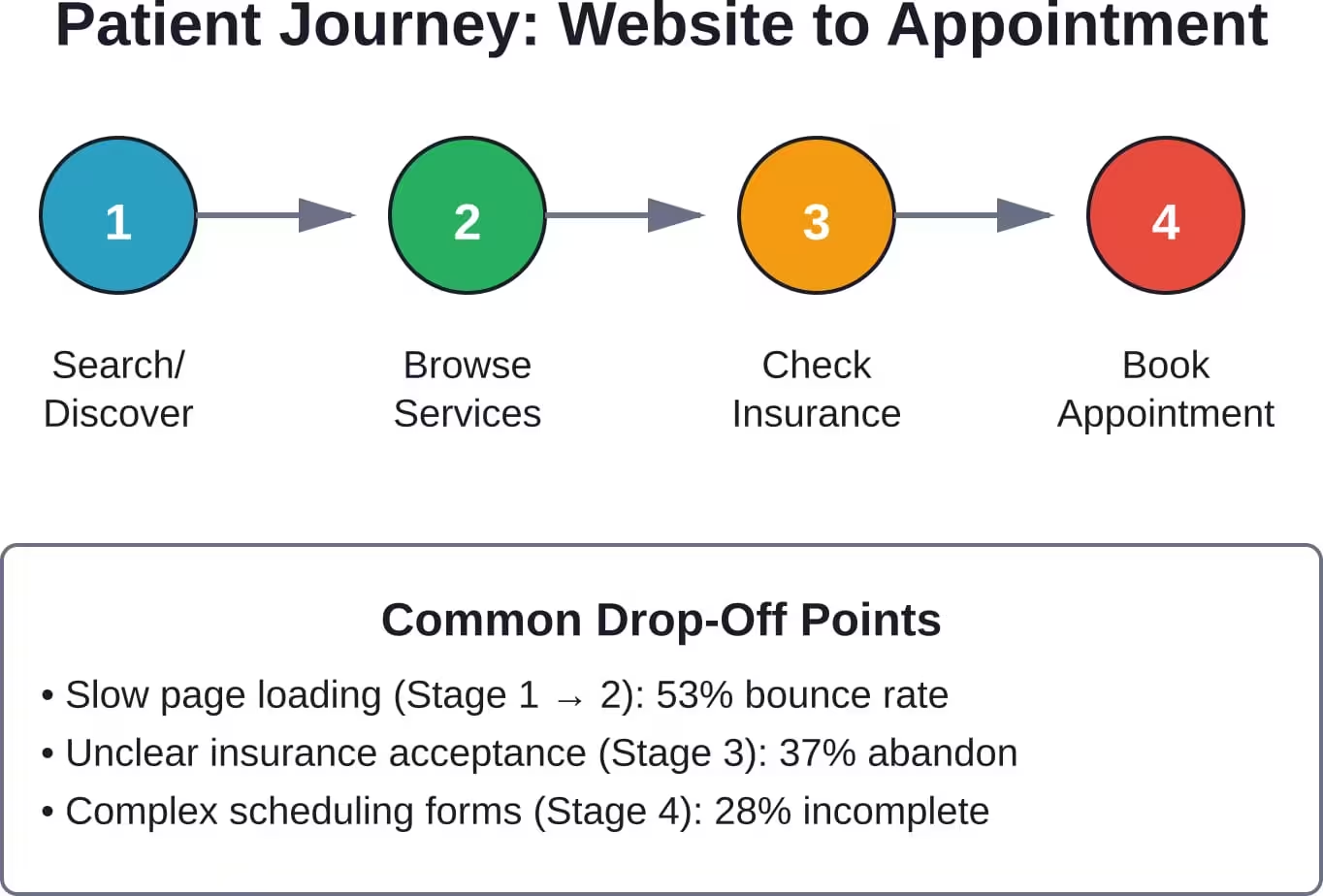
Appointment scheduling forms particularly benefit from mobile optimization. Multi-step forms with progress indicators work better on small screens than single-page forms requiring excessive scrolling.
Search Engine Optimization for Medical Practices
Technical excellence means nothing if patients can’t find the website. Medical practice SEO balances local visibility with specialty-specific authority.
Local SEO Dominates Patient Acquisition
Most medical searches include geographic qualifiers. “Pediatrician near me,” “orthopedic surgeon Chicago,” and similar queries represent high-intent traffic—patients ready to book appointments.
Google Business Profile optimization forms the foundation. Complete profiles with accurate hours, accepted insurance, service descriptions, and consistent patient reviews improve local pack rankings.
On-page local signals matter too. Location pages for multi-site practices, embedded Google Maps, and schema markup identifying the practice as a medical organization help search engines understand geographic relevance.
Content Strategy for Medical Websites
Educational content establishes expertise and captures informational search queries that precede appointment booking. Condition guides, treatment explanations, and frequently asked questions serve both SEO and patient education goals.
Medical content faces unique constraints. Information must be accurate, current, and appropriately cautious about medical advice. Many practices include disclaimers that website content doesn’t constitute medical advice and can’t replace professional consultation.
Update frequency signals relevance to search engines. Practices that regularly publish new content or update existing pages typically outrank static websites, even when the static sites have been established longer.
Technical SEO Fundamentals
Page load speed significantly impacts conversion rates and user experience for medical websites.
Image optimization reduces load times without sacrificing visual quality. Modern formats like WebP, lazy loading for below-the-fold images, and appropriately sized images for mobile devices all contribute to performance.
Structured data markup helps search engines understand page content. Schema.org types for medical organizations, physicians, medical conditions, and frequently asked questions provide explicit signals about content meaning.
SSL certificates (HTTPS) are mandatory for medical websites, both for HIPAA compliance and search rankings. Google has confirmed HTTPS as a ranking factor and browsers now flag HTTP sites as “not secure,” eroding patient trust.
Common Website Development Mistakes to Avoid
Certain errors consistently undermine medical website effectiveness. These problems appear across practices of all sizes and specialties.
Choosing Platforms Based on Aesthetics Alone
Beautiful templates attract practice managers and physicians reviewing proposals. But aesthetic appeal doesn’t guarantee functionality, compliance, or conversion performance.
The opposite problem exists too—prioritizing features over usability creates websites that technically do everything but feel overwhelming to use. Balance matters.
Neglecting Mobile Experience
Desktop-focused design still appears in medical websites, particularly for older practices updating legacy sites. Testing on actual mobile devices reveals problems that desktop browsers don’t show.
Small tap targets, horizontal scrolling, tiny text requiring pinch-zoom, and forms that don’t work well with mobile keyboards all frustrate mobile users and reduce conversion rates.
Insufficient Attention to Page Speed
Medical websites often accumulate performance-killing elements: unoptimized images, excessive plugins, render-blocking scripts, and third-party integrations that slow initial page loads.
Speed testing tools identify specific bottlenecks. Regular performance audits catch problems before they significantly impact patient experience.
Weak Call-to-Action Elements
Passive websites present information but don’t guide visitors toward booking. Clear calls-to-action—”Schedule Appointment,” “Call Now,” “New Patient Registration”—need prominent placement and visual distinction from surrounding content.
Multiple contact methods accommodate different patient preferences. Phone numbers for patients who prefer calling, online scheduling for those who book digitally, and contact forms for general inquiries all serve conversion goals.
Cost Considerations and Budget Planning
Medical website development costs vary dramatically based on complexity, platform choice, and ongoing maintenance requirements.
Initial Development Investment
Template-based website builders represent the lowest entry cost, with plans available at various price points. HIPAA-compliant features typically require business or enterprise tiers with higher costs.
Custom WordPress development for medical practices varies in cost based on complexity, integration requirements, and developer experience. Complex implementations with EHR integration, patient portals, and custom functionality can exceed $30,000.
Healthcare-specific website platforms often use monthly subscription models that bundle hosting, compliance, support, and features. Pricing varies—consult vendors directly for accurate quotes based on practice size and feature requirements.
Custom development from scratch typically starts at $25,000 for basic implementations and easily reaches six figures for sophisticated systems with extensive integration requirements.
Ongoing Maintenance and Hosting
Hosting costs for medical websites exceed standard shared hosting due to security and compliance requirements. HIPAA-compliant hosting providers charge premium rates for servers meeting technical safeguard requirements.
Software updates, security monitoring, backup management, and plugin maintenance require either internal IT resources or external support contracts. Monthly maintenance agreements typically range from $100 to $500 for basic WordPress sites, with healthcare-specific requirements increasing costs.
Content updates, SEO work, and feature additions represent additional expenses. Practices should budget for ongoing digital marketing and website improvement rather than treating the website as a one-time project.
| Cost Component | One-Time | Monthly/Annual | Notes |
|---|---|---|---|
| Initial Design & Development | $5,000-$30,000+ | — | Varies by complexity |
| HIPAA-Compliant Hosting | — | $50-$300/month | Includes security features |
| Maintenance & Updates | — | $100-$500/month | Security, backups, updates |
| SSL Certificate | — | $0-$200/year | Often included with hosting |
| Premium Plugins/Tools | — | $20-$200/month | Scheduling, forms, analytics |
Working With Developers and Agencies
Most medical practices lack in-house web development expertise. Selecting the right development partner significantly impacts project success.
Healthcare Experience Matters
Developers familiar with medical practice workflows, HIPAA requirements, and healthcare-specific integrations deliver better results than generalists learning on the practice’s budget.
Ask potential developers about previous medical website projects. Request examples demonstrating patient portal integration, appointment scheduling systems, and EHR connections if those features matter for the practice.
Communication and Project Management
Clear project scopes prevent scope creep and budget overruns. Detailed proposals should specify deliverables, timelines, revision allowances, and ongoing support terms.
Regular progress updates keep stakeholders informed. Practices should designate a point person who can make decisions and provide feedback during development, avoiding delays from committee decision-making.
Post-Launch Support and Training
Staff need training to update content, respond to appointment requests, and use backend systems. Developers should provide documentation and training sessions rather than delivering a completed site without explanation.
Clarify ongoing support terms before signing contracts. Response times for urgent issues, procedures for requesting changes, and long-term maintenance responsibility should be explicit.
Future-Proofing Medical Practice Websites
Healthcare technology evolves rapidly. Building adaptability into website architecture reduces the need for complete rebuilds when requirements change.
API-First Architecture
According to healthit.gov data from 2021, approximately 70% of hospitals reported patient access through apps, with four in five supporting FHIR API access. As patient expectations evolve, medical practice websites increasingly need similar digital access capabilities.
API-first design separates the content and data layer from the presentation layer. This architecture allows the same backend to serve web browsers, mobile apps, patient portals, and third-party integrations without rebuilding core functionality.
FHIR APIs specifically enable standardized health data exchange. Practices investing in FHIR-compatible systems position themselves for future interoperability requirements and patient expectations.
Content Management Flexibility
Websites that require developer intervention for routine content updates become bottlenecks. Content management systems that allow non-technical staff to update services, provider bios, blog posts, and announcements improve agility.
The balance involves providing enough flexibility without overwhelming staff with options. Custom content types, reusable blocks, and templates that enforce design consistency while allowing content variation work well for medical practices.
Analytics and Continuous Improvement
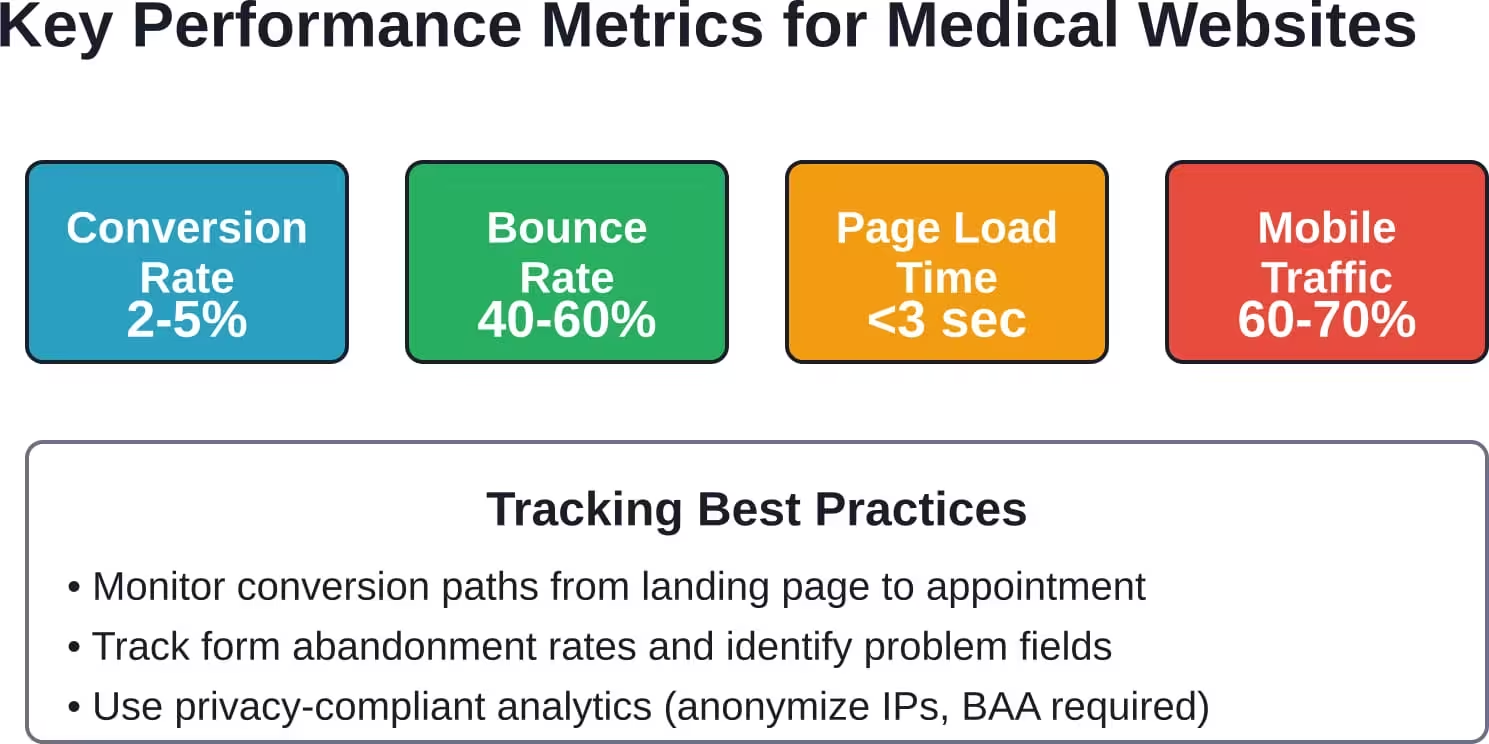
Data-driven optimization beats assumptions. Website analytics reveal which pages patients visit, where they drop off in the appointment booking process, and which traffic sources generate the most conversions.
Privacy-compliant analytics require careful implementation. The Department of Health and Human Services issued guidance about online tracking technologies and HIPAA obligations. Practices must ensure analytics tools don’t improperly transmit PHI to third parties.
Regular review of analytics data, user behavior recordings (with IP anonymization), and conversion funnel analysis identify improvement opportunities. Small incremental changes often produce measurable results.
Taking Action: Next Steps for Your Medical Practice Website
Medical website development isn’t optional anymore—it’s infrastructure as essential as phone systems and office space. But the good news? The right approach doesn’t require massive budgets or technical expertise.
Start by auditing the current situation. Does the practice website convert visitors into appointments? Does it load quickly on mobile devices? Is it compliant with HIPAA and accessibility requirements? These questions reveal whether incremental improvements suffice or a complete rebuild makes more sense.
For practices starting from scratch, begin with clear goals. Is patient acquisition the priority? Does the website need to reduce administrative burden through self-service scheduling? Will telemedicine capabilities matter? Goals determine platform requirements and feature priorities.
Budget realistically for both initial development and ongoing maintenance. Websites require continuous attention—security updates, content refreshes, performance optimization, and feature additions. Practices that budget only for initial development often struggle with outdated, vulnerable websites within a year.
The competitive advantage goes to practices that view their website as a patient acquisition and retention tool, not a digital brochure. Data from healthit.gov shows 99% of hospitals now enable electronic patient access to health information. Patient expectations for digital healthcare experiences continue rising.
Whether building a new website or improving an existing one, focus on three priorities: HIPAA compliance protects the practice and patients, mobile optimization serves how patients actually access information, and clear conversion paths turn visitors into appointments.
The medical practices thriving in 2026 treat their websites as critical infrastructure deserving strategic investment. The time to build or improve that infrastructure is now.