


Quick Summary: Website development for manufacturers requires a strategic approach combining technical excellence, industry-specific functionality, and lead generation focus. Modern manufacturing websites must deliver seamless user experience, showcase complex products effectively, integrate with enterprise systems, and rank well in search engines to convert B2B buyers. Success hinges on working with developers who understand manufacturing workflows, compliance requirements, and the lengthy B2B sales cycle.
Manufacturing websites serve a fundamentally different purpose than consumer e-commerce sites. The average manufacturing sale involves multiple stakeholders, technical specifications, compliance documentation, and sales cycles stretching months or even years.
Yet many manufacturers still treat their website as a digital brochure rather than a revenue-generating asset. That approach doesn’t cut it anymore. Manufacturing is a major contributor to the U.S. economy and employs millions of workers, with significant private-sector R&D activity happening in this sector. The digital transformation of manufacturing demands websites that match the sophistication of the industry itself.
Here’s what actually works when building a manufacturing website that drives results.
Why Manufacturing Website Development Differs from Standard Business Sites
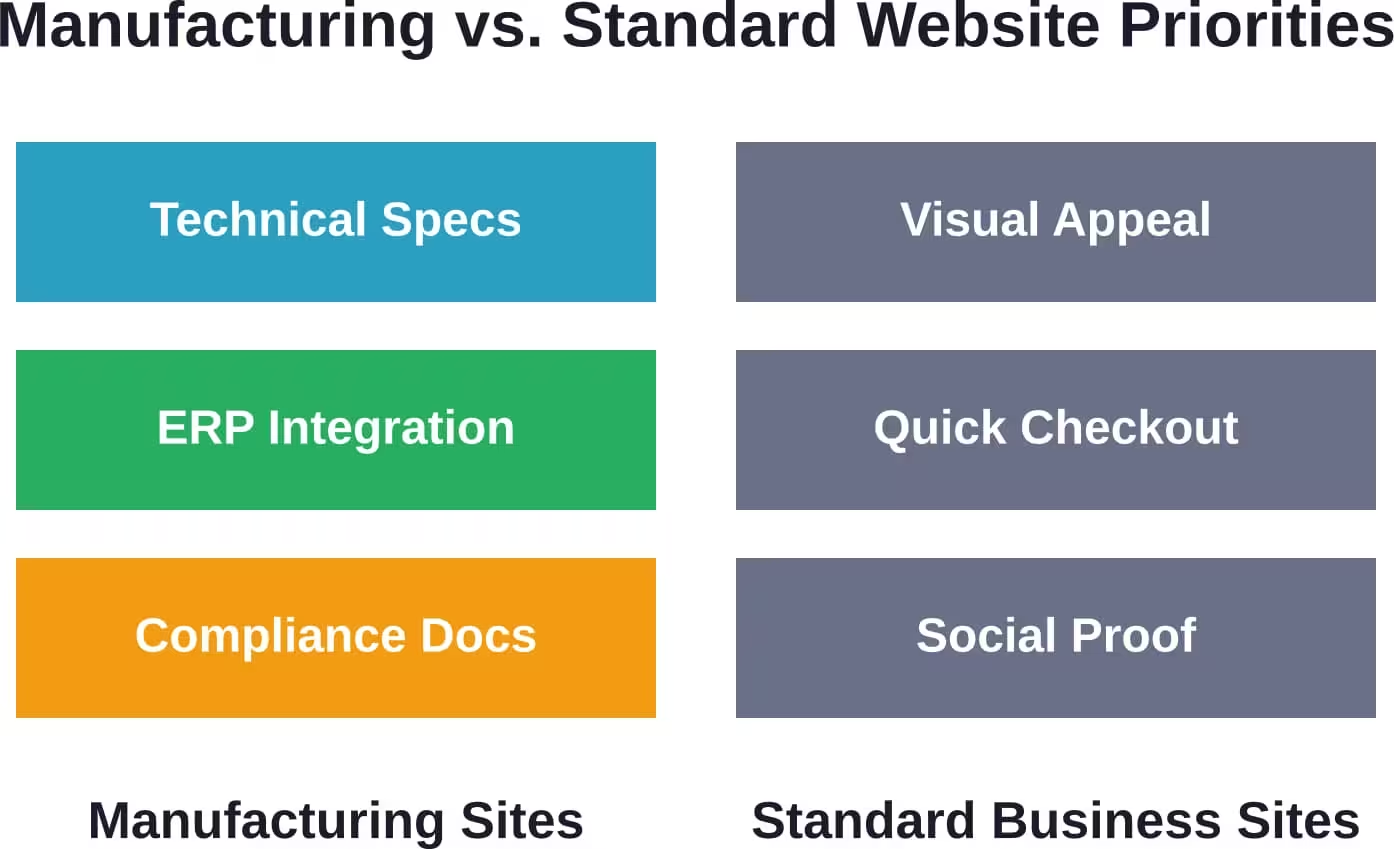
Manufacturing websites face unique challenges that generic web development approaches can’t address. The technical complexity alone sets these projects apart.
First, product catalogs often contain thousands of SKUs with detailed specifications, CAD drawings, compliance certificates, and cross-reference data. Standard content management systems weren’t built for this level of technical documentation.
Second, the buyer journey is fundamentally different. Research shows 90% of users never go beyond page one of Google results. But manufacturing buyers don’t make impulse purchases. They research extensively, compare specifications, review case studies, and involve multiple decision-makers before requesting a quote.
Third, integration requirements are more demanding. Manufacturing websites typically need to connect with ERP systems, inventory databases, customer portals, and distributor networks. Only 52% of organizations have formal guidelines for web development projects, according to research examining UK organizations.
Core Technical Requirements for Manufacturing Websites
The foundation of an effective manufacturing website rests on several non-negotiable technical capabilities.
Product Information Management Systems
Managing technical product data at scale requires purpose-built systems. A proper PIM allows engineers to update specifications, publish CAD files, maintain version control, and ensure accuracy across thousands of products.
The alternative—manually updating product pages—doesn’t scale. When product teams update specifications quarterly or when new compliance certifications arrive, the website needs to reflect those changes immediately across all affected products.
Search and Filtering Architecture
Manufacturing buyers know exactly what they need. They arrive searching for specific part numbers, dimensions, materials, or certifications.
Search functionality must support technical queries: parametric search by specifications, cross-reference lookups for competitor part numbers, and filtering by compliance standards. The search engine needs to understand manufacturing terminology, not just match keywords.
Security and Compliance Frameworks
Manufacturing websites handle sensitive data: proprietary designs, customer-specific pricing, export-controlled technical documentation. Security can’t be an afterthought.
NIST has released frameworks addressing foundational cybersecurity activities for IoT product manufacturers. While focused on IoT products, the foundational security principles apply to web infrastructure handling manufacturing data.
Role-based access controls, encrypted data transmission, regular security audits, and compliance with industry standards like ITAR or GDPR become baseline requirements, not optional features.
Mobile Responsiveness for Industrial Environments
Responsive design isn’t just about smartphone screens. Engineers access technical specifications from shop floors on tablets. Maintenance teams pull up installation guides on rugged mobile devices. Procurement managers review quotes on laptops during factory walks.
The website must remain functional across device types, screen sizes, and even challenging environments with poor connectivity. That means optimized images, progressive loading, and offline capabilities for critical documentation.
Lead Generation Architecture for B2B Manufacturing
Manufacturing websites exist to generate qualified leads. Everything else supports that mission.
But B2B lead generation works differently than consumer conversion optimization. The goal isn’t an immediate sale—it’s moving prospects through a nurture sequence that ultimately results in RFQs, demos, or sales conversations.
Strategic Content Gating
Not all content should require form fills. Technical specifications, product catalogs, and basic documentation should be freely accessible. That builds trust and supports search engine visibility.
Gate the high-value assets: detailed engineering guides, ROI calculators, compliance documentation, case studies with specific performance data. These attract serious buyers willing to identify themselves.
Multi-Step Quote Request Flows
Simple contact forms don’t work for complex manufacturing purchases. Buyers have specific requirements around quantities, delivery timelines, customization needs, and technical specifications.
Effective quote request systems capture this information upfront through progressive disclosure—asking questions based on previous answers. The sales team receives qualified leads with enough context to provide accurate responses quickly.
Resource Centers That Demonstrate Expertise
Manufacturing buyers need proof of capability before engaging. Resource centers that include technical whitepapers, application guides, material compatibility charts, and problem-solving content position the manufacturer as the knowledgeable partner.
This content serves double duty: attracting organic search traffic while educating prospects already considering the manufacturer’s solutions.
| Lead Generation Element | Purpose | Target Stage |
|---|---|---|
| Technical blog content | Attract early research phase traffic | Awareness |
| Product comparison guides | Support evaluation and selection | Consideration |
| Detailed case studies | Provide proof of capability | Evaluation |
| RFQ configurators | Capture qualified intent | Decision |
| Sample request forms | Convert to sales conversations | Purchase |
Search Engine Optimization for Industrial Products
Manufacturing SEO follows different rules than consumer product optimization. The keywords are more technical, the competition is less crowded, and the intent signals are stronger.
Technical Keyword Research
Engineers and procurement professionals search using industry terminology, not consumer language. They search for “316 stainless steel flanges ANSI B16.5” not “metal pipe connectors.”
Keyword research must identify the specific technical terms, part numbers, industry standards, and application-based queries that actual buyers use. Trade publications, technical forums, and customer service transcripts reveal this language better than standard keyword tools.
Structured Data for Product Information
Schema markup helps search engines understand complex product data. Structured data for manufacturers should include product specifications, certifications, availability, and technical documentation.
This enables rich snippets in search results and improves visibility for highly specific technical queries. When someone searches for a product meeting exact specifications, proper structured data helps the site appear for that precise match.
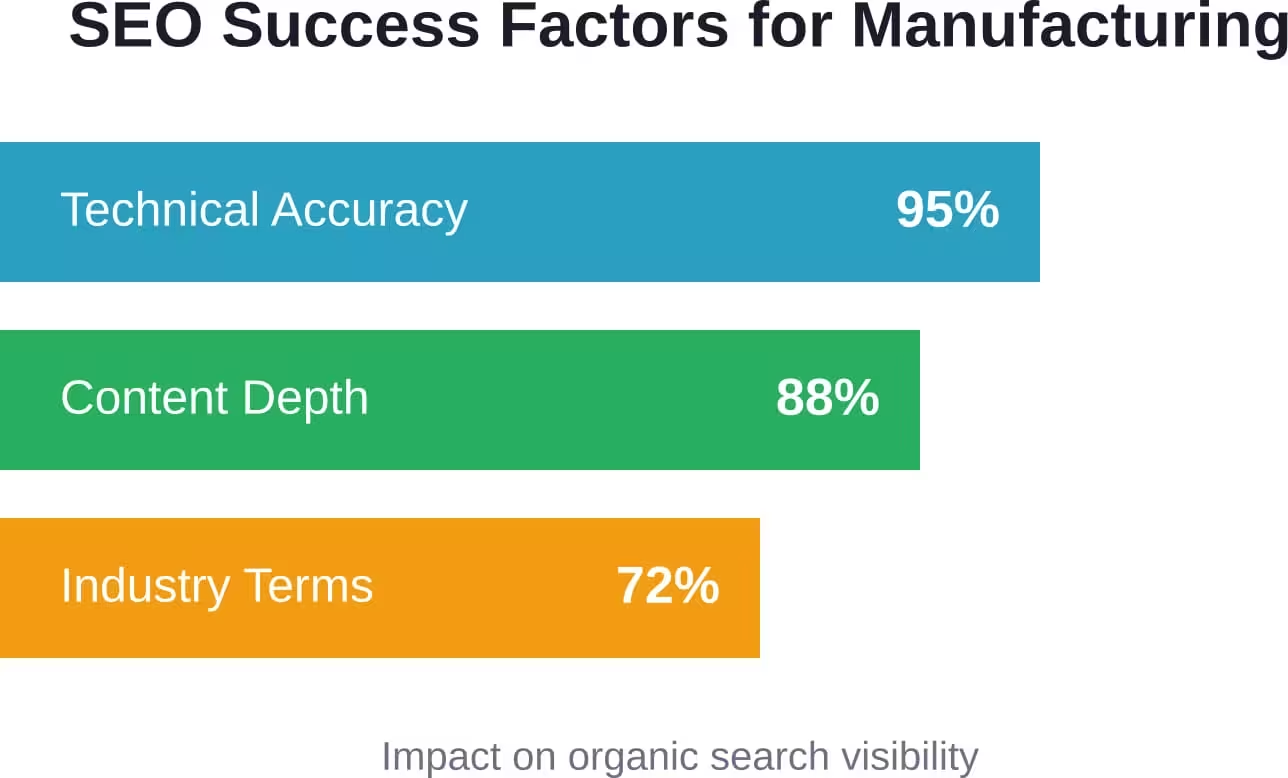
Content Depth Over Keyword Density
Manufacturing topics demand comprehensive coverage. A product page for industrial pumps might need to cover materials, flow rates, pressure ratings, temperature ranges, motor specifications, seal types, certifications, applications, and maintenance requirements.
Search engines reward thorough, accurate technical content. Superficial pages targeting keywords don’t compete with genuinely informative resources that answer real engineering questions.
Integration with Enterprise Manufacturing Systems
Manufacturing websites rarely operate in isolation. They connect to enterprise systems that run the business.
ERP and Inventory Connections
Real-time inventory visibility prevents disappointed customers and wasted sales time. When the website connects to the ERP system, product availability reflects actual stock levels and production schedules.
Pricing can reflect customer-specific agreements, volume discounts, and current material costs. Quote requests automatically flow into the ERP system where they’re tracked alongside other opportunities.
This integration requires careful API design, data synchronization logic, and error handling. Product data structures in the ERP might not map cleanly to web presentation formats.
Customer Portal Functionality
Existing customers need different functionality than prospects. Authenticated customer portals provide order history, tracking information, invoices, technical documentation for purchased products, and reordering capabilities.
The portal becomes a self-service channel that reduces customer service workload while improving customer satisfaction. Engineers can download the exact version of documentation matching their purchased equipment revision.
Distributor and Partner Ecosystem Tools
Many manufacturers sell through distributor networks. The website needs to support this channel without competing with it.
Distributor locators, partner portals with marketing resources, and lead routing based on territory all require technical implementation. The website becomes a tool that strengthens channel relationships rather than creating channel conflict.
User Experience Design for Technical Buyers
Manufacturing buyers are task-oriented. They arrive with specific goals: find a part, verify compatibility, download a CAD model, request a quote.
User experience design must prioritize efficiency over engagement. That doesn’t mean ugly or boring—it means respecting the user’s time and expertise.
Information Architecture for Complex Catalogs
Organizing thousands of products requires clear taxonomy. Products might be categorized by industry application, by technical characteristics, by product family, or by use case.
Effective information architecture supports multiple navigation paths. An HVAC engineer looking for industrial fans approaches the catalog differently than a wastewater facility manager solving a specific problem.
Faceted navigation, clear category hierarchies, and prominent search functionality let users find products their preferred way.
Technical Documentation Accessibility
Engineers need CAD files, spec sheets, installation guides, and compliance certificates. This documentation should be immediately accessible from product pages.
Research examining website development practices found that accessibility matters for technical documentation: screen reader compatibility, keyboard navigation, and downloadable formats that work with assistive technologies.
Decision Support Tools
Product selectors, compatibility checkers, and configuration tools help buyers navigate complex technical decisions. These interactive tools demonstrate expertise while qualifying leads.
When a buyer uses a pump selector tool that asks about flow rates, viscosity, and chemical compatibility, they’re providing valuable data about their application. The tool recommends appropriate products while the form submission creates a qualified lead with application details already captured.
Development Methodology and Team Structure
How the website gets built matters as much as what gets built.
Choosing Between Custom and Platform-Based Development
Manufacturing websites typically need customization that standard templates don’t provide. The question is how much custom development versus extending existing platforms.
Enterprise CMS platforms like Sitecore, Adobe Experience Manager, or Optimizely provide robust foundations but require significant implementation work. Open-source platforms like WordPress or Drupal offer flexibility at lower licensing costs but need careful architecture planning for enterprise scalability.
Custom builds provide ultimate flexibility but longer timelines and higher maintenance costs. The right choice depends on specific requirements, internal technical capabilities, and integration complexity.
Agile Development for Manufacturing Complexity
Research analyzing software development practices found that generational experience explains significant variation in resource productivity.
Manufacturing website projects benefit from iterative development. Start with core functionality, launch, gather user feedback, and enhance. Trying to build everything before launch often results in delayed projects that miss evolving requirements.
That said, roughly one-third of organizations produce documentation for website development processes, creating knowledge transfer challenges when team members change.
Post-Launch Maintenance and Evolution
Manufacturing websites require ongoing maintenance: security updates, content additions, feature enhancements, and integration updates as enterprise systems evolve.
Budget for continuous improvement rather than treating the website as a finished project. Plan for quarterly feature releases, monthly content updates, and continuous optimization based on analytics and user feedback.
| Maintenance Activity | Frequency | Responsibility |
|---|---|---|
| Security patches | As released | Development team |
| Product data updates | Daily/Weekly | Product management |
| Content additions | Weekly | Marketing team |
| Performance monitoring | Daily | Operations team |
| Feature enhancements | Quarterly | Development team |
| SEO optimization | Monthly | Marketing team |
Measuring Manufacturing Website Performance
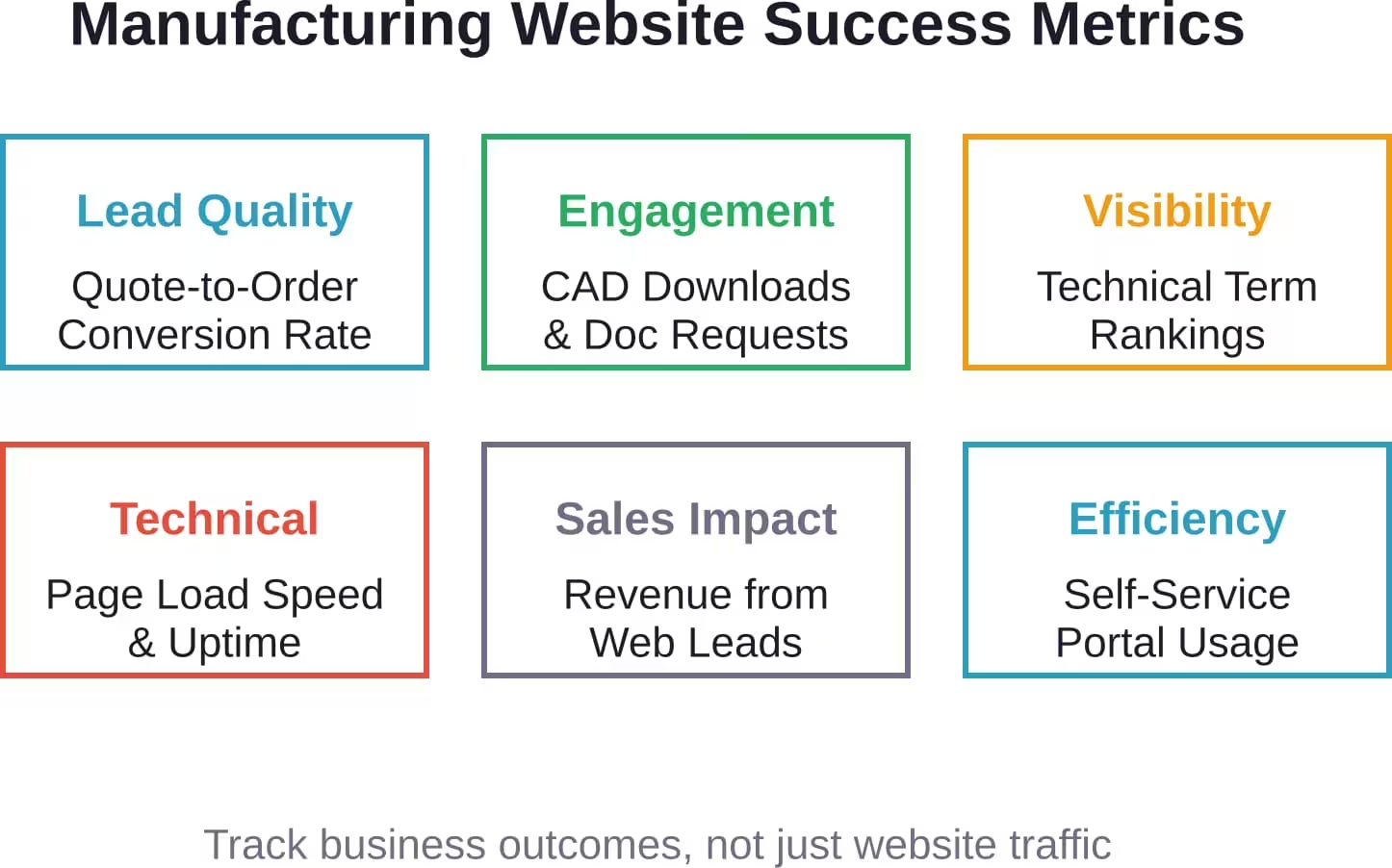
Not all metrics matter equally for manufacturing websites. Traffic volume means little if visitors aren’t qualified prospects. Bounce rate might be high because users found exactly what they needed on a single product page.
Lead Quality Over Lead Quantity
Track not just form submissions but what happens next. How many quote requests turn into actual quotes? How many sample requests convert to orders? What’s the average order value from web-generated leads versus other channels?
Connect website analytics to CRM data to understand the full funnel. Some website visitors might not convert immediately but enter nurture sequences that generate revenue months later.
Technical Content Engagement
Time on page for technical content, documentation downloads, CAD file requests, and video views indicate serious buyer interest. These engagement signals identify hot prospects for sales follow-up.
Track which products generate the most documentation downloads. That data reveals market interest and helps prioritize product development and marketing efforts.
Search Performance for Target Keywords
Manufacturing SEO focuses on specific technical terms. Track rankings for target keywords tied to revenue-generating products and applications.
Monitor search impression share—the percentage of relevant searches where the website appears. Low impression share indicates missed opportunities where competitors capture traffic.
Digital Transformation and Industry 4.0 Considerations
Manufacturing faces broader digital transformation that extends beyond public-facing websites. Industry 4.0 initiatives, smart manufacturing, and AI adoption are reshaping how manufacturers operate.
According to the National Association of Manufacturers’ Manufacturing Leadership Council report, 82% of manufacturers cite lack of AI-ready skills as the top workforce challenge.
The website plays a role in this ecosystem. IoT-connected products need customer-facing portals for monitoring and management. Predictive maintenance systems generate service opportunities that flow through digital channels. Smart factory capabilities enable real-time order tracking and production visibility that customers increasingly expect.
NIST has released frameworks addressing foundational cybersecurity activities for IoT product manufacturers. Security considerations extend from the website through connected products and manufacturing systems.
Website development needs to anticipate these evolving requirements. APIs that today connect to ERP systems might tomorrow need to surface IoT device data or integrate with AI-powered customer service systems.
Common Pitfalls in Manufacturing Website Projects
Certain mistakes appear repeatedly in manufacturing web development. Avoiding these pitfalls shortens timelines and improves outcomes.
Underestimating Content Migration Complexity
Moving thousands of product pages from legacy systems to new platforms takes longer than expected. Product data lives in multiple systems, specifications need verification, and images require optimization.
Plan for extensive data cleanup. Product information that accumulated over decades often contains inconsistencies, outdated information, and formatting quirks that need manual correction.
Neglecting Internal Stakeholder Training
The marketing team needs training on the CMS. The sales team needs to understand how leads flow from the website to the CRM. Customer service needs access to what customers see online.
Budget time and resources for comprehensive training. The sophisticated website that nobody knows how to use doesn’t generate results.
Ignoring Mobile Usage Patterns
Assuming all technical research happens at desktop computers misses how manufacturing buyers actually work. Field service technicians look up part numbers on phones. Engineers reference specifications on tablets during shop floor conversations.
Test thoroughly on actual mobile devices in realistic conditions. That PDF spec sheet that’s readable on a 27-inch monitor might be unusable on a smartphone screen.
Treating the Website as a One-Time Project
The website launch is the beginning, not the end. Markets change, products evolve, competitors improve their digital presence, and customer expectations shift.
Organizations that treat websites as ongoing platforms rather than completed projects see better long-term results. Continuous optimization based on user feedback and performance data compounds over time.
Selecting the Right Development Partner
Manufacturing website development requires specialized expertise. Not every web development agency understands the unique requirements of industrial B2B businesses.
Industry Experience and Technical Understanding
Look for agencies with manufacturing client portfolios. They’ll understand the sales cycle, technical content requirements, and integration challenges without extensive education.
Ask specific questions about their experience with product configurators, ERP integrations, customer portals, and technical SEO. Generic web design skills don’t translate directly to manufacturing requirements.
Development Methodology and Communication
Clear project management, regular communication, and realistic timelines matter more than cutting-edge technology. The agency that promises a three-month timeline for a complex manufacturing site is either inexperienced or planning to cut corners.
Request detailed project plans showing phases, deliverables, decision points, and dependencies. Manufacturing websites involve multiple stakeholders; the development process needs to accommodate input from product management, sales, marketing, IT, and executive leadership.
Post-Launch Support and Maintenance
What happens after launch matters as much as the initial build. Ask about support models, response times for issues, processes for enhancements, and how updates are prioritized and scheduled.
Some agencies specialize in new builds but provide minimal ongoing support. Manufacturing websites need long-term partners who can maintain and evolve the platform as business needs change.
Develop a Reliable Manufacturing Website to Win More Orders
Manufacturing companies often rely on websites that show products but don’t help move conversations forward. Visitors don’t always understand capabilities, differences between solutions, or how to take the next step. Lengreo works with custom website development to solve exactly this problem. Instead of fitting your business into a standard layout, they build around how your products, services, and inquiries actually work. This allows you to present technical information more clearly and remove friction between first visit and initial contact.
Turn Your Website Into a Practical Tool for Sales and Inquiries
Lengreo focuses on building websites that support business goals instead of acting as simple presentation pages:
- Clear structure for services, content, and user journeys
- Flexible approach using JavaScript and WordPress to adapt to different needs
- Focus on building websites that support lead generation and client acquisition
- Mobile-friendly layouts for users browsing across devices
- Fast, stable pages that improve overall experience
Get a website that supports how you sell — book a consultation at Lengreo and move your project forward.
Future Trends Shaping Manufacturing Websites
Several emerging trends will influence manufacturing website development over the coming years.
Augmented reality for product visualization lets customers see equipment in their facility before purchasing. 3D configurators enable real-time customization with instant pricing. AI-powered chatbots answer technical questions and route complex inquiries to appropriate specialists.
Personalization engines deliver different content based on industry, role, or previous behavior. Account-based marketing platforms identify target company visitors and customize their experience. Predictive analytics identify high-intent visitors for sales follow-up.
Sustainability reporting becomes increasingly important as customers demand transparency about environmental impact. Manufacturing websites will need to communicate carbon footprints, circular economy initiatives, and ESG commitments with the same rigor applied to technical specifications.
The digital thread connecting design, manufacturing, and customer experience will surface more operational data through customer-facing interfaces. Buyers will expect real-time production status, supply chain transparency, and delivery visibility as standard features.
Conclusion
Website development for manufacturers demands a fundamentally different approach than consumer-focused web projects. The technical complexity, integration requirements, lengthy sales cycles, and specialized buyer needs require expertise that goes beyond standard web design skills.
Success depends on treating the website as a strategic business platform, not a digital brochure. The manufacturers winning online invest in sophisticated functionality that generates qualified leads, supports complex buying decisions, and integrates seamlessly with enterprise systems. They measure success by business outcomes—qualified leads, conversion rates, and revenue impact—rather than vanity metrics like traffic volume.
The investment in proper manufacturing website development pays dividends for years. Done right, the website becomes the most productive member of the sales team, working 24/7 to attract prospects, educate buyers, and convert interest into revenue.
Start by assessing current website performance against business objectives. Identify gaps between what the website delivers today and what modern manufacturing buyers expect. Then build a roadmap that addresses those gaps systematically, prioritizing the highest-impact improvements first.
The manufacturers who embrace digital transformation through effective website development position themselves to capture market share, serve customers more efficiently, and compete successfully in an increasingly digital industrial marketplace.