Quick Summary: Website development for life science companies requires balancing technical precision, regulatory compliance, and user engagement. Effective platforms prioritize clear communication of complex science, FDA/HIPAA compliance, and conversion-optimized design. Strategic development focuses on trust-building, data visualization, and lead generation to differentiate organizations in a competitive marketplace.
The life science sector operates under constraints most industries don’t face. Regulatory oversight from the FDA, HIPAA requirements, and the need to communicate highly technical information to diverse audiences create unique challenges.
But here’s the thing—a well-executed website isn’t just a digital brochure. It’s a lead generation platform, a trust-building mechanism, and often the first touchpoint for investors, partners, and customers.
This guide covers the technical and strategic considerations that separate effective life science websites from generic corporate templates.
Why Life Science Website Development Is Different
Life science organizations—whether pharmaceutical companies, biotech startups, or medical device manufacturers—operate in a regulatory environment that directly impacts website development.
The FDA’s Digital Health Center of Excellence provides guidance on software functions that fall under regulatory oversight. According to the FDA, digital health technologies require developers to understand regulatory considerations throughout the development process.
HIPAA compliance adds another layer. The Summary of the HIPAA Privacy Rule defines protected health information and how it can be used. Penalties for violations vary significantly based on factors including willful neglect and knowledge of the failure to comply.
Beyond compliance, life science websites must translate complex scientific concepts for multiple audiences: researchers, clinicians, investors, patients, and regulatory bodies. Each group requires different content depth and technical language.
Core Components of Effective Life Science Websites
Successful website development for life science organizations hinges on several technical and strategic elements.
Regulatory Compliance Architecture
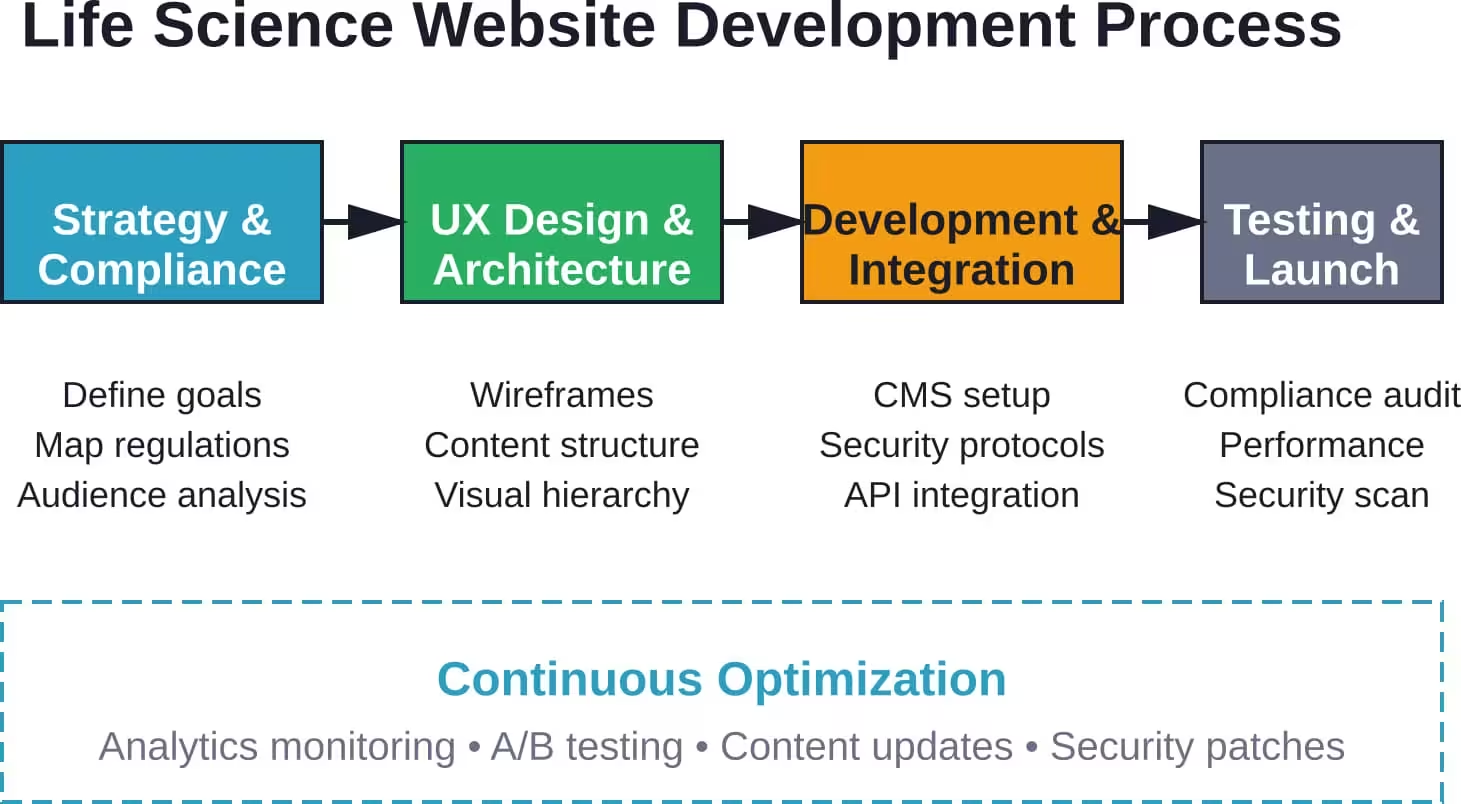
Compliance isn’t an afterthought—it shapes the entire development process.
For organizations developing digital health products, the FDA’s Digital Health Policy Navigator helps determine whether software functions require regulatory oversight. The tool guides developers through digital health policies to assess device classification.
On December 29, 2022, the Consolidated Appropriations Act added section 524B to the Federal Food, Drug, and Cosmetic Act, establishing cybersecurity requirements for medical devices. These requirements took effect on March 29, 2023.
NIST provides the Cybersecurity Framework that helps organizations manage cybersecurity risk. For healthcare specifically, NIST published guidance to help organizations comply with the HIPAA Security Rule.
| Compliance Area | Key Requirement | Impact on Development |
|---|---|---|
| FDA Digital Health | Software function classification | Content disclaimers, product labeling |
| HIPAA Privacy | Protected health information controls | Form handling, data storage, tracking |
| Cybersecurity | Device security measures | Secure architecture, vulnerability management |
| Clinical Trial Reporting | ClinicalTrials.gov submission | Data integration, reporting workflows |
Data Visualization and Scientific Communication
Visual content can enhance understanding and retention—and generates 94% more views according to analyses of life science marketing content.
Interactive data visualizations transform complex datasets into digestible formats. For clinical trial data, researchers need to see enrollment timelines, efficacy endpoints, and safety profiles at a glance.
According to the Tufts Center for the Study of Drug Development, the mean direct cost to conduct Phase II and Phase III clinical trials reaches $40,000 per day. Delays launching a product cost approximately $800,000 per day. These figures underscore why efficient data presentation matters for stakeholder communication.
Interoperability and Standards
Life science organizations increasingly need websites that integrate with clinical systems, research databases, and regulatory platforms.
HL7 FHIR (Fast Healthcare Interoperability Resources) provides a standard for exchanging healthcare information. According to HL7’s 2026 AI Challenge documentation, the organization is shaping the future of responsible AI in healthcare through standardized data exchange.
For clinical research, the Vulcan FHIR Accelerator focuses on moving the needle on clinical trial timelines. Clinical trial technology modernization through standards like those developed by IEEE’s Clinical Trial Technology Modernization Network enables decentralized trials and efficient data collection.
Technical Development Considerations
The technical foundation determines whether a life science website can scale with organizational growth and regulatory changes.
Security and Infrastructure
Cybersecurity isn’t optional. The FDA has issued alerts about medical device vulnerabilities requiring manufacturers to address security risks.
NIST Cybersecurity White Paper CSWP 34 addresses mitigating cybersecurity and privacy risks in telehealth and smart home integration. These frameworks apply to any life science website handling sensitive data.
Infrastructure decisions impact compliance. Cloud hosting must meet HIPAA requirements if protected health information is involved. Content delivery networks need geographic redundancy while respecting data sovereignty regulations.
Content Management and Workflow
Life science content requires review workflows that accommodate scientific accuracy checks, legal review, and regulatory compliance verification before publication.
WordPress remains popular for life science website development, with custom development services starting at a rate of £90 per hour according to industry providers. The platform’s flexibility supports custom taxonomies for scientific content, role-based access controls, and version management.
But the platform matters less than the workflow design. Multiple stakeholder reviews demand staging environments, approval queues, and audit trails documenting who changed what and when.
Conversion Optimization for Scientific Audiences
Life science websites serve specific business goals: attracting investors, recruiting clinical trial participants, generating qualified leads, or establishing thought leadership.
According to a biotech marketing agency case study, implementing targeted design improvements focused on performance and engagement resulted in significant increases in website visitors—including examples of 56% increase in organic site traffic.
Conversion optimization in this context means understanding audience intent. Researchers evaluating a laboratory reagent need technical specifications, validation data, and protocol examples. Investors reviewing a biotech startup need pipeline data, intellectual property status, and management team credentials.
Clear calls-to-action matter, but so does reducing friction. Forms that request excessive information deter qualified leads. According to community discussions among life science marketers, progressive profiling—collecting information over multiple interactions rather than upfront—improves conversion rates.
Develop a Life Science Website Built for Your Business Needs
Life science websites often struggle when they rely on standard templates. Complex data, services, and workflows don’t fit well into rigid structures, which leads to confusion and drop-offs. Lengreo focuses on custom web development, building websites that match specific business requirements instead of forcing them into platform limits. This gives companies full control over how their content and functionality are structured and presented.
Get a Website Built to Handle Complex Content Hassle-Free
Lengreo builds websites that stay manageable as your pages, content, and use cases expand:
- Structure planned early to avoid messy page hierarchies later
- Layouts that remain consistent across different sections of the site
- Stable performance that doesn’t degrade as more content is added
Get a website that fits your workflows and requirements — talk to Lengreo and map out your project.
Common Pitfalls in Life Science Website Development
Several patterns consistently undermine life science website projects:
- Overcomplicating the technical architecture creates maintenance burdens: Custom-built content management systems seem appealing but require ongoing development resources. Established platforms like WordPress offer sufficient flexibility with lower total cost of ownership.
- Neglecting mobile optimization remains surprisingly common: Researchers and clinicians access content from tablets and smartphones. Responsive design isn’t optional.
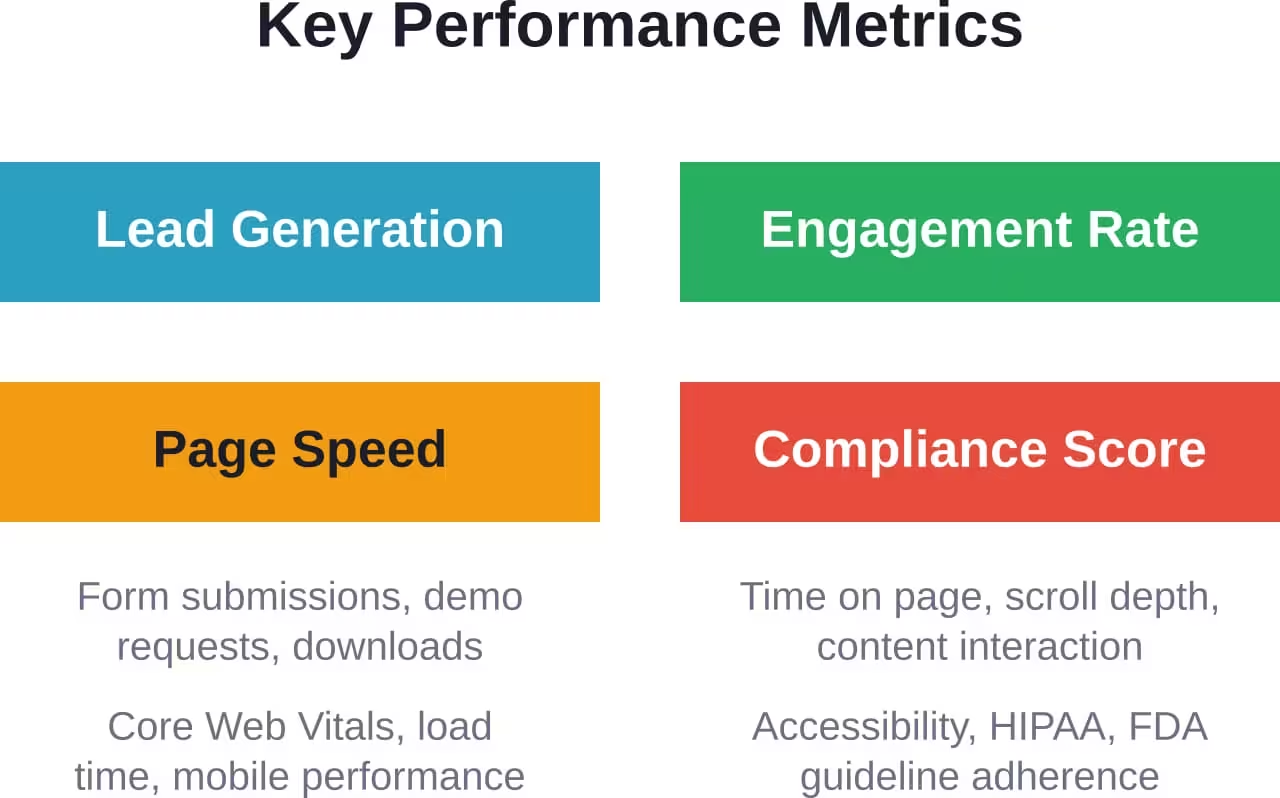
- Ignoring page speed impacts both user experience and search rankings: Core Web Vitals—Google’s metrics for loading performance, interactivity, and visual stability—directly affect organic search visibility.
- Treating compliance as a checkbox rather than an ongoing process creates risk: Regulatory requirements evolve. The FDA issued new Clinical Decision Support Software guidance on January 29, 2026, and updated General Wellness guidance on January 6, 2026. Websites must adapt to these changes.
Measuring Success
Analytics for life science websites extend beyond standard traffic metrics:
- Track qualified lead generation: form submissions from target audiences, not just total conversions.
- Monitor engagement with scientific content: time spent on technical pages, downloads of white papers or protocols, video completion rates for product demonstrations.
- Assess mobile performance separately: Many B2B tools default to desktop analytics, but life science professionals increasingly consume content on mobile devices.
Regular compliance audits verify ongoing adherence to regulatory requirements. Automated scanning tools identify accessibility issues, security vulnerabilities, and privacy risks before they become problems.
Moving Forward
Website development for life science organizations demands more than technical proficiency. Success requires understanding regulatory landscapes, scientific communication principles, and the specific needs of highly educated audiences.
The intersection of compliance, conversion optimization, and technical performance creates challenges. But organizations that invest in strategic website development gain competitive advantages: stronger brand authority, more qualified leads, and more effective stakeholder communication.
Start with clear goals. Define target audiences and map their information needs. Build compliance into the foundation rather than layering it on afterward. Measure what matters, iterate based on data, and maintain adaptability as regulations evolve.
Ready to build a life science website that drives measurable results? Focus on the fundamentals: regulatory compliance, scientific accuracy, user experience, and conversion optimization. The technical details matter, but strategic clarity matters more.