

Quick Summary: Jewelry retailers need specialized website development that handles high-resolution product imagery, real-time inventory integration with suppliers like Rapnet and Stuller, secure payment processing for high-value transactions, and compliance with FTC Jewelry Guides. The right platform combines elegant product visualization, B2B dealer portals for wholesale operations, and mobile-optimized design that converts browsers into buyers.
Building a website for a jewelry business isn’t like launching a standard ecommerce store. The stakes are higher—literally. When customers browse engagement rings or custom pieces, they’re making decisions that run thousands of dollars, and your website needs to earn that level of trust.
Generic website builders fall short because they don’t account for the jewelry industry’s unique challenges. Real-time inventory synchronization with diamond suppliers, multi-tier pricing for wholesale buyers, FTC compliance for product descriptions—these aren’t optional features. They’re table stakes.
Here’s what separates websites that drive jewelry sales from those that just look pretty.
Why Generic Platforms Fail Jewelry Retailers
Most jewelry businesses start with Shopify or WordPress because they’re familiar names. That works fine for selling t-shirts. But jewelry ecommerce has specific requirements that standard templates can’t handle.
Product visualization is the first breaking point. A jewelry piece needs multiple high-resolution images—top view, side view, detail shots of settings, video of light refraction through stones. Standard product galleries choke on this. They’re built for one hero image and a couple of thumbnails.
Then there’s inventory complexity. Many jewelry retailers don’t actually stock every piece they sell. They integrate with suppliers like Rapnet, Nivoda, IDEX, or Stuller to access thousands of diamonds and settings. When a customer browses your site, they need to see real-time availability and pricing from these supplier APIs. Standard ecommerce platforms don’t offer this integration out of the box.
The Federal Trade Commission’s Jewelry Guides add another layer. According to the FTC, marketers must truthfully represent gemstones, precious metals, and their imitations. Your product descriptions need precise terminology—”lab-created” vs. “natural,” metal purity percentages, gemstone treatments. Generic product fields don’t enforce this level of accuracy.
Build a Better Jewelry Retail Website With Lengreo
Lengreo builds and improves websites, then connects them with SEO, paid ads, tracking, and lead generation. For jewelry retailers, this means a website that presents collections, product pages, custom jewelry services, store details, reviews, and inquiry or purchase paths clearly.
The focus is to help shoppers browse with less friction and take the next step when they are ready. Lengreo can help organize product and collection pages, improve traffic setup, and make inquiries or purchases easier to complete.
Need a Website That Helps Shoppers Act?
Lengreo can help with:
- building or redesigning your website
- improving SEO and paid traffic setup
- setting up tracking and website structure
- refining collection, product, and inquiry pages
👉 Contact Lengreo to discuss your website and setup.
Essential Features for Jewelry Website Development
Specialized jewelry website platforms like Thinkspace and Punchmark exist because the industry demands specific functionality. Understanding what features actually matter helps you evaluate platforms and developers.
High-Resolution Image and Video Support
Jewelry websites need to load fast despite heavy visual content. That means optimized image delivery—automatic compression, lazy loading, and responsive sizing that adjusts for mobile screens.
Video support is equally critical. A 360-degree rotation view or close-up of a diamond’s brilliance does more to sell a piece than ten static photos. The platform needs video hosting that doesn’t kill page speed.
Supplier Inventory Integration
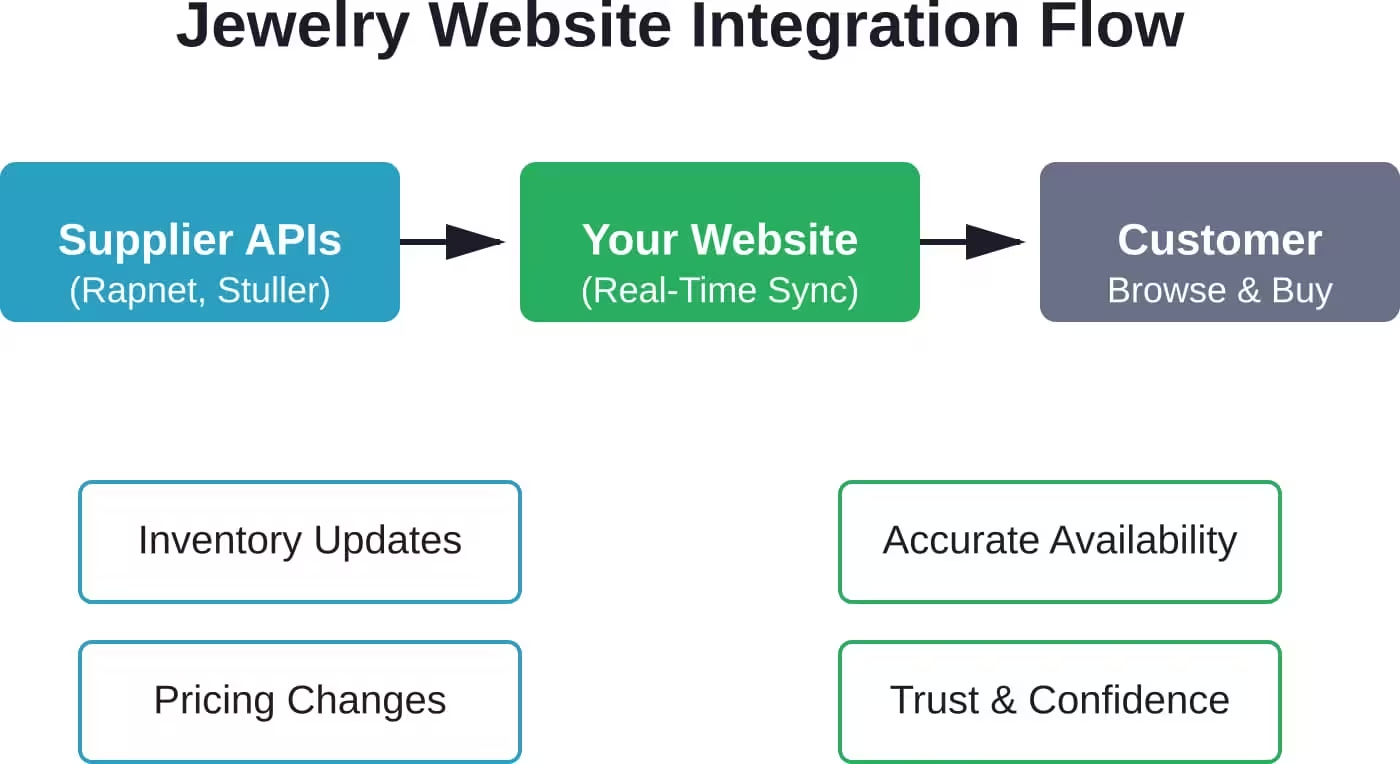
Real-time API connections to diamond and jewelry suppliers transform your website from a digital catalog into a dynamic marketplace. Rapnet API integration lets you pull from thousands of certified diamonds. Stuller API connects to findings, mountings, and finished jewelry.
TransPacific Software specializes in these integrations across platforms including Shopify Plus, WooCommerce, and Magento. The right implementation syncs pricing and availability every few minutes, so customers never see out-of-stock items or outdated prices.
B2B and Multi-Tier Pricing
Jewelry businesses often serve both retail customers and wholesale buyers—other jewelers, designers, or bulk purchasers. Your website needs separate pricing structures and dealer portals.
Multi-tier pricing lets you show different rates based on customer type. A retail browser sees full price. A logged-in wholesale account sees trade pricing. Custom catalogs can limit which products specific dealer groups can access.
Folio3 builds these dealer portals directly into jewelry website development projects, creating password-protected sections where B2B clients place orders, track shipments, and download invoices.
Security and Payment Processing
High-value transactions demand bulletproof security. Customers won’t enter credit card details on a site that looks sketchy or loads slowly.
In 2026, TLS 1.3 is the mandatory encryption standard for jewelry retailers handling high-value transactions, and compliance must adhere to the PCI DSS v4.0.1 requirements, which include mandatory automated multi-factor authentication (MFA) for all administrative access.
The checkout experience itself needs refinement. Jewelry buyers often hesitate before completing purchases. Address autofill, guest checkout options, and multiple payment methods (credit cards, PayPal, financing through Affirm or similar) reduce friction.
Platform Comparison for Jewelry Websites
Choosing between specialized jewelry platforms and customizing general ecommerce systems depends on your business model, budget, and technical resources.
| Platform Type | Best For | Key Strengths | Limitations |
|---|---|---|---|
| Specialized Jewelry Platforms (Thinkspace, Punchmark) | Dedicated jewelry retailers | Built-in supplier integrations, jewelry-specific templates, industry expertise | Higher cost, less flexibility for non-jewelry features |
| Shopify Plus with Custom Development | Growing businesses | Scalable infrastructure, extensive app ecosystem, good support | Requires developer for API integrations, monthly fees increase with sales |
| WooCommerce (WordPress) | Budget-conscious retailers | Lower upfront cost, full control, massive plugin library | Requires hosting management, security updates, performance optimization |
| Magento | Large enterprises | Unlimited customization, handles massive catalogs, robust B2B features | Expensive development, requires dedicated technical team |
Community discussions on platforms like Reddit reveal mixed experiences. Some small jewelry businesses thrive on basic Shopify setups. Others hit walls quickly and migrate to specialized platforms when inventory integration becomes critical.
The short answer? Start with your inventory model. If you’re showcasing primarily supplier inventory through API feeds, a specialized jewelry platform saves months of custom development. If you’re selling your own designed pieces with limited SKUs, a well-configured Shopify or WooCommerce site can work.
Design Considerations That Actually Drive Sales
Beautiful design matters in jewelry ecommerce, but not the way most people think. It’s not about trendy layouts or flashy animations. It’s about removing doubt.
Mobile Optimization Is Non-Negotiable
Mobile traffic dominates jewelry browsing, especially for engagement ring shopping. Couples browse on phones during lunch breaks, on commutes, late at night. Your website needs to load in under three seconds on mobile networks and display product images clearly on small screens.
Punchmark emphasizes speed in their platform, consistently achieving top performance scores. Fast loading isn’t just about user experience—it’s a Google ranking factor that affects how many potential customers even find your site.
Trust Signals and Social Proof
Buying jewelry online requires significant trust. Your website needs visible trust signals: customer reviews with photos, security badges, clear return policies, certifications from organizations like the American Gem Society.
Jewelers of America offers certification programs that validate jewelry knowledge and proficiency to national standards. Displaying JA Professional Certification on your website differentiates your store and enhances credibility with fine jewelry customers.
FTC Compliance for Jewelry Product Descriptions
The Federal Trade Commission takes jewelry marketing seriously. The FTC Jewelry Guides specify how jewelers must describe products to avoid misleading consumers.
Key requirements include accurate representation of gemstones (natural vs. lab-created vs. imitation), proper disclosure of treatments (heat treatment, clarity enhancement), and precise metal purity statements (14K, 18K, platinum percentages).
Your website’s product description templates should enforce this accuracy. Drop-down menus for stone origin, treatment checkboxes, automatic metal purity formatting—these design choices keep your business compliant while reducing manual description errors.
The INFORM Consumers Act adds a compliance layer for online marketplaces. While this primarily affects multi-seller platforms, understanding these regulations helps jewelry retailers maintain transparency and consumer trust.
Development Timeline and Budget Considerations
Realistic expectations prevent frustration. A basic jewelry website on Shopify with minimal customization might launch in 4-6 weeks. A fully custom Magento build with complete supplier API integration, B2B portals, and custom design may take several months.
Budget follows complexity. Specialized jewelry platforms charge monthly fees, plus design and setup fees. Custom development on enterprise platforms varies widely depending on feature requirements.
That said, phased development makes sense for many jewelry retailers. Launch with core ecommerce functionality and your own inventory. Add supplier API integration in phase two. Build out B2B portals in phase three. This approach spreads costs and lets you refine requirements based on actual customer behavior.
Marketing Integration and SEO
A beautiful jewelry website that nobody finds is worthless. Development should include technical SEO foundations from day one.
Proper heading hierarchy, meta descriptions for every product, optimized image alt text, clean URL structures—these aren’t afterthoughts. Schema markup for products and reviews helps Google understand your content and display rich results in search.
Email marketing integration matters too. Capturing emails from browsers who don’t immediately buy, then nurturing them with helpful content, drives eventual conversions. Abandoned cart recovery is particularly valuable in jewelry ecommerce where customers often research extensively before purchasing.
Making the Right Development Choice
Website development for jewelry retailers isn’t one-size-fits-all. The right approach depends on your inventory model, target customers, and growth plans.
Specialized platforms like Thinkspace and Punchmark offer turnkey solutions with industry-specific features built in. They’re faster to launch and include support from teams who understand jewelry retail challenges. Custom development on Shopify Plus, WooCommerce, or Magento provides more flexibility but requires technical expertise and longer timelines.
Start by mapping your requirements. What inventory will you sell—your own pieces, supplier inventory, or both? Do you need B2B functionality for wholesale accounts? What integrations are essential versus nice-to-have?
Then evaluate platforms against those requirements. Request demos from specialized jewelry platforms. Consult with developers experienced in jewelry ecommerce who can show relevant portfolio examples.
The website becomes your most valuable sales tool when it’s built around how jewelry customers actually shop—high-quality imagery, detailed product information, seamless mobile browsing, secure checkout, and the trust signals that turn browsers into buyers.