Quick Summary: Website development for jewelers requires specialized ecommerce platforms that handle inventory management, high-resolution imagery, secure payments, and mobile-responsive design. A professional jewelry website should showcase products with detailed photography, integrate with diamond and inventory databases, and provide seamless checkout experiences that build customer trust while reflecting the brand’s unique aesthetic.
The jewelry industry has transformed dramatically over the past decade. What used to be a business built entirely on foot traffic and word-of-mouth now demands a sophisticated digital presence.
But here’s the thing: building a website that actually sells jewelry isn’t the same as creating a standard ecommerce store. Jewelry customers expect high-resolution imagery that captures every facet and detail. They need reassurance about authenticity, pricing transparency, and secure transactions. And they’re shopping on smartphones more than ever—over 60% of online shopping happens on mobile devices.
For independent jewelers, growing retailers, and multi-location brands, the website isn’t just a digital catalog anymore. It’s the foundation of the entire business strategy.
Why Jewelry Websites Need Specialized Development
Most generic website builders and ecommerce platforms fall short when it comes to jewelry retail. The requirements are just different.
Traditional product pages work fine for clothing or electronics. But jewelry pieces require multiple high-resolution images from different angles, zoom functionality that reveals craftsmanship details, and the ability to showcase variations in metal type, gemstone options, and sizing without creating dozens of duplicate listings.
Then there’s inventory management. Jewelry businesses often work with a hybrid model—some pieces in ready stock, others made to order. Dynamic pricing becomes essential when gold rates fluctuate daily and gemstone prices vary by carat weight and quality grade.
According to Jewelers of America’s Skills Spotlight, companies are increasingly hiring those who specialize in CAD, web development and e-commerce—recognizing that technology expertise has become just as important as traditional jewelry skills in today’s market.
The Security Imperative
Jewelry websites handle high-value transactions, making them attractive targets for cybercriminals. Security isn’t optional.
Research indicates that most security incidents and data breaches stem from social engineering attempts and stolen passwords. With many users reusing passwords across multiple sites and a significant portion of data breaches involving stolen passwords, the security infrastructure behind a jewelry website requires serious attention.
Payment gateways must be PCI-compliant. SSL certificates are mandatory. And implementing multi-factor authentication for customer accounts protects both the business and its clients from account takeovers.
Platform Selection for Jewelry Ecommerce
Choosing the right development platform determines everything else downstream—from available features to long-term scalability.
Several platforms dominate the jewelry website space, each with distinct strengths.
Shopify for Jewelry Stores
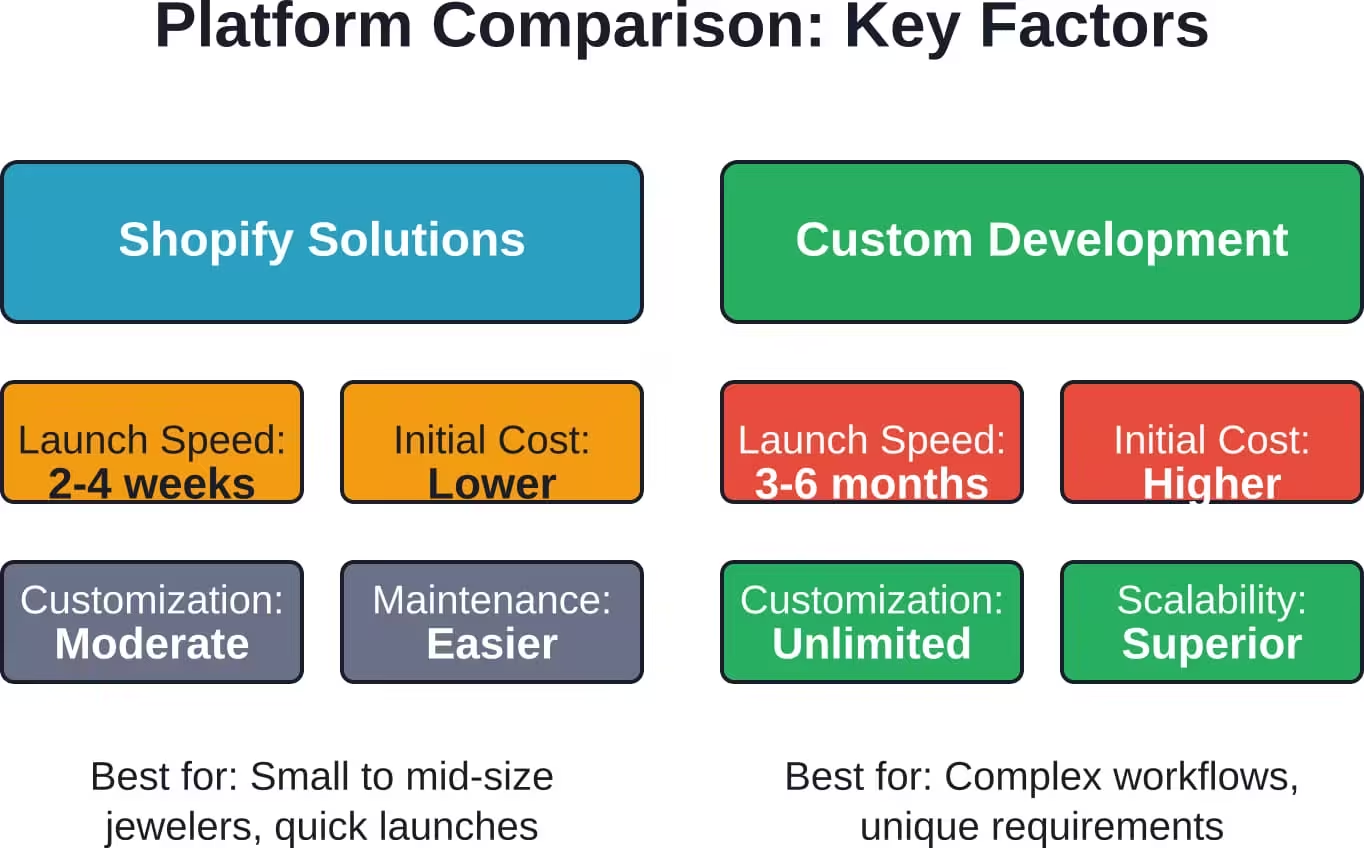
Shopify has emerged as a popular choice for jewelry retailers, particularly those without extensive technical teams. The platform offers jewelry-specific themes, built-in payment processing, and a robust app ecosystem.
But the real advantage comes from specialized Shopify partners who understand jewelry retail. These partners build custom functionality for inventory feeds, diamond search integration, and virtual try-on features that generic Shopify stores lack entirely.
Subscription costs vary based on business size and required features. Real-time shipping calculations, abandoned cart recovery, and multi-channel selling capabilities come standard even on mid-tier plans.
Custom Development Solutions
For jewelers with unique requirements—complex pricing logic, extensive customization workflows, or integration with specialized CAD software—custom development often makes more sense than adapting a platform.
Custom websites can handle component-level pricing (calculating costs based on metal weight, gemstone specifications, and labor separately), manage purity variations, and synchronize with in-store POS systems in ways that template-based solutions struggle to achieve.
The tradeoff? Development time and cost. Custom solutions require larger upfront investment and ongoing developer relationships for maintenance and updates.
Build a Jewelry Website for Sales and Growth
Jewelry websites need to handle growing catalogs, mobile usability, customization features, and overall website performance without becoming difficult to manage. Lengreo develops eCommerce and business websites through a process that includes business analysis, prototyping, development, QA, and post-launch support. Their team primarily works with JavaScript and WordPress, helping businesses build flexible websites that are easier to maintain and adapt as operational needs change.
Choose a Proven Development Team
With Lengreo, you get:
- Full commitment to your project goals and requirements
- Development aligned with your timeline and budget
- Flexible website solutions for ecommerce and custom functionality
👉Talk to Lengreo about building a jewelry website that supports both daily operations and long-term ecommerce growth.
Essential Features for Jewelry Websites
Certain features separate functional jewelry websites from exceptional ones that actually convert browsers into buyers.
High-Resolution Product Photography
Image quality makes or breaks jewelry sales online. Customers can’t physically examine pieces, so photographs must do that work instead.
Multiple angles are mandatory—front view, side profile, clasp detail, and scale reference. Zoom functionality should reveal craftsmanship details like prong work, engraving, and stone settings. 360-degree photography or video adds another dimension entirely.
The technical requirements matter too. Images should be optimized for web delivery (compressed without quality loss) and served via CDN for fast loading regardless of customer location. Slow-loading images kill conversion rates faster than almost anything else.
Inventory Integration and Management
Managing jewelry inventory gets complicated fast. Between ready-made pieces, customizable options, and made-to-order items, the backend systems need sophistication that basic ecommerce platforms don’t provide out of the box.
Integration with diamond databases lets jewelers offer customers access to thousands of stones without holding physical inventory. Real-time synchronization prevents overselling. And centralized product tables prevent SKU proliferation that makes catalog management impossible.
For jewelers working with suppliers, API connections that automatically update availability and pricing save countless hours of manual data entry while eliminating costly errors.
Mobile-Responsive Design
With over 60% of online shopping happening on smartphones, mobile responsiveness isn’t a nice-to-have feature anymore—it’s fundamental architecture.
Jewelry websites face particular mobile challenges. Those high-resolution images need to load quickly on cellular connections. Navigation must work perfectly with touch inputs. And checkout flows need to be streamlined since mobile users have less patience for multi-step processes.
Testing across devices—various iPhone models, Android phones, tablets, and different browsers—catches issues before customers encounter them.
Secure Payment Processing
Payment security builds customer trust, particularly important for high-value jewelry purchases where buyers need reassurance.
PCI DSS compliance is mandatory for any business processing credit card payments. But compliance alone doesn’t guarantee security—implementation matters.
Tokenization protects card data by replacing sensitive information with non-sensitive equivalents. SSL certificates encrypt data in transit. And offering multiple payment methods (credit cards, PayPal, Apple Pay, financing options) increases conversion by meeting customer preferences.
Design Considerations for Jewelry Brands
Design aesthetics need to match brand positioning. A website selling vintage estate jewelry should look and feel different from one focused on modern minimalist pieces.
Template selection matters enormously. Minimalist designs work well for modern jewelry, emphasizing clean lines and letting product photography dominate. Ornate templates suit vintage or bohemian collections where decorative elements reinforce the aesthetic.
But templates are starting points. Customization brings brand identity to life through color palettes that complement jewelry tones, typography that reflects brand personality, and layout choices that guide customer attention to key pieces.
User Experience and Navigation
Even beautiful websites fail if customers can’t find what they’re looking for. Navigation structure needs to be intuitive and accommodate multiple browsing paths.
Category organization works best when it matches how customers think about jewelry. Some browse by type (rings, necklaces, earrings), others by occasion (engagement, anniversary, everyday), and still others by price range.
Filtering and sorting options help customers narrow vast selections to relevant choices. Filter by metal type, gemstone, price, style, or availability. Sort by newest arrivals, price (high to low or low to high), or popularity.
Search functionality needs to be robust and forgiving. Customers might search for “rose gold engagement rings” or “diamond studs under $1000” and expect relevant results either way.
| Design Element | Impact on Conversions | Implementation Priority |
|---|---|---|
| High-resolution zoom | Increases buyer confidence by showing detail | Critical |
| Multiple product angles | Reduces uncertainty and return rates | Critical |
| Mobile optimization | Captures 60%+ of traffic effectively | Critical |
| Fast page load speed | Reduces bounce rate significantly | High |
| Clear pricing display | Builds trust and transparency | High |
| Customer reviews | Provides social proof | Medium |
| Wishlist functionality | Enables consideration over time | Medium |
Development Costs and Investment
Understanding cost structures helps jewelers budget appropriately and avoid expensive surprises mid-project.
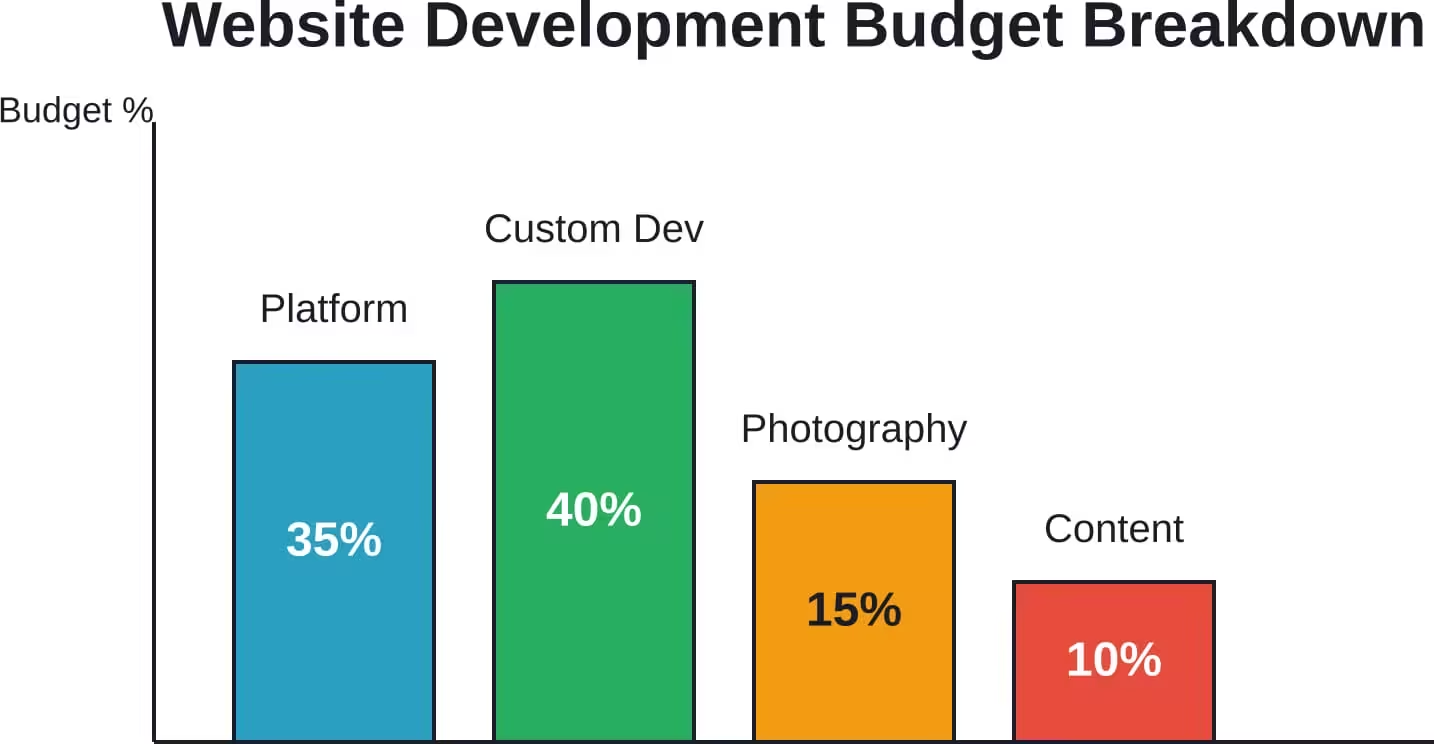
Platform-based solutions typically involve monthly subscription fees plus transaction costs. Check the official websites for current pricing tiers, as these change frequently. Additional costs come from premium themes, third-party apps for specialized functionality, and developer time for customization.
Custom development operates differently. Projects are usually quoted as fixed bids or hourly rates. Technology specialists in the jewelry industry are compensated competitively within the broader market, with salaries varying based on experience and role specialization—helpful context for understanding developer costs.
Ongoing maintenance represents another budget consideration. Security updates, content changes, feature additions, and technical support require either in-house staff or agency retainers.
Hidden Costs to Anticipate
Beyond obvious development and hosting expenses, several hidden costs catch jewelers by surprise.
Professional photography represents significant investment but makes an enormous difference in conversion rates. Plan for hundreds to thousands of dollars depending on collection size and whether lifestyle shots supplement product photography.
Content creation—product descriptions, about pages, care guides, and blog articles—takes time and expertise. Hiring professional copywriters familiar with jewelry and SEO best practices pays dividends.
Marketing tools add up quickly. Email marketing platforms, advertising spend, SEO tools, and analytics software all carry monthly costs that grow as the business scales.
SEO for Jewelry Websites
Building a beautiful website accomplishes nothing if potential customers can’t find it. Search engine optimization determines visibility.
Jewelry SEO faces intense competition. Terms like “engagement rings” or “diamond earrings” attract massive search volume and equally massive competition from established retailers with years of SEO history.
The solution? Combine competitive broad terms with more specific long-tail keywords. “Art deco sapphire engagement rings in rose gold” have less search volume than “engagement rings” but also less competition and much higher purchase intent.
Technical SEO Foundations
Technical infrastructure supports all other SEO efforts. Get the foundation wrong and no amount of content optimization will compensate.
Site speed matters enormously for both user experience and rankings. Compress images, leverage browser caching, use CDN delivery, and minimize unnecessary code. Google’s Core Web Vitals provide specific metrics to target.
Mobile-friendliness affects rankings directly since Google uses mobile-first indexing. Test thoroughly and fix any mobile-specific issues before launch.
Structured data markup helps search engines understand product information—price, availability, ratings, and specifications. Rich snippets in search results increase click-through rates substantially.
Content Strategy for Jewelry Retail
Product descriptions represent the foundation of jewelry website content. But too many jewelers settle for generic manufacturer descriptions that duplicate content across dozens of other sites.
Unique, detailed descriptions improve both SEO and conversion. Describe the piece’s inspiration, craftsmanship techniques, ideal occasions, and how it complements different styles. Include relevant keywords naturally without forced repetition.
Blog content attracts traffic for informational queries that lead to eventual purchases. Educational articles about “how to choose diamond quality” or “caring for pearl jewelry” bring qualified visitors who may not be ready to buy today but remember the helpful resource when they are.
Buying guides, style tips, and jewelry care advice all serve dual purposes—providing value to customers while improving search visibility for high-volume informational queries.
Compliance and Legal Considerations
Operating a jewelry ecommerce business involves several compliance requirements that developers and business owners must address.
The Federal Trade Commission enforces advertising rules that apply to jewelry marketing. All advertising must be truthful and non-deceptive, with evidence to back up claims. Specific guidelines cover how jewelers describe metal purity, gemstone treatments, and diamond quality.
Privacy regulations have grown increasingly stringent. GDPR affects any business serving European customers. CCPA applies to California residents. Cookie consent, privacy policies, and data handling procedures need proper implementation from launch rather than bolted on afterward.
Accessibility standards matter both ethically and legally. WCAG guidelines provide a framework for making websites usable by people with disabilities—proper color contrast, keyboard navigation, screen reader compatibility, and alternative text for images.
Working with Development Partners
Most jewelers lack in-house technical expertise to build sophisticated ecommerce websites. Choosing the right development partner determines project success.
Industry specialization makes a substantial difference. Developers who focus on jewelry retail understand the unique requirements—inventory complexity, pricing logic, and design aesthetics—without lengthy explanation.
Specialized firms with expertise in jewelry retail have been helping independent jewelers and growing retailers create websites that attract customers and drive results. These partners combine technical expertise with industry knowledge that generic web agencies can’t match.
Evaluating Development Proposals
When reviewing proposals from potential development partners, look beyond price to understand what’s actually included.
Ask about the discovery process. Strong partners spend time understanding business requirements, competitive positioning, and customer needs before proposing solutions.
Review portfolio examples, particularly for jewelry clients. Examine not just visual design but functionality—how does navigation work, how are products organized, what features are integrated?
Clarify ongoing support. What happens after launch when inevitable questions arise or features need adjustment? Understand response times, support channels, and fee structures.
| Selection Criteria | Why It Matters | Questions to Ask |
|---|---|---|
| Jewelry industry experience | Reduces learning curve and avoids common mistakes | How many jewelry sites have you built? Can I see examples? |
| Technical capabilities | Ensures platform can handle complex requirements | What platforms do you work with? How do you handle inventory feeds? |
| Design process | Results in brand-aligned aesthetic | How do you approach design? What’s the revision process? |
| Timeline realism | Sets appropriate expectations | What’s a realistic timeline for our scope? What could delay it? |
| Post-launch support | Provides security after go-live | What support do you offer after launch? What are response times? |
Future Trends in Jewelry Ecommerce
Technology evolution continues reshaping jewelry retail. Staying aware of emerging trends helps jewelers make development decisions that remain relevant longer.
Virtual try-on technology using augmented reality lets customers visualize how pieces look when worn. The technology has matured significantly, moving from novelty to genuinely useful sales tool.
AI-powered recommendation engines analyze browsing behavior and purchase patterns to suggest relevant pieces. When done well, recommendations feel helpful rather than intrusive and measurably increase average order values.
Sustainable sourcing transparency grows more important to customers each year. Websites increasingly showcase supply chain information—mine of origin, ethical sourcing certifications, and environmental impact data.
Virtual appointments and consultations became necessary during pandemic lockdowns but have proven valuable enough to remain standard offerings. Integrating video consultation scheduling directly into websites removes friction from the booking process.
Measuring Website Performance
Launching the website is just the beginning. Ongoing measurement and optimization determine long-term success.
Analytics platforms provide essential data about visitor behavior. Where do they enter the site? Which pages do they view? Where do they exit? How long does the typical session last?
Conversion rate tracking reveals what percentage of visitors take desired actions—adding items to cart, completing purchases, signing up for email lists, or requesting appointments. Small improvements in conversion rate produce substantial revenue impact at scale.
Traffic sources show which marketing channels drive the most valuable visitors. Organic search, paid advertising, social media, email campaigns, and direct traffic each have different characteristics and conversion patterns.
A/B Testing for Continuous Improvement
Data shows what’s happening. Testing reveals why and identifies improvements.
A/B testing compares two versions of a page element to determine which performs better. Test product page layouts, call-to-action button colors, navigation structure, or checkout flow variations.
Run tests long enough to achieve statistical significance. One or two days of data rarely provides reliable conclusions. Wait for hundreds of conversions across both variants before declaring winners.
Prioritize high-impact tests over trivial tweaks. Testing button color might produce marginal gains, but optimizing the checkout flow could increase conversion by double digits.
Conclusion
Website development for jewelers demands specialized expertise that goes well beyond generic ecommerce capabilities. The technical requirements—high-resolution imagery, complex inventory management, dynamic pricing, secure payments, and mobile responsiveness—combine with aesthetic considerations that must reflect brand positioning and appeal to discerning customers.
Whether choosing platform solutions or custom development, success requires careful planning around business requirements, realistic budgets that account for all necessary components, and selection of development partners who understand jewelry retail’s unique challenges.
The digital presence isn’t separate from the jewelry business anymore. It is the business foundation that determines which jewelers thrive and which struggle to compete.
Ready to build a jewelry website that actually drives sales? Start by defining clear business requirements, gathering high-quality product photography, and evaluating development partners with proven jewelry industry experience. The investment in professional development pays returns for years through increased sales, expanded reach, and competitive advantage in an increasingly digital marketplace.