


Quick Summary: Website development for irrigation companies requires mobile-responsive design, clear service messaging, online booking systems, and local SEO optimization. A professional website serves as the digital storefront that converts homeowners and property managers searching for irrigation services into qualified leads, with strategic call-to-action placement and social proof to build trust.
When a homeowner’s lawn turns brown during summer heat or a property manager discovers a broken sprinkler head, they pull out their phone and search Google. That moment—right there—determines whether they call your irrigation company or scroll past to a competitor.
Your website isn’t just a digital business card anymore. It’s the decision point where prospects become customers or disappear forever. But most irrigation company websites fail spectacularly at this critical job.
They load slowly on mobile devices. Navigation confuses visitors. Service descriptions remain vague. Call-to-action buttons hide below the fold. And meanwhile, competitors with polished digital presences capture those high-value installation and maintenance contracts.
Why Irrigation Companies Need Specialized Website Development
The irrigation industry faces unique digital challenges that generic website templates can’t solve. Seasonal service cycles demand different messaging in March versus October. Commercial clients evaluate vendors differently than residential homeowners. And search behavior varies dramatically—someone researching “spring sprinkler startup” has different intent than someone frantically Googling “emergency irrigation repair near me.”
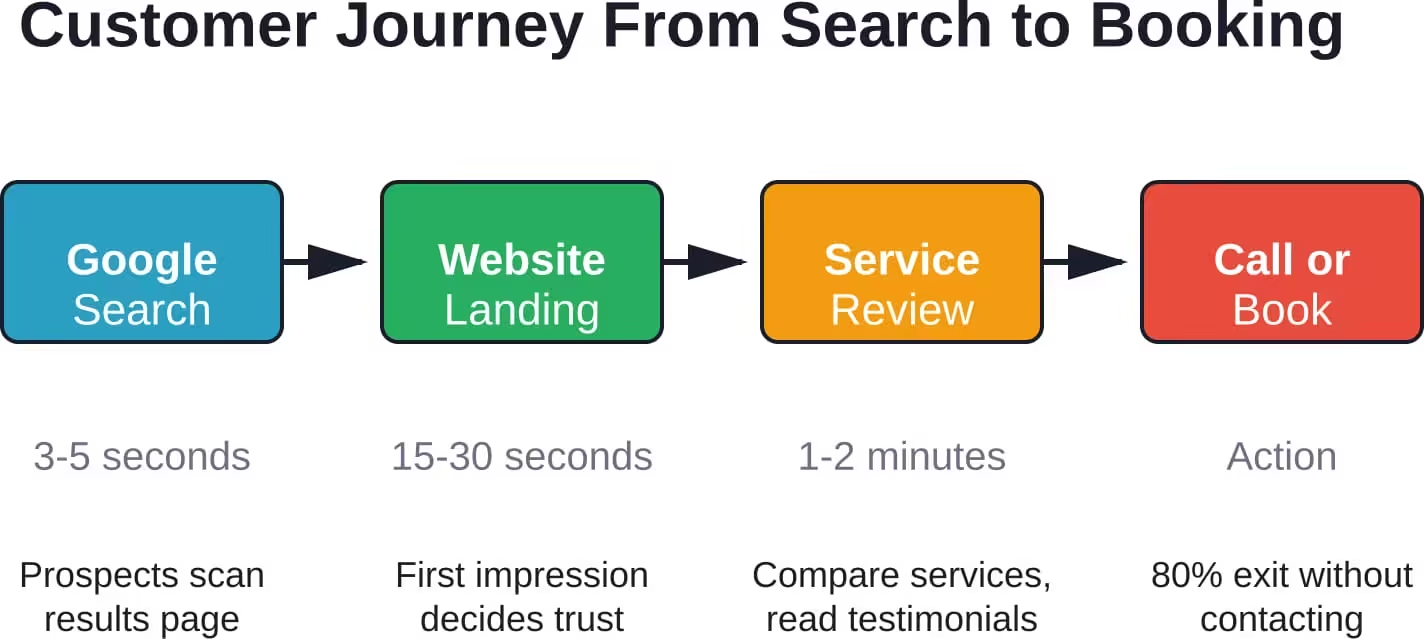
According to industry analyses, potential customers typically follow a predictable path: they search Google, scan the first page of results, click 2-3 websites, and make a decision within minutes. If the website doesn’t immediately communicate trustworthiness and expertise, they’re gone.
Digital agriculture technologies have seen substantial adoption across the farming sector, creating increased awareness of precision irrigation methods. This technological shift means even residential customers now expect irrigation companies to demonstrate technical sophistication through their digital presence.
Build a Better Irrigation Website With Lengreo
Lengreo builds and improves websites, then connects them with SEO, paid ads, tracking, and lead generation. For irrigation companies, this means a website that explains installation, repair, maintenance, service areas, pricing details, and contact options clearly.
The focus is to help homeowners, property managers, or commercial clients find the right service without confusion. Lengreo can help organize key pages, improve traffic setup, and make quote requests or service inquiries easier to complete.
Need a Website That Helps Clients Request a Quote?
Lengreo can help with:
- building or redesigning your website
- improving SEO and paid traffic setup
- setting up tracking and website structure
- refining service, location, and quote pages
👉 Contact Lengreo to discuss your website and setup.
Essential Features That Convert Visitors Into Customers
Website development for irrigation companies centers on conversion architecture—designing every element to guide visitors toward contacting the business. This isn’t about aesthetics. It’s about strategic placement of specific functional components.
Mobile-First Responsive Design
The majority of irrigation service searches happen on mobile devices. A website that doesn’t display properly on smartphones kills conversions immediately. Text must remain readable without zooming. Buttons need sufficient size for thumb taps. Page load times should be optimized for fast performance.
But here’s what most irrigation companies miss: mobile design isn’t just about shrinking the desktop version. Mobile users exhibit different behavior patterns—they’re often on-site dealing with an irrigation emergency, which means prominent phone numbers and click-to-call functionality matter more than lengthy service descriptions.
Strategic Call-to-Action Placement
Prospects visit websites at different stages of readiness. Some need extensive information before committing. Others know exactly what they want and simply need contact information. Still others fall somewhere between—interested but cautious.
Effective irrigation websites place conversion opportunities at every stage. Phone numbers in the header. Consultation request forms after service descriptions. Estimate request buttons in the sidebar. Chat widgets for quick questions. Strategic placement ensures prospects can take action whenever they’re ready.
Clear Service Categorization
Irrigation companies typically offer 5-8 distinct service categories: spring startup, winterization, repair, installation, commercial systems, drip irrigation, smart controllers, and maintenance plans. But many websites dump all services into one confusing page.
Better approach: dedicated landing pages for each major service. This structure improves both user experience and search engine optimization, since Google can match specific search queries to relevant pages rather than generic service lists.
| Website Element | Poor Implementation | Effective Implementation |
|---|---|---|
| Service Pages | Single page listing all services | Individual pages per service with booking CTAs |
| Contact Options | Contact form buried on separate page | Phone, form, chat available on every page |
| Social Proof | No testimonials or outdated reviews | Recent reviews, photo galleries, case studies |
| Mobile Experience | Desktop site scaled down | Redesigned interface optimized for mobile behavior |
| Booking System | Requires phone call during business hours | Online scheduling available 24/7 with instant confirmation |
Local SEO Optimization for Irrigation Companies
Search visibility makes the difference between a website that generates leads and one that sits invisible in search results. Local irrigation companies compete in a specific geographic market, which means local SEO strategies deliver far better results than generic national approaches.
Google prioritizes local businesses for service-based searches. When someone searches “irrigation company near me” or “sprinkler repair Dallas,” Google displays the Local Pack—those three businesses with map pins at the top of results. Landing in that coveted space requires specific technical optimization.
Google Business Profile Integration
The Google Business Profile acts as the gateway to local search visibility. Complete profiles with accurate business information, service categories, business hours, and service areas receive preferential ranking. Regular posts, customer reviews, and photo uploads signal active engagement to Google’s algorithm.
Website development should connect seamlessly with the Business Profile. Schema markup tells Google exactly what services the company offers, what areas they serve, and how customers can contact them. This structured data helps Google match the business to relevant searches.
Geographic Targeting and Service Area Pages
Irrigation companies serving multiple cities or regions need dedicated pages for each service area. These location-specific pages should include relevant local information—not just templated content with city names swapped. References to local water regulations, common soil conditions, typical irrigation challenges for that region, and area-specific service offerings create genuine value while signaling geographic relevance to search engines.
Content Strategy That Establishes Authority
Beyond technical optimization and design elements, irrigation company websites need content that demonstrates expertise and answers common customer questions. This content serves dual purposes: it educates prospects while signaling topical authority to search engines.
Effective content strategies address questions prospects actually ask. “How often should irrigation systems be serviced?” “What’s the average cost to install a sprinkler system?” “When should I schedule winterization?” These informational queries represent research-stage prospects who may convert to customers months later—but only if they remember which company provided helpful information.
Technical content works particularly well for irrigation companies. Articles explaining how smart irrigation controllers reduce water consumption, comparisons of drip versus spray systems for different applications, or guides to interpreting water pressure readings establish credibility. According to EPA data, soil moisture-based control technologies can result in water savings of at least 20 percent—the kind of specific, authoritative information that resonates with both commercial and residential clients.
Visual Documentation of Work
Photo galleries and project portfolios provide social proof while showcasing capabilities. Before-and-after images of lawn transformations following irrigation system installation, photos of complex commercial installations, and documentation of repair work all build trust.
But generic stock photos destroy credibility. Prospects can spot fake images instantly. Authentic photos of actual projects, even if less professionally polished, communicate genuine expertise far more effectively than purchased imagery.
Online Booking and Service Scheduling Systems
The irrigation industry faces a persistent challenge: phone tag. Prospects call during business hours when they’re available, which often doesn’t align with when office staff can answer. This disconnect costs irrigation companies countless leads.
Online booking systems solve this friction. Prospects can request service quotes, schedule consultations, or book routine maintenance appointments 24/7 without phone calls. The system captures lead information, sends automatic confirmations, and populates the company’s schedule.
Advanced implementations integrate with CRM systems and dispatch software, creating seamless workflows from website inquiry to completed job. Some irrigation companies report that a significant percentage of their appointments now come through online booking, with higher satisfaction rates since customers schedule at their convenience.
Performance Tracking and Continuous Optimization
Website development isn’t a one-time project—it’s an ongoing process of testing, measuring, and refining. Analytics platforms reveal which pages generate leads, which service categories attract the most interest, and where prospects abandon the conversion process.
Heat mapping tools show where visitors click, how far they scroll, and which content captures attention. A/B testing different call-to-action placements, form designs, or headline copy identifies optimization opportunities. Small improvements in conversion rates can accumulate to generate additional qualified leads.
But tracking only works when the website collects meaningful data. Phone call tracking shows which marketing channels and website pages generate calls. Form analytics reveal which fields cause prospects to abandon quote requests. Conversion path analysis identifies the typical sequence of page visits before prospects contact the company.
Conclusion: Your Digital Competitive Advantage
Website development represents the most controllable aspect of an irrigation company’s marketing strategy. Unlike paid advertising where costs rise continuously, or SEO where algorithm changes create uncertainty, a well-developed website remains a stable asset that generates leads year after year.
The irrigation companies dominating local markets in 2026 aren’t necessarily those with the most trucks or the longest history. They’re the ones whose websites immediately communicate professionalism, make it effortless for prospects to take action, and establish authority through helpful content and social proof.
Start by auditing the current state. Does the website load quickly on mobile? Are phone numbers and contact forms prominently displayed? Do service pages answer common questions? Is local SEO properly implemented? Identify the gaps, prioritize fixes that deliver the highest impact, and systematically improve each element.
The irrigation industry’s digital transformation mirrors the broader adoption of precision agriculture technologies documented by USDA research. Companies embracing modern digital tools—from smart controllers to professional web presence—position themselves for sustained growth while competitors struggle with outdated approaches.
Ready to transform website visitors into booked irrigation jobs? Focus on mobile optimization, clear service messaging, strategic conversion points, and local search visibility. The investment in professional website development pays dividends every time a prospect searches for irrigation services and finds a compelling digital presence that converts interest into action.