


Quick Summary: Website development for independent living focuses on creating accessible, ADA-compliant digital platforms that empower individuals with disabilities and older adults to live autonomously. Modern independent living websites integrate assistive technologies, follow WCAG 2.1 Level AA standards, and prioritize usability for people with diverse abilities. With federal compliance deadlines approaching in 2027-2028, organizations must build sites that serve everyone equally and effectively.
The digital landscape has transformed how people access services, information, and community connections. For individuals seeking independent living solutions—whether they’re aging adults, people with disabilities, or those requiring assistive care—websites serve as critical gateways to autonomy and self-sufficiency.
But here’s the thing: most websites fail spectacularly at serving these populations.
According to data from The Ohio State University’s ASC Tech division, 21% of undergraduate students and 11% of graduate students reported having at least one disability during the 2019-2020 academic year. That’s just academia. The broader population includes more than 55 million Americans with disabilities—18% of the total population—all of whom deserve equal access to digital services.
Understanding ADA Compliance Requirements for Independent Living Websites
The Department of Justice published updated regulations for Title II of the Americans with Disabilities Act in April 2024, establishing specific technical standards for web and mobile application accessibility. These aren’t suggestions. They’re legal requirements.
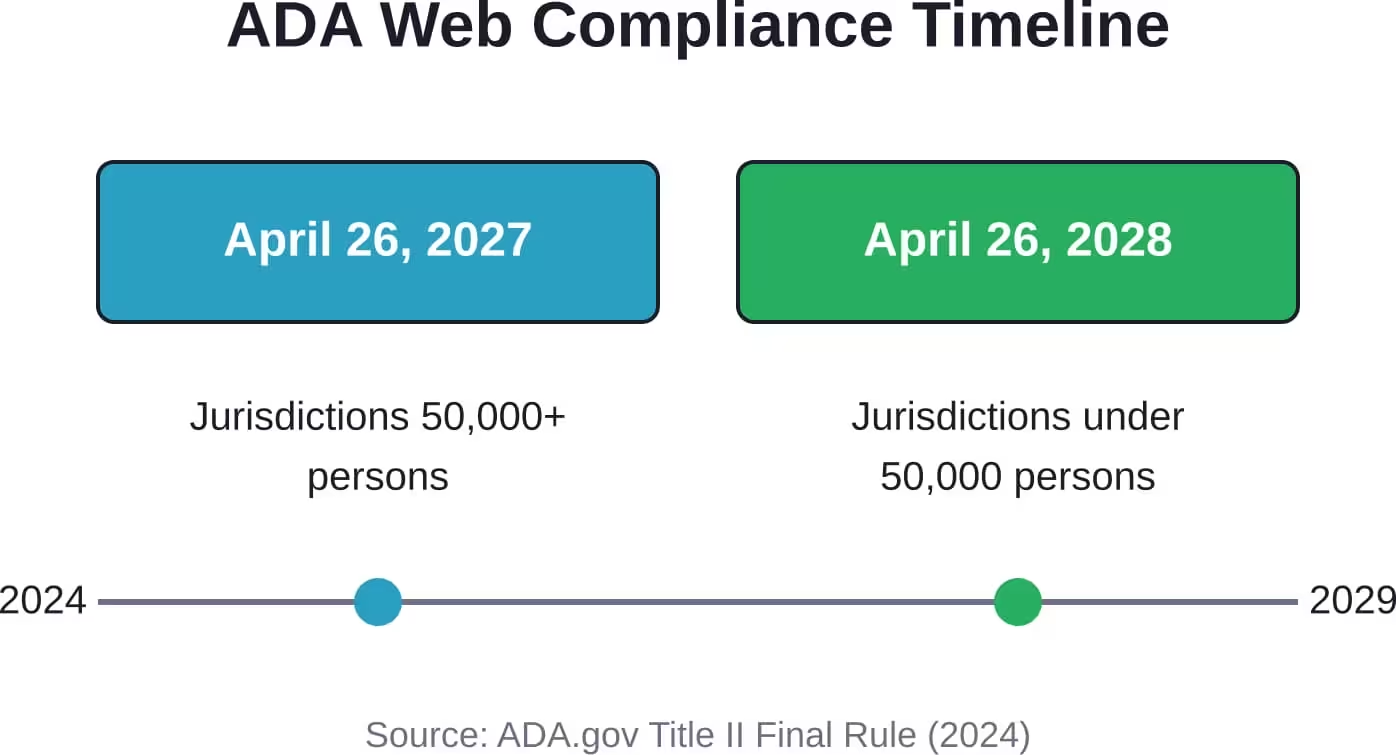
State and local governments face two critical deadlines:
- April 26, 2027 — Compliance deadline for jurisdictions with 50,000+ persons
- April 26, 2028 — Compliance deadline for jurisdictions with fewer than 50,000 persons
The rule requires conformance with WCAG 2.1 Level AA standards. That means websites must be perceivable, operable, understandable, and robust for all users, regardless of ability.
Organizations serving independent living populations—assisted living facilities, disability services providers, aging-in-place technology companies—should treat these as minimum thresholds, not finish lines. Real talk: if individuals can’t access information about services designed to help them live independently, the entire mission collapses.
Build a Clear Independent Living Website With Lengreo
Lengreo builds and improves websites, then connects them with SEO, paid ads, tracking, and lead generation. For independent living communities, this means a website that explains housing options, amenities, care levels, costs, location details, and contact paths in a clear way.
The focus is to help families and residents find important information without confusion. Lengreo can help organize key pages, improve traffic setup, and make inquiry or tour booking steps easier to follow.
Need a Website That Helps Families Inquire?
Lengreo can help with:
- building or redesigning your website
- improving SEO and paid traffic setup
- setting up tracking and website structure
- refining housing, amenity, and inquiry pages
👉 Contact Lengreo to discuss your website and setup.
Technology Solutions Empowering Independent Living
AARP research published in December 2025 shows technology adoption surging among adults 50-plus. These individuals aren’t passive technology consumers—they’re active participants integrating digital services into daily routines.
The most effective independent living websites incorporate assistive technologies that extend far beyond basic screen reader compatibility. Assistive Technology for Kansans, based at the KU Life Span Institute, helps people across the state access tools for safer, independent living through regional offices statewide.
Modern age tech includes:
- Connected medical alert devices (with only 3% of those 50-plus currently owning them, and 18% planning to purchase in the future)
- Health-tracking apps (used by 71% of older adults for health and fitness according to AARP data from 2025)
- Telemedicine platforms and mental health services
- Voice-activated home controls and smart home integration
- Fitness classes and cognitive wellness programs delivered digitally
Websites serving these populations must seamlessly integrate with—or at minimum acknowledge—the broader technology ecosystem supporting independent living.
Design Principles for Accessible Independent Living Platforms
Accessible design means people with disabilities can acquire the same information, engage in the same interactions, and enjoy the same services as people without disabilities. Equally effective. Equally integrated. Substantially equivalent ease of use.
That’s not marketing language—it’s the legal definition from ADA guidance.
Universal Design Integration
Universal design features work better for everyone, not just people with specific disabilities. AARP’s Livable Communities initiative defines universal design in housing as accommodating features integrated into overall design, making homes and products work better for a wide range of people.
The same principle applies to websites. Features that help someone with low vision navigate a site—high contrast, scalable text, clear visual hierarchy—also help someone using a mobile device in bright sunlight or an older adult with age-related vision changes. Captions help people in noisy environments, non-native speakers, and those who simply process information better through multiple channels.
Core Accessibility Features
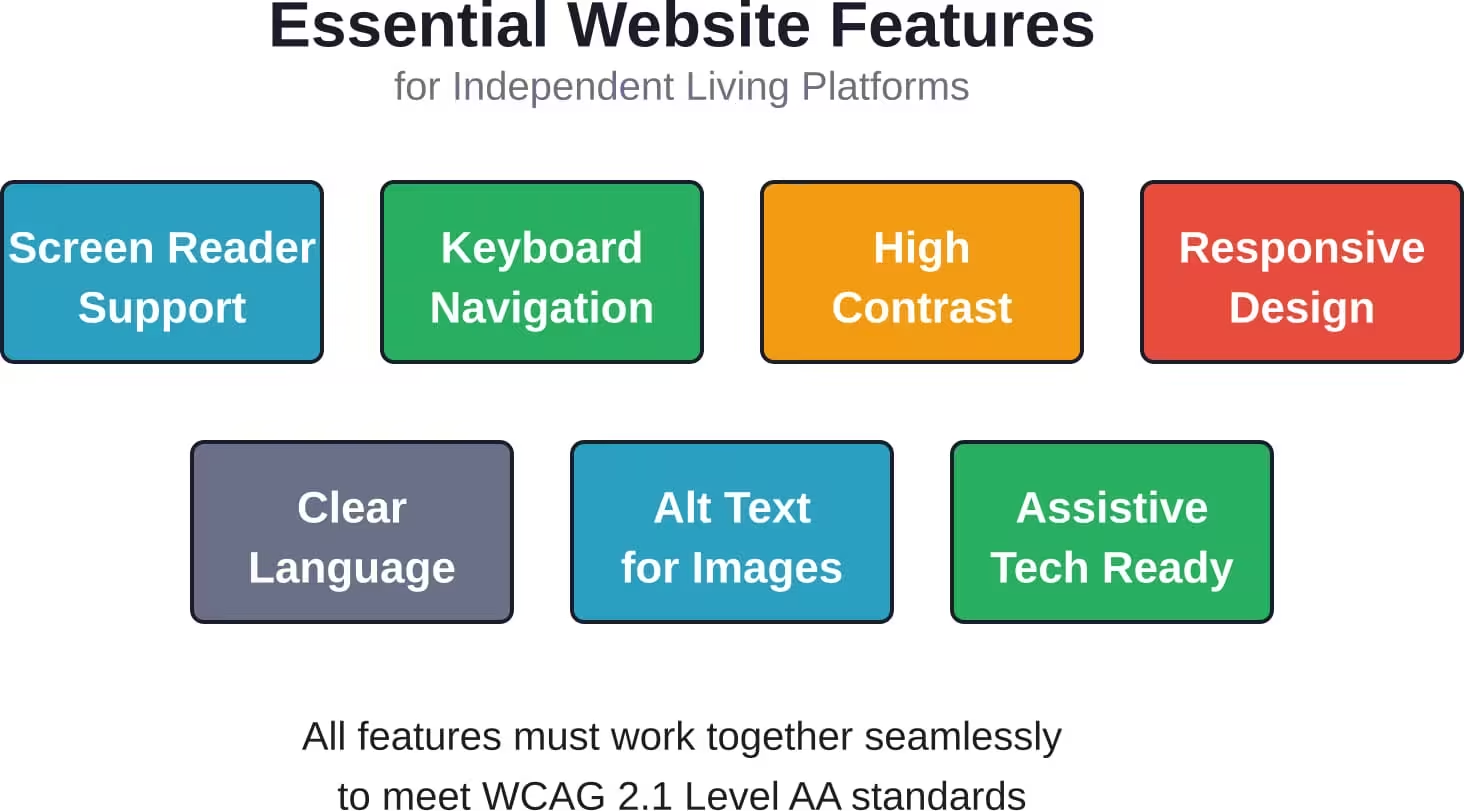
Every independent living website should implement these foundational elements:
| Feature Category | Implementation Requirements | Impact |
|---|---|---|
| Keyboard Navigation | Full site functionality without mouse; visible focus indicators | Critical for motor disabilities and screen reader users |
| Color Contrast | Minimum 4.5:1 for normal text, 3:1 for large text | Supports low vision and color blindness |
| Alternative Text | Descriptive alt text for all meaningful images | Enables screen reader comprehension |
| Responsive Design | Mobile-friendly layouts that reflow content | Accommodates zoom users and mobile devices |
| Clear Language | Plain language, consistent navigation, clear headings | Assists cognitive disabilities and reading difficulties |
Development Costs and Project Scope
Website development costs for independent living organizations vary significantly based on complexity and customization needs.
Industry data from senior living web specialists suggests typical project ranges:
- $3,500 to $5,500 for smaller sites using semi-custom design
- $5,500 to $10,000 for small custom projects or larger semi-custom sites
- More than $10,000 for large websites with extensive customization
These figures represent baseline development. Accessibility auditing, WCAG compliance testing, assistive technology integration, and ongoing maintenance add to total investment.
But wait. Consider the alternative cost: legal liability, excluded users, and communities unable to access services designed specifically for them. That calculation changes quickly.
Measuring Success Beyond Compliance
Compliance checklists represent the floor, not the ceiling. The goal isn’t passing an audit—it’s enabling genuine independence.
Successful independent living websites demonstrate measurable outcomes:
- Reduced support call volume as users find information independently
- Increased self-service completion rates for applications and registrations
- Positive feedback from users with diverse abilities
- Lower bounce rates and longer engagement times
- Higher conversion rates for service inquiries and enrollment
AARP research indicates that 55% of caregivers use technology to coordinate caregiving responsibilities, with estimates of approximately 63 million caregivers nationwide. Websites that serve this population effectively reduce caregiver burden while supporting care recipients’ autonomy.
Building for Independence, Not Just Compliance
Website development for independent living carries profound responsibility. These platforms connect vulnerable populations to services, information, and communities that directly impact their ability to live autonomously with dignity.
The technology exists. The legal framework is clear. The need is urgent.
Organizations must move beyond viewing accessibility as a compliance burden and recognize it as fundamental to their mission. When independent living websites truly work for everyone—people using screen readers, individuals with cognitive disabilities, aging adults managing health conditions—they fulfill their core purpose: empowering independence.
Start by auditing current digital properties against WCAG 2.1 Level AA standards. Identify gaps. Prioritize fixes based on user impact. Involve people with disabilities in testing and design decisions. Build accessibility into development workflows from day one.
The deadline is approaching. More importantly, people are waiting.