

Quick Summary: Website development for hotels is the process of creating a professional, revenue-generating online platform that drives direct bookings and showcases a property’s unique brand. A well-designed hotel website must integrate booking engines, load quickly on mobile devices, rank well in search results, and convert browsers into confirmed guests while reducing dependency on third-party booking platforms.
Hotels lose money every single day because of poorly designed websites. That’s not an exaggeration—it’s just reality.
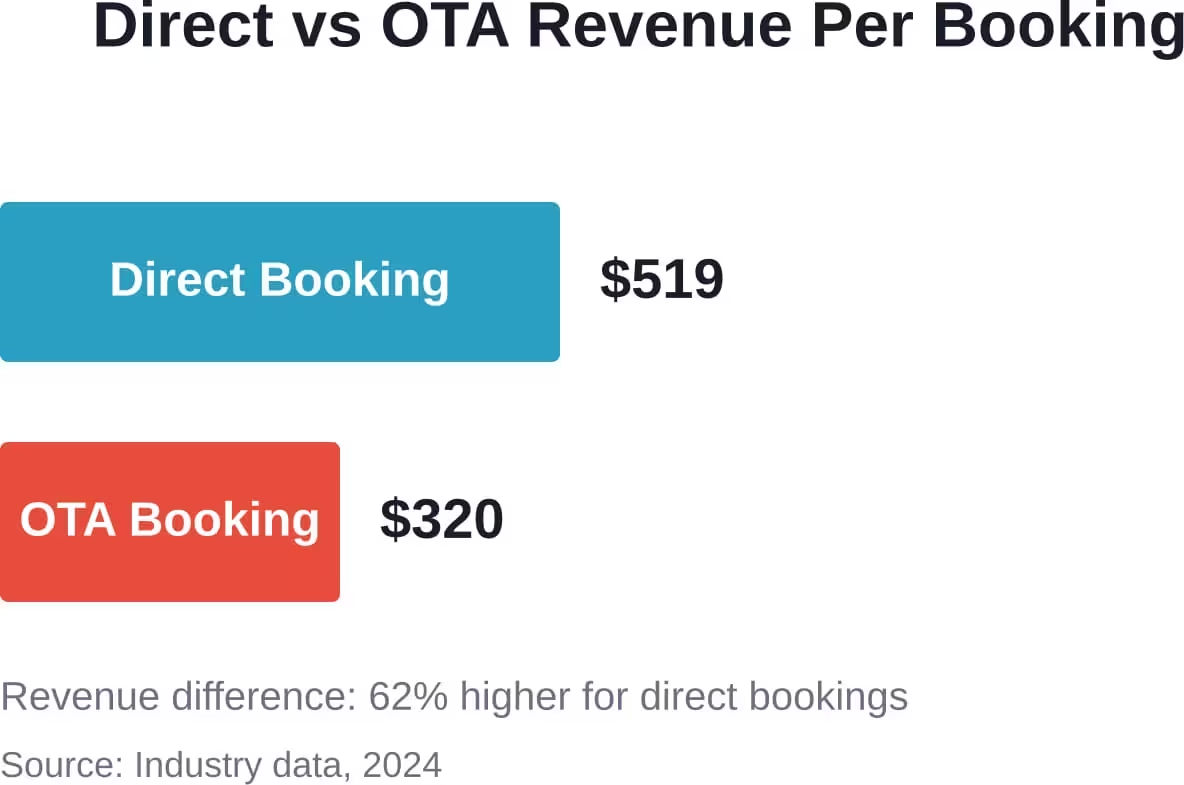
When potential guests land on a slow, confusing, or outdated hotel website, they leave. They head straight to OTAs where commission fees drain 15-25% of every booking. In 2024, hotels earned about $519 per direct booking through their website compared to $320 from OTAs—nearly 60% more revenue per reservation.
The difference between a revenue-generating website and one that pushes guests to competitors comes down to thoughtful website development. Not just pretty pictures and a color scheme, but strategic design that understands guest behavior and converts browsers into bookers.
Why Hotel Website Development Differs from Generic Web Design
Building a hotel website isn’t the same as creating a site for a restaurant or retail shop. The stakes are higher.
Your website serves as your digital front door, your sales team, and your brand ambassador—all at once. Guests judge your property based on what they see online before they ever step foot in your lobby. Research shows that contactless technology and digital experiences have transformed the hospitality industry permanently, especially following the pandemic.
Here’s what makes hotel website development unique:
- Real-time inventory management and booking functionality
- Integration with property management systems and channel managers
- Dynamic pricing displays that update automatically
- Multi-language and multi-currency support for international travelers
- High-quality visual storytelling through photography and virtual tours
Generic website builders can’t handle these specialized requirements. Hotels need purpose-built solutions.
Build a Better Hotel Website With Lengreo
Lengreo builds and improves websites, then connects them with SEO, paid ads, tracking, and lead generation. For hotels, this means a website that presents rooms, amenities, location, offers, booking options, and contact details in a simple structure.
The focus is to make the site useful for people comparing places to stay. Lengreo can help shape key pages, improve traffic setup, and make the path from browsing to booking or sending an inquiry easier.
Need a Website That Supports More Bookings?
Lengreo can help with:
- building or redesigning your website
- improving SEO and paid traffic setup
- setting up tracking and website structure
- refining room, offer, and booking pages
👉 Contact Lengreo to discuss your website and setup.
Essential Features Every Hotel Website Needs
Not all website features deliver equal value. Some are absolutely critical, while others are nice-to-have additions.
Integrated Booking Engine
The most important element of any hotel website is a seamless booking engine. Without one, guests click away to OTAs.
Your booking engine should load quickly, display real-time availability, and make the reservation process frictionless. Ideally, guests should complete a booking in three clicks or fewer. Any additional friction increases abandonment rates.
The booking engine must integrate directly with your property management system to prevent overbookings and update inventory across all channels simultaneously.
Mobile Responsiveness
More than half of hotel website traffic comes from mobile devices. If your site doesn’t work perfectly on smartphones, you’re losing bookings.
Mobile responsiveness means more than just shrinking your desktop site to fit a smaller screen. Touch targets need proper spacing, images must load quickly on cellular connections, and the booking process must work smoothly with thumbs instead of mouse clicks.
Speed Optimization
Website speed directly impacts booking conversion rates. Every second of delay reduces conversions measurably.
Optimization techniques include image compression, browser caching, content delivery networks, and minimizing code bloat. Hotels must target page load times under 1.2 seconds for the Main Contentful Paint (LCP) to meet 2026 SEO and user experience standards.
Search Engine Optimization Structure
Beautiful design means nothing if potential guests can’t find your website. SEO-driven architecture helps your hotel appear in search results when travelers look for accommodations in your area.
This includes optimized page titles, meta descriptions, heading structures, local business schema markup, and location-specific content. Hotels should target keywords related to their destination, property type, and unique amenities.
Design Best Practices for Hotel Websites
Design isn’t just aesthetics—it’s conversion optimization. Every visual choice either guides guests toward booking or creates friction.
High-Quality Visual Content
Photography makes or breaks first impressions. Professional images of rooms, amenities, and property grounds showcase your hotel far better than descriptions.
Some hotels now offer 3D imaging experiences that let potential guests virtually explore properties before booking. This technology builds confidence and reduces booking hesitation, especially for luxury properties and destination resorts.
Clear Navigation and Information Architecture
Guests should find critical information within seconds. Room types, rates, location, amenities—these essentials belong front and center.
Navigation menus should be simple and logical. Avoid burying important pages three clicks deep or using creative labels that confuse rather than clarify. Standard terminology works better than clever wordplay.
Trust Signals and Social Proof
Guest reviews, awards, certifications, and testimonials build credibility. Display these prominently without overwhelming the design.
Security badges near booking forms reassure guests that payment information is protected. Industry certifications and star ratings provide third-party validation of quality standards.
Technology Integration Considerations
Modern hotel websites connect to multiple systems. Seamless integration prevents technical headaches and operational inefficiencies.
Property Management System Integration
Your website must communicate with your PMS in real-time. Room inventory, rates, and availability need automatic synchronization to prevent double bookings or rate discrepancies.
API connections handle this communication. When a guest books through your website, the reservation should instantly appear in your PMS without manual data entry.
Channel Manager Connectivity
Hotels using multiple distribution channels need channel manager integration. This ensures rate parity across all platforms and updates inventory everywhere simultaneously when a booking occurs.
Without proper integration, hotels risk overselling rooms or maintaining inconsistent rates across channels—both serious problems.
Payment Processing and Security
Secure payment processing builds guest confidence. SSL certificates, PCI compliance, and encrypted transactions are non-negotiable requirements.
Display security badges prominently near payment forms. Guests need reassurance that credit card information is protected.
Emerging Technologies Shaping Hotel Websites
Technology continues reshaping guest expectations. Some innovations have moved from experimental to mainstream.
Artificial Intelligence and Chatbots
AI-powered chatbots now handle common guest questions 24/7. Recent hospitality hackathons have focused on AI solutions for guest experience challenges, with winning proposals demonstrating effective chatbot implementations.
These tools answer questions about amenities, policies, and local attractions without requiring human intervention. For simple inquiries, chatbots provide instant responses that improve guest satisfaction.
Robot Technology in Hotels
Robot applications in hotels have expanded significantly. By 2025, the integration of robotics in the hospitality sector reached a new milestone, with over 15,000 hotels globally employing autonomous service robots for delivery and concierge task. The most common commands included room power management and environmental controls.
Success with robot implementations depended heavily on implementation strategy and guest acceptance.
Contactless Technology
Research from Cornell University highlights how contactless technology has permanently transformed the hospitality industry. Mobile check-in, digital room keys, and contactless payments have shifted from premium features to expected standards.
Websites need to communicate these contactless options clearly. Travelers actively seek properties offering touchless experiences, making these features important selling points.
Website Maintenance and Ongoing Optimization
Launch day isn’t the finish line—it’s the starting point. Successful hotel websites require continuous improvement.
Regular updates keep content fresh, security patches protect against vulnerabilities, and performance monitoring identifies issues before they impact guests. Analytics reveal which pages convert well and which need refinement.
Hotels should review website performance monthly. Track metrics like bounce rate, average session duration, booking conversion rate, and traffic sources. These numbers reveal opportunities for improvement.
| Maintenance Task | Frequency | Purpose |
|---|---|---|
| Security updates | Weekly | Protect against vulnerabilities |
| Content refresh | Monthly | Keep information current |
| Performance audit | Monthly | Maintain fast load times |
| Analytics review | Monthly | Identify optimization opportunities |
| Backup verification | Weekly | Ensure data recovery capability |
| SEO optimization | Quarterly | Improve search rankings |
Choosing Between Website Builders and Custom Development
Hotels face a fundamental choice: use a specialized website builder or invest in custom development.
Website builders designed specifically for hotels offer templates, drag-and-drop editors, and pre-integrated booking engines. They provide faster implementation and lower upfront costs. Many platforms offer customizable templates that maintain professional design standards while allowing brand personalization.
Custom development delivers complete flexibility and unique functionality but requires larger budgets and longer timelines. This approach makes sense for large hotel groups or properties with highly specialized requirements.
For most independent hotels and small groups, purpose-built hotel website platforms offer the best balance of functionality, cost, and implementation speed.
Common Website Development Mistakes to Avoid
Even well-intentioned hotel website projects sometimes go wrong. Here are pitfalls worth avoiding:
- Prioritizing aesthetics over functionality: Beautiful designs that don’t convert waste money
- Ignoring mobile users: Mobile traffic represents the majority of visitors
- Complicated booking processes: Every extra step increases abandonment
- Missing calls-to-action: Guests need clear guidance toward booking
- Outdated content: Old information damages credibility
- Slow page speed: Impatient users leave before content loads
Testing with real users during development catches these issues before launch. Watch actual people attempt to book rooms and note where they struggle.
Final Thoughts on Hotel Website Development
Your website represents one of the most important investments in your property’s revenue infrastructure. When done right, it reduces OTA dependency, increases profit per booking, and strengthens your brand.
The best hotel websites balance beautiful design with conversion optimization. They load quickly, work flawlessly on mobile devices, integrate seamlessly with property systems, and make booking effortless.
Whether you choose a specialized website builder or custom development, focus on guest needs first. Every design decision should answer one question: does this help potential guests understand our property and complete a booking?
Ready to transform your hotel’s digital presence? Start by auditing your current website against the best practices outlined here, then create a development plan that addresses your biggest gaps. Your future guests—and your bottom line—will thank you.