


Quick Summary: Website development for home health agencies requires HIPAA-compliant platforms, secure patient portals, mobile responsiveness, and integration with electronic health records (EHR) systems. Modern home health websites must balance regulatory compliance with user experience, incorporating secure communication channels, online scheduling, and accessibility features to serve both patients and caregivers effectively.
The digital front door to home health services has fundamentally changed. With many agencies report receiving up to 80% or more of their senior care customers from the Internet, a professional website isn’t optional anymore—it’s the cornerstone of business growth.
But here’s the thing. Building a website for home health agencies isn’t like creating a site for retail or hospitality. The regulatory requirements, patient privacy concerns, and specialized functionality create unique challenges that demand careful planning.
This guide covers what matters: compliance frameworks, essential features, security protocols, and design strategies that actually convert visitors into clients.
Understanding HIPAA Compliance Requirements
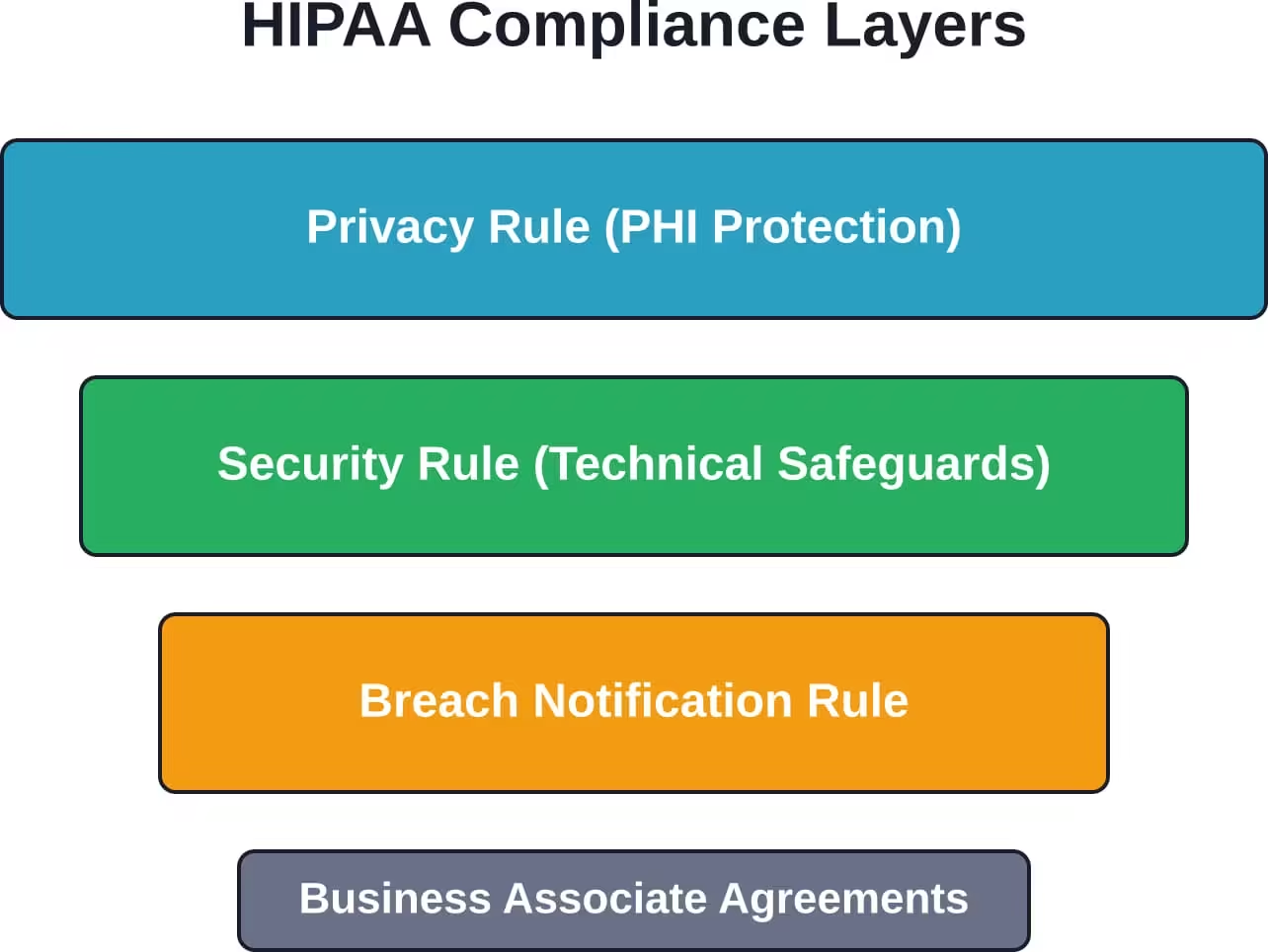
Every home health website handling protected health information (PHI) must comply with HIPAA regulations. The Health Insurance Portability and Accountability Act established national standards for electronic transactions to improve efficiency and effectiveness across the healthcare system.
These standards apply to all HIPAA covered entities—health plans, healthcare clearinghouses, and healthcare providers who conduct electronic transactions. Any provider accepting payment from health plans or insurance companies must comply with HIPAA.
Core Security Standards
HIPAA-compliant technology requires specific safeguards. Similar to in-person visits, telehealth appointments, messages, and related health and billing information receive protection under HIPAA rules.
Covered healthcare providers and health plans must use technology vendors that comply with HIPAA requirements. The stakes? Non-compliance can result in significant penalties and damage to agency reputation.
Real talk: many website builders market themselves as “HIPAA-ready” but don’t actually provide the necessary infrastructure. Look for vendors who sign Business Associate Agreements (BAAs) and demonstrate documented compliance with the Security Rule.
Transaction Standards and Deadlines
HIPAA established specific transaction standards with compliance dates that home health agencies must meet:
| Transaction Type | Standard | Compliance Date |
|---|---|---|
| Eligibility and Benefit Verification | ASC X12N 270/271 Version 5010 | January 1, 2012 |
| Prior Authorization and Referrals | ASC X12N 278 Version 5010 | January 1, 2012 |
| Claim Status Inquiry and Response | ASC X12N 276/277 Version 5010 | January 1, 2012 |
| Claim Payment/EFT | ASC X12N 835 Version 5010 | January 1, 2012 |
| Electronic Remittance Advice | ASC X12N 835 Version 5010 | January 1, 2012 |
Operating rules for eligibility verification and claim status transactions followed with operating rules compliance dates of January 1, 2013 and January 1, 2014. Additional standards like the ACH CCD+Addenda for claim payment came later.
Build a Better Home Health Website With Lengreo
Lengreo builds and improves websites, then connects them with SEO, paid ads, tracking, and lead generation. For home health providers, this means a website that makes care services, locations, eligibility details, caregiver information, and inquiry paths easy to understand.
The focus is to help families and patients find the right information without confusion. Lengreo can help structure key pages, improve traffic setup, and make referral or care request forms easier to use.
Need a Website That Helps Families Reach Out?
Lengreo can help with:
- building or redesigning your website
- improving SEO and paid traffic setup
- setting up tracking and website structure
- refining care, location, and inquiry pages
👉 Contact Lengreo to discuss your website and setup.
Essential Website Features for Home Health Agencies
A successful home health website does more than look professional. It actively converts visitors into clients while serving as a functional tool for operations.
Patient and Caregiver Portals
Secure portals enable patients and families to access care information, communicate with providers, and manage appointments. These portals must use encrypted connections and secure authentication methods.
Research on homecare electronic health records shows that EHR use enables sustained increases in productivity of note completion and timeliness of documentation. The same principles apply to patient-facing portals—when designed well, they reduce administrative burden while improving communication.
Key portal features include:
- Secure messaging with care teams
- Appointment scheduling and management
- Access to care plans and visit summaries
- Medication lists and health education resources
- Billing and payment processing
Mobile Responsiveness and Accessibility
Caregivers and healthcare professionals increasingly access websites from mobile devices during home visits. A website that doesn’t function flawlessly on smartphones and tablets creates operational bottlenecks.
Accessibility matters too. Home health serves diverse populations, including elderly patients with visual or cognitive impairments. Websites should meet WCAG 2.1 AA standards at minimum, incorporating features like adjustable text sizes, high contrast modes, and screen reader compatibility.
Integration with Electronic Health Records
Standalone websites create data silos. Integration with EHR systems enables seamless workflows, reducing duplicate data entry and improving accuracy.
Studies demonstrate that virtual hospital-in-the-home models can be implemented effectively at scale when adequate resource planning, skilled multidisciplinary workforce, well-defined care pathways, and equity-focused approaches are in place. The technology infrastructure supporting these programs depends on robust EHR integration.
Quality Reporting and Regulatory Integration
Home health agencies face mandatory quality data reporting requirements. The reporting of quality data by HHAs is mandated by Section 1895(b)(3)(B)(v)(II) of the Social Security Act.
This statute requires each home health agency to submit data the Secretary determines appropriate for measuring healthcare quality. The data must be submitted in a form, manner, and time specified by the Secretary.
OASIS Data Collection
The Outcome and Assessment Information Set (OASIS) forms the backbone of home health quality reporting. HHAs must complete comprehensive assessments at specific intervals:
- At start of care
- Every 60 days during ongoing care
- Within the last 5 days of each 60-day episode
- Within 48 hours after hospital readmission of 24 hours or more
- At transfer to inpatient facility
- At discharge from agency
Websites with integrated data collection tools streamline OASIS administration. HHAs meeting quality data reporting requirements receive the full home health market basket percentage increase. Those failing to meet requirements face a 2 percentage point reduction to the HH market basket increase.
Design Strategies That Convert Visitors
Professional design builds trust. But conversion requires more than aesthetics—it demands strategic user experience design tailored to healthcare decision-making.
Clear Calls to Action
Healthcare decisions carry emotional weight. Families researching home health services often face stressful situations—recent hospital discharge, declining parental health, or post-surgical care needs.
Effective calls to action acknowledge this context. Instead of generic “Learn More” buttons, specific action prompts work better: “Schedule a Free Consultation,” “Speak with a Care Coordinator,” or “Get Started with Home Care.”
Place primary CTAs above the fold on every key page. Secondary CTAs can appear in sidebar widgets or footer sections, but the main conversion path should be unmistakable.
Trust Signals and Credibility Markers
Healthcare consumers need reassurance. Strategic placement of trust signals reduces friction in the decision process:
- Medicare and Medicaid certification badges
- State licensure information
- Accreditation from organizations like ACHC or Joint Commission
- Years in operation and service area coverage
- Client testimonials with photos (with proper consent)
- Professional affiliations and memberships
The national healthcare agenda to improve efficiencies, reduce costs, and provide high-quality evidence-based care while meeting stricter legal and regulatory requirements has forced home care staff to change how they work. Websites should reflect this professionalism and compliance focus.
Service Area and Specialty Focus
Geographic targeting matters. Visitors want immediate confirmation that services are available in their location. Include service area information prominently, ideally with an interactive map or ZIP code checker.
Specialty services deserve dedicated landing pages. Whether focusing on cardiac care, wound management, diabetes education, or pediatric home health, create content that speaks directly to those specific needs.
Technical Infrastructure and Performance
Page speed impacts both user experience and search rankings. Healthcare websites must load quickly even when incorporating secure portals and third-party integrations.
Hosting Considerations
Shared hosting rarely meets the security and performance needs of HIPAA-compliant websites. VPS or dedicated hosting provides better control over security configurations and resource allocation.
Cloud hosting platforms offer scalability, but verify HIPAA compliance before selection. Not all cloud providers sign BAAs or implement the necessary safeguards.
Look for hosts offering:
- SSL/TLS certificates (minimum TLS 1.2)
- Regular security patches and updates
- Automated backups with encryption
- DDoS protection
- 24/7 monitoring and support
- Business Associate Agreements
Content Management Systems
WordPress dominates healthcare website development, but requires proper hardening. Default WordPress installations aren’t HIPAA-compliant out of the box.
Essential WordPress security measures include:
- Limiting login attempts
- Two-factor authentication for all users
- Regular plugin and theme updates
- Web application firewall (WAF)
- Malware scanning
- Secure forms with encryption
Alternative platforms like custom Laravel or Django applications offer greater control but require more development resources. The choice depends on budget, technical expertise, and specific functionality requirements.
Content Strategy for Home Health Websites
Technical excellence means nothing if content fails to engage. Effective healthcare content educates, builds trust, and guides visitors toward action.
Educational Resources
Position the agency as a knowledge resource. Blog posts, guides, and downloadable resources addressing common patient and caregiver questions establish authority.
Topics that resonate include:
- Understanding Medicare home health benefits
- What to expect during the first home visit
- Managing chronic conditions at home
- Caregiver stress and self-care strategies
- Hospital discharge planning
- Medication management tips
Patient-Reported Outcome Measures have significance to home healthcare. Clinicians have begun integrating health information technology-enabled PROM platforms into routine care to facilitate patient engagement. Content explaining these tools helps patients understand what to expect.
Service Descriptions
Generic service descriptions don’t convert. Specific, detailed explanations of what services include, who provides them, and what outcomes to expect create clarity.
For each service offered, address:
- What the service includes
- Who qualifies or would benefit
- Typical visit frequency and duration
- What credentials providers hold
- How the service integrates with physician care
- Expected outcomes and goals
Search Engine Optimization for Home Health
Visibility in search results determines whether potential clients find the website. Local SEO strategies prove particularly crucial for geographically-bound services.
Local Search Optimization
Google Business Profile optimization forms the foundation. Complete every section, add photos regularly, respond to reviews, and keep business hours current.
Location-specific landing pages improve rankings for service area searches. Create unique pages for each city or region served, incorporating local landmarks, hospitals, and community references.
Local citations—mentions of business name, address, and phone number on other websites—boost local authority. Target healthcare directories, senior living resources, and local business listings.
Technical SEO Elements
| Element | Best Practice | Why It Matters |
|---|---|---|
| Title Tags | 55-60 characters, keyword-focused | Primary ranking signal and click driver |
| Meta Descriptions | 150-160 characters, compelling CTA | Impacts click-through rates |
| Header Tags | Logical hierarchy (H1-H4) | Improves readability and SEO structure |
| Image Alt Text | Descriptive, include keywords naturally | Accessibility and image search |
| Schema Markup | LocalBusiness, MedicalBusiness | Enhanced search results display |
| XML Sitemap | Updated automatically, submitted to GSC | Ensures complete indexing |
Telehealth Integration Considerations
Remote care delivery has expanded significantly. Websites supporting telehealth functionality require additional technical and compliance considerations.
Technology Requirements
All telehealth services provided by covered healthcare providers and health plans must comply with HIPAA Rules. Covered healthcare providers must use technology vendors that comply with HIPAA requirements.
Clinical and technology infrastructure form important aspects of telehealth programs. Accreditors may check components including clinical processes, quality monitoring, provider credentialing, and technology requirements.
Recent Federal legislation authorized extension of many Medicare telehealth flexibilities through December 31, 2027, making long-term telehealth integration increasingly valuable.
Platform Selection
Generic video conferencing tools like standard Zoom or Skype don’t meet HIPAA requirements. Healthcare-specific platforms provide necessary safeguards:
- End-to-end encryption
- Signed Business Associate Agreements
- Access controls and authentication
- Audit logs
- Data storage compliance
Integration with the main website should be seamless. Patients shouldn’t navigate to entirely separate platforms—embed telehealth scheduling and access within the existing patient portal when possible.
Vendor Selection and Partnership
Choosing a development partner requires evaluating both technical competence and healthcare industry knowledge.
Key Evaluation Criteria
Generic web developers often lack understanding of healthcare regulations. Specialized healthcare web development agencies bring domain expertise that prevents costly compliance mistakes.
When evaluating potential partners, assess:
- Documented experience with HIPAA-compliant projects
- Portfolio of healthcare clients, specifically home health
- Understanding of Medicare and Medicaid requirements
- Ability to sign Business Associate Agreements
- Post-launch support and maintenance offerings
- Security incident response procedures
- References from similar agencies
Community discussions reveal varied experiences. Agencies report success with specialized healthcare agencies but emphasize the importance of checking credentials and actually verifying compliance documentation rather than accepting marketing claims.
In-House vs. Agency Development
Larger organizations may consider in-house development teams. This approach offers maximum control but requires significant investment in personnel, training, and infrastructure.
Agency partnerships provide access to specialized expertise without full-time staffing costs. The trade-off involves less direct control and potential ongoing dependency on the vendor.
Hybrid approaches—agency for initial build, in-house for content updates and minor changes—balance control and expertise.
Measuring Website Performance
Data-driven optimization improves results over time. Establishing clear metrics enables meaningful performance assessment.
Key Performance Indicators
| Metric | What It Measures | Target Range |
|---|---|---|
| Conversion Rate | Percentage of visitors taking desired action | 2-5% for healthcare |
| Bounce Rate | Visitors leaving after viewing one page | 40-60% |
| Page Load Time | Time until page fully interactive | Under 3 seconds |
| Pages per Session | Average pages viewed per visit | 3-5 pages |
| Form Completion Rate | Percentage completing contact forms | 15-25% |
Analytics and Tracking
Google Analytics provides foundational website analytics, but configuration requires attention to HIPAA compliance. Avoid tracking personally identifiable information, disable advertising features, and implement IP anonymization.
Heatmap tools like Hotjar or Crazy Egg reveal how visitors interact with pages. These insights guide design improvements and identify conversion bottlenecks.
Call tracking metrics connect phone inquiries to specific marketing sources. When a significant portion of conversions happen via phone calls, this data proves essential for ROI calculation.
Common Pitfalls to Avoid
Learning from others’ mistakes saves time and money. Certain issues appear repeatedly in home health website projects.
Over-Complicating Navigation
Complex mega-menus and deep page hierarchies confuse visitors. Healthcare decisions involve enough stress without adding navigation challenges.
Limit primary navigation to 5-7 main categories. Use clear, descriptive labels rather than clever branding language. “Our Services” communicates better than “How We Help.”
Neglecting Mobile Experience
Testing only on desktop computers creates blind spots. A substantial portion of healthcare website traffic comes from mobile devices, particularly from family members researching options during hospital visits or commutes.
Test forms on actual phones. Tiny input fields and buttons that work fine on desktop become frustrating on mobile. Consider implementing click-to-call buttons prominently on mobile layouts.
Ignoring Page Speed
High-resolution photos and videos enhance visual appeal but destroy page speed when not optimized. Every second of load time increases bounce rates.
Implement lazy loading for images, use modern formats like WebP, enable browser caching, and minimize JavaScript. Tools like Google PageSpeed Insights identify specific optimization opportunities.
Insufficient Content
Thin content signals low quality to search engines and fails to answer visitor questions. Each service page should contain at least 300-500 words of substantive information.
But here’s the balance—walls of text overwhelm. Break content into scannable sections with descriptive headings, bullet points, and strategic white space.
Moving Forward with Your Home Health Website
Website development for home health agencies balances competing priorities—regulatory compliance, user experience, operational efficiency, and marketing effectiveness. Success requires understanding these requirements upfront rather than discovering gaps after launch.
Start by documenting specific needs. What functionality must the site provide on day one? What can wait for phase two? Which integrations are essential versus nice-to-have?
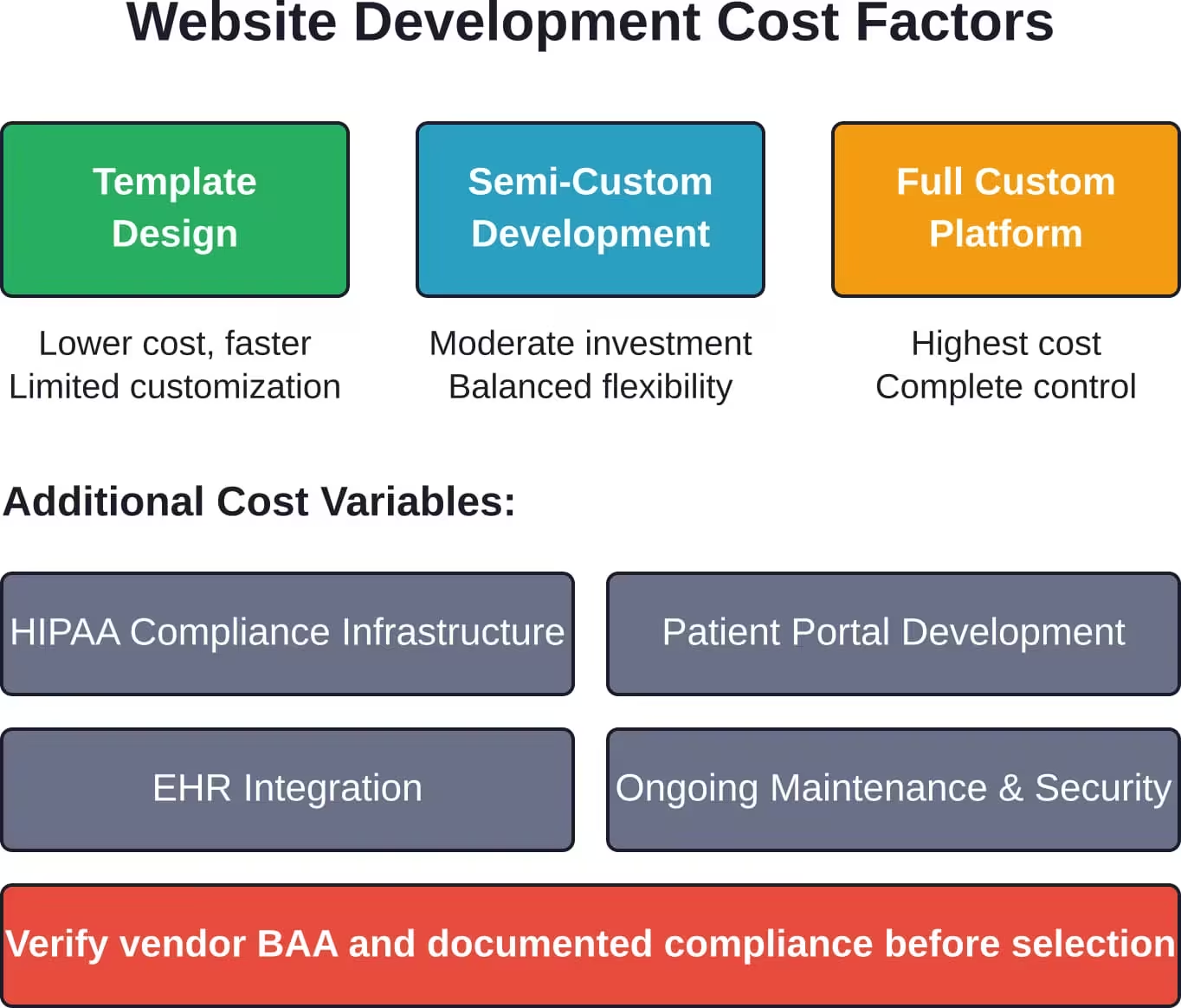
Verify vendor credentials thoroughly. Request documentation of HIPAA compliance, review actual client websites, and speak with references. The cheapest option rarely proves most cost-effective when compliance failures or poor performance require rebuilding.
Plan for ongoing investment. Websites aren’t one-time purchases—they require continuous security updates, content development, and optimization. Budget accordingly from the start.
The home health industry continues evolving. Telehealth integration, remote patient monitoring, and advanced analytics increasingly become standard expectations rather than competitive differentiators. Building a flexible foundation now enables adaptation as requirements change.
Whether starting from scratch or redesigning an existing site, prioritize compliance first, functionality second, and aesthetics third. A beautiful website that violates HIPAA creates liability. A compliant but unusable site fails to convert visitors. Finding the balance delivers sustainable results.
Ready to build a website that drives growth while protecting patient data? Start by auditing current compliance status, documenting functional requirements, and researching specialized healthcare development partners with documented home health experience.