

Quick Summary: Website development for freelancers requires choosing the right tools to build professional client sites efficiently. In 2026, freelancers balance no-code platforms like Webflow and Figma Make with custom coding to meet diverse client needs while managing projects, pricing, and portfolio growth. The right approach depends on technical skills, client expectations, and business goals.
The freelance web development landscape has shifted dramatically. What worked three years ago—bidding on every project, racing to the lowest price, using the same template approach—doesn’t cut it anymore.
According to Champlain University, web developers and digital designers make approximately $80,000 per year on average, with experienced professionals reaching $150,000. But here’s the thing: those figures mask enormous variation based on how freelancers position themselves, which tools they master, and how they adapt to client expectations.
And client expectations have evolved fast. Professional services buying behavior research shows that 74% of clients review portfolios before making contact, and 82% consider portfolio quality a primary hiring factor. Your website isn’t just a digital business card anymore—it’s your most effective sales tool.
The Current State of Freelance Web Development
The Bureau of Labor Statistics reports 265,900 graphic designers were employed in 2024. Self-employment figures for this occupation are not explicitly confirmed in available data. For technical writers—a related digital services category—median pay reached $91,670, with 56,400 professionals in the field.
But the market’s gotten more competitive. Research from Brookings Institution examining freelance platforms found that workers in AI-exposed occupations experienced a 2% decline in contracts and a 5% drop in earnings following generative AI releases in 2022. Experienced freelancers felt the impact most acutely.
Real talk: AI hasn’t eliminated freelance web development opportunities. It’s just changed what clients expect at different price points.
Wharton research tracking online labor markets after ChatGPT’s launch revealed that incumbent freelancers submitted 51% to 62% fewer job applications—not because work disappeared, but because they adapted their positioning. Meanwhile, Upwork reported that skills explicitly tied to applying AI grew 109% year-over-year, with specific categories like AI video generation growing by 329% and AI integration by 178%.
The takeaway? Freelancers who combine technical skills with strategic positioning still thrive. Those competing purely on price struggle.
Build a Clear Freelancer Website With Lengreo
Lengreo builds and improves websites, then connects them with SEO, paid ads, tracking, and lead generation. For freelancers, this means a website that explains services, shows work examples, outlines pricing or process, and gives clients a simple way to get in touch.
The focus is to make the website more useful than a basic online profile. Lengreo can help organize key pages, improve traffic setup, and make inquiry paths easier for potential clients to follow.
Need a Website That Helps Clients Reach Out?
Lengreo can help with:
- building or redesigning your website
- improving SEO and paid traffic setup
- setting up tracking and website structure
- refining service, portfolio, and contact pages
👉 Contact Lengreo to discuss your website and setup.
Choosing Your Development Approach
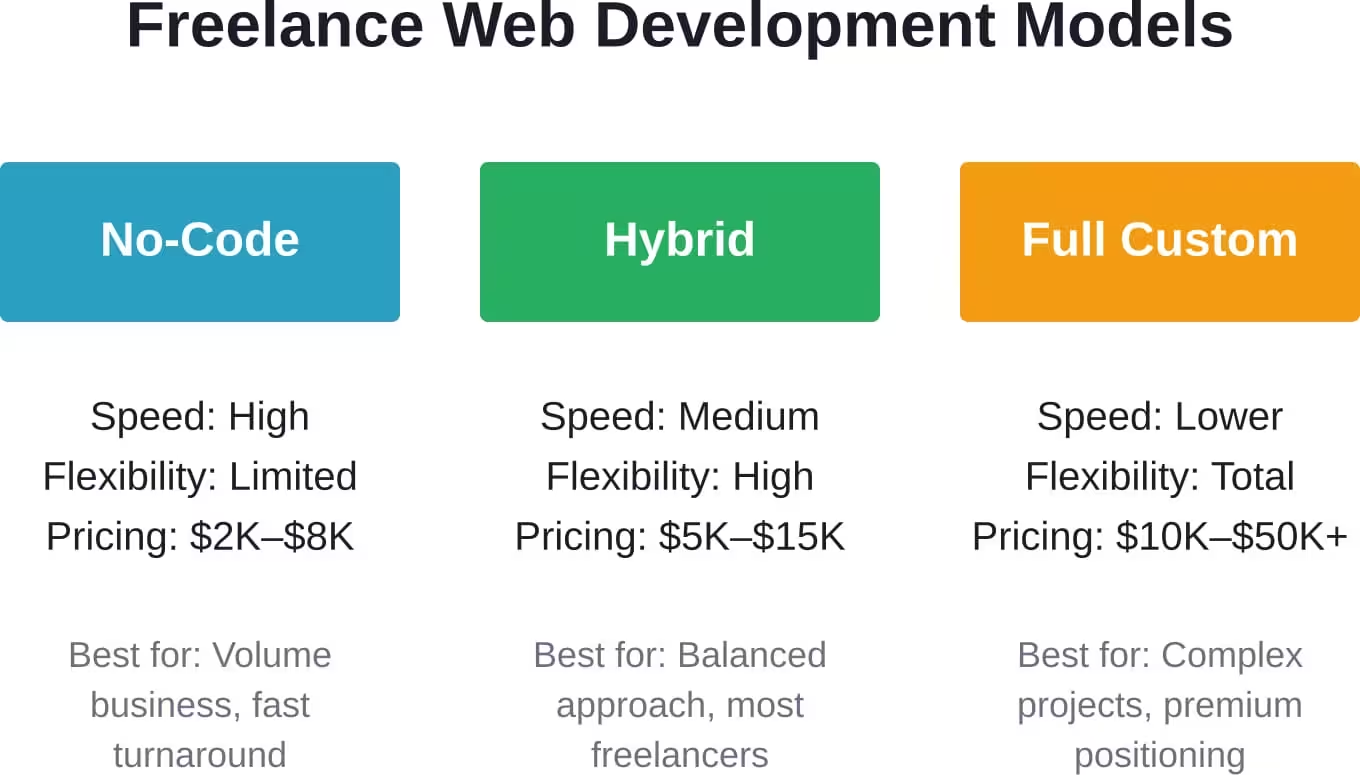
Freelancers essentially work across three development models, each with distinct trade-offs.
No-Code Platform Specialization
Platforms like Webflow, Squarespace, and Wix Studio let freelancers deliver professional sites without writing code. This approach works especially well for specific client types: local businesses, consultants, coaches, and small e-commerce operations.
The advantages are obvious. Projects move faster. Clients can make content updates themselves. Hosting and security come bundled. And you can take on more projects simultaneously since you’re not debugging custom code at 2 AM.
The limitations matter too. Platform constraints eventually surface. Some clients specifically want custom solutions or have requirements no-code tools can’t meet. And you’re building equity in platform-specific skills rather than transferable development expertise.
Hybrid Development (No-Code + Custom Code)
Many successful freelancers blend approaches. They’ll build the core site in Webflow but add custom JavaScript for specific interactions. Or use Squarespace for the main site while developing a custom booking system that integrates via API.
This model maximizes flexibility. You deliver fast for standard requirements but can handle custom needs when clients pay for them. It does require broader skill sets—you need platform expertise AND coding ability.
Full Custom Development
Building everything from scratch using frameworks like React, Next.js, or WordPress with custom themes commands premium pricing. But it also demands more time per project and requires clients who understand why custom development costs more.
The Bureau of Labor Statistics projects 2% employment growth for graphic designers through 2034, and 1% for technical writers—slower than average. Custom development skills help freelancers differentiate in a crowded market.
Platform Selection: What Actually Matters
Community discussions consistently highlight five platforms freelancers return to in 2026: Webflow, Figma Make, Squarespace, Wix Studio, and emerging options like Emergent.
Here’s what separates them.
| Platform | Best For | Client Handoff | Learning Curve |
|---|---|---|---|
| Webflow | Designer-developers who want visual control with code-level precision | Excellent—clients get editor access | Steep initially, powerful once mastered |
| Figma Make | Designers already in Figma ecosystem wanting AI-assisted builds | Good—generates responsive code | Low for Figma users |
| Squarespace | Small business clients who prioritize simplicity | Excellent—extremely intuitive for clients | Very low |
| Wix Studio | Agencies and freelancers managing multiple client sites | Good—dedicated client management tools | Medium |
| Emergent | Developers wanting unified frontend and backend logic | Variable—depends on implementation | Medium to high |
The “best” platform depends entirely on your client profile and technical comfort. Webflow dominates among freelancers serving design-conscious clients with moderate budgets. Squarespace wins for volume business with small local clients. Custom development still commands the highest rates but requires the most time investment per project.
Building Your Freelance Business Model
Platform choice matters less than business model clarity. Successful freelancers in 2026 typically follow one of three paths.
Specialized Niche Expert
Focus on one industry vertical—say, websites for physical therapists or e-commerce for handmade goods sellers. Deep specialization lets you develop reusable processes, create industry-specific templates, and charge premium rates because you understand client needs better than generalists.
The Small Business Administration works with federal agencies to increase contracting opportunities and achieve the government’s 5% contracting goal for women-owned small businesses, creating opportunities for freelancers who understand procurement processes and can serve B2G clients.
High-Volume Operator
Build a streamlined process for churning out solid, professional sites quickly. This model prioritizes efficiency over customization. Think five-page business sites delivered in two weeks, priced at $3,000-$5,000 each.
This works when you’ve systematized everything: onboarding questionnaires, content templates, design frameworks, and handoff processes. The Bureau of Labor Statistics projects 5,700 employment change for graphic designers from 2024-2034, suggesting steady demand for visual design services.
Boutique Developer
Take on fewer projects at significantly higher rates. Each site gets custom treatment, extensive client collaboration, and unique design work. Projects might run $15,000-$50,000+ and span months.
This model demands strong portfolio pieces, professional positioning, and the ability to sell value rather than features. It also requires financial reserves since projects are less frequent.
Pricing Strategy and Project Management
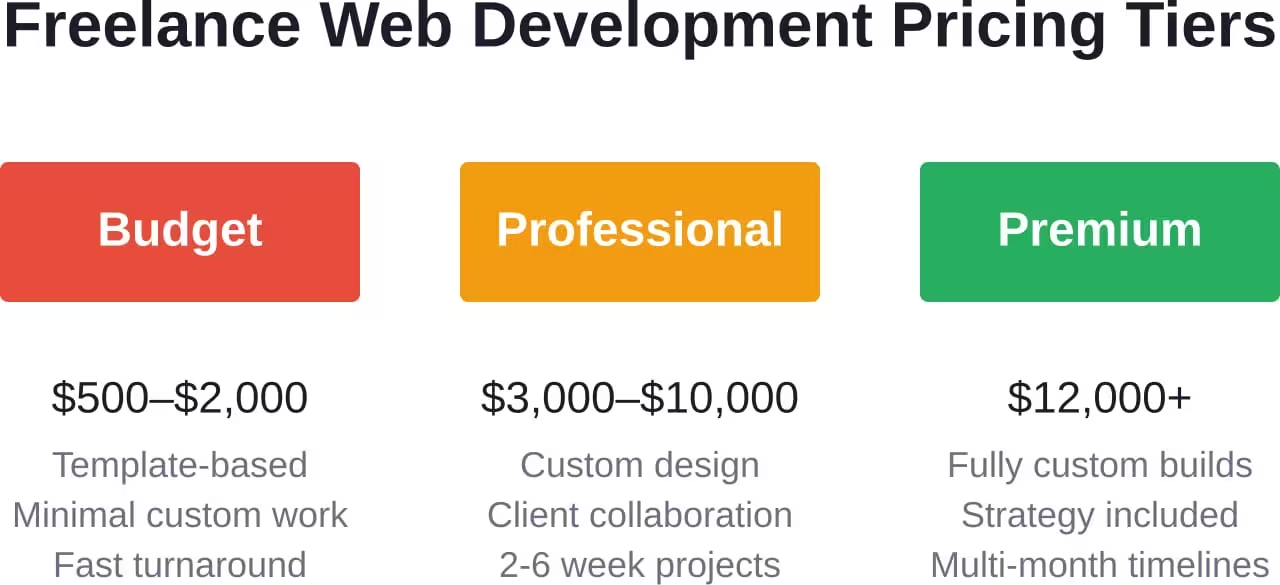
Community discussions reveal enormous pricing variation—from $500 basic sites to $50,000+ complex builds. The difference isn’t just scope; it’s positioning.
Fixed-price projects work well for defined scopes: a five-page business site with contact form and blog. Hourly billing makes sense for ongoing maintenance or projects with uncertain requirements. Value-based pricing—charging based on business impact rather than time—commands the highest rates but requires deep client understanding and confidence.
Web developers make approximately $45-51 per hour on average, but that figure reflects employed workers. Successful freelancers typically charge $75-$200+ per hour depending on specialization and client type.
Managing Client Relationships
Technical skills get you hired. Client management keeps you hired.
Set boundaries early. Define what’s included in project scope and what counts as additional work. Use contracts that spell out revision limits, timeline expectations, and payment terms. And communicate proactively—clients tolerate delays far better when they’re informed early rather than surprised at deadline.
Webflow’s freelancer-focused tools include client billing management and safe project handoff features. Wix Studio similarly offers dedicated client management capabilities. But the platform matters less than the process.
Successful freelancers typically use project management tools (Notion, Trello, or Asana), maintain regular check-in schedules, and document everything. When scope creep happens—and it will—having written agreements makes conversations straightforward rather than confrontational.
Building and Leveraging Your Portfolio
That 74% statistic about clients reviewing portfolios before contact isn’t abstract. Your portfolio directly determines which leads find you and whether they reach out.
Quality beats quantity. Five exceptional case studies outperform twenty mediocre screenshots. For each portfolio piece, show the problem the client faced, your approach, and measurable results when possible. “Increased contact form submissions by 340%” tells a better story than “built a responsive website.”
Process documentation matters too. Walk through your research, design iterations, and technical decisions. This demonstrates thinking, not just execution.
And keep the portfolio itself fast and accessible. Figma Make and similar AI-assisted builders can generate professional portfolio sites quickly, letting you focus energy on showcasing work rather than building the showcase.
Adapting to AI Tools
Generative AI hasn’t eliminated freelance web development—it’s redistributed which skills command premium pricing.
Basic template customization and simple landing pages increasingly get handled by AI tools or in-house using no-code builders. That’s the $500-$1,500 project tier largely disappearing. But complex custom work, strategic consulting, and specialized technical implementation remain firmly in human freelancer territory.
Smart freelancers use AI as leverage. ChatGPT drafts initial copy that gets refined. AI tools generate color schemes and layout options that get evaluated and customized. Code assistants speed up development.
The 109% growth in AI-category projects on Upwork suggests opportunity, not threat—for freelancers who position themselves as experts deploying AI tools rather than competing against them.
Growing Beyond Solo Freelancing
Not every freelancer wants to build an agency, but understanding the options helps plan growth.
Some freelancers expand horizontally—adding related services like SEO, content strategy, or ongoing maintenance. Others expand vertically—moving from execution to strategy consulting while outsourcing implementation.
And some transition to productized services: fixed-scope packages at fixed prices, delivered through streamlined processes. This bridges pure freelancing and agency models, allowing greater scale without hiring.
The Small Business Administration provides resources for freelancers considering federal contracting opportunities. Government work requires navigating procurement processes and eligibility requirements, but contracts can provide stable revenue.
Building Sustainable Freelance Income
Website development as a freelancer remains viable in 2026—but the approach matters enormously.
The freelancers thriving now combine technical execution with clear positioning, efficient processes, and strategic tool selection. They specialize enough to build expertise but remain flexible enough to adapt as client needs evolve.
Platform choice, pricing model, and service focus should align with personal strengths and target clients. There’s no single “correct” path—successful freelancers build sustainable businesses by matching their approach to market opportunities they can serve effectively.
Start by defining one specific client type. Master the tools needed to serve them well. Build portfolio pieces that demonstrate results. And price based on value delivered rather than hours logged.
The freelance web development market hasn’t disappeared—it’s just gotten more sophisticated. So should your approach.