


Quick Summary: Website development for financial planners requires balancing trust-building design with regulatory compliance, mobile responsiveness, and lead generation features. A professional site should showcase credentials, clearly communicate services, meet SEC marketing guidelines, and include client portals, scheduling tools, and educational content. With 98% of advisors planning to increase website spending in 2026, a strategic online presence is essential for attracting high-value clients.
The way people choose financial planners has changed. Most clients now begin their search online, evaluating advisors through websites before ever picking up the phone. Your digital presence isn’t optional anymore—it’s the foundation of client acquisition.
A 2024 survey found that 98% of advisors plan to increase spending on their websites in the next 12 months in an effort to generate more leads. That’s not surprising. When trust is your most valuable asset, your website becomes the first place prospects decide whether you’re worth their time.
But here’s the thing: building a financial planner website isn’t like creating a site for a restaurant or retail shop. You’re dealing with compliance requirements, sophisticated clients, and a competitive market where every detail matters.
Why Financial Planners Need a Professional Website
Trust doesn’t happen by accident online. When someone’s evaluating who should manage their retirement savings or estate planning, they’re looking for signals that you’re credible, experienced, and professional.
Your website delivers those signals—or fails to—in about 2.5 seconds. That’s how long it takes for a visitor to form a first impression. A polished, well-structured site tells prospects you take your practice seriously. A dated or cluttered one raises immediate doubts.
Beyond first impressions, a professional website serves multiple strategic functions. It qualifies leads by clearly communicating who you serve and what problems you solve. It educates prospects through blog content and resources. And it converts interest into consultations through strategic calls to action.
The financial services industry also faces unique digital challenges. According to the SEC, advisors must ensure their marketing materials—including websites—comply with rule 206(4)-1 under the Investment Advisers Act. As of December 2020, with ongoing guidance through January 15, 2026, these guidelines require that all communications be fair, balanced, and not misleading, with particular scrutiny on testimonials and performance claims.
Build a Financial Planning Website With Lengreo
Lengreo builds and improves websites for service businesses, then connects them with SEO, paid ads, tracking, and lead generation. For financial planners, this means a website that explains services clearly, supports trust, and gives visitors an easy way to book a call or send an inquiry.
The focus is not only on how the site looks. Lengreo can help shape the structure, key pages, and traffic setup so the website works as part of your wider marketing instead of sitting online as a basic brochure.
Need a Website That Makes Your Services Clear?
Lengreo can help with:
- building or redesigning your website
- improving SEO and paid traffic setup
- setting up tracking and website structure
- refining service, trust, and contact pages
👉 Contact Lengreo to discuss your website and setup.
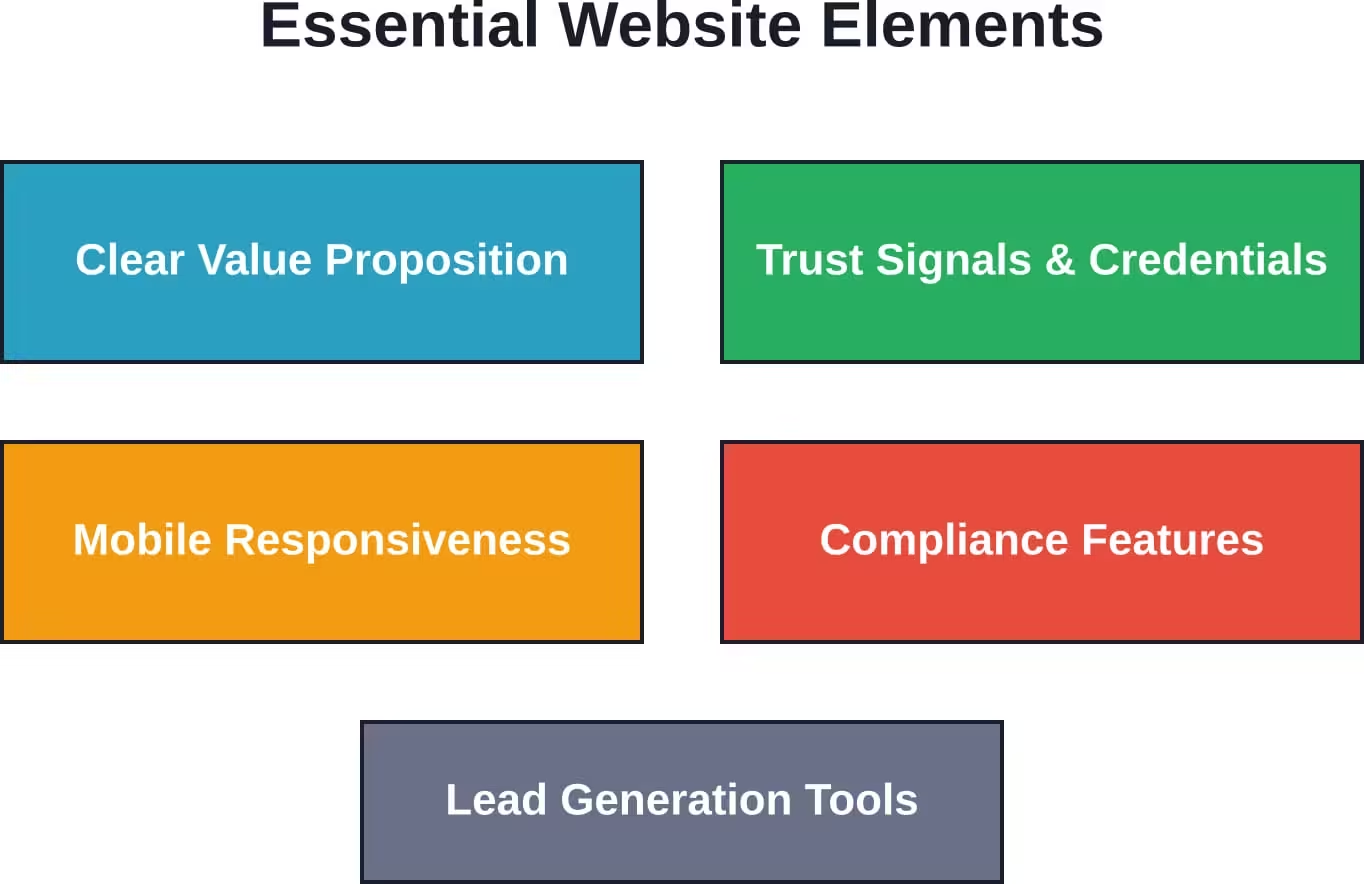
Core Elements of an Effective Financial Planner Website
Not all financial advisor websites are built the same. The difference between a site that generates qualified leads and one that collects digital dust comes down to specific elements working together.
Clear Value Proposition and Service Offering
Visitors shouldn’t have to hunt for what you do. Within seconds of landing on your homepage, prospects should understand your specialization, ideal client profile, and unique approach.
Generic language like “comprehensive financial planning services” doesn’t cut it anymore. Specificity wins. Do you focus on physicians navigating student debt? Executives managing equity compensation? Retirees optimizing Social Security and Medicare decisions?
The best financial advisor websites state this upfront, often in a hero section that combines a headline, supporting copy, and a single clear call to action.
Credentials and Trust Signals
Credentials matter in financial planning. Your website should prominently display relevant certifications—CFP®, CFA, CPA—along with firm registrations and professional affiliations.
Real talk: prospects are checking whether you’re legitimate. Make it easy for them. Include links to your ADV Part 2, FINRA BrokerCheck profile, or state registration where applicable. This transparency builds confidence rather than raising questions.
Client testimonials work, but proceed carefully. The SEC’s marketing rule updated testimonial requirements significantly. Testimonials must now include disclosures about whether the client was compensated, conflicts of interest, and whether the testimonial represents the typical client experience.
Mobile Responsiveness and Speed
More than half of website traffic comes from mobile devices. If your site doesn’t adapt seamlessly to smartphones and tablets, you’re losing prospects before they even read your content.
Mobile responsiveness isn’t just about shrinking content to fit smaller screens. It means rethinking navigation, ensuring buttons are thumb-friendly, and prioritizing the most important information for on-the-go visitors.
Site speed matters too. A delay of even two seconds increases bounce rates dramatically. Compress images, minimize plugins, and use quality hosting to keep load times under three seconds.
Design Principles That Build Trust
Design isn’t just aesthetics in financial services. It’s part of your risk management and brand positioning strategy.
Professional Visual Identity
High-net-worth clients expect sophistication. Your color palette, typography, and imagery should communicate stability and professionalism, not flash or trendiness.
Stick with clean layouts, ample white space, and a limited color palette—typically two to three primary colors. Blues and greens often work well in financial services because they psychologically signal trust and growth.
Photography matters more than stock images. If budget allows, invest in professional photos of your team and office. Authentic imagery outperforms generic stock photos every time.
Intuitive Navigation
Visitors should find what they need in three clicks or fewer. Complex mega-menus or hidden navigation frustrate users and increase bounce rates.
Structure your navigation around user intent. Common top-level menu items include Services, About, Resources/Blog, and Contact. Keep it simple and predictable.
Include a prominent call to action in your header—something like “Schedule Consultation” or “Get Started”—that remains visible as users scroll.
Compliance Considerations for Financial Advisor Websites
Here’s where financial planner websites diverge sharply from other industries. Regulatory compliance isn’t optional, and violations can result in fines or worse.
SEC Marketing Rule Requirements
The SEC’s Marketing Rule was adopted in December 2020, with ongoing guidance through January 15, 2026, governing how investment advisers advertise. Key requirements include:
- All communications must be fair and balanced, not misleading
- Testimonials require specific disclosures about compensation and conflicts
- Performance advertising must meet strict calculation and presentation standards
- Third-party ratings need clear context about methodology
According to the SEC, advisors must review all marketing materials—including website content—to ensure they don’t make unsubstantiated claims or omit material facts. Regular compliance audits of your website should be standard practice.
Privacy and Data Security
Regulation S-P was updated May 16, 2024, with requirements for broker-dealers and investment advisers to implement incident response programs and safeguards for customer information. Your website must include a privacy policy explaining how client data is collected, used, and protected.
If your site includes any client portal, contact form, or data collection mechanism, ensure it uses HTTPS encryption, secure hosting, and regular security updates. Data breaches damage trust irreparably in financial services.
Digital Accessibility Standards
The Americans with Disabilities Act (ADA) Title II now includes digital accessibility requirements. The compliance deadline for websites to meet WCAG 2.1 Level AA standards was extended to April 26, 2027. This includes:
- Text alternatives for images and graphics
- Keyboard navigation support
- Sufficient color contrast ratios
- Screen reader compatibility
Accessibility isn’t just about compliance. It expands your potential client base and demonstrates inclusive values.
Features That Generate and Nurture Leads
A website that looks good but doesn’t generate business is a missed opportunity. Strategic features turn visitors into prospects and prospects into clients.
Content Marketing and Thought Leadership
Educational content establishes expertise and builds trust before prospects ever contact you. A blog or resources section addressing common questions—retirement planning strategies, tax-efficient investing, estate planning basics—attracts organic search traffic and demonstrates knowledge.
The key is consistency and quality. Publishing one thorough article monthly outperforms sporadic, shallow posts. Focus on questions your ideal clients actually ask during discovery meetings.
Online Scheduling and Contact Forms
Friction kills conversions. Make it as easy as possible for interested prospects to take the next step. Online scheduling tools—Calendly, Acuity, or native integrations—let visitors book initial consultations without phone tag.
Contact forms should be short. Name, email, phone, and a brief message are usually sufficient. Asking for too much information upfront reduces form completions.
Client Portal Integration
For existing clients, a secure portal for document sharing, performance reporting, and communication streamlines service delivery and reduces administrative burden. Many platforms—eMoney, RightCapital, Orion—offer client portal solutions that can integrate with your website.
Highlighting portal features on your website also signals to prospects that you use modern technology and value efficient communication.
Email Capture and Nurture Sequences
Not every visitor is ready to schedule a consultation immediately. Email capture—through newsletter signup, downloadable guides, or webinar registration—lets you stay in touch with prospects over time.
Automated email sequences can nurture these leads by delivering valuable content on a schedule, gradually building trust until they’re ready to engage.
SEO and Content Strategy for Financial Planners
The most beautiful website in the world doesn’t matter if no one finds it. Search engine optimization ensures your site appears when prospects search for financial planning services.
Local SEO Optimization
Most financial planners serve specific geographic markets. Local SEO—optimizing for “financial planner in [city]” searches—drives highly qualified traffic.
Key tactics include claiming and optimizing your Google Business Profile, ensuring consistent NAP (name, address, phone) information across directories, and creating location-specific content on your site.
Encourage satisfied clients to leave Google reviews. Reviews influence both search rankings and prospect decision-making.
Keyword Research and On-Page Optimization
Understanding what prospects search for guides content creation. Tools like Google Keyword Planner reveal search volume and competition for terms like “retirement planning advisor,” “fee-only financial planner,” or “wealth management services.”
On-page optimization means incorporating these keywords naturally into page titles, headings, meta descriptions, and body content. But don’t stuff keywords unnaturally—search engines penalize over-optimization, and it reads poorly to human visitors.
Technical SEO Fundamentals
Behind-the-scenes technical factors affect search rankings. These include site speed, mobile-friendliness, secure HTTPS connection, XML sitemap submission, and structured data markup.
Most modern website platforms handle many technical SEO elements automatically, but it’s worth auditing your site or working with a developer to ensure everything is properly configured.
Choosing a Website Development Approach
Financial planners have several paths for building or rebuilding their websites. Each has tradeoffs in cost, control, and complexity.
Custom Development vs. Platforms
Custom-built sites offer maximum flexibility and unique branding but require larger budgets and ongoing developer relationships. Industry-specific platforms like Twenty Over Ten, Advisor Websites, or FMG Suite provide compliant templates and content libraries at lower costs.
For most solo and small firm advisors, industry-specific platforms offer the best balance. They understand compliance requirements, include relevant features, and cost a fraction of fully custom development.
DIY Website Builders
Platforms like Wix, Squarespace, or WordPress.com make it possible to build a site yourself. This can work for tech-savvy advisors with time to invest, but several cautions apply.
First, you’re responsible for ensuring compliance—generic website builders don’t know SEC or FINRA requirements. Second, design quality varies significantly. And third, your time has a cost—hours spent building a website are hours not spent serving clients or developing business.
| Approach | Cost Range | Best For | Key Advantage |
|---|---|---|---|
| Industry Platform | $100-500/month | Most advisors | Compliance features included |
| Custom Development | $10,000-50,000+ | Large firms with unique needs | Complete customization |
| DIY Builder | $20-100/month | Tech-savvy solos | Low initial cost |
| Agency Design | $5,000-20,000 | Advisors wanting custom work | Professional design + setup |
Emerging Technologies and Future Considerations
The financial planning industry continues to evolve digitally. Staying current with emerging technologies positions forward-thinking advisors for competitive advantage.
AI and Personalization
Artificial intelligence is reshaping investment management and client interaction. According to a February 3, 2026 speech by Brian Daly, Director of the SEC’s Division of Investment Management, AI presents opportunities and considerations for investment advisers and investment companies.
Website applications of AI include chatbots for initial prospect questions, personalized content recommendations based on visitor behavior, and automated lead scoring to prioritize follow-up.
But proceed thoughtfully. The CFP Board has released guidance on AI in financial planning, emphasizing that human judgment and the fiduciary standard remain paramount even as technology advances.
Video Content and Virtual Consultation
Video humanizes your online presence in ways text and photos cannot. Brief introduction videos, educational content, or virtual office tours help prospects feel connected before meeting you.
Virtual consultation capabilities—Zoom integration, screen sharing for plan reviews—expanded dramatically during the pandemic and remain valuable for serving remote clients or offering initial consultations without geographic constraints.
Common Website Development Mistakes to Avoid
Even with good intentions, financial planners often stumble in predictable ways when building websites.
Overcomplicating Navigation and Structure
More pages and features don’t equal a better website. Cluttered navigation confuses visitors and dilutes focus. Start simple with core pages—Home, About, Services, Resources, Contact—and expand only as genuinely needed.
Neglecting Ongoing Maintenance
Websites aren’t set-and-forget projects. Outdated content, broken links, and old copyright dates signal neglect. Security updates, content refreshes, and performance monitoring should happen regularly.
Ignoring Analytics and User Behavior
Without tracking, you’re flying blind. Google Analytics reveals which pages attract traffic, where visitors come from, and where they drop off. This data guides iterative improvements based on actual user behavior rather than assumptions.
Professional Development and Continuing Education
Maintaining CFP® certification requires ongoing learning. CFP Board requires continuing education hours per two-year cycle, with emphasis on professional development across various planning domains.
Website development and digital marketing increasingly appear in practice management continuing education offerings, recognizing that online presence is now central to running a successful planning practice.
Final Thoughts
Website development for financial planners isn’t a one-time project—it’s an ongoing asset that requires strategic thinking, regular maintenance, and adaptation to changing technology and regulations.
The advisors who thrive online understand that a website serves multiple purposes simultaneously: first impression maker, trust builder, lead generator, client resource, and compliance demonstration. Getting all these elements working together takes planning, but the payoff in client acquisition and practice efficiency makes it one of the highest-return investments in your business.
Start with clear goals for what you want your website to accomplish. Prioritize compliance from day one rather than treating it as an afterthought. Focus on your ideal client’s needs and questions rather than what you want to say. And commit to treating your website as a living tool that evolves with your practice.
Whether you’re launching a new site or upgrading an existing one, the financial advisors who approach website development strategically—balancing design, functionality, compliance, and marketing—position themselves to capture the growing number of prospects who begin their search for financial guidance online.
Ready to build a website that attracts your ideal clients and supports practice growth? Start by auditing your current online presence, identifying gaps in functionality or compliance, and researching platform options that fit your firm’s size and specialization. The digital front door to your practice deserves the same attention you give to client service.