


Quick Summary: Website development for estate agents requires a professional platform that showcases properties, captures leads, and builds trust with potential buyers and sellers. The right website builder combines IDX/MLS integration, mobile responsiveness, and lead-generation tools to help agents stand out in a competitive market. Successful estate agent websites prioritize fast loading speeds, clear calls-to-action, and compliance with UK data protection regulations.
Estate agents operate in one of the most competitive professional landscapes. A buyer scrolling through property listings won’t wait for a slow website to load. They won’t tolerate confusing navigation. And they certainly won’t hand over contact details without a compelling reason.
That’s where professional website development comes in. The right platform doesn’t just display properties—it builds credibility, captures leads, and turns casual browsers into serious buyers or motivated sellers.
But here’s the thing: not all website builders are created equal. Some offer gorgeous templates but lack the property-specific tools estate agents actually need. Others provide robust features but demand technical expertise most agents don’t have.
Why Estate Agents Need a Purpose-Built Website
Generic business websites don’t cut it for property professionals. Estate agents need specialized functionality that serves both sides of the transaction—buyers searching for their next home and sellers evaluating which agent to trust.
A properly developed estate agent website handles multiple jobs simultaneously. It showcases current listings with high-quality images and detailed descriptions. It provides instant property valuations that capture seller leads. It integrates with MLS databases to display real-time availability.
The business case is straightforward. Professional websites enable agents to demonstrate expertise and build credibility compared to third-party listing portals alone. Buyers and sellers use those portals for research, but they visit agent websites to assess professionalism and expertise.
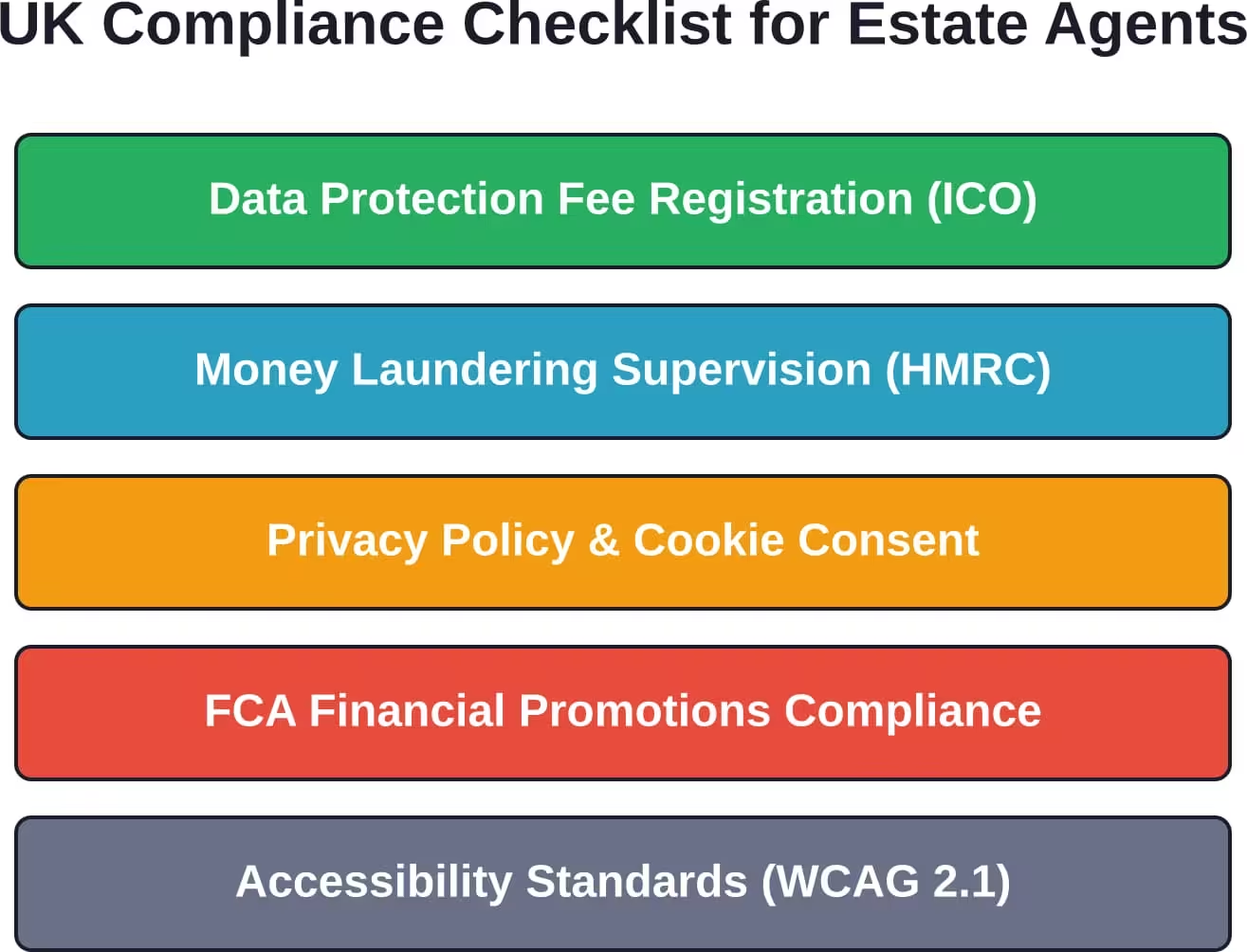
And there’s a regulatory dimension, too. Estate agency businesses in the UK must register with HMRC for money laundering supervision—it’s a criminal offense to trade without registration. While website content doesn’t directly trigger these requirements, the professional presentation of services and client data handling certainly falls under scrutiny.
Core Features Every Estate Agent Website Must Have
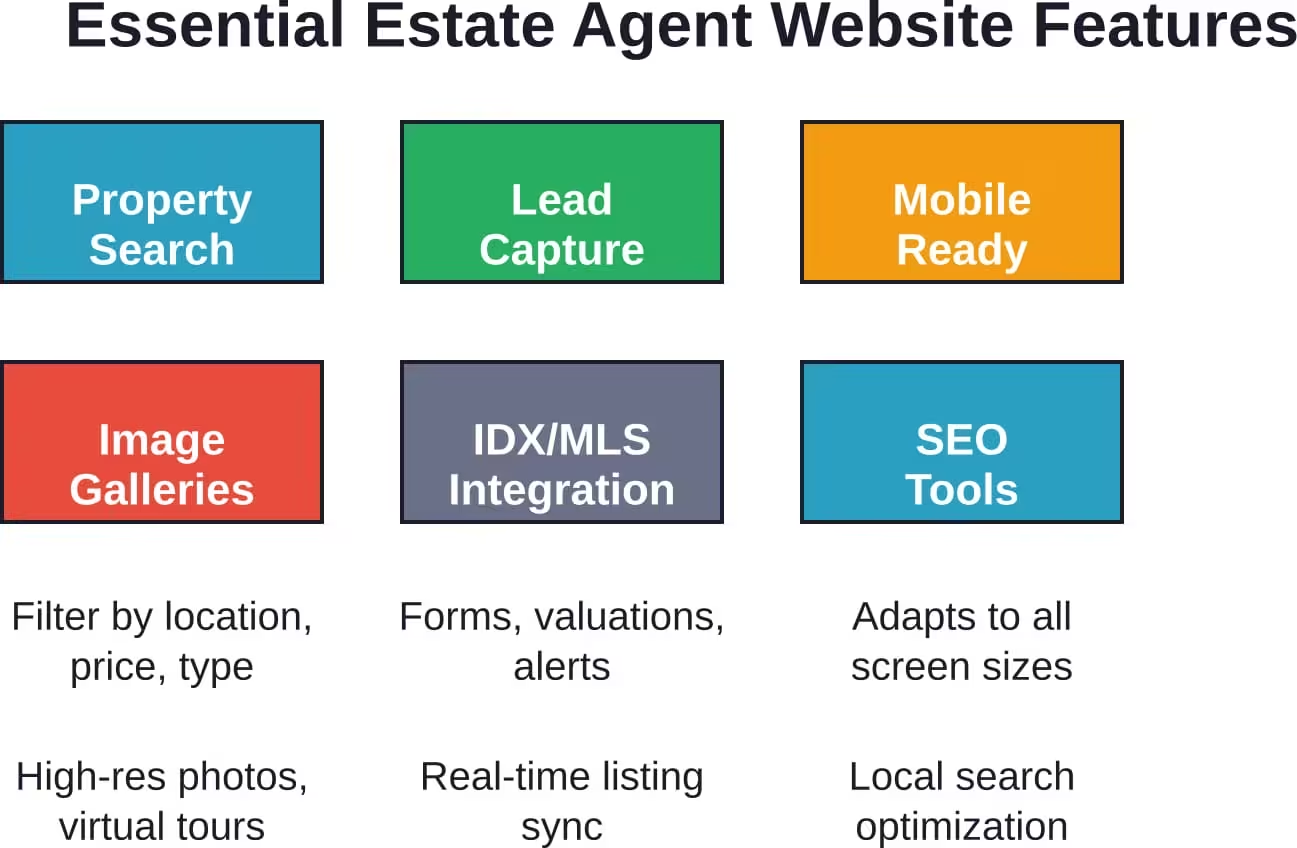
Let’s talk about non-negotiables. These are the features that separate a functioning estate agent website from a glorified digital business card.
Property Search and Filtering
Buyers need to narrow down options fast. Search functionality should filter by price range, property type, number of bedrooms, location, and special features. The interface needs to be intuitive—if someone has to read instructions to use the search, the design has failed.
IDX integration (for agents working with MLS systems) automatically pulls in listings and keeps them updated. This eliminates manual data entry and ensures accuracy. For UK-based agents, integration with property management systems serves the same purpose.
Lead Capture Mechanisms
Every page should offer a reason for visitors to share contact information. Instant valuation tools work particularly well for attracting seller leads. Buyers respond to saved search alerts and new listing notifications.
Contact forms need to be short. Name, email, phone number, and a message field—that’s it. Longer forms reduce completion rates. The form should appear on property detail pages, the homepage, and a dedicated contact page.
Mobile Responsiveness
More than half of property searches now happen on mobile devices. A website that doesn’t adapt to smaller screens loses those visitors immediately.
Mobile responsiveness means more than just shrinking desktop content. Touch targets need adequate spacing. Images should load quickly without consuming excessive data. Phone numbers should be tappable for instant calls.
High-Quality Image Galleries
Property listings live or die on photography. The website must display multiple images per listing, support zoom functionality, and load images quickly without quality degradation.
Virtual tour integration has become standard for higher-value properties. The platform should embed 360-degree tours or video walkthroughs without requiring visitors to leave the site.
Choosing the Right Website Builder Platform
Platform selection determines what’s possible with the website and how much ongoing maintenance it requires. The choice breaks down into several categories, each with distinct tradeoffs.
Template-Based Builders
Platforms like Wix and SITE123 offer pre-built templates specifically designed for estate agents. These provide the fastest path from zero to a functioning website.
Wix offers pre-built real estate templates and integrated IDX capabilities. Depending on the plan and features needed, prices generally range from $17 to $159 per month. The platform offers sufficient flexibility for most independent agents and small agencies.
SITE123 prioritizes speed over customization. Setup takes hours instead of days, but design flexibility is limited. For agents who want a basic online presence without technical complexity, that’s often an acceptable tradeoff.
Industry-Specific Platforms
Platforms built exclusively for property professionals—like Placester—include features generic builders don’t offer. Automated property import, CRM integration, and compliance tools come standard.
The specialized focus means these platforms understand estate agent workflows. But that specialization comes with higher costs and occasionally less design flexibility compared to general-purpose builders.
Custom Development
For larger agencies with specific requirements, custom development provides complete control. A development team builds exactly the functionality needed, integrates with existing business systems, and creates a unique brand presence.
Custom development requires significantly higher investment—both initially and for ongoing maintenance. Technical staff or a retained development agency becomes necessary. But for agencies handling hundreds of properties and multiple agents, the investment often pays for itself through operational efficiency.
| Platform Type | Best For | Setup Time | Technical Skill Required |
|---|---|---|---|
| Template Builders | Independent agents, small agencies | 1-3 days | Low |
| Industry Platforms | Growing agencies, team environments | 1-2 weeks | Low to medium |
| Custom Development | Large agencies, specific requirements | 2-6 months | High (requires developers) |
Launch a Good Real Estate Website to Generate Leads
For estate agents, the website is often the first thing potential buyers or sellers see before making contact. Slow pages, outdated layouts, or poor mobile experience can easily cost property inquiries. Lengreo develops websites for businesses that need a clearer online presence and a better way to turn visitors into client inquiries. Their team creates real estate websites with practical structure, mobile-friendly layouts, landing pages, and SEO-focused foundations that help agencies showcase properties clearly and make it easier for potential clients to get in touch.
Upgrade Your Estate Agency Website Now
Lengreo provides estate agencies with:
- Custom website development for real estate businesses
- Landing pages for property searches and local visibility
- Mobile-friendly website structure
- Post-launch support and maintenance options
If your agency needs a better website to attract more property inquiries, contact Lengreo and book a consultation for your website development project.
Design Principles That Build Trust and Drive Conversions
Design isn’t decoration—it’s how the website communicates professionalism and guides visitors toward desired actions.
Visual Hierarchy and Clarity
The most important elements should be the most visually prominent. Property search typically belongs above the fold on the homepage. Featured listings should use larger images and more prominent placement than older inventory.
White space prevents cognitive overload. Cramming too much information into limited screen space makes everything harder to process. Better to use clear section breaks and scrolling than squeeze content into a single viewport.
Consistent Branding
Color scheme, typography, and imagery style should remain consistent across all pages. This consistency builds recognition and reinforces professionalism.
Brand colors should appear in navigation elements, buttons, and accent features—but not overwhelm property photography. The properties are the product; the brand is the wrapper.
Speed and Performance
Page load time directly impacts both search rankings and visitor patience. Images should be compressed without visible quality loss. Code should be minimized. Hosting should provide adequate resources for peak traffic.
Real talk: if the website takes more than three seconds to load, half the visitors will leave before seeing any content. Speed isn’t a luxury—it’s fundamental.
Clear Calls to Action
Every page should tell visitors what to do next. “Schedule a Valuation,” “View Similar Properties,” “Contact Agent”—these prompts guide the visitor journey.
Calls to action should be visually distinct from surrounding content. Button color, size, and placement all signal importance. The most critical actions deserve the most prominent positioning.
UK Compliance Considerations for Estate Agent Websites
Operating an estate agency website in the UK means navigating several regulatory frameworks. Getting these wrong carries legal and financial consequences.
Data Protection and Privacy
Estate agents process personal data—contact details, property preferences, financial information. Registered charities, and small organizations (Tier 1), now pay £52 per year (increased from £40), or £47 if paid by direct debit. Other organizations processing personal data typically pay higher fees.
Websites must clearly inform visitors about data collection and use. Privacy policies need to explain what information is collected, why it’s collected, how long it’s retained, and who it’s shared with. This isn’t optional bureaucracy—it’s a legal requirement under UK data protection law.
Contact forms should only request information genuinely needed for the stated purpose. Collecting excessive data without justification violates data minimization principles.
Money Laundering Regulations
Estate agency businesses must register with HMRC for money laundering supervision. According to government guidance published in January 2021, it’s a criminal offense to trade as an estate agency business without being registered or after registration is cancelled.
While the website itself doesn’t trigger registration, the online presence should reflect compliance. This includes maintaining proper client verification processes and documenting business activities appropriately.
Financial Promotions
When estate agents promote financial services—mortgages, insurance, or investment properties—those promotions must comply with Financial Conduct Authority rules. The FCA strengthened its financial promotion rules through Policy Statement PS22/10 in 2022, with key measures (including prominent risk warnings for high-risk investments) coming into force from 1 December 2022. Further rules, particularly for cryptoassets, were introduced in PS23/6 in June 2023.
Promotional content must be clear, fair, and not misleading. Material risks must be presented as prominently as benefits. If the website includes mortgage calculators or financial product recommendations, ensure these comply with current FCA guidance.
Lead Generation and Conversion Optimization
Driving traffic to the website is only half the equation. Converting visitors into actionable leads determines whether the website investment delivers returns.
Property Valuation Tools
Instant valuation calculators capture seller leads effectively. A homeowner considering selling enters their address, and the tool provides an estimated value range.
These tools work because they offer immediate value. The visitor gets useful information; the agent gets contact details and knows the prospect is considering selling. That’s a qualified lead worth following up.
Email Marketing Integration
Collecting email addresses enables ongoing communication. Market updates, new listings, and property tips keep the agent top-of-mind when visitors are ready to transact.
Email signup forms should explain what subscribers receive. “Weekly market updates” is more compelling than “Subscribe to our newsletter.” Be specific about frequency and content.
Social Proof and Testimonials
Reviews and testimonials from previous clients build credibility fast. Video testimonials carry more weight than text quotes, but even written reviews help if they’re specific and authentic.
Displaying recent sales with sold prices (where permitted) demonstrates market activity and expertise. This works particularly well for agents specializing in specific neighborhoods or property types.
Live Chat and Instant Response
Some visitors prefer chat over forms. Live chat tools—whether staffed by humans or well-configured chatbots—capture leads that would otherwise bounce.
The key is response time. If chat inquiries sit unanswered for hours, the tool does more harm than good. Either commit to monitoring chat during business hours or set clear expectations about response timing.
SEO Strategy for Estate Agent Websites
Search engine visibility determines how many potential clients discover the website organically. Local SEO matters most for estate agents—someone searching “estate agents [city name]” represents a high-intent prospect.
Local Search Optimization
Google Business Profile optimization is non-negotiable. The profile should include accurate business information, current photos, service area, and regular posts about new listings or market updates.
Location-specific content helps rank for geographic searches. Neighborhood guides, local market reports, and area-specific landing pages all signal relevance for local searches.
Property Listing Optimization
Each property listing is an SEO opportunity. Unique descriptions (not copy-pasted from MLS feeds), descriptive titles, and properly formatted image alt text all contribute to search visibility.
Property listings should include specific details buyers actually search for—school catchment areas, parking availability, recent renovations, garden size. These long-tail keywords attract highly qualified traffic.
Content Marketing
Blog posts addressing common buyer and seller questions establish expertise and attract organic traffic. “How much does stamp duty cost in England?” and “What documents do I need to sell a property?” are search queries that align perfectly with estate agent services.
Stamp duty thresholds vary by region. Content addressing these regional differences helps agents appear in relevant local searches.
Technical SEO Fundamentals
Clean URL structures, proper heading hierarchy, fast page loads, mobile responsiveness, and SSL certificates form the technical foundation. Search engines can’t rank pages they can’t properly crawl and index.
XML sitemaps help search engines discover all property listings quickly. Structured data markup (schema.org) helps search results display rich snippets with property details, increasing click-through rates.
Ongoing Maintenance and Updates
Launching the website is just the beginning. Ongoing maintenance keeps it secure, functional, and relevant.
Software updates address security vulnerabilities and add new features. Platforms that handle updates automatically reduce maintenance burden. Custom-built sites require manual updates or retained development support.
Content freshness matters for both SEO and visitor perception. Stale listings with “Sold” stamps months old suggest inactivity. Regular blog posts, market updates, and new listings signal an active business.
Analytics review identifies what’s working and what isn’t. Which pages generate the most leads? Where do visitors drop off? What search terms bring traffic? Monthly analysis of these metrics informs optimization priorities.
Cost Considerations and Budget Planning
Website development costs vary dramatically based on approach, platform, and feature requirements.
Template-based builders represent the most affordable entry point. Many estate agents can achieve professional results with platforms priced between $17 and $159 monthly. These typically include hosting, SSL certificates, and basic support.
Industry-specific platforms cost more but include specialized features. Budget for both setup fees and ongoing subscriptions. Some platforms charge per-agent licensing, which scales costs with team size.
Custom development requires the largest initial investment but offers the most flexibility. Development costs depend on complexity, but budgets typically start in the thousands and can reach tens of thousands for sophisticated multi-agent platforms.
Don’t forget ongoing costs. Domain registration, hosting (if not included in the platform), email marketing tools, premium plugins, and professional photography all add up. Marketing budget to drive traffic to the new website is also essential—even the best website delivers no value if nobody finds it.
| Cost Category | Template Builder | Industry Platform | Custom Development |
|---|---|---|---|
| Initial Setup | $50-$200 | $500-$2,000 | $5,000-$50,000+ |
| Monthly Platform | $17-$159 | $119-$500+ | $100-$1,000+ (hosting) |
| Photography | $200-$500 per shoot | $200-$500 per shoot | $200-$500 per shoot |
| Ongoing Updates | Included or minimal | Included | $1,000-$5,000+ annually |
Common Mistakes to Avoid
Website development projects often stumble over predictable pitfalls. Learning from others’ mistakes saves time and money.
Prioritizing Design Over Functionality
A gorgeous website that doesn’t capture leads or display properties effectively has failed its primary purpose. Aesthetics matter, but functionality determines results.
Neglecting Mobile Experience
Testing exclusively on desktop monitors misses how most visitors actually experience the site. Mobile testing should happen throughout development, not as an afterthought.
Overcomplicating Navigation
Visitors should reach any page within three clicks. Convoluted menu structures frustrate users and increase bounce rates. Simple, clear navigation serves visitors better than clever category schemes.
Ignoring Load Times
High-resolution property photos are essential, but uncompressed 5MB images kill page speed. Image optimization should be standard practice, not optional.
Launching Without Analytics
Installing Google Analytics or alternative tracking from day one provides baseline data for measuring improvement. Retrofitting analytics means losing early performance data forever.
Copying Competitor Content
Duplicate content hurts search rankings. Property descriptions should be original, even when working from MLS data. The effort required for unique content pays dividends in search visibility.
Future-Proofing the Website
Technology changes fast. Building flexibility into the website helps it adapt to new requirements without complete rebuilds.
Platform choice impacts adaptability. Open platforms with extensive plugin ecosystems offer more flexibility than closed proprietary systems. The ability to add features as needs evolve extends the website’s useful life.
API access enables integration with emerging tools. CRM systems, marketing automation, AI-powered chatbots—these integrations become possible when the platform supports external connections.
Content structure matters too. Using proper semantic HTML and avoiding platform-specific markup makes migrating to different systems easier if that becomes necessary.
But here’s the reality: no website lasts forever without updates. Planning for evolution is smarter than expecting permanence. Annual reviews of platform capabilities, competitor offerings, and visitor expectations keep the website competitive.
Taking Action on Website Development
Estate agents who delay website development hand competitive advantage to rivals. Every day without a professional online presence means missed leads and lost opportunities.
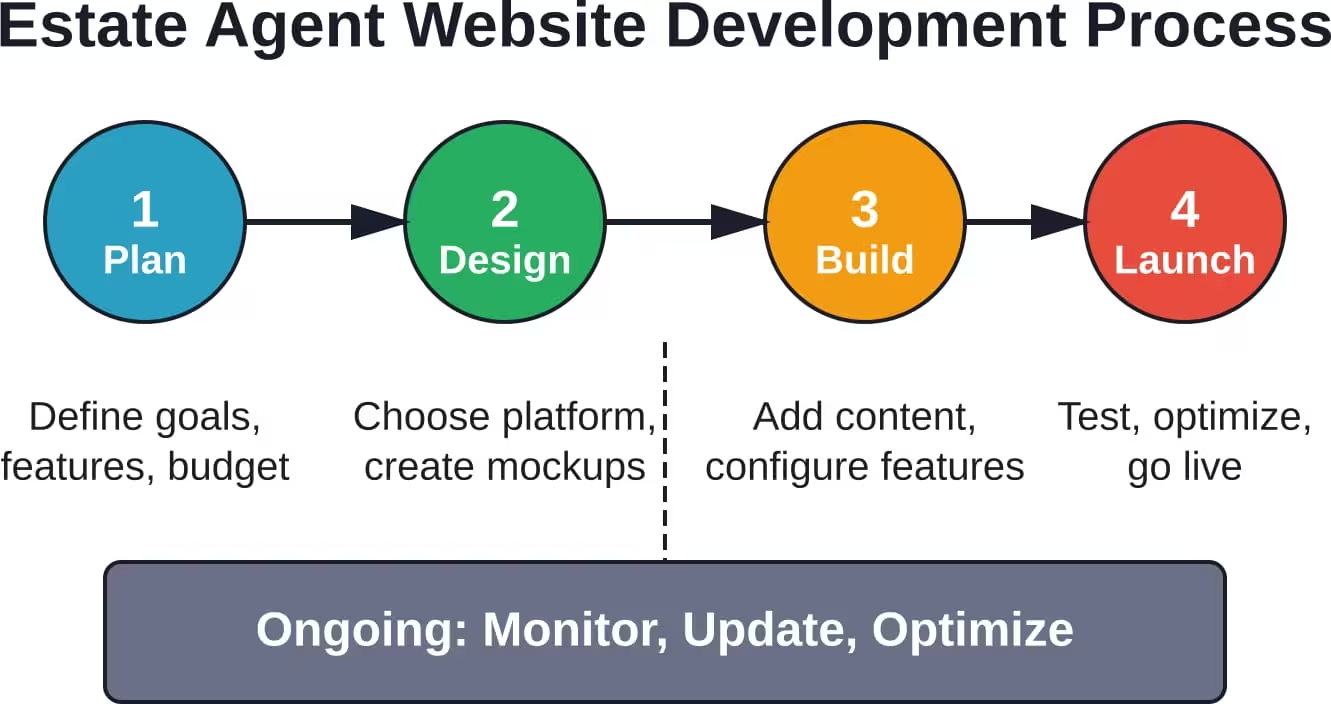
The development process doesn’t require technical expertise—just clear goals and commitment to follow through. Start by defining what success looks like. How many leads per month would justify the investment? What features are essential versus nice-to-have? What budget is realistic?
Research platforms thoroughly. Most offer free trials or demo access. Test the interface, review template options, and confirm essential features are included. Valuable insights into which platforms deliver on promises and which fall short emerge from direct testing.
Don’t aim for perfection at launch. A good website launched today beats a perfect website launched never. Ship the fundamentals—professional design, property search, lead capture, mobile responsiveness—then iterate based on visitor behavior and feedback.
The property market rewards agents who make it easy for clients to find them, evaluate their expertise, and make contact. A well-developed website accomplishes all three while working around the clock to generate leads.
Investment in professional website development isn’t optional anymore—it’s fundamental infrastructure for modern estate agency business. The question isn’t whether to build a website, but how soon can it be done properly.
Start today. Research platforms, gather property photos, draft initial content. Forward momentum compounds. The sooner the website launches, the sooner it starts delivering returns through increased visibility, lead generation, and professional credibility in an increasingly digital property market.