

Quick Summary: Website development for entrepreneurs balances cost, control, and capability. DIY builders like Wix and Squarespace start at $12-17/month and suit simple sites, while custom development from $2,000+ offers unlimited flexibility for complex requirements. The right choice depends on technical skills, budget, growth plans, and whether mobile-first design and conversion-focused structure align with business goals.
Building a business website in 2026 means navigating dozens of platforms, pricing models, and technical decisions. Entrepreneurs face a fundamental fork: grab a DIY website builder and launch this week, or hire a developer for a custom solution that takes months but fits perfectly.
The stakes are higher than most realize. According to the U.S. Small Business Administration, many small business websites lack the fundamental elements that help visitors navigate, build trust, and drive conversions. Getting the foundation right—whether through a template or custom code—determines whether site traffic converts or bounces.
Here’s what actually matters when choosing your approach.
DIY Builders vs. Custom Development: The Real Trade-Offs
The price gap tells part of the story. DIY website builders typically cost $12 to $159 per month depending on features and business needs. Custom development starts around $2,000 for a basic site and climbs into five figures for complex builds, according to SBA guidance from 2018.
But cost is just the entry point.
DIY platforms like Wix, Squarespace, Webnode, and Canva offer drag-and-drop editors, hosting included, and hundreds of templates built for common business types. The learning curve stays gentle. Most entrepreneurs can publish a professional-looking site within days, no coding required.
Custom development delivers different advantages: complete design control, unique functionality, integration with specialized business systems, and no monthly platform fees after launch. The trade-off? Development time stretches to weeks or months, and every change requires developer involvement unless the team builds a content management system.
When DIY Builders Make Sense
Entrepreneurs launching service businesses, local shops, portfolios, or simple ecommerce stores often find DIY builders sufficient. The platforms handle hosting, security updates, mobile responsiveness, and basic SEO automatically.
Webnode offers multilingual support and starts at $0 for testing, then $8.50/month for the first purchase. Wix provides 1,000s of fully customizable business templates. Squarespace targets design-conscious brands with polished templates and integrated commerce tools.
The limitation surfaces when requirements turn complex: custom user dashboards, third-party API integrations beyond what plugins offer, highly specific checkout flows, or database-driven features unique to the business model.
When Custom Development Becomes Necessary
Some business models demand custom solutions from day one. SaaS products, marketplaces connecting buyers and sellers, membership platforms with tiered access, or applications requiring real-time data processing rarely fit DIY templates.
Even simpler businesses sometimes outgrow builders. A consulting firm might start on Squarespace but later need a custom client portal that integrates with their project management system and invoicing software in ways plugins can’t handle.
Real talk: custom development requires budget and patience. According to SBA guidance, typical custom website prices start at $2,000 and climb based on complexity. Payment structures vary—some designers request 50% upfront, others take 25% deposits. Contracts and deposits before any work begins are standard practice to protect both parties.
Launch a Business Website to Start Selling Faster
Entrepreneurs usually need more than just a website launch. They need a website that supports visibility, lead generation, and future growth without turning into a complicated long-term project. Lengreo combines website development with digital marketing strategy, helping businesses build websites that work as part of a broader growth plan. Their team handles everything from early research and prototyping to launch support and ongoing maintenance.
Focus on Growth Instead of Just Design
With Lengreo, entrepreneurs can get:
- Business websites and landing pages tailored to their goals
- Conversion-focused website planning
- Support during launch and post-launch stages
- Long-term maintenance services when needed
Contact Lengreo if you want a business website that supports growth from the start instead of limiting it later.
Mobile-First Design: Non-Negotiable in 2026
Here’s where many entrepreneurs still stumble. According to The Pew Charitable Trusts data, 83% of Americans access the internet via mobile devices, and 15% rely on mobile as their only internet connection.
The disparity by income level matters even more for businesses targeting broad markets. Only 57% of households earning under $30,000 annually subscribe to home broadband, compared to 95% of households earning over $100,000. Mobile isn’t just a preference—for significant customer segments, it’s the only access point.
Both DIY builders and competent developers default to responsive design now. But responsiveness alone doesn’t equal mobile-optimization. True mobile-first design prioritizes:
- Touch-friendly navigation with tap targets at least 44×44 pixels
- Readable typography without zooming (minimum 16px body text)
- Simplified forms with minimal fields and smart input types
- Fast loading on slower connections (under 3 seconds target)
- Critical content above the fold on small screens
Test every page on actual mobile devices, not just browser dev tools. Behavior on a real phone—especially mid-range Android devices common among cost-conscious consumers—reveals friction that desktop testing misses.
Conversion Architecture: Why Visitors Don’t Take Action
According to the SBA’s National Small Business Week content, many small business websites lack fundamental elements that build trust and drive conversions. Visitors arrive but don’t book, buy, or even contact the business.
The culprit often isn’t design quality—it’s behavioral science. As the SBA workshop on website design explains, most visitors don’t read websites; they scan. System 1 thinking dominates first impressions and decision-making, meaning visitors make snap judgments based on visual hierarchy, clarity, and trust signals before consciously processing details.
Reducing Friction and Applying Nudge Theory
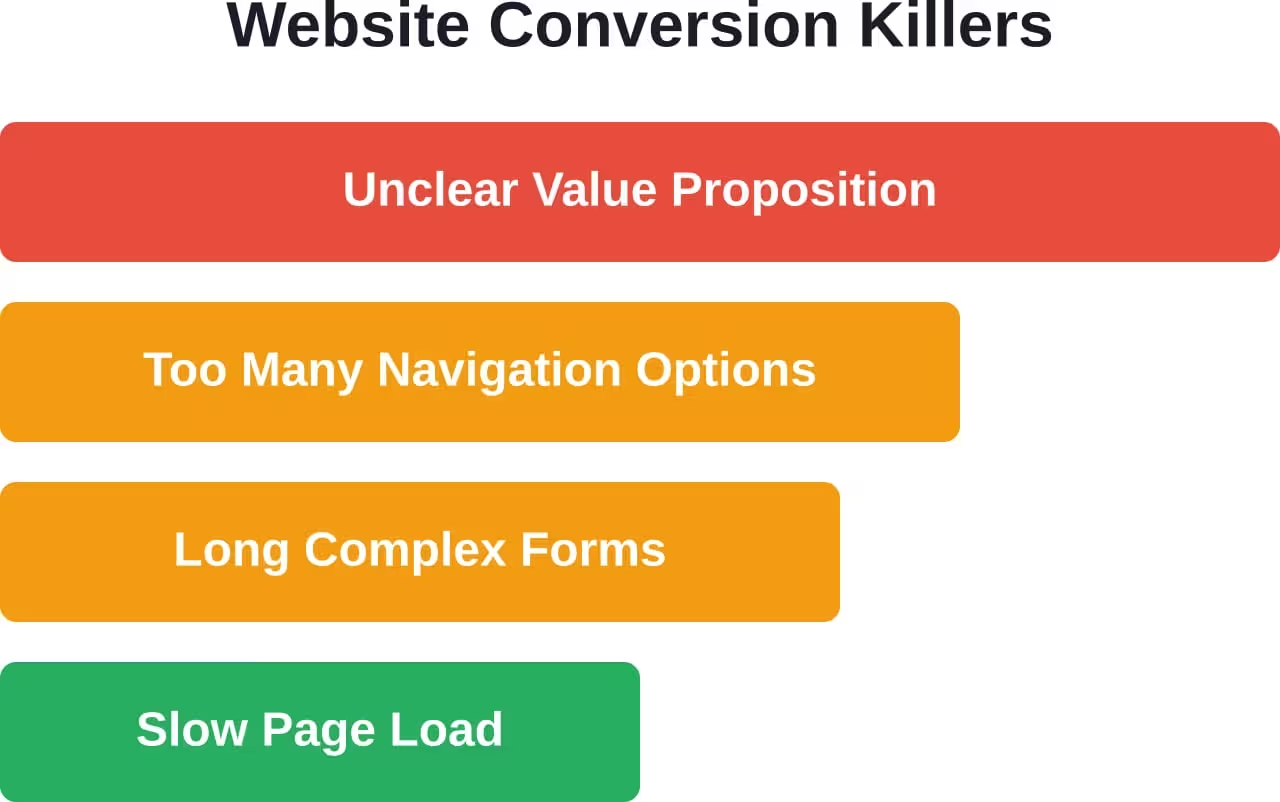
Friction refers to any obstacle between a visitor’s interest and their action. Common friction sources include:
- Unclear value propositions buried in vague copy
- Navigation menus with too many options causing decision paralysis
- Forms requesting unnecessary information
- Missing trust indicators like testimonials, credentials, or security badges
- Slow page loads that test patience
Nudge theory—using design choices to guide behavior without restricting options—helps entrepreneurs structure pages for action. Placing the primary call-to-action button in a contrasting color, limiting navigation choices on landing pages, and using directional cues (arrows, gaze direction in photos) all nudge visitors toward conversion.
Testing matters more than guessing. Simple A/B tests on headline clarity, button placement, or form length reveal what actually moves conversion rates for a specific audience.
Content Strategy and AI Tools
Website development isn’t just design and code—content determines whether the site communicates value. According to SBA workshops on AI-driven content creation in 2026, entrepreneurs can now use artificial intelligence to draft website copy and blog posts more efficiently.
The approach works for ecommerce stores, service providers, and information sites alike. AI tools help overcome blank-page paralysis and generate first drafts faster than writing from scratch. That said, human editing remains essential—AI lacks brand voice nuance and often produces generic phrasing that weakens differentiation.
Smart content strategy for business websites includes:
- Clear service or product descriptions that address customer pain points
- About pages that build credibility through credentials, experience, and values
- Case studies or testimonials demonstrating real results
- FAQ sections answering common objections and questions
- Blog content targeting search terms potential customers actually use
SEO still matters. Even the best-designed site fails if the target audience can’t find it. Basic on-page optimization—descriptive page titles, header hierarchy, alt text on images, internal linking—gives search engines the signals they need to understand and rank content.
Platform Comparison: Features That Matter
Not all DIY builders offer the same capabilities. Entrepreneurs should evaluate platforms based on actual business requirements, not feature checklists.
| Platform | Best For | Starting Cost | Key Strengths | Limitations |
|---|---|---|---|---|
| Webnode | Multilingual sites, simplicity | $0 (free) → $8.50/mo | Easy to use, good for testing, multilingual support | Fewer advanced features than competitors |
| Wix | Creative freedom, design-heavy sites | $17/mo | 1,000+ templates, extensive app market, design flexibility | Steeper learning curve, can feel overwhelming |
| Squarespace | Design-conscious brands, portfolios | $12/mo | Polished templates, strong visual design, integrated commerce | Less flexible than Wix for custom layouts |
| Canva | Visual content creators, simplicity | Free → paid tiers | Familiar interface for Canva users, drag-and-drop simplicity | Newer to website space, fewer features |
Cost structures vary. Some platforms advertise free plans but limit features, display ads, or use subdomains (yoursite.platform.com instead of yoursite.com). Business plans with custom domains, ecommerce capability, and marketing tools are typically more expensive.
Domain Names and Professional Email
Every business website needs a custom domain. Subdomains on free plans (yourcompany.wix.com) undermine credibility and hurt branding. Domain registration costs $10-20 annually for common extensions like .com, .net, or .co.
Professional email matching the domain ([email protected] rather than [email protected]) similarly builds trust. Most website platforms offer email hosting as an add-on, or entrepreneurs can use Google Workspace or Microsoft 365 separately.
Getting Clients and Building a Web Design Side Hustle
Some entrepreneurs discover website development skills to become their business. Building websites for other small businesses represents a viable side hustle or full-time venture.
According to a web designer who started in 2011 and maintained a profitable business through major life changes, key success factors include:
- Using contracts for every project to set clear expectations
- Taking deposits before starting work (25-50% upfront is standard)
- Never delivering final files before receiving full payment
- Building a portfolio through early discounted projects if necessary
- Promoting services through social media, local business networks, and referrals
Equipment needs stay minimal: a reliable computer, design software (Adobe Creative Suite or affordable alternatives like Figma and Canva), and a website showcasing your own work. Legal setup—registering as an LLC or sole proprietorship—protects personal assets.
Common mistakes to avoid include underpricing services (charging too little devalues expertise and attracts problem clients), scope creep without additional fees, and failing to set revision limits in contracts.
Digital Marketing Integration
A website alone doesn’t guarantee traffic or sales. According to SBA workshops on mastering the digital marketing process, successful online presence requires cohesive strategy aligning with business goals.
Effective digital marketing combines:
- Search engine optimization so organic search drives qualified traffic
- Content marketing through blogs, guides, or resources that demonstrate expertise
- Social media presence on platforms where the target audience actually spends time
- Email marketing to nurture leads and maintain customer relationships
- Paid advertising when budget allows and ROI justifies spending
Automation tools and AI increasingly save time on repetitive marketing tasks. Scheduled social posts, email sequences triggered by user behavior, and chatbots handling common questions all reduce manual work.
The key insight: marketing and website development aren’t separate projects. The site should support marketing goals through clear conversion paths, lead capture mechanisms, and content structured to rank in search and answer customer questions.
Evaluating and Improving Existing Websites
Already have a website but struggling with results? The SBA workshop framework suggests evaluating objectively and prioritizing improvements.
Questions to ask:
- Do visitors immediately understand what the business offers?
- Does the site build trust through testimonials, credentials, or social proof?
- Are calls-to-action clear, visible, and compelling?
- Does the site load quickly on mobile devices?
- Can visitors complete their goal (purchase, booking, contact) in three clicks or fewer?
Small changes often deliver outsized results. Rewriting a vague headline, simplifying a checkout form, or adding customer testimonials can lift conversion rates without redesigning everything.
Analytics tools reveal where visitors drop off. High bounce rates on key pages signal problems worth investigating. Low time-on-page might indicate content doesn’t match visitor expectations from search or ads.
Making the Right Choice for Your Business
Website development for entrepreneurs comes down to matching approaches with actual requirements. DIY builders deliver speed, affordability, and sufficient capability for most small business needs. Custom development offers unlimited flexibility for complex or highly specialized requirements.
The best approach considers current needs and growth trajectory. Starting with a DIY platform and migrating to custom development later works for many businesses. Others know from day one their model requires custom solutions.
Either way, mobile-first design, conversion-focused structure, and integration with broader digital marketing strategy determine whether the website actually drives business results. Technology platforms matter less than strategic thinking about how the site serves customers and business goals.
Ready to build your business website? Start by defining your must-have features, realistic budget, and timeline. Then choose the development approach that fits—and start building the online presence your business needs to grow.