


Quick Summary: E-commerce website development for self-storage businesses transforms online presence into a revenue-driving machine by integrating online rentals, payment systems, mobile optimization, and trust-building features. Professional development prioritizes conversion-focused design, fast load times, seamless integration with management software, and robust SEO to capture the 70%+ of customers who now search online before renting storage units.
The self-storage industry has shifted dramatically. Most customers now begin their search online, with more than 70% of storage customers in the U.S. starting their facility hunt through digital channels. That makes your website more than just a digital brochure—it’s your facility’s primary storefront.
But not all websites deliver results. The difference between a site that generates bookings and one that bleeds traffic to competitors comes down to strategic e-commerce development. This means building a platform that doesn’t just inform visitors—it converts them.
Why E-Commerce Development Matters for Self-Storage
Traditional self-storage websites often function as informational placeholders. Potential customers visit, browse unit sizes, then leave to call during business hours. That creates friction.
E-commerce-enabled websites remove those barriers. Customers can check availability, compare unit sizes, reserve or rent units, and complete payment—all without picking up the phone. According to the SBA, market research that blends consumer behavior with economic trends helps businesses confirm and improve their ideas, reducing risks even while operations are still small.
The result? Higher conversion rates, more unit rentals, and revenue that doesn’t stop when your office closes.
10 Essential Components of Self-Storage E-Commerce Websites
Professional self-storage website development relies on specific must-have elements. Here’s what separates high-performing sites from the rest.
1. Mobile Optimization
Mobile devices dominate search traffic. If your website doesn’t render perfectly on smartphones and tablets, you’re turning away the majority of your audience before they see a single unit.
Mobile optimization means fast load times, thumb-friendly buttons, and content that adapts to smaller screens without horizontal scrolling. Research shows websites that load in one second average a 7% bounce rate, while those taking five seconds see a 38% bounce rate. Studies indicate that additional seconds of load time increase bounce probability significantly.
2. Online Reservations and Rentals
This is the core e-commerce functionality. Customers should be able to select a unit, choose a move-in date, and complete the transaction online—no phone call required.
Integration with your facility management software ensures real-time availability updates. When a unit is rented, it’s immediately removed from available inventory across all platforms.
3. Secure Payment Processing
Security is non-negotiable. OWASP (Open Web Application Security Project) documentation highlights payment functionality vulnerabilities as critical, since flaws could allow attackers to steal from organizations, make fraudulent purchases, or compromise payment card details.
Implement SSL certificates, PCI-compliant payment gateways, and encrypted data transmission. Display security badges prominently to reassure customers their financial information is protected.
4. Clear Pricing and Unit Information
Transparency builds trust. Display unit sizes, dimensions, pricing, and photos clearly. Avoid the “call for pricing” trap—customers want answers immediately, and competitors are one click away.
Include comparison tools that let visitors see multiple units side-by-side. This helps customers make confident decisions without external assistance.
5. Trust-Building Elements
Trust is currency in e-commerce. Visitors need reassurance they’re dealing with a legitimate, professional operation before handing over credit card information.
Key trust signals include:
- Customer reviews (especially Google reviews, which serve as both trust signals and powerful ranking factors)
- Security badges and SSL certificates
- Professional photography of facilities and units
- Clear contact information with physical address
- Video tours of the facility
Google reviews aren’t 100% unbiased, but they’re governed by a neutral party and carry significantly more weight than reviews hosted on your own site. Display them prominently.
6. Search Engine Optimization (SEO)
E-commerce functionality means nothing if customers can’t find your site. SEO ensures your facility appears when potential customers search “storage near me” or similar queries.
Technical SEO requirements include:
- Fast page load speeds
- Mobile responsiveness
- Clean URL structures
- Optimized meta titles and descriptions
- Local business schema markup
- Google Business Profile integration
Content optimization means creating location-specific pages, unit size guides, and educational resources that answer common customer questions.
7. Integration with Facility Management Software
Your website shouldn’t exist in isolation. Seamless integration with your property management system ensures inventory, pricing, and customer data sync automatically.
This eliminates double-entry work, reduces errors, and ensures customers always see accurate availability. Popular self-storage management platforms often provide API access for this purpose.
8. Bill Pay and Account Management
E-commerce doesn’t end after the initial rental. Customers need the ability to manage their accounts, make payments, and update information online.
Self-service portals reduce administrative burden on facility staff while improving customer satisfaction. Tenants can pay bills at 2 AM if they want—no office hours required.
9. Educational Content and Resources
Many customers don’t fully understand what size unit they need or how to prepare items for storage. Educational content positions your facility as helpful rather than purely transactional.
Content ideas include:
- Unit size calculators
- Packing guides
- Climate control explanations
- Security feature overviews
- Frequently asked questions
This content also serves SEO purposes, helping your site rank for informational queries that lead to rentals.
10. Clear Calls-to-Action (CTAs)
Every page should guide visitors toward the next logical step. That might be “Check Availability,” “Reserve Now,” “Get Directions,” or “Call Us.”
CTAs should be visually distinct, action-oriented, and positioned prominently without being obnoxious. Test different button colors, text, and placements to optimize conversion rates.
Development Approaches: Custom vs. Platform-Based
Self-storage operators have several paths for website development. Each comes with tradeoffs.
| Approach | Pros | Cons | Best For |
|---|---|---|---|
| Custom Development | Complete control, unique design, tailored functionality | Expensive, longer development time, requires technical maintenance | Large operators with significant budgets and specific requirements |
| Industry-Specific Platforms | Built for self-storage, easy integration, faster launch | Less customization, subscription costs, limited design flexibility | Most single-location and regional operators |
| WordPress + WooCommerce | Flexible, large plugin ecosystem, cost-effective | Requires skilled developer, security maintenance, can become bloated | Tech-savvy operators or those with development resources |
| Website Builders (Shopify, Squarespace) | Easy to use, no coding required, quick setup | Monthly fees, limited customization, not self-storage-specific | Very small operations or those testing the market |
Community discussions suggest experienced operators often lean toward platforms built specifically for the self-storage industry. These solutions understand the unique requirements—unit management, gate access codes, insurance options—without requiring custom development.
That said, WooCommerce remains popular among operators who want flexibility without full custom development. The key is finding a developer who truly understands the platform and doesn’t bloat the site with unnecessary plugins.
Building Trust Through Design
Design isn’t just aesthetics—it’s a trust mechanism. Visitors make snap judgments about legitimacy based on visual presentation.
Professional design signals include:
- Clean, modern layouts with plenty of white space
- High-quality photography (not stock images)
- Consistent branding and color schemes
- Easy-to-read typography
- Logical navigation structure
Avoid design patterns that scream “template site.” Generic stock photos of padlocks and storage units don’t differentiate your facility. Real photos of your actual location build authenticity.
Performance Optimization: Speed Matters
Site speed directly impacts both conversion rates and search rankings. Google prioritizes fast-loading sites, and impatient users abandon slow ones.
Technical optimization tactics include:
- Image compression and next-gen formats (WebP)
- Content delivery networks (CDNs)
- Browser caching
- Minified CSS and JavaScript
- Lazy loading for images below the fold
Test your site speed regularly using tools like Google PageSpeed Insights. Aim for load times under two seconds on both desktop and mobile.
Payment Security and Compliance
OWASP testing guides emphasize that payment functionality security is critical. Vulnerabilities could allow attackers to steal from organizations, make fraudulent purchases, or compromise customer payment card details.
Key security measures include:
- PCI DSS compliance
- SSL/TLS encryption
- Secure payment gateway integration (Stripe, Square, Authorize.net)
- Regular security audits
- Two-factor authentication for admin access
Never store raw credit card data on your servers. Use tokenization through your payment processor instead. Display security certifications prominently to reassure customers.
Local SEO for Self-Storage
Self-storage is inherently local. Nobody is searching for storage facilities 50 miles away. That makes local SEO absolutely critical.
Local optimization includes:
- Claimed and optimized Google Business Profile
- Consistent NAP (Name, Address, Phone) across all directories
- Location-specific landing pages
- Local citations and backlinks
- Schema markup for local business
- Regular posting of Google Business updates
Encourage satisfied customers to leave Google reviews. These serve dual purposes—they build trust for future customers and signal to Google that your business is active and reputable.
Choosing the Right Development Partner
Unless you’re building the site yourself, selecting the right developer or platform is crucial. The SBA emphasizes that market research and competitive analysis help businesses find competitive advantages—this applies to choosing vendors too.
Questions to ask potential development partners:
- Do you have experience with self-storage websites specifically?
- Can you show examples of sites you’ve built and their conversion data?
- How do you handle facility management software integration?
- What’s your approach to mobile optimization?
- Who owns the website code and content after launch?
- What ongoing support and maintenance do you provide?
- How do you handle payment security and compliance?
Beware of developers who want to load your site with 30+ plugins or who can’t explain their SEO strategy beyond “we’ll add keywords.” Real expertise shows in streamlined, efficient implementations.
Develop a Reliable Self-Storage Website
A reliable website for self-storage depends on how it is built, not just how it looks. Lengreo builds websites as part of a structured development process that starts with research and business analysis, moves through prototyping and development, and finishes with testing and launch. The process is planned in stages, with clear scope, defined timelines, and short-term support after launch.
Order a Website Built With a Clear Plan and No Guesswork
Here’s what you get when working with Lengreo:
- Project-based pricing based on specific website requirements
- Defined scope and timelines agreed before development starts
- Full commitment to meeting time and budget expectations
- Flexible approach from simpler builds to custom website development
- Optional hourly support for ongoing maintenance after launch
Contact Lengreo to discuss your project and get your website built properly from the start.
Ongoing Optimization and Testing
Launch isn’t the finish line—it’s the starting point. Successful e-commerce websites undergo continuous testing and improvement.
Regular optimization activities include:
- A/B testing CTAs, headlines, and page layouts
- Analyzing conversion funnel drop-off points
- Reviewing user session recordings
- Monitoring site speed and uptime
- Updating content based on search trends
- Refining SEO strategy based on performance data
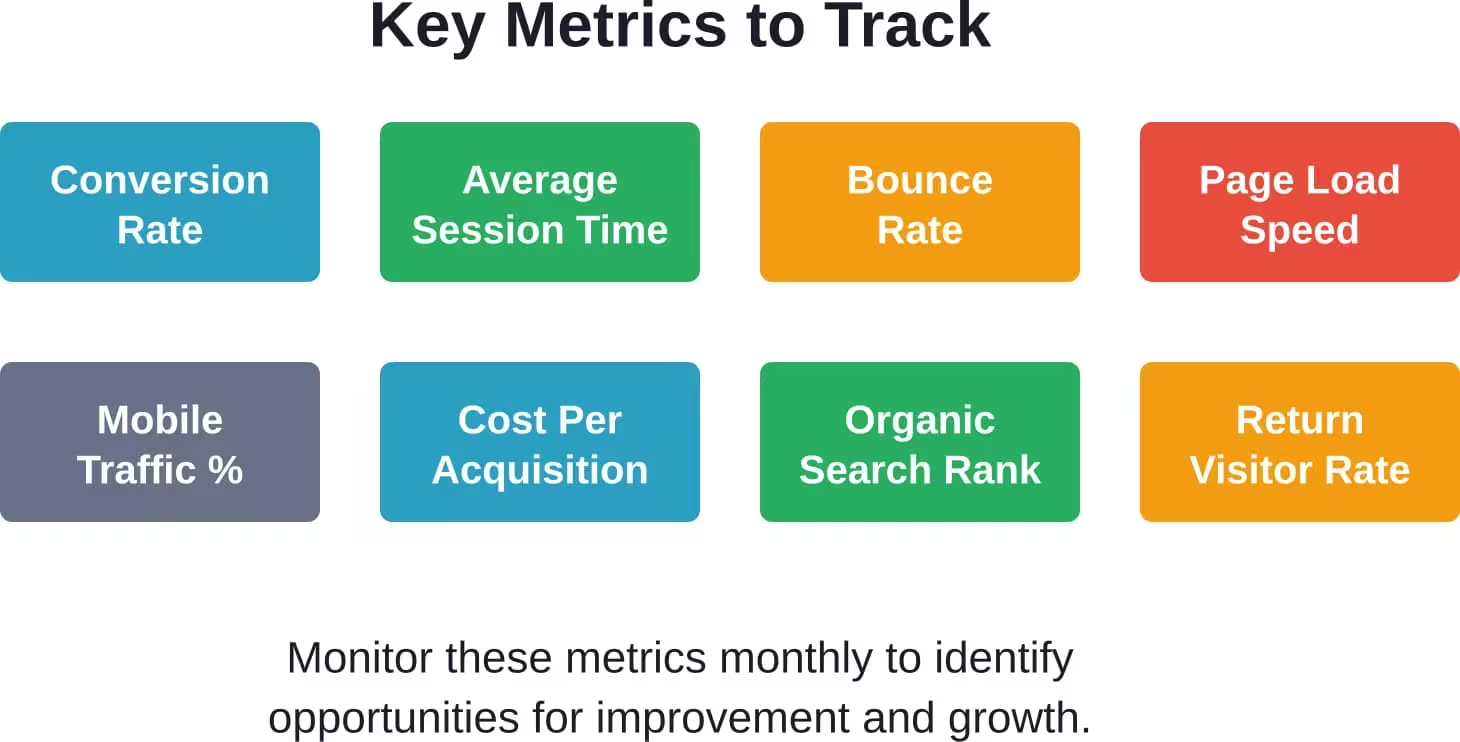
Set up Google Analytics and conversion tracking from day one. Data-driven decisions beat guesswork every time.
Common Pitfalls to Avoid
Even well-intentioned development projects can go wrong. Watch out for these common mistakes:
- Overcomplicating the user experience: More features don’t always equal better results. Focus on core functionality that directly supports conversions. Every additional click between landing and booking reduces completion rates.
- Neglecting mobile users: Testing your site on desktop isn’t enough. Actually book a unit using your phone. If it’s frustrating for you, it’s frustrating for customers.
- Hiding pricing: Customers hate surprises. Transparent pricing builds trust, even if your rates are higher than competitors. Those comparison-shopping solely on price probably weren’t your ideal customers anyway.
- Forgetting about accessibility: Websites should be usable by everyone, including people with disabilities. This isn’t just ethical—it’s increasingly a legal requirement.
- Skipping security measures: One data breach can destroy years of reputation-building. Invest in proper security from the start rather than treating it as an afterthought.
Business Planning and Licensing
Before launching any e-commerce operation, make sure you’ve covered the business fundamentals. The SBA notes that business plans serve as roadmaps for structuring, running, and growing new businesses—they help think through key elements at every stage.
For self-storage e-commerce, this means understanding:
- Required business licenses and permits (varies by location)
- Sales tax collection and remittance for online transactions
- Insurance requirements for online operations
- Terms of service and privacy policies
- Accessibility compliance (ADA)
The SBA also emphasizes that most small businesses need a combination of federal and state licenses and permits. Check with appropriate agencies to ensure full compliance before processing your first online transaction.
Conclusion
E-commerce website development transforms self-storage operations from reactive to proactive. Instead of waiting for phone calls during business hours, facilities capture rentals 24/7 from customers who prefer digital transactions.
Success requires more than just putting a website online. It demands strategic planning, mobile-first design, robust security, trust-building elements, and ongoing optimization. The investment pays dividends through higher conversion rates, reduced administrative burden, and competitive positioning in an increasingly digital marketplace.
Start by auditing your current online presence. Identify gaps in mobile experience, booking functionality, and trust signals. Then prioritize improvements based on potential impact. Even incremental upgrades can meaningfully boost rental rates when focused on the elements that matter most to customers.
Ready to transform your self-storage facility’s online presence? Begin with mobile optimization and online rental capabilities—the two features that consistently deliver the highest ROI for operators across all facility sizes.